

Main Points :
- The forced sale of seized Bitcoin by the U.S. Department of Justice signals an internal power struggle within the U.S. government over national crypto strategy.
- Regulatory clarity, as highlighted by Goldman Sachs, is transforming crypto markets into a legitimate institutional asset class.
- Analysts like Tom Lee foresee new all-time highs driven not by speculation alone, but by aggressive spot accumulation from industry giants such as BitMine.
- Crypto assets are no longer speculative instruments—they are becoming strategic national and institutional resources.
- The global competition for physical crypto supply has entered an irreversible acceleration phase.
1. The DOJ’s Forced Bitcoin Sale and the Collapse of a Unified National Strategy
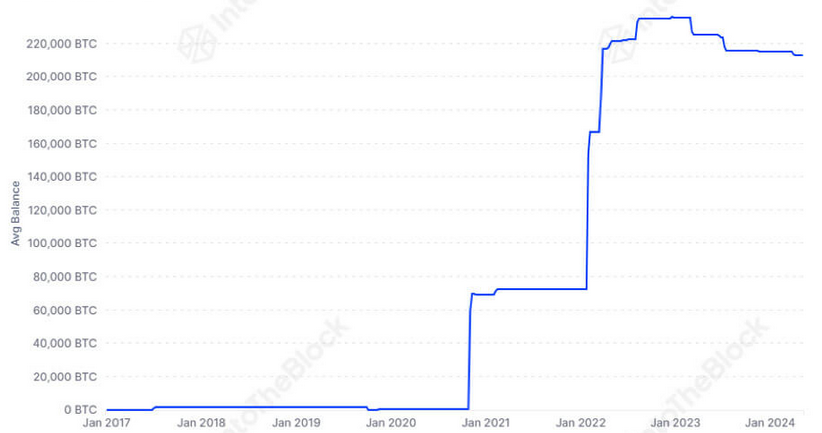
The recent revelation that the U.S. Department of Justice liquidated a portion of its seized Bitcoin holdings represents far more than an administrative asset disposal. It exposes a deep and unresolved power struggle within Washington itself.
Former President Donald Trump’s vision of a Bitcoin Strategic National Reserve positioned digital assets as instruments of geopolitical leverage. Against this backdrop, the DOJ’s unilateral sale appears as an institutional rebellion—an assertion of bureaucratic authority over executive strategy.
This act demonstrates that crypto policy inside the United States remains fragmented. Even executive-level directives fail to unify enforcement agencies operating under legacy legal frameworks. Markets reacted not merely to selling pressure, but to the realization that sovereign crypto strategy is still contested terrain.
Ironically, this internal conflict reinforces Bitcoin’s core value proposition: neutrality. As state actors clash, Bitcoin remains indifferent—absorbing political dysfunction while strengthening its role as a non-sovereign reserve asset.
The more aggressively government entities intervene, the clearer Bitcoin’s function becomes—not as a policy tool, but as a hedge against institutional inconsistency. In this sense, resistance from within the system paradoxically validates the necessity of a national reserve strategy.
2. Goldman Sachs and the Institutionalization of Crypto Markets
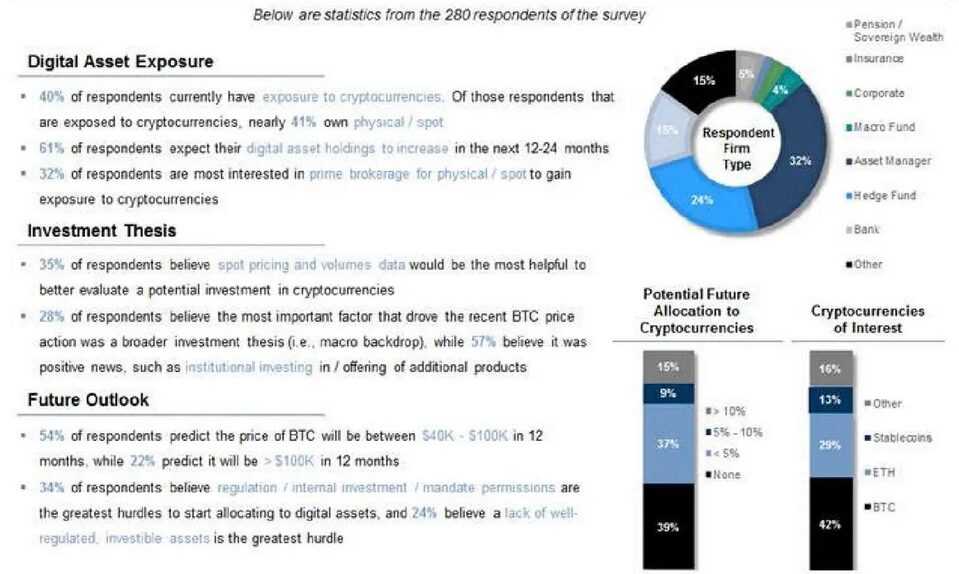
When Goldman Sachs publicly framed regulatory reform as the trigger for the next crypto supercycle, it marked a definitive turning point.
For years, institutional capital remained sidelined by regulatory ambiguity. That barrier is now dissolving. Regulation is no longer perceived as constraint—but as infrastructure.
Banks, insurers, pension funds, and sovereign wealth entities require legal clarity before allocating capital at scale. With regulatory runways now taking shape across major jurisdictions, trillions of dollars in dormant liquidity are preparing for deployment.
This shift will fundamentally alter market structure. Volatility driven by retail speculation will be replaced by disciplined capital flows, long-duration positioning, and strategic accumulation.
Crypto is transitioning from a speculative frontier into an integrated component of the global financial system. Tokenized assets, digital settlement layers, and on-chain financial primitives will increasingly blur the boundary between traditional finance and decentralized networks.
Goldman’s signal is not predictive—it is declarative. Institutional capital is not asking if it will enter crypto markets, but how fast.
3. Tom Lee, BitMine, and the Mechanics of a Supply Shock
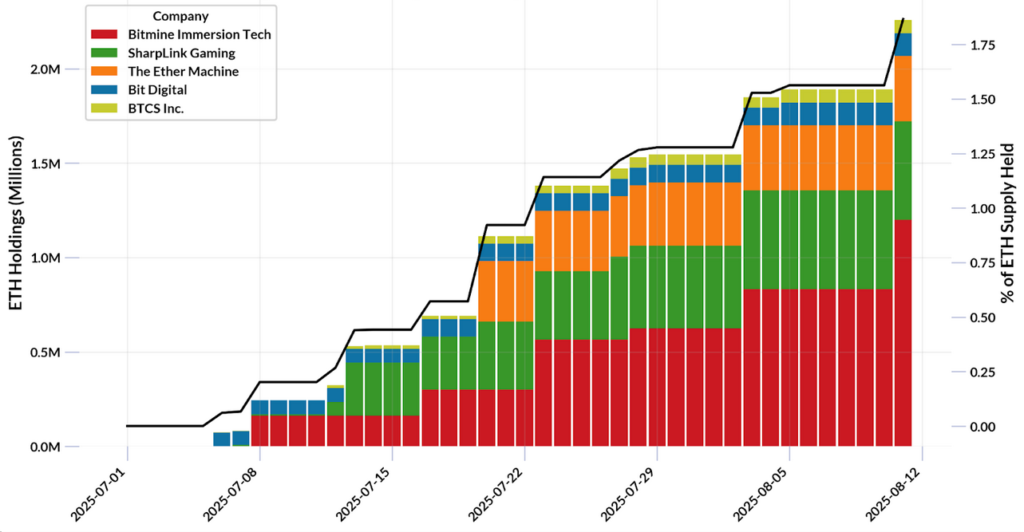
Market strategist Tom Lee has forecast new all-time highs by the end of January. Simultaneously, mining and infrastructure giant BitMine deployed approximately $110 million into additional Ethereum spot purchases.
This convergence of narrative and action is critical. Price forecasts unsupported by supply dynamics are fragile. But when predictions align with aggressive spot accumulation, the probability distribution changes.
BitMine’s strategy is not speculative. By securing physical ETH, it is positioning itself for dominance within the next-generation decentralized infrastructure stack—staking, validation, and protocol-level influence.
As circulating supply migrates into long-term institutional custody, liquidity tightens. Retail investors are not competing against sentiment; they are competing against balance sheets.
Tom Lee’s timing reflects an understanding of this structural shift. Once supply absorption reaches critical mass, price does not move linearly—it gaps.
The January window thus represents more than a technical milestone. It is a decision point for capital allocation in 2026 and beyond.
Conclusion: Crypto as Strategic Terrain
Crypto markets have crossed a threshold. What was once experimental is now strategic. Nation-states, financial institutions, and infrastructure giants are converging on the same realization: digital scarcity is geopolitical power.
Internal conflicts, regulatory clarity, and spot accumulation are not isolated events. They are facets of a single transformation—the elevation of crypto assets into core components of global economic architecture.
Those who act early secure position. Those who hesitate will be forced to buy access later, at exponentially higher cost.
This is no longer a cycle. It is a structural realignment.
