
Main Points :
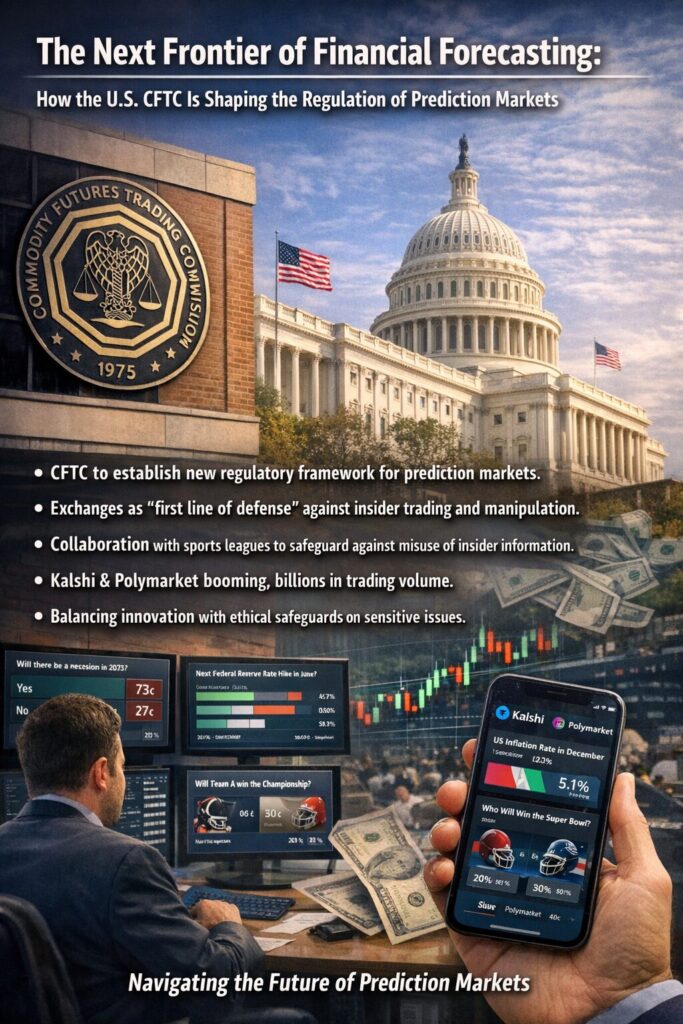
- The U.S. Commodity Futures Trading Commission (CFTC) has announced plans to create a clearer regulatory framework for rapidly expanding prediction markets.
- Exchanges will be required to act as the “first line of defense” against insider trading and market manipulation.
- Collaboration with sports leagues and other organizations will be encouraged to prevent misuse of privileged information.
- Major prediction market platforms such as Kalshi and Polymarket are experiencing explosive growth, attracting billions in trading volume and investor interest.
- New regulations aim to balance innovation with safeguards against ethical concerns, such as trading on wars, deaths, or confidential information.
1. A New Era for Prediction Markets
Prediction markets—platforms where participants trade contracts based on the probability of future events—have grown rapidly in recent years. From election outcomes and economic indicators to sports events and geopolitical developments, these markets attempt to harness the “wisdom of crowds” to forecast the future.
In March 2026, the U.S. Commodity Futures Trading Commission (CFTC) announced new regulatory guidance aimed at establishing a clearer oversight framework for these markets. The move reflects growing concerns that prediction markets—while innovative—are also vulnerable to manipulation, insider trading, and ethical controversies.
The CFTC emphasized that it maintains exclusive federal jurisdiction over prediction markets, reaffirming that event-based derivatives contracts fall under the Commodity Exchange Act rather than state gambling law.
This clarification is significant because prediction markets have increasingly faced legal challenges from state regulators who argue that these platforms resemble gambling operations. The CFTC’s stance suggests that such markets should instead be treated as financial instruments—similar to derivatives.
This regulatory shift comes at a time when the industry is expanding at remarkable speed. Leading platforms such as Kalshi and Polymarket have reportedly explored funding rounds that could value them at around $20 billion each, demonstrating how investor interest in event-based trading is rapidly increasing.
2. Exchanges as the “First Line of Defense”
A central element of the CFTC’s new guidance is the expectation that exchanges themselves will actively prevent market abuse.
Rather than relying solely on regulators, prediction market platforms will be required to function as the first line of defense against manipulation and insider trading.
This includes:
- Monitoring suspicious trading activity
- Implementing strict compliance systems
- Conducting pre-launch consultations with regulators for sensitive contracts
- Maintaining detailed audit trails for transactions
Prediction markets differ from traditional financial markets because many contracts relate to real-world events that may involve confidential information. For example, government officials, corporate insiders, or sports participants might possess knowledge that could influence market outcomes before the information becomes public.
Such risks have already attracted attention. Investigations have examined unusual trades placed shortly before geopolitical events, including military actions and political changes, raising concerns that insiders could profit from non-public information.
The CFTC has made it clear that misuse of confidential information may constitute fraud or market manipulation under existing derivatives law.
3. Collaboration With Sports Organizations
One particularly sensitive area involves sports-related prediction contracts.
Prediction markets increasingly allow users to trade contracts tied to sports outcomes—sometimes even specific player performances. These contracts can be vulnerable to manipulation because athletes, referees, or team officials might have access to non-public information.
To address this issue, regulators are encouraging exchanges to establish formal partnerships with sports leagues and governing bodies.
These partnerships may include:
- Data-sharing agreements
- Integrity monitoring systems
- Reporting mechanisms for suspicious activity
Such collaboration mirrors the existing model used by sports betting operators, where leagues and bookmakers cooperate to detect match-fixing or insider betting.
However, prediction markets differ from traditional betting platforms in a crucial way: they are often framed as financial hedging tools rather than gambling products.
For instance, some participants may use prediction markets to hedge risks related to economic events or policy decisions. A company exposed to regulatory risk might trade a contract predicting whether a specific law will pass, effectively hedging the financial impact.
4. The Rapid Growth of the Prediction Market Industry
Prediction markets have expanded dramatically over the past decade.
Experts estimate that global prediction market trading volumes exceeded $37 billion in 2025, spanning politics, sports, economic indicators, and cryptocurrency-related forecasts.
Several factors have fueled this growth:
1. Blockchain infrastructure
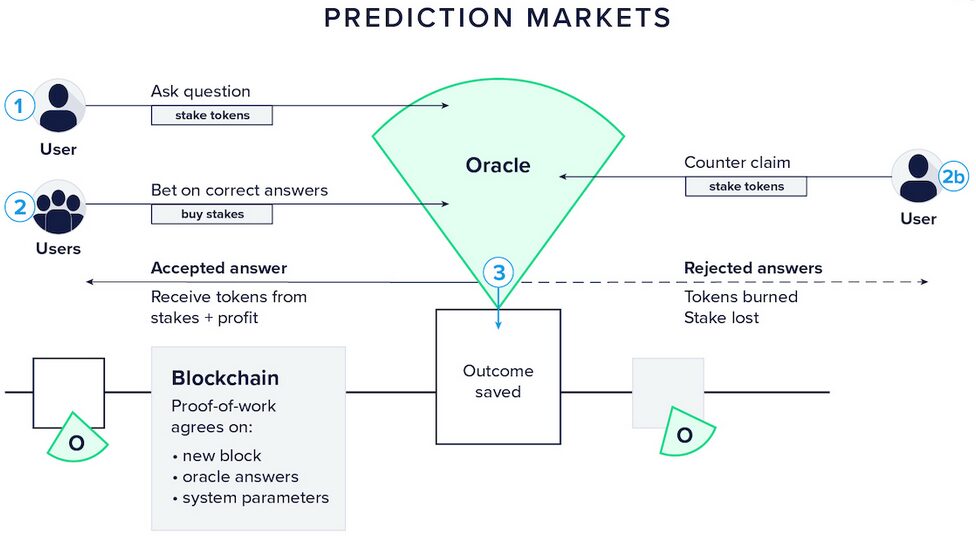
Platforms such as Polymarket operate using blockchain technology, allowing users to trade prediction contracts using cryptocurrency.
2. Retail investor participation
Prediction markets have attracted younger investors who view event-based trading as both an analytical tool and a speculative opportunity.
3. Institutional interest
Major financial firms have begun exploring the integration of prediction markets into trading platforms.
For example, some brokerage apps are experimenting with adding event contracts alongside traditional assets such as stocks and options.
5. Ethical and Political Controversies
Despite their potential benefits, prediction markets have also sparked intense debate.
One controversial issue involves contracts related to sensitive events such as war, assassination, or the death of political leaders.
Some lawmakers argue that allowing users to profit from such outcomes is morally problematic and could even incentivize harmful behavior.
In March 2026, U.S. lawmakers introduced legislation that would explicitly ban prediction contracts tied to war, terrorism, or death-related events.
Regulators are also evaluating whether certain types of contracts violate public interest standards under derivatives law.
For example, the Commodity Exchange Act already prohibits event contracts that involve illegal activities or that are considered contrary to the public good.
6. Legal Battles Between Federal and State Authorities
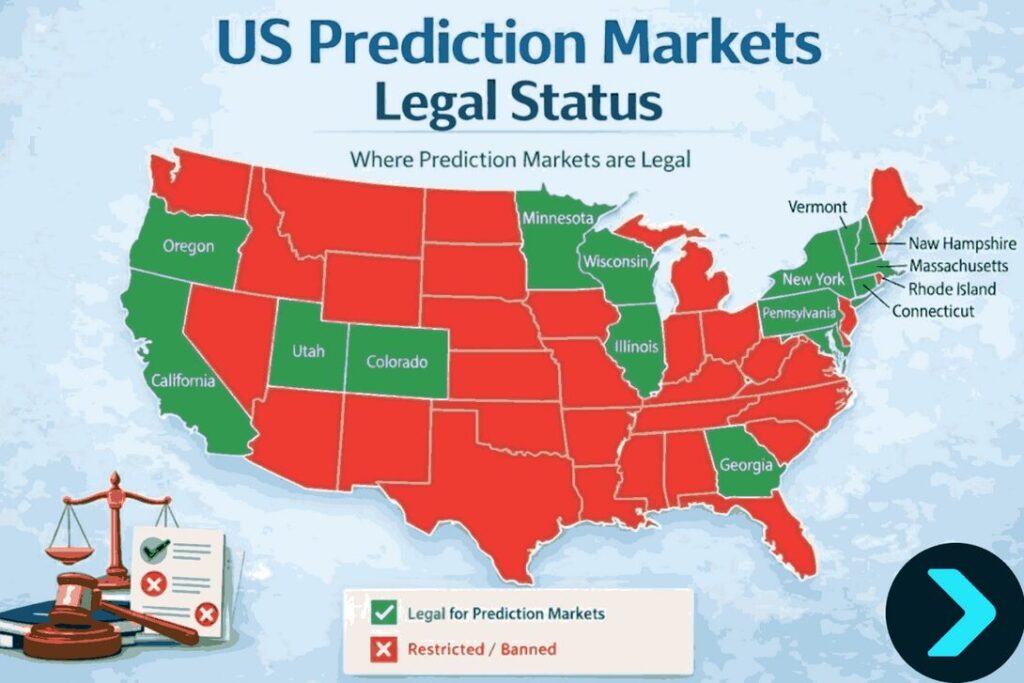
Another major issue is the conflict between federal financial regulation and state gambling laws.
Several U.S. states argue that prediction markets are essentially online casinos and should be regulated under gambling statutes.
Some states have even attempted to ban platforms such as Kalshi and Polymarket entirely.
However, the CFTC maintains that prediction markets fall under federal derivatives regulation and therefore operate legally nationwide.
This dispute has led to multiple lawsuits, with courts issuing conflicting rulings across different states.
Legal experts believe that the issue could eventually reach the U.S. Supreme Court, potentially establishing a definitive legal framework for the industry.
7. The Future of Prediction Markets
Looking ahead, prediction markets could play an increasingly important role in financial markets and decision-making.
Potential applications include:
- Forecasting economic indicators such as inflation or GDP growth
- Hedging risks related to regulatory policy
- Improving corporate decision-making through probabilistic forecasting
- Enhancing market-based intelligence gathering
Some economists argue that prediction markets may provide more accurate forecasts than traditional polling or expert analysis.
However, their success will depend heavily on maintaining transparency, fairness, and trust.
Without strong safeguards against manipulation and insider trading, prediction markets risk losing credibility among investors and regulators.
Conclusion
The CFTC’s move to establish a clearer regulatory framework marks a pivotal moment in the evolution of prediction markets.
These platforms are rapidly transforming from experimental forecasting tools into a major new financial category—one that blends elements of derivatives trading, data analytics, and decentralized technology.
Yet their growth also introduces significant challenges.
Regulators must ensure that markets remain transparent and resistant to manipulation, while still allowing innovation to flourish.
If the industry succeeds in striking this balance, prediction markets could become one of the most powerful mechanisms for aggregating information and forecasting the future.
For cryptocurrency investors, traders, and entrepreneurs, this emerging sector represents both a new investment frontier and a powerful example of how blockchain technology can reshape financial markets.
