

Key Points :
- Early “genesis whales” of Bitcoin and Ethereum are accelerating large-scale asset distribution
- This redistribution signals a structural shift from concentrated wealth to broader market liquidity
- Institutional players such as Goldman Sachs are signaling a potential market bottom
- Crypto miners are reallocating capital toward AI infrastructure, reshaping the role of computational power
- The market is transitioning from speculative infancy to a mature global financial layer
1. The Awakening of Genesis Whales: A Historic Redistribution Event
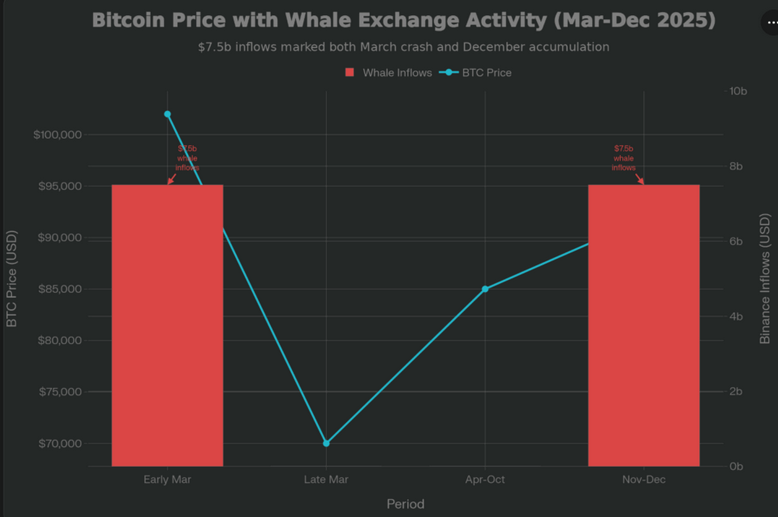
The cryptocurrency market is witnessing one of the most profound structural transformations in its history. Early holders—often referred to as “genesis whales”—who accumulated Bitcoin and Ethereum during their formative years are now accelerating the movement and distribution of their assets at an unprecedented scale.
These are not ordinary investors. Many of these wallets date back to the earliest blocks of Bitcoin and Ethereum, having survived multiple market cycles, regulatory crackdowns, and existential crises. Their long silence gave them a mythical status within the ecosystem.
Now, their coordinated movement suggests something far more significant than profit-taking. It indicates a systemic transition—one that reshapes the ownership structure of the entire market.
Historically, crypto wealth has been heavily concentrated. A relatively small number of early participants controlled a disproportionate share of supply. This concentration introduced structural fragility, as large sell-offs could destabilize markets.
However, what we are now observing is a redistribution event. While the influx of supply may exert temporary downward pressure on prices, it simultaneously democratizes access. Coins once locked in dormant wallets are now entering circulation, increasing liquidity and participation.
This is not merely a sell-off—it is a generational transfer of financial power.
Bitcoin Whale Distribution Over Time
2. Market Metabolism: From Concentration to Circulation
The concept of “market metabolism” is essential to understanding this transition. Just as biological systems require renewal and circulation to remain healthy, financial ecosystems must periodically redistribute capital to maintain resilience.
The release of dormant supply from early whales acts as a catalyst for this renewal. It allows new participants—retail investors, institutions, and even sovereign entities—to acquire assets at scale.
This process reduces systemic risk. Instead of relying on a few large holders, the network becomes supported by a broader base of stakeholders.
Moreover, this redistribution aligns with the maturation of the crypto market. Early speculative phases are giving way to more structured participation, including derivatives markets, ETFs, and institutional custody solutions.
The result is a more stable and liquid ecosystem—one capable of supporting global financial infrastructure.
3. Institutional Awakening: The Signal from Goldman Sachs
A defining feature of this new phase is the growing involvement of traditional finance.
When Goldman Sachs publicly signals that the Bitcoin market may have already bottomed, it represents more than just an opinion—it is a strategic declaration.
For years, large financial institutions approached crypto with skepticism. Concerns over volatility, regulation, and legitimacy kept them at a distance.
That stance is now changing.
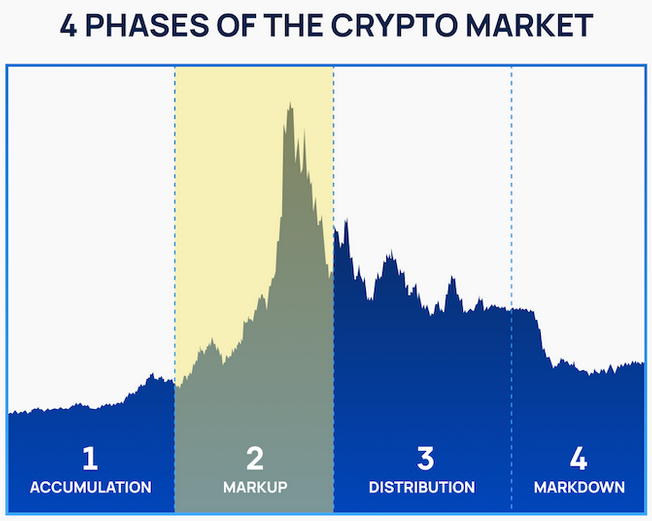
Goldman Sachs’ analysis, based on macroeconomic indicators and on-chain data, suggests that the current market conditions resemble previous accumulation phases preceding major bull cycles.
This is critical. Institutional capital does not move impulsively. It accumulates quietly during periods of fear and uncertainty.
While retail investors often react emotionally to price declines, professional capital views these moments as opportunities.
Institutional vs Retail Accumulation Cycles
4. Bitcoin as Digital Gold in a Fragmented World
In an era defined by inflation, geopolitical instability, and monetary experimentation, Bitcoin’s role as “digital gold” is becoming increasingly clear.
Unlike traditional assets, Bitcoin offers:
- Fixed supply
- Transparent issuance
- Decentralized governance
These properties make it uniquely suited as a hedge against systemic risk.
Institutional adoption reinforces this narrative. As Bitcoin becomes integrated into portfolios alongside equities, bonds, and commodities, its legitimacy as an asset class solidifies.
This transition marks a turning point. Crypto is no longer a niche market driven by enthusiasts—it is becoming a core component of global finance.
5. Miners Transform: From Crypto to AI Empires
Perhaps the most unexpected development is the transformation of crypto miners.
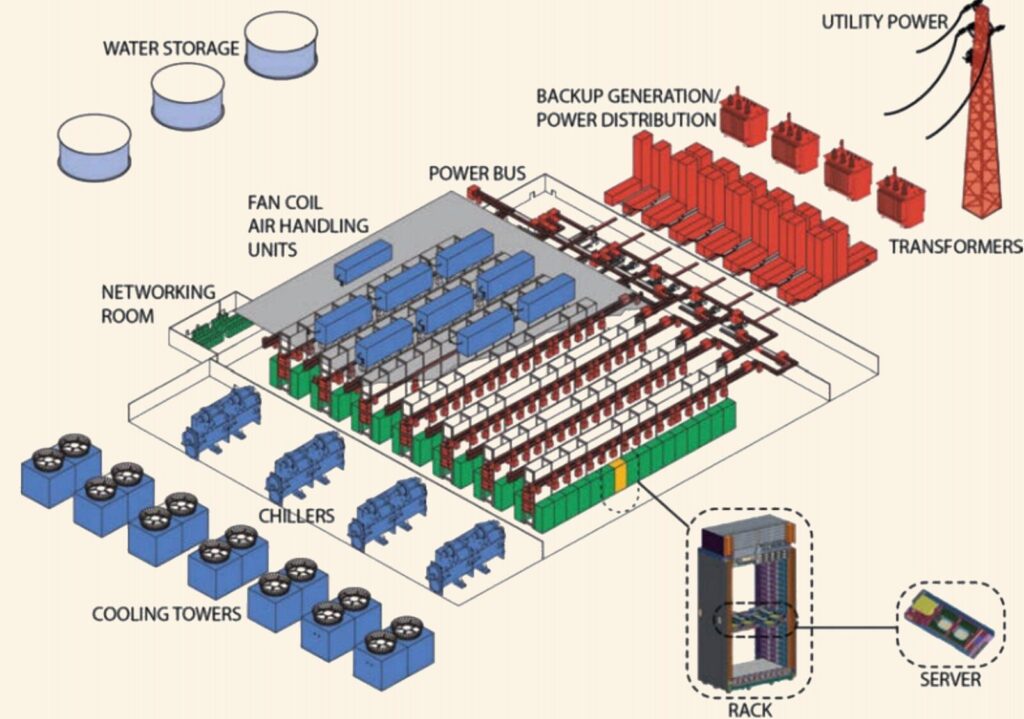
Companies that once focused solely on securing blockchain networks are now pivoting toward artificial intelligence. Their competitive advantage lies in infrastructure: massive data centers, access to cheap electricity, and expertise in managing large-scale computational workloads.
This makes them ideal candidates for AI computing.
To fund this transition, many miners are selling portions of their Bitcoin reserves. While this creates short-term selling pressure, it represents a strategic reallocation of capital.
The goal is clear: invest in higher-value industries.
AI, particularly large-scale model training and inference, demands enormous computational resources. By entering this space, former mining companies position themselves at the center of the next technological revolution.
Mining Infrastructure to AI Transition
6. The New Oil: Computational Power
The convergence of crypto and AI reveals a deeper truth: computation is the new oil.
Both industries rely on the same fundamental resource—processing power.
In crypto, computation secures networks and validates transactions.
In AI, computation generates intelligence.
This shared foundation creates powerful synergies.
Mining companies already possess the infrastructure required for AI workloads. By repurposing their assets, they unlock new revenue streams while contributing to the broader technological ecosystem.
This shift also enhances the resilience of the crypto network. As miners diversify their income sources, they become less dependent on block rewards and transaction fees.
7. A Market Reborn: From Speculation to Infrastructure
Taken together, these trends point to a single conclusion: the cryptocurrency market is undergoing a rebirth.
- Wealth is being redistributed from early adopters to a broader base
- Institutions are entering with long-term strategies
- Infrastructure is evolving to support new industries like AI
This is the hallmark of a maturing system.
Speculation will always play a role, but it is no longer the dominant force. Instead, crypto is becoming an essential layer of global infrastructure—supporting payments, settlements, and decentralized applications.
Conclusion: Navigating the Great Transition
We are living through a historic transition.
The exit of early whales is not a sign of decline—it is a necessary step toward a more inclusive and resilient market.
Institutional accumulation signals confidence in the long-term future of crypto. Meanwhile, the transformation of miners into AI infrastructure providers highlights the expanding role of blockchain-related industries.
For investors and builders alike, the message is clear:
The question is no longer whether crypto will survive.
The question is how to position within its next phase of growth.
Those who focus on data rather than emotion—and who understand the structural shifts underway—will be best positioned to navigate this new landscape.
