

Main Points :
- Non-financial Web3 use cases such as decentralized social media, digital identity, gaming, and media have struggled to achieve mass adoption.
- Leading venture capitalists are divided on whether these failures stem from poor product–market fit or from structural and regulatory headwinds.
- Financial use cases still dominate blockchain revenue, but this may reflect infrastructure maturity rather than long-term potential.
- Venture capital time horizons and portfolio strategies strongly influence how “success” and “failure” are defined.
- The next phase of Web3 may lie in quietly embedded, non-speculative, non-financial applications rather than overtly “crypto-native” products.
1. The Spark That Ignited the Debate
In early 2026, a public debate erupted among prominent crypto venture capitalists regarding one of the most fundamental questions in the Web3 space: why have non-financial blockchain applications failed to gain traction?
The discussion began when Chris Dixon, managing partner at Andreessen Horowitz (a16z Crypto), published an essay arguing that non-financial Web3 applications did not fail due to lack of demand, but because they were systematically undermined by years of fraud, regulatory hostility, and extractive behavior.
According to Dixon, use cases such as decentralized social media, digital identity, decentralized media distribution, digital rights platforms, and Web3 gaming were never given a fair chance to mature.
This framing immediately drew sharp criticism.
2. “No One Wanted Them”: The Product–Market Fit Argument
Responding to Dixon, Haseeb Qureshi, managing partner at Dragonfly Capital, took a much harsher stance.
Qureshi argued that the truth was simpler and more uncomfortable:
“We should just admit it. The products weren’t very good. They didn’t survive the market test. They didn’t fail because of regulators, Sam Bankman-Fried, or Terra. They failed because nobody wanted them.”
In this view, decentralized social platforms did not outperform Web2 incumbents. Blockchain-based games were often less fun than traditional games. Decentralized identity systems added friction rather than reducing it. Users voted with their attention — and left.
For Qureshi, blaming regulation or external shocks amounted to post-hoc rationalization rather than honest assessment.
3. The Time Horizon Problem in Venture Capital
Dixon countered by emphasizing that a16z Crypto funds operate on 10-year or longer horizons. Building entirely new digital primitives — identity, ownership, coordination — cannot be evaluated using the same metrics as SaaS or fintech startups.
However, this argument was challenged by Nic Carter, founding partner of Castle Island Ventures.
Carter pointed out that most venture funds do not have the luxury of waiting indefinitely:
“VCs don’t get to wait until they’re right. You have to make correct judgments about markets within a 2–3 year investment window.”
This highlights a structural tension: even if non-financial Web3 applications eventually succeed, they may fail as venture investments simply because they mature too slowly.
4. What the Revenue Data Actually Shows
One empirical anchor in this debate is on-chain revenue data.
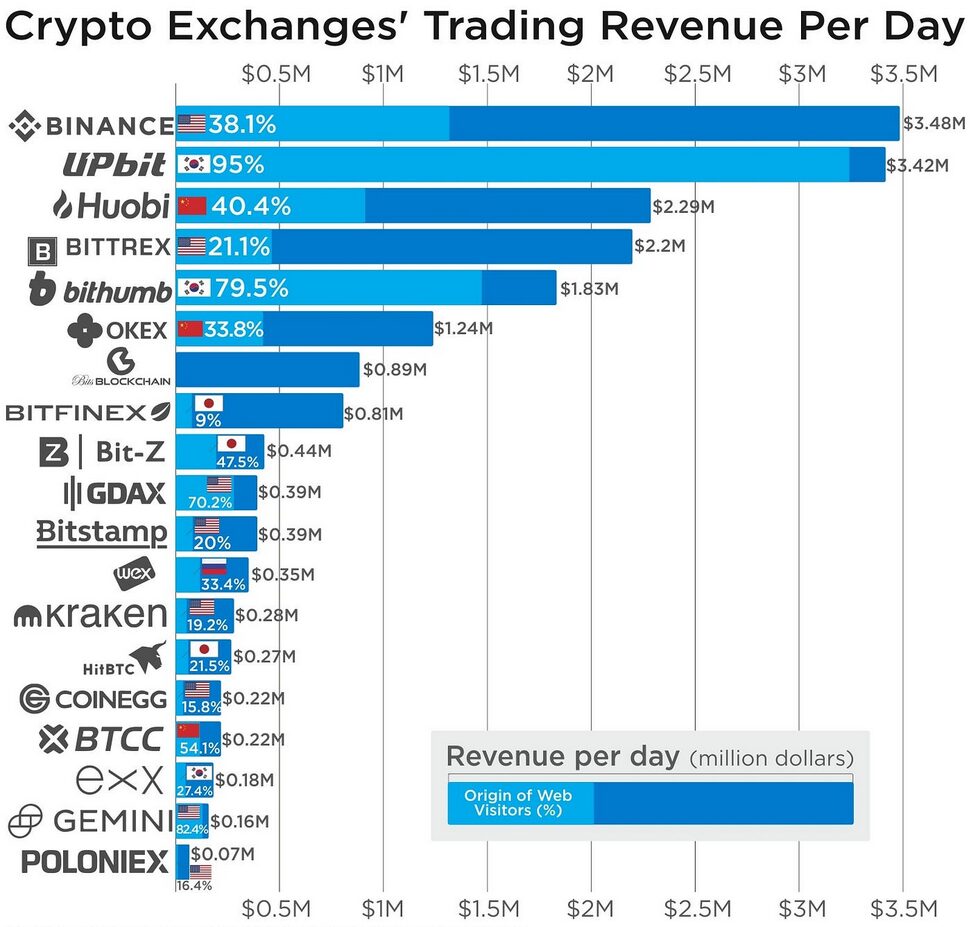
Insert here: Chart comparing fee and revenue generation of top crypto applications (financial vs non-financial).
Data from DeFiLlama consistently shows that the top revenue-generating blockchain applications are overwhelmingly financial: exchanges, lending protocols, derivatives platforms, and stablecoins.
Over the past 24 hours alone, more than $60 million in fees were paid to crypto exchanges and DeFi protocols — nearly all tied to financial activity.
Critics argue this proves the market verdict is already in. Supporters counter that infrastructure layers always monetize first, just as TCP/IP monetized before social media or streaming.
5. The 2025–2026 Shift: Capital Floods Into RWAs
The debate is also shaped by recent capital allocation trends.
In 2025, venture investment into crypto projects surged again, but with a noticeable shift: tokenized real-world assets (RWAs) became the dominant narrative.
RWAs represent traditional assets — bonds, treasuries, real estate, commodities — as on-chain tokens. This category aligns comfortably with existing financial demand, regulatory frameworks, and institutional risk models.
For many VCs, RWAs offered something non-financial Web3 never did: clear buyers, predictable cash flows, and familiar legal structures.
6. Two Very Different Portfolio Philosophies
Dragonfly Capital: Financial Primitives First
Dragonfly’s portfolio reflects a thesis centered on value transfer, risk transfer, and settlement efficiency.
Notable investments include:
- Agora – stablecoin and payments infrastructure
- Rain – card and payment rails
- Ethena – yield-bearing synthetic USD
- Monad – high-performance base-layer network
In this worldview, blockchains are financial machines first, and everything else is optional.
a16z Crypto: Betting on Cultural Layers
By contrast, a16z Crypto deliberately invests beyond pure finance.
Alongside Coinbase and Uniswap, its portfolio includes:
- Friends With Benefits – tokenized communities
- World – biometric-based identity
- Yield Guild Games – play-to-earn gaming
Here, the thesis is that culture, identity, and coordination will eventually matter as much as money — just not yet.
7. Why Non-Financial Web3 May Have Been Premature
Rather than framing the issue as success vs failure, a more nuanced explanation may be premature abstraction.
Non-financial Web3 demanded that users:
- Manage private keys
- Understand gas fees
- Accept irreversible transactions
- Trust immature UX
All without delivering clear, immediate benefits over Web2 alternatives.
In hindsight, this may have inverted the adoption curve: the hardest problems were presented to mainstream users first.
8. The Quiet Future of Non-Financial Blockchain Use
Ironically, the future of non-financial Web3 may look nothing like early crypto visions.
Instead of “decentralized Twitter” or “NFT-based games,” we may see:
- Invisible blockchain-based identity layers embedded in apps
- Rights management systems used by creators without crypto branding
- Games that use blockchain only for settlement, not gameplay
- Enterprise coordination tools where tokens are hidden entirely
In this future, blockchain disappears from the interface but remains in the stack.
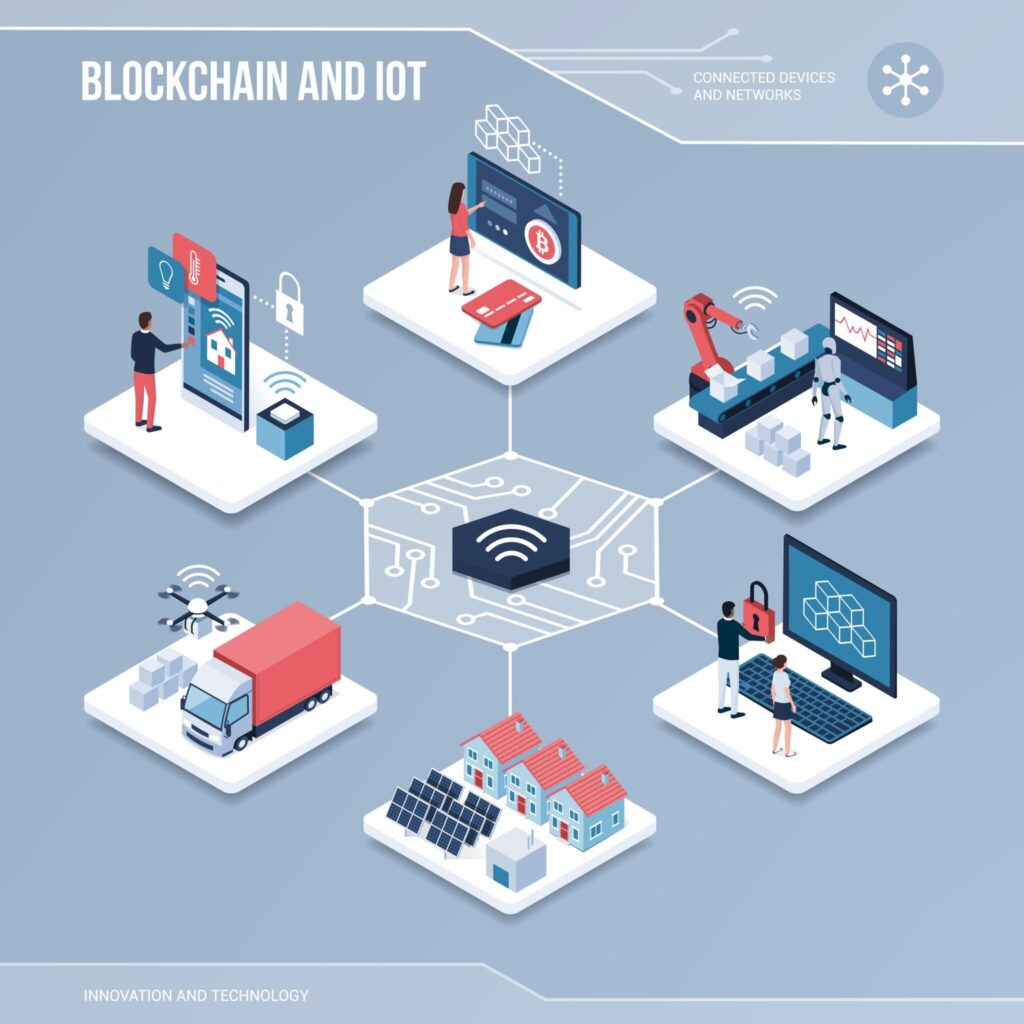
Diagram showing blockchain as an invisible infrastructure layer beneath consumer applications.
9. Final Conclusion: Failure, or Just Bad Timing?
The VC debate over non-financial Web3 reflects deeper truths about technology adoption, capital incentives, and narrative cycles.
Non-financial Web3 likely failed as a venture category, but not necessarily as a technological direction.
For builders and investors seeking the next opportunity, the lesson is not to abandon non-financial use cases — but to stop selling them as revolutions.
The next wave will not announce itself as “Web3.”
It will simply work.
