

Key Takeaways :
- Japan’s decision to bring crypto assets fully under the Financial Instruments and Exchange Act (FIEA) marks the end of speculative chaos and the beginning of a state-backed financial order.
- Redefined self-regulation through JVCEA is transforming strict compliance into a global trust brand.
- More than $7 trillion (approx. ¥1,000 trillion) in Japanese household financial assets could be structurally mobilized into regulated digital asset markets.
- Regulatory rigor is not a constraint, but a magnet for institutional capital and long-term innovation.
- Japan is positioning itself to re-emerge as a frontline player in the global financial system.
1. The End of Speculative Frenzy and the Birth of a State-Governed Financial Order

As of 2026, the status of crypto assets in Japan is undergoing a fundamental transformation. What was once dismissed as a shadowy, speculative playground is being decisively reclassified as a legitimate financial product under strict national supervision.
By placing crypto assets within the framework of the Financial Instruments and Exchange Act, Japan is doing more than tightening rules—it is granting digital assets full legal citizenship within its financial system. This shift draws a clear line between the chaotic pre-2026 era and a new age defined by institutional discipline.
The determination expressed by the leadership of the Japan Virtual and Crypto assets Exchange Association (JVCEA) reflects a collective resolve across Japan’s financial ecosystem. Past failures are not being ignored; they are being systemically corrected to ensure that opaque operators never again dominate the market.
This reform functions as a purification process, integrating next-generation blockchain technology with Japan’s existing financial infrastructure. While some may nostalgically recall the looser environment of earlier years, such sentimentality belongs to those unwilling to accept market maturity.
The removal of non-transparent operators and the elevation of investor protection to world-class standards are not optional steps—they are prerequisites for Japan’s return as a global financial center.
For the broader public, long skeptical of crypto assets, state endorsement represents a paradigm shift. The future in which banks and securities firms routinely handle digital assets is no longer hypothetical—it is now institutionally guaranteed.
At first glance, stronger regulation may appear to restrict freedom. In reality, it constructs the robust foundation necessary for large-scale capital inflows. Humanity’s methods of preserving and transferring wealth are being embedded directly into national legal systems.
With ruleless competition now concluded, only projects with genuine technological and economic value will survive. Those who understand this tectonic shift and adapt accordingly will be the ones positioned to reap the greatest rewards.
2. Redefining Self-Regulation: Trust as Japan’s Ultimate Brand Strategy
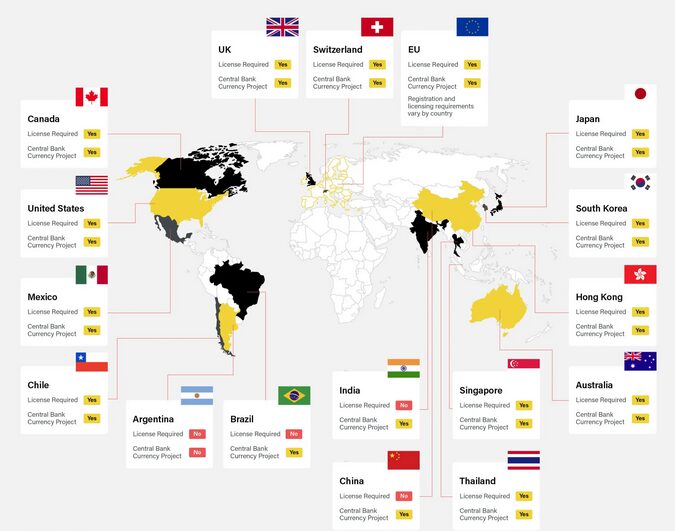
The migration of crypto assets under the Financial Instruments and Exchange Act is a reform without sacred cows. JVCEA’s leadership has framed this transition as a point of no return—a declaration that Japan’s crypto market will be rebuilt around trust.
Redefining self-regulation means abandoning complacency and continuously evolving in response to emerging technologies and risks. For Japan to reclaim leadership in digital assets, it must embrace harsh legal rigor as a strategic advantage.
Critics often argue that Japanese regulation is excessively strict. Yet this very strictness is becoming Japan’s strongest brand. In a global market plagued by uncertainty and regulatory arbitrage, predictability and transparency are scarce commodities.
The era of dysfunctional self-regulatory bodies is over. Going forward, public and private sectors will jointly enforce uncompromising standards against misconduct. Japan’s regulatory model, once refined, may well become a global export.
The long-criticized lag between legal frameworks and technological innovation is closing. Law is no longer chasing technology—it is guiding its social implementation.
For investors navigating an opaque global market, the standards set by JVCEA function as a lighthouse. Trust cannot be built overnight, but 2026 represents Japan’s irreversible first step toward restoring it.
This reform will inevitably eliminate operators who prioritized their own profits over customer welfare. Their exit is not collateral damage—it is the clearest sign of market normalization.
Japan is moving beyond a phase of mere price speculation into an era where trust itself becomes a form of capital. Ethical compliance is no longer opposed to profitability; it is becoming the most efficient path to sustainable returns.
3. Awakening $7 Trillion in Household Assets: Japan’s Return to the Global Financial Frontline
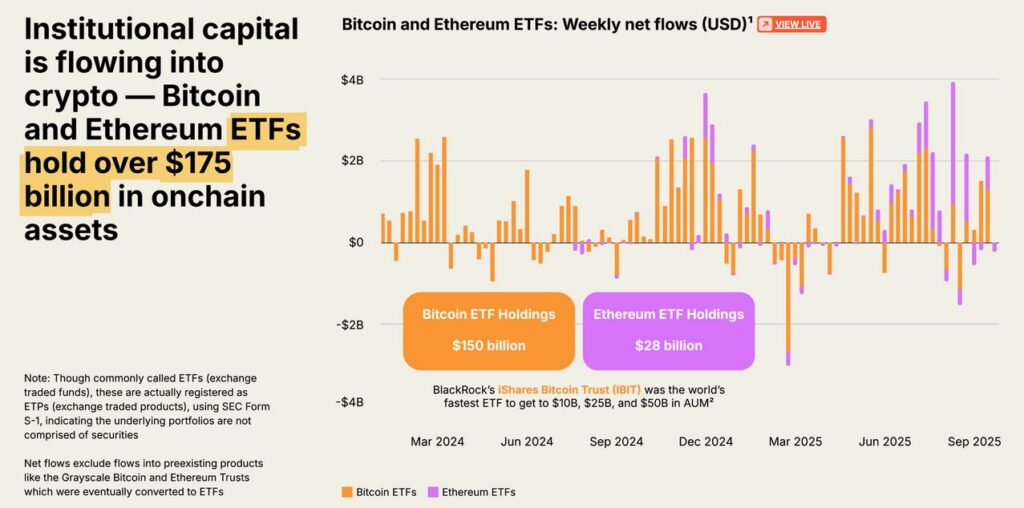
A strengthened legal framework creates the long-missing levee that allows Japan’s vast pools of capital to safely enter the crypto market.
Japan’s household financial assets exceed $7 trillion, much of which has remained dormant in cash and low-yield instruments. Once these assets begin flowing into digital markets through the secure vessel of the Financial Instruments and Exchange Act, the global impact will be profound.
What once felt like a storm in a teacup will be overshadowed by a massive capital current reshaping both financial markets and the real economy.
A regulated crypto market is not only a safe zone for retail investors—it is the launchpad for Japanese innovation on a global scale. Rather than lamenting stricter rules, investors must recognize that these rules dramatically expand the market’s total addressable size.
The regulatory upheaval of 2026 marks Japan’s first decisive step toward reclaiming a leading role in the global economy through digital assets.
In a future where institutional investors routinely allocate to crypto assets, Japan’s economic identity itself will be redefined. For those who remember the “Japan as Number One” era, this convergence of law and technology may represent the last, best hope to overcome decades of stagnation.
As government policy promotes Japan as an asset management nation, crypto assets become the final missing piece. In global competition, Japan’s regulatory rigor will function not as a shackle, but as a powerful magnet for capital.
We are witnessing not the end of a speculative boom, but the dawn of a new financial civilization—one built for permanence.
The age of uncertainty is over. A path illuminated by law now stretches forward, and the choice of where to place one’s assets has never been clearer.
Conclusion: A Disciplined Gateway to the Future
Japan’s embrace of strict crypto regulation is not a retreat from innovation—it is its strategic acceleration. By embedding digital assets within the nation’s most robust legal frameworks, Japan is transforming compliance into competitive advantage.
This is not a story of speculative revival, but of structural rebirth. Those who respect discipline and possess foresight will find that the heavy doors to this new world open only for them.
