
Main Points :
- The U.S. Commodity Futures Trading Commission (CFTC) has officially withdrawn its 2024 proposal to ban political event contracts on decentralized prediction markets.
- The agency also rescinded a 2025 staff advisory that warned against sports-related event contracts, citing regulatory confusion.
- This shift signals a more innovation-friendly regulatory stance toward blockchain-based prediction markets as legitimate financial instruments.
- Political and economic prediction markets may gain renewed momentum as tools for information discovery, hedging, and alternative yield generation.
- Sports-related markets remain controversial, with state-level regulators and financial institutions drawing a sharp line between investment and gambling.
- The regulatory rebalancing creates new opportunities—and new compliance challenges—for crypto builders, investors, and institutional participants.
1. Introduction: A Quiet but Pivotal Regulatory Reversal
On February 4, 2026, the U.S. Commodity Futures Trading Commission (Commodity Futures Trading Commission, CFTC) made a decision that may fundamentally reshape the future of blockchain-based prediction markets. The agency formally withdrew its 2024 proposal that sought to prohibit political event contracts on decentralized prediction platforms. At the same time, it rescinded a 2025 staff advisory that had cautioned regulated entities against offering sports-related event contracts.
While the announcement did not dominate mainstream headlines, its implications are far-reaching. Prediction markets sit at the intersection of finance, information economics, and blockchain technology. They challenge traditional definitions of derivatives, gambling, and financial infrastructure. For crypto-native builders and investors searching for the next wave of sustainable yield and real-world utility, this regulatory shift deserves close attention.
This article analyzes the CFTC’s reversal, contextualizes it within broader U.S. and global regulatory trends, and explores what it means for practical blockchain use cases, new digital assets, and alternative revenue models.
2. What Are Decentralized Prediction Markets?
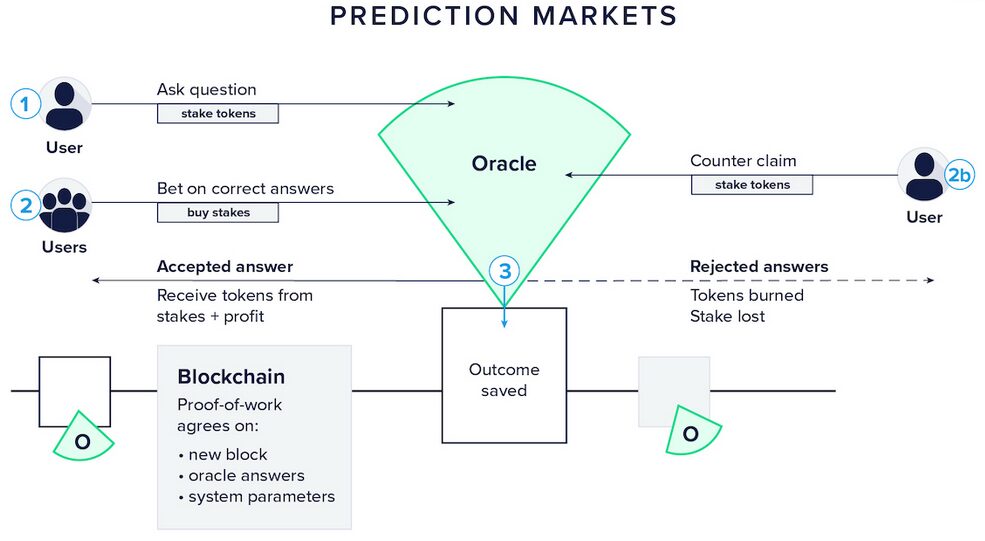
Decentralized prediction markets are blockchain-based platforms that allow users to take positions on the outcome of future events. These events can range from political elections and macroeconomic indicators to corporate actions and sports results. Participants typically stake cryptocurrency, and smart contracts automatically settle payouts based on verified outcomes.
Well-known examples include Polymarket and Kalshi, both of which have gained traction for offering markets tied to elections, inflation data, and geopolitical events.
Unlike traditional betting platforms, prediction markets are often framed as:
- Information aggregation tools
- Risk-hedging instruments
- Alternative derivatives markets
- Decentralized financial primitives
From an economic perspective, prediction markets have long been studied for their ability to produce accurate probability estimates by aggregating diverse information sources.
[“Structure of a Decentralized Prediction Market”]
3. The 2024 Proposal: Politics as a Regulatory Red Line
The CFTC’s now-withdrawn 2024 proposal emerged under the Biden administration in the run-up to the U.S. presidential election. The proposal aimed to categorically prohibit event contracts tied to political outcomes and other “sensitive” social topics.
The rationale was twofold:
- Political contracts might undermine democratic processes or public trust.
- Prediction markets resembled gambling more than legitimate financial hedging.
Critics argued that the proposal was overly broad and politically motivated. They pointed out that political risk is a real and material factor for investors, corporations, and governments. Currency volatility, trade policy shifts, sanctions, and fiscal policy outcomes are all deeply political—and yet widely hedged through traditional derivatives markets.
4. Why the CFTC Changed Course
CFTC Chair Michael Selig cited the need to support “lawful innovation” in derivatives markets. In his words, the 2024 proposal reflected “arbitrary regulation by a previous administration,” particularly given its timing ahead of a national election.
The agency emphasized that future rulemaking would be grounded in:
- A consistent interpretation of the Commodity Exchange Act
- Congressional intent
- The promotion of responsible innovation in derivatives markets
By withdrawing the proposal rather than amending it, the CFTC effectively reset the regulatory conversation.
This move also aligns with a broader trend of inter-agency coordination, including closer cooperation between the CFTC and the Securities and Exchange Commission on digital asset oversight.
5. Sports Contracts: Still a Flashpoint
While political and economic markets received a reprieve, sports-related event contracts remain contentious.
The CFTC withdrew its 2025 staff advisory warning registered entities about the legal risks of sports contracts. The advisory had highlighted overlapping state and federal gambling laws, which created uncertainty for exchanges, brokers, and clearing organizations.
However, withdrawal does not equal endorsement.
Several state regulators continue aggressive enforcement. Nevada’s gaming authority recently sued Coinbase, alleging that its sports-related event contracts constituted unlicensed gambling under state law.
A Nevada district court rejected an immediate shutdown of the service without a hearing, setting the stage for further litigation—possibly at the federal level.
6. Institutional Perspective: Investment vs. Gambling
Traditional financial institutions are drawing clear boundaries. Rick Wurster, CEO of Charles Schwab, publicly expressed interest in economic and financial prediction markets but rejected sports markets as incompatible with the firm’s mission.
His reasoning was blunt: people generally do not build long-term wealth through gambling.
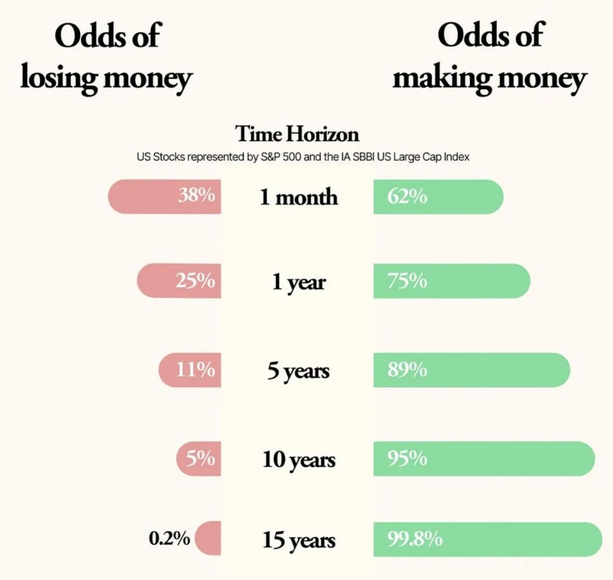
[“Regulatory Spectrum: Investment vs Gambling”]
This distinction matters. It suggests that institutional capital may flow into:
- Inflation-linked prediction markets
- Interest rate and recession probability markets
- Election outcome markets tied to policy risk
…but avoid sports entirely.
7. Why Prediction Markets Matter for Crypto Builders
For crypto-native entrepreneurs, prediction markets represent more than speculation. They offer several practical blockchain use cases:
- On-chain information pricing: Markets convert qualitative uncertainty into quantitative signals.
- Composable DeFi primitives: Prediction outcomes can feed into lending, insurance, and DAO governance.
- New yield models: Liquidity providers earn fees independent of traditional trading volume.
- Non-custodial design: Smart contracts reduce counterparty risk.
These characteristics align with a broader shift toward “productive DeFi,” where value is derived from information, coordination, and risk transfer rather than pure token inflation.
8. Market Opportunity and Asset Design
The regulatory softening opens the door for new token and protocol designs:
- Governance tokens tied to market curation and dispute resolution
- Synthetic assets linked to macroeconomic indicators
- Cross-chain settlement layers for regulated and unregulated markets
- Compliance-aware smart contracts that geofence or restrict certain markets by jurisdiction
For investors seeking the “next” crypto narrative beyond Layer 2s and AI tokens, prediction markets offer exposure to real-world demand driven by uncertainty itself.
9. Regulatory Fragmentation: The New Reality
Despite the CFTC’s pivot, the U.S. regulatory landscape remains fragmented:
- Federal agencies signal openness to innovation
- States enforce gambling laws aggressively
- Courts increasingly act as arbiters of crypto policy
This fragmentation favors sophisticated builders who can design modular compliance layers while maintaining decentralized core logic.
10. Broader Trend: Information as an Asset Class
Prediction markets reflect a deeper macro trend: information itself is becoming a tradable asset class. In an environment of persistent geopolitical risk, inflation volatility, and policy uncertainty, markets that price probabilities offer tangible economic value.
Blockchain technology enables these markets to operate globally, transparently, and with minimal intermediaries—precisely the qualities regulators are now cautiously acknowledging.
11. Conclusion: A Door Reopens, Carefully
The CFTC’s withdrawal of its political prediction market ban is not a green light for unchecked experimentation. Rather, it is a recalibration—a recognition that decentralized markets can serve legitimate economic functions when designed responsibly.
For crypto investors, builders, and institutions seeking new revenue streams and practical blockchain applications, prediction markets may represent one of the most underappreciated opportunities of the current cycle.
The winter may not be over, but the regulatory thaw has begun.
