
Main Points :
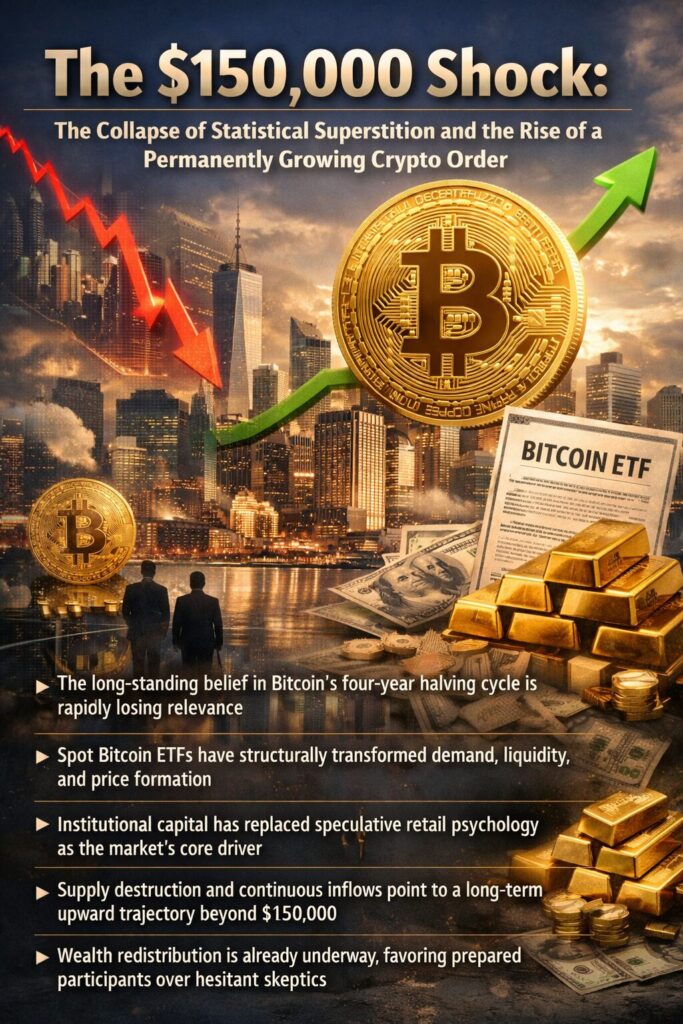
- The long-standing belief in Bitcoin’s four-year halving cycle is rapidly losing relevance
- Spot Bitcoin ETFs have structurally transformed demand, liquidity, and price formation
- Institutional capital has replaced speculative retail psychology as the market’s core driver
- Supply destruction and continuous inflows point to a long-term upward trajectory beyond $150,000
- Wealth redistribution is already underway, favoring prepared participants over hesitant skeptics
1. Breaking Free from the Four-Year Cycle: The End of a Market Superstition
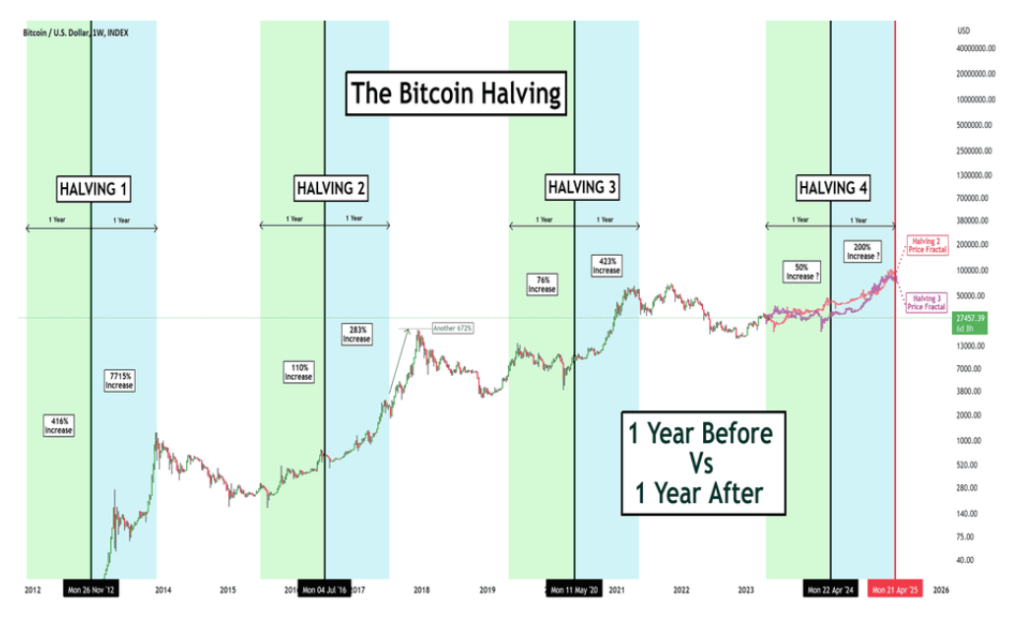
For more than a decade, the cryptocurrency market—Bitcoin in particular—has been interpreted through the lens of a four-year cycle centered on halving events. This framework, born from early historical observation, became a near-religious doctrine among investors. Prices rise after halvings, peak, crash, and enter a “crypto winter.” Repeat every four years.
However, what once functioned as a useful heuristic has now devolved into a statistical superstition—one that increasingly blinds investors to the market’s present reality.
We are entering a phase where historical repetition no longer governs price behavior. The structural forces shaping today’s market are fundamentally different from those of the past. Persisting in outdated models now carries a significant opportunity cost.
This paradigm shift is clearly reflected in the recent decision by major asset managers to dramatically revise their long-term price outlooks. Forecasts targeting $150,000 per Bitcoin in 2026 are not speculative fantasies but logical extensions of a transformed market structure.
In the early years, Bitcoin’s price was driven primarily by retail sentiment, reflexive speculation, and narrative-driven hype cycles. Volatility was extreme because capital was fragile and short-term oriented. Today, that foundation has been replaced.
The market is now dominated by institutional capital, algorithmic execution, and balance-sheet-level allocation decisions. Pension funds, endowments, sovereign vehicles, and large asset managers operate on multi-year horizons. Their presence dampens cyclical boom-and-bust dynamics and replaces them with structural accumulation.
Believing that Bitcoin must inevitably repeat its past crashes simply because it once did so is akin to assuming that today’s equity markets must behave like those of the 19th century. Markets evolve. Participants evolve. Infrastructure evolves.
Accepting the end of the four-year cycle frees investors from the psychological trap of endlessly waiting for a “perfect dip” that may never arrive again. Instead, it opens the door to understanding Bitcoin as a long-duration asset embedded in global capital markets, not a seasonal speculation.
Those who continue to cling to historical patterns risk watching the market move permanently beyond their reach.
2. Spot ETFs as a Structural Heartbeat: Infinite Liquidity Meets Supply Destruction
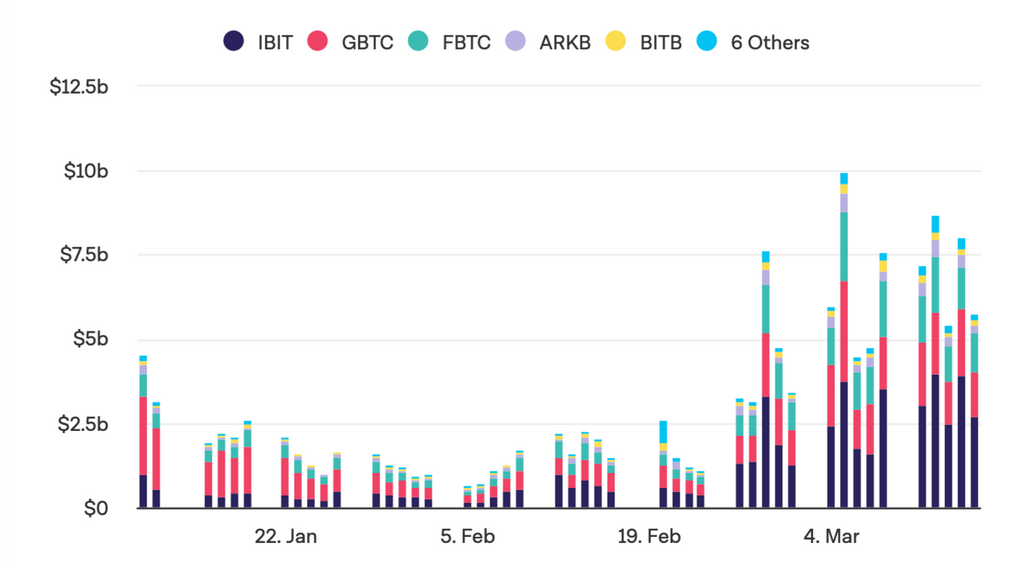
The introduction of spot Bitcoin ETFs marks the single most important structural change in the asset’s history.
These ETFs function as a massive financial heart, continuously pumping institutional liquidity into the Bitcoin ecosystem. Unlike previous inflows driven by speculative enthusiasm, ETF demand is systematic, persistent, and policy-driven.
Before ETFs, access to Bitcoin required technical literacy, custody management, and regulatory ambiguity. ETFs eliminated these frictions overnight. For institutions, Bitcoin became as easy to allocate as equities or bonds.
The result is a historic mismatch between inelastic supply and expanding demand pipelines.
Bitcoin’s supply is mathematically capped and issuance continues to decline due to halvings. ETFs, meanwhile, absorb coins daily, removing them from liquid circulation. This is not merely a demand increase—it is supply destruction.
Markets are no longer waiting for periodic events to trigger interest. Capital flows 24 hours a day, 365 days a year, through regulated channels, pension mandates, and asset-allocation models.
In this environment, the $150,000 price level is not a speculative ceiling but a logical waypoint.
Moreover, this shift alters risk perception. In a world where fiat currencies steadily lose purchasing power through inflation and monetary expansion, not holding Bitcoin increasingly represents a greater risk than holding it.
Traditional financial elites—once skeptical—are quietly redefining their portfolios. Bitcoin is no longer treated as a fringe asset but as strategic digital collateral, increasingly compared to monetary commodities rather than speculative tech plays.
As this reclassification continues, traditional assets are being re-priced relative to Bitcoin, not the other way around. This inversion signals a profound shift in global value measurement.
So long as ETF inflows persist—and there is no structural reason for them to stop—the idea that Bitcoin will return to old lows becomes a relic of a bygone era.
3. The New Wealth Redistribution: Leaving Crash-Waiters Behind
A striking feature of the current market is the psychological divide between participants.
On one side stand those waiting for a catastrophic crash, convinced that history must repeat itself. On the other are those who recognize that the market’s internal logic has changed.
As prices accelerate beyond familiar frameworks, hesitation transforms into anxiety. That anxiety, in turn, becomes forced demand, pushing prices even higher. Ironically, the skeptics themselves become fuel for the rally.
The winners of this new era are not those obsessively modeling past cycles, but those capable of observing real-time capital movement and adapting accordingly.
Noise—predictions of imminent collapse, sensational headlines, recycled fear narratives—remains abundant. But noise no longer moves the market. Capital does.
The end of cyclicality does not mean the absence of volatility. Rather, it implies a smoothing of extremes. Without leverage-driven speculative excess dominating flows, violent crashes become less probable, even as long-term appreciation accelerates.
This sets the stage for a true supercycle—not one driven by hype, but by infrastructure, regulation, and institutional adoption.
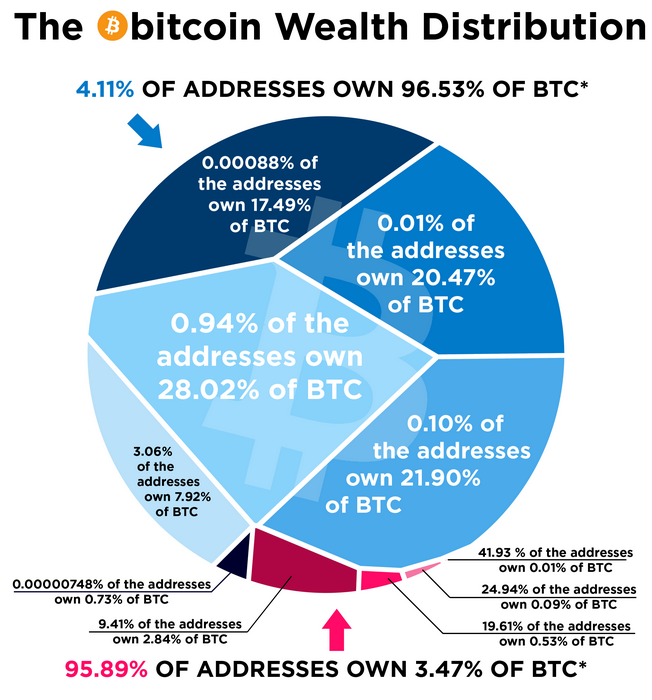
Wealth redistribution in such cycles is brutally impartial. Capital migrates from the unprepared to the prepared, from the hesitant to the decisive. Timing becomes less about catching bottoms and more about maintaining exposure.
Beyond $150,000 lies a valuation regime where old economic assumptions cease to function. Traditional models struggle to account for a non-sovereign, scarce, globally liquid asset embedded within the world’s financial plumbing.
In this historical moment, investors are not merely choosing positions—they are choosing which economic paradigm they believe will dominate the coming decades.
Hesitation itself has become a position. And increasingly, it is the losing one.
Conclusion: Choosing the Future in a Post-Cycle World
The collapse of the four-year cycle narrative marks more than a market transition—it marks a cognitive transition.
Bitcoin has crossed the threshold from speculative curiosity to structural financial asset. Spot ETFs, institutional adoption, and supply destruction have combined to rewrite its price dynamics.
The $150,000 level is not an end, but an inflection point—a visible marker of a deeper transformation underway.
Those who acknowledge this shift and position themselves accordingly stand to participate in one of the most significant wealth realignments in modern financial history. Those who remain anchored to outdated frameworks may find themselves permanently sidelined.
The future no longer waits for cycles. It compounds continuously.
The only remaining question is whether you choose to stand within that flow—or watch it pass by.
