

Main Points :
- Strategy has expanded its Bitcoin holdings to 714,000 BTC, reinforcing its position as the world’s largest corporate Bitcoin treasury.
- Despite an unrealized loss of $8.4 billion, the company achieved a 22.8% Bitcoin yield in 2025, meeting its stated targets.
- Massive capital raising—$25.3 billion in 2025 alone—has turned Strategy into one of the most aggressive capital allocators in crypto-linked equities.
- The introduction of fair value accounting dramatically increased reported losses, without altering the firm’s long-term Bitcoin strategy.
- Strategy’s preferred equity products, especially STRC, are emerging as a new model for Bitcoin-backed credit and yield generation.
1. Strategy’s Position as the World’s Largest Bitcoin Treasury
Comparison of Corporate Bitcoin Holdings
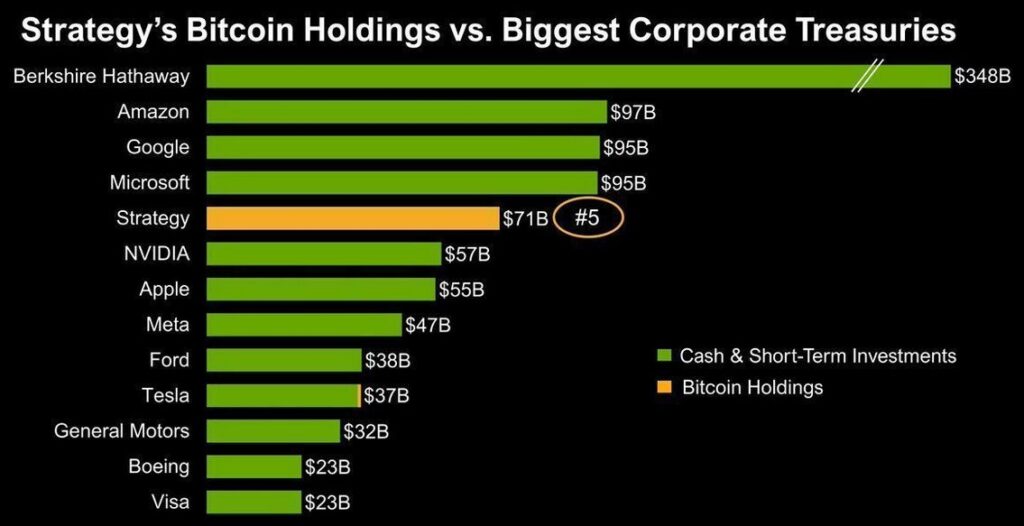
Strategy, widely recognized as the world’s largest Bitcoin treasury company, released its fourth-quarter and full-year financial results for the fiscal year ending December 31, 2025. As of February 1, 2026, the company held approximately 714,000 BTC, acquired at a total cost of $54.26 billion, with an average purchase price of $76,000 per Bitcoin.
This accumulation places Strategy in a category of its own. While several public companies have adopted Bitcoin as a treasury asset, none approach Strategy’s scale or commitment. The firm’s Bitcoin position now represents not only a balance-sheet allocation but a core corporate identity.
However, the decline in Bitcoin’s market price toward the end of 2025 resulted in an unrealized loss of $8.4 billion on these holdings. Importantly, this loss is accounting-based and does not reflect realized selling activity. Strategy continues to treat Bitcoin as a long-term reserve asset rather than a trading instrument.
From a macro perspective, this aggressive accumulation coincided with a period of tightening liquidity, higher global interest rates, and increased scrutiny of crypto-related balance sheets. Strategy’s willingness to expand holdings under these conditions underscores its conviction that Bitcoin remains superior to fiat-denominated reserves over multi-year horizons.
2. Bitcoin Yield and Capital Efficiency in 2025
Strategy’s Bitcoin Yield Performance (2023–2025)
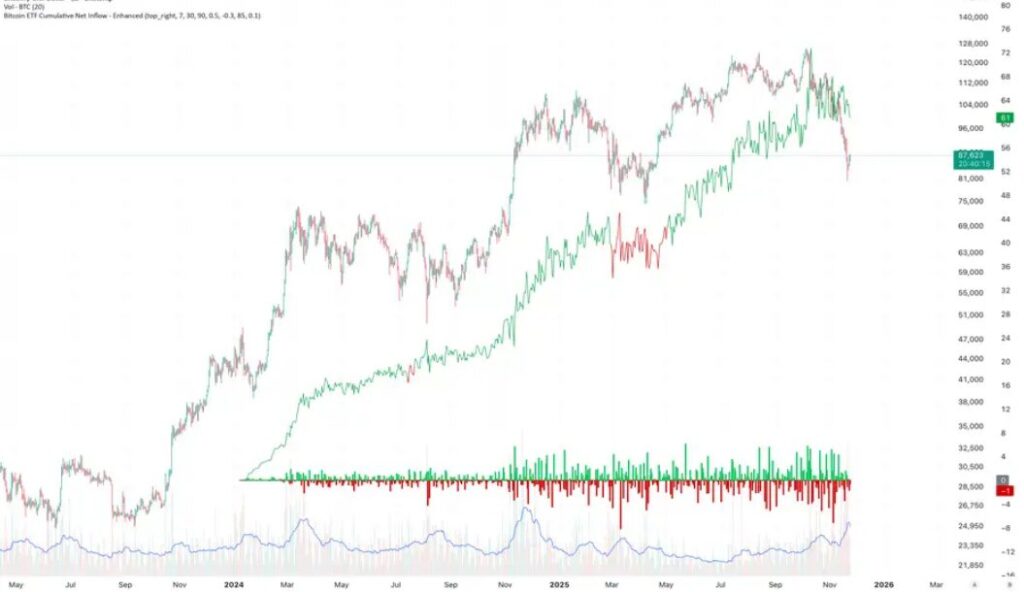
For the full year 2025, Strategy reported a Bitcoin yield of 22.8%, falling comfortably within its stated target range of 22.0% to 26.0%. This yield metric reflects the growth of Bitcoin held per diluted share, rather than price appreciation alone.
In practical terms, this means that even during a period of declining Bitcoin prices, Strategy increased the Bitcoin exposure of each shareholder through disciplined capital allocation. This approach reframes Bitcoin investment away from short-term price movements and toward long-term accumulation efficiency.
During 2025, the company raised $25.3 billion in capital, making it the largest equity issuer among U.S. public companies for the second consecutive year. Remarkably, this amount represented roughly 8% of all U.S. equity issuance during the period. Strategy also completed five preferred equity offerings, raising an additional $5.5 billion.
This scale of fundraising highlights a critical shift: public equity and hybrid instruments are increasingly being used as conduits for institutional Bitcoin exposure, especially for investors unable or unwilling to hold Bitcoin directly.
3. The Impact of Fair Value Accounting on Reported Losse
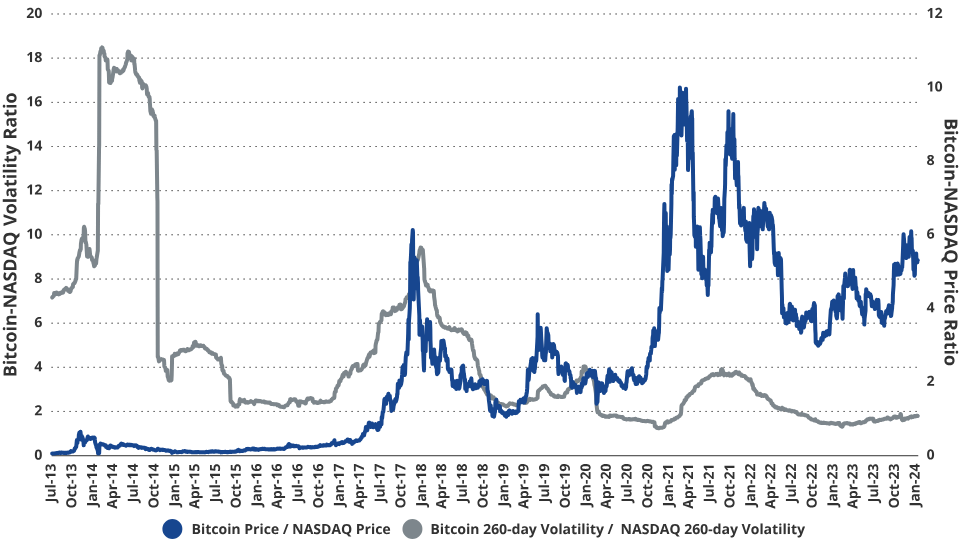
Impact of Fair Value Accounting on Strategy’s Earnings
One of the most striking figures in Strategy’s fourth-quarter report was an operating loss of $17.4 billion, a dramatic increase from the $1.0 billion loss reported in the same quarter of the previous year. The majority of this loss—approximately $17.4 billion—was attributable to unrealized Bitcoin losses.
Beginning January 1, 2025, Strategy adopted fair value accounting for its Bitcoin holdings. Under this framework, both upward and downward price movements are reflected directly in earnings, introducing significant volatility to reported results.
As a result, the company posted a net loss of $12.4 billion for the quarter, or $42.93 per diluted share, compared to a net loss of $670 million, or $3.03 per share, in the prior-year period.
From an investor’s standpoint, this accounting change is critical. It does not alter Strategy’s cash flow, liquidity, or long-term Bitcoin thesis. Instead, it amplifies short-term earnings volatility, which may obscure underlying operational performance for traditional equity analysts unfamiliar with digital asset accounting dynamics.
4. Software Business Performance: Stability Amid Volatility
While Bitcoin dominates Strategy’s narrative, the company’s legacy software business continues to generate stable revenue. In the fourth quarter, total software revenue reached $120 million, representing a 1.9% year-over-year increase.
More notably, subscription services revenue surged 62.1% year-over-year to $51.8 million, reflecting a continued transition toward recurring revenue models. Although this segment is now dwarfed by Bitcoin-related balance sheet movements, it provides a steady operational foundation and supports ongoing corporate expenses.
This dual structure—steady software revenues combined with aggressive Bitcoin accumulation—has effectively transformed Strategy into a hybrid entity: part enterprise software firm, part Bitcoin-focused financial vehicle.
5. Strengthening Liquidity Through USD Reserves
As of February 1, 2026, Strategy reported $2.25 billion in USD reserves. These funds provide approximately 2.5 years of coverage for preferred equity dividends and debt interest payments.
The reserves were primarily accumulated through proceeds from the company’s at-the-market (ATM) common stock issuance program. Management has indicated its intention to maintain USD reserves sufficient to cover two to three years of fixed financial obligations, while retaining flexibility to adjust based on market conditions.
This emphasis on liquidity addresses a key concern among critics: the risk of forced Bitcoin sales during market downturns. By holding substantial cash reserves, Strategy reduces the probability that it would need to liquidate Bitcoin to meet short-term obligations.
6. STRC and the Emergence of Bitcoin-Backed Credit
One of the most strategically significant developments in 2025 was the expansion of Strategy’s digital credit business. Its flagship preferred equity product, STRC, grew to a scale of $3.4 billion.
STRC features a variable dividend rate, currently set at 11.25%, designed to stabilize the instrument’s price near its $100 par value even during periods of Bitcoin price weakness. To date, cumulative dividends paid have reached $410 million, with an average annual yield of 9.6%.
This structure represents an emerging model for Bitcoin-backed credit markets. Instead of direct collateralized lending, Strategy uses equity-linked instruments to convert Bitcoin volatility into structured yield products suitable for income-oriented investors.
From a broader industry perspective, this approach may foreshadow how institutional Bitcoin finance evolves—bridging the gap between traditional fixed-income products and digital asset exposure.
7. Leadership Perspective and Strategic Outlook
CEO Phong Le emphasized that in January 2026 alone, Strategy acquired an additional 41,000 BTC, bringing total holdings to 714,000 BTC. He reaffirmed the company’s focus on expanding STRC and increasing Bitcoin per share for common stock investors throughout 2026.
Chairman Michael Saylor further highlighted the complementary roles of MSTR common stock and STRC preferred equity within the company’s capital structure. According to Saylor, the growing ecosystem centered on STRC strengthens Strategy’s position as a dominant issuer of Bitcoin-backed credit.
This vision aligns with broader market trends, as traditional financial institutions increasingly explore Bitcoin-based lending, structured products, and balance-sheet strategies.
8. Conclusion: What Strategy’s 2025 Results Signal for the Crypto Market
Strategy’s 2025 full-year results illustrate both the opportunities and challenges of integrating Bitcoin into corporate finance at scale. Massive unrealized losses coexist with record-breaking accumulation, while accounting volatility contrasts with long-term strategic clarity.
For investors seeking exposure to Bitcoin beyond spot holdings, Strategy represents a unique—and controversial—vehicle. Its approach demonstrates how Bitcoin can be transformed from a speculative asset into a foundation for capital markets, yield products, and corporate treasury strategy.
As regulatory frameworks mature and institutional adoption deepens, Strategy’s model may serve as a blueprint—or a cautionary tale—for the next generation of crypto-financial innovation.
