

Main Key Points :
- Strategy purchased 4,871 BTC (~$330 million) in April 2026
- Total holdings reached ~766,970 BTC (~$51.6 billion at avg. $75,644/BTC)
- Buying resumed after a 13-week pause linked to STRC preferred stock pricing
- Strategy remains one of the most influential institutional actors in Bitcoin markets
- Market sentiment improved as accumulation resumed despite ongoing unrealized losses
- Financing model (STRC preferred shares) reflects innovative, quasi-debt Bitcoin acquisition strategy
1. The Return of Institutional Accumulation: Strategy Buys Again
After a temporary pause that raised questions across the crypto industry, Strategy—the largest corporate holder of Bitcoin—has resumed its aggressive accumulation strategy. Chairman Michael Saylor announced that the company acquired 4,871 BTC at approximately $67,718 per coin, totaling roughly $330 million.
This move comes just one week after halting a remarkable 13-week consecutive buying streak, signaling that the pause was tactical rather than structural. As of April 2026, Strategy now holds approximately 766,970 BTC, making it not only the largest corporate holder but also one of the most influential players in the global crypto market.
This scale of accumulation places Strategy in a position comparable to sovereign-level influence over Bitcoin supply dynamics. Given that Bitcoin’s total supply is capped at 21 million, Strategy now controls roughly 3.6% of all Bitcoin that will ever exist—a staggering concentration for a single corporate entity.
2. Insert Figure 1 Here – Strategy Bitcoin Holdings Growth
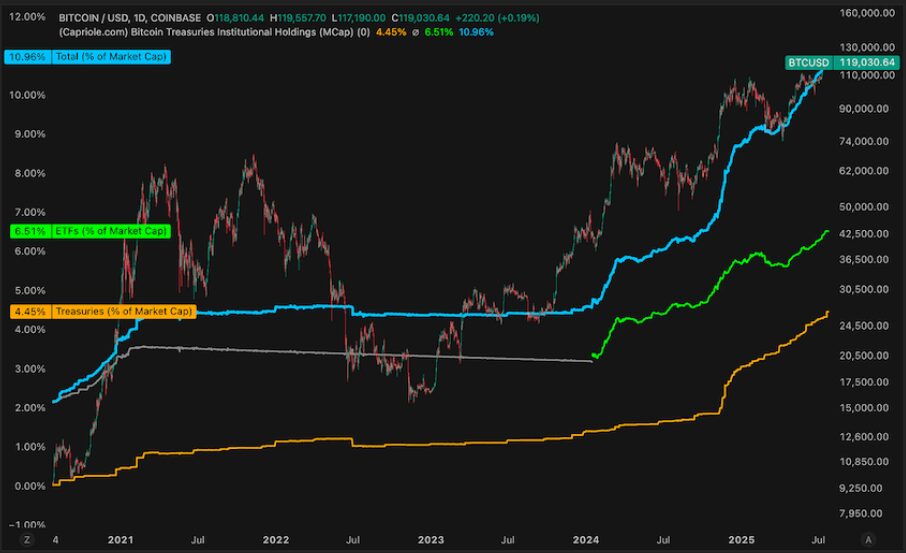
This visual should illustrate how Strategy’s holdings evolved from its initial purchases in 2020 through the aggressive accumulation cycles of 2024–2026. The exponential growth pattern highlights the firm’s conviction and long-term thesis: Bitcoin as a superior treasury reserve asset.
3. The Financial Engineering Behind the Strategy
What makes Strategy’s approach particularly unique is not just the scale of its Bitcoin purchases, but how it finances them.
At the center of this mechanism is the company’s STRC preferred stock, which Michael Saylor has described as a form of “perpetual bond”. Unlike traditional debt, this structure allows Strategy to raise capital without fixed maturity obligations while minimizing dilution to common shareholders.
However, this mechanism introduces a critical dependency:
- When STRC trades below its $100 par value, capital raising becomes inefficient
- When STRC trades above par (e.g., $100.02), Strategy can issue new shares and resume Bitcoin purchases
This exact dynamic explains the recent pause and restart. Once STRC recovered above par, the company regained its ability to fund acquisitions efficiently.
This model represents a hybrid between equity financing, debt instruments, and crypto treasury management, effectively creating a new asset acquisition framework that other corporations are now closely studying.
4. Unrealized Losses and Market Risk: A Strategic Gamble
Despite continued accumulation, Strategy currently faces a significant challenge: unrealized losses.
With an average acquisition price of approximately $75,644 per BTC, any market price below this level places the company in a loss position on paper. While this is not immediately threatening to operations, it raises several important considerations:
- Balance sheet volatility
- Investor confidence sensitivity
- Regulatory scrutiny over accounting practices
However, Strategy’s leadership has consistently framed Bitcoin not as a short-term trade but as a long-duration, high-conviction macro asset—akin to digital gold but with superior characteristics such as portability, programmability, and fixed supply.
This philosophical stance is critical: Strategy is not optimizing for quarterly performance but for multi-decade capital preservation and growth.
5. Market Impact: Why Strategy Still Moves Bitcoin
The resumption of purchases by Strategy has already had a measurable psychological effect on the market.
Institutional investors closely monitor Strategy for several reasons:
- Signal of institutional conviction
- Supply absorption from the open market
- Narrative reinforcement (Bitcoin as treasury reserve asset)
Even in a market increasingly influenced by ETFs and macroeconomic factors, Strategy remains a sentiment anchor.
When Strategy buys:
- Confidence rises
- Long-term holders are validated
- Institutional flows often follow
When Strategy pauses:
- Questions emerge about sustainability
- Market uncertainty increases
This dynamic effectively turns Strategy into a quasi-central actor in Bitcoin’s demand-side economics.
6. Insert Figure 2 Here – Bitcoin Price vs Strategy Buying Cycles
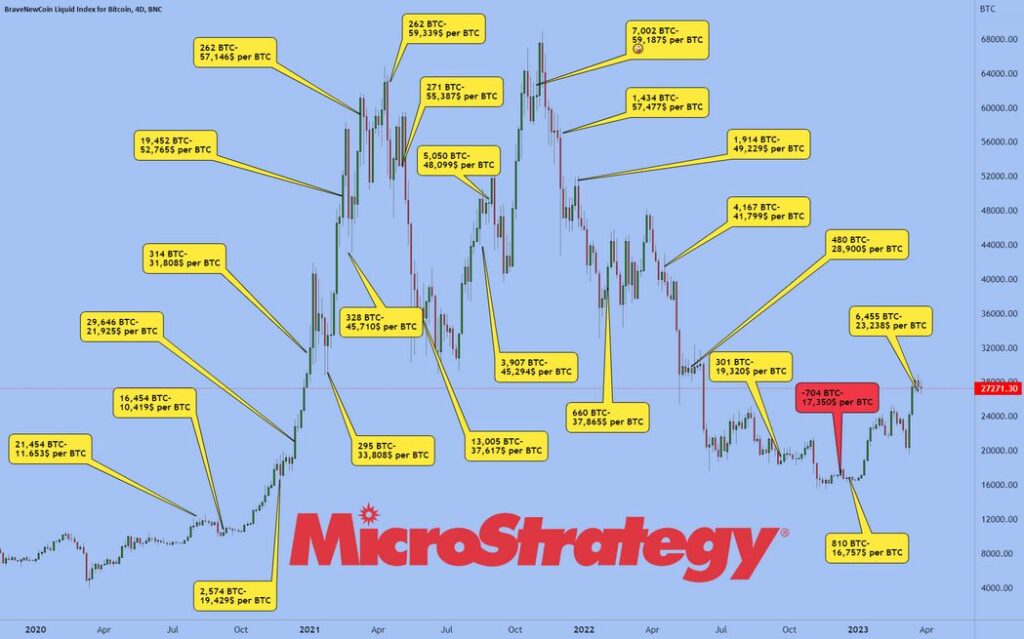
This chart should show how major buying periods correlate with price stabilization or upward momentum, reinforcing the idea that institutional accumulation acts as a market floor mechanism.
7. Broader Industry Context: Institutional Bitcoin is Accelerating
Beyond Strategy, the broader institutional landscape is evolving rapidly:
- Spot Bitcoin ETFs in the U.S. have significantly increased accessibility
- Traditional asset managers are integrating Bitcoin into portfolios
- Sovereign wealth funds and pension funds are exploring exposure
- Corporate treasuries are revisiting Bitcoin amid inflation concerns
Strategy’s continued accumulation reinforces a growing thesis:
Bitcoin is transitioning from a speculative asset to a core macro asset class.
At the same time, new narratives are emerging:
- Bitcoin as collateral in financial systems
- Bitcoin-backed lending markets
- Integration with payment systems and remittance rails
These developments align closely with real-world applications—particularly relevant for readers interested in practical blockchain use cases and revenue opportunities.
8. Strategic Implications for Investors and Builders
For investors, Strategy’s actions suggest several key takeaways:
- Long-term conviction matters more than short-term volatility
- Institutional accumulation can create structural demand floors
- Financing innovation (like STRC) may unlock new capital flows into crypto
For builders and entrepreneurs:
- Treasury strategies using crypto are becoming viable
- Hybrid financial instruments (equity + crypto exposure) are emerging
- There is growing demand for infrastructure supporting institutional crypto adoption
This opens opportunities in:
- Custody solutions
- Compliance frameworks
- Tokenized financial products
- Cross-border payment systems
9. The “Next Orange Dot”: What the Market Watches
Michael Saylor is known for signaling purchases through cryptic “orange dot” posts on X (formerly Twitter). These signals have become market-moving events, eagerly anticipated by traders and analysts alike.
Going forward, the key variable remains:
- STRC preferred stock pricing
If STRC continues trading above par, Strategy is likely to:
- Maintain or accelerate its accumulation pace
- Further tighten Bitcoin supply
- Reinforce institutional narratives
If it falls below par again:
- Accumulation may pause
- Market sentiment could weaken
10. Conclusion: A New Financial Paradigm in Motion
Strategy’s latest Bitcoin purchase is more than just another accumulation event—it is a case study in financial evolution.
By combining:
- Innovative capital markets instruments
- High-conviction asset allocation
- Long-term macro positioning
Strategy is redefining how corporations interact with digital assets.
For the crypto industry, this signals a deeper transformation:
- Bitcoin is no longer fringe—it is becoming financial infrastructure
- Institutional strategies are shaping market structure
- New financial models are emerging at the intersection of traditional finance and blockchain
For readers seeking new crypto assets, income opportunities, and practical blockchain applications, the message is clear:
The next phase of crypto growth will not be driven solely by retail speculation—but by institutional design, capital engineering, and real-world integration.
