
Main Points :
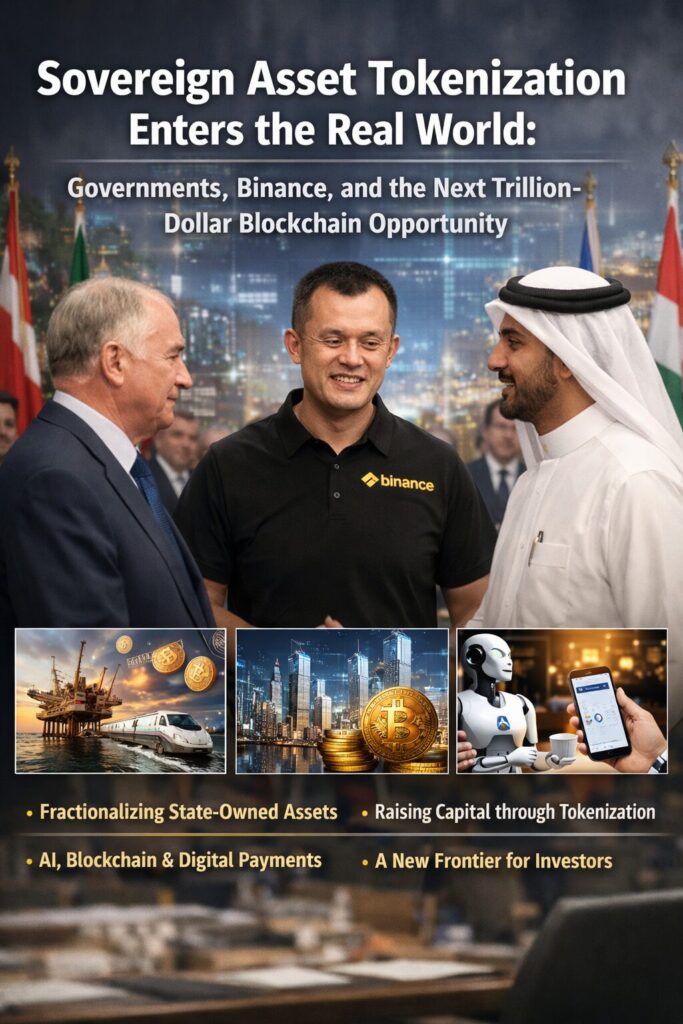
- More than ten governments are reportedly in discussions with Binance and its co-founder Changpeng Zhao regarding the tokenization of sovereign assets.
- Tokenization enables governments to fractionalize state-owned assets—such as infrastructure, real estate, and commodities—and raise capital by selling digital ownership units.
- Sovereign tokenization is emerging as a practical funding and liquidity tool rather than a theoretical blockchain use case.
- The convergence of blockchain, AI agents, and digital payments may fundamentally reshape how governments, institutions, and users interact with capital markets.
- For investors and builders, sovereign asset tokenization represents a new frontier for yield, infrastructure participation, and compliant blockchain adoption.
1. From Crypto Speculation to State-Level Infrastructure
For much of its early history, the cryptocurrency industry was driven primarily by retail speculation, decentralized finance (DeFi) experiments, and ideological debates around monetary sovereignty. However, as blockchain technology matures, its center of gravity is shifting decisively toward institutional and governmental adoption.
In January 2026, Changpeng Zhao, co-founder of Binance, revealed that he has been in discussions with “probably more than ten” governments regarding the tokenization of sovereign assets. This statement marks a significant turning point: blockchain is no longer merely an alternative financial system—it is becoming a toolkit for nation-states themselves.
Sovereign asset tokenization refers to the process by which governments convert ownership or revenue rights of state-controlled assets into blockchain-based tokens. These tokens can be sold, traded, or used as collateral, enabling governments to unlock liquidity without traditional debt issuance.
This is not a distant vision. It is already happening.
2. What Exactly Is Sovereign Asset Tokenization?
At its core, tokenization is the digital representation of real-world assets (RWAs) on a blockchain. When applied to sovereign assets, this can include:
- Transportation infrastructure (roads, ports, airports)
- Energy assets (power plants, grids, renewable facilities)
- Public real estate (government buildings, land banks)
- Natural resources and commodities
- Revenue-generating concessions or licenses
Instead of selling an entire asset outright or issuing sovereign bonds, governments can tokenize fractional ownership or cash-flow rights. These tokens can then be distributed to domestic or international investors.
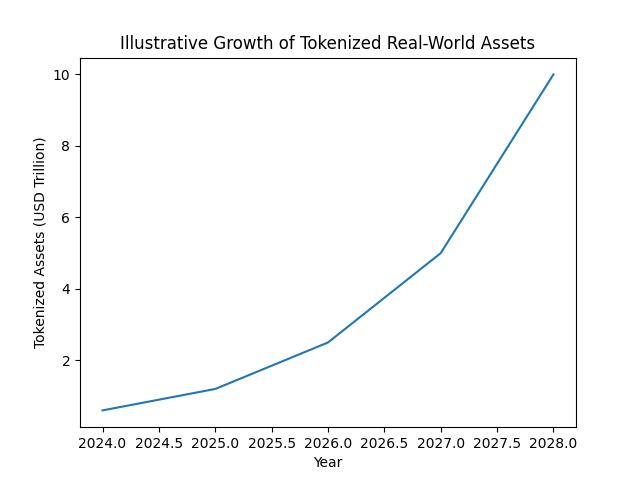
【Illustrative Growth of Tokenized Real-World Assets】
This approach offers three powerful advantages:
- Capital Efficiency – Governments can raise funds without increasing traditional debt ratios.
- Liquidity – Previously illiquid assets become tradable in secondary markets.
- Accessibility – Smaller investors can participate in state-backed assets with lower minimum investment sizes.
3. Why Governments Are Suddenly Interested
The renewed global interest in sovereign tokenization is not accidental. Several macro trends are converging:
Fiscal Pressure and Infrastructure Gaps
Many governments face rising infrastructure costs alongside constrained public budgets. Traditional financing methods—such as bonds or multilateral loans—are increasingly expensive in a higher interest rate environment.
Tokenization offers an alternative funding channel that appeals to global capital markets without relying solely on banks or rating agencies.
Transparency and Auditability
Blockchain-based systems allow real-time tracking of ownership, cash flows, and distributions. For governments under pressure to improve transparency and reduce corruption, tokenization provides built-in audit trails.
Global Investor Reach
Tokenized assets can be distributed globally, potentially denominated in stablecoins or digital dollars, allowing governments to tap into international liquidity pools more efficiently.
4. Binance’s Strategic Position in Sovereign Tokenization
Binance’s involvement in these discussions is particularly notable. As the world’s largest crypto exchange by trading volume, Binance possesses three assets governments find attractive:
- Technical Infrastructure – Proven experience handling large-scale digital asset issuance and trading.
- Global User Base – Access to tens of millions of users worldwide.
- Liquidity Expertise – Deep knowledge of market-making, custody, and settlement.
However, Binance’s role is likely to extend beyond being a simple exchange. In sovereign tokenization, the platform could act as:
- A technical advisor for token design and issuance
- A liquidity venue for secondary trading
- A compliance bridge between governments and global investors
This signals a broader shift: major crypto platforms are evolving into quasi-financial infrastructure providers rather than pure trading venues.
5. The Mechanics: How Sovereign Tokenization Works in Practice
A typical sovereign tokenization structure may look like this:
【Simplified Flow of Sovereign Asset Tokenization】
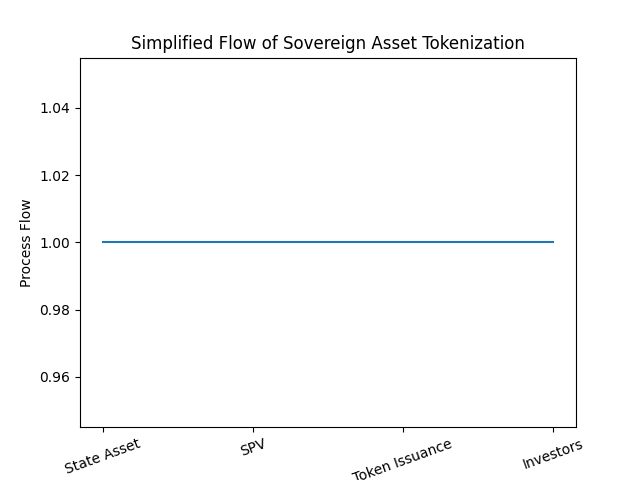
- A government identifies a revenue-generating asset.
- A special-purpose vehicle (SPV) is established to hold the asset.
- Tokens representing ownership or revenue rights are issued on a blockchain.
- Investors purchase tokens using fiat-backed stablecoins or digital dollars.
- Cash flows (fees, rents, tolls) are distributed automatically via smart contracts.
From an operational standpoint, this structure mirrors traditional project finance—but with significantly lower friction and higher programmability.
6. AI Agents and Crypto as Native Settlement Layers
Beyond tokenization, Zhao also highlighted a forward-looking trend: cryptocurrencies becoming the native payment rail for AI agents.
As AI systems evolve from passive tools into autonomous agents capable of executing transactions, they require:
- Instant settlement
- Programmable money
- Global interoperability
Cryptocurrencies and stablecoins fulfill these requirements far better than legacy banking systems. In this vision, AI agents could autonomously manage portfolios, rebalance tokenized assets, or participate in sovereign token markets on behalf of users.
For governments, this raises profound possibilities—such as automated treasury management or real-time infrastructure monetization.
7. Implications for Investors Seeking New Yield
For investors searching for the next generation of yield opportunities, sovereign tokenization offers a unique value proposition:
- Exposure to state-backed assets without direct political risk of bonds
- Potentially higher yields than developed-market sovereign debt
- On-chain transparency and automated distributions
Unlike speculative altcoins, tokenized sovereign assets may offer more predictable cash flows while still benefiting from blockchain liquidity.
This hybrid profile—part infrastructure investment, part digital asset—may define a new asset class altogether.
8. Regulatory Reality: Not DeFi Anarchy, but Structured Finance
It is important to emphasize that sovereign tokenization is not “permissionless DeFi.” These projects are likely to operate under:
- Strict KYC/AML frameworks
- Jurisdiction-specific investor eligibility rules
- Clear legal claims on underlying assets
In other words, this is blockchain-enhanced structured finance, not crypto-anarchism.
For builders and operators, compliance literacy will be as important as technical expertise.
9. Strategic Outlook: A Trillion-Dollar Transition Phase
Multiple industry reports now estimate that tokenized real-world assets could exceed $10 trillion in total value within the next decade. Sovereign assets—due to their scale and stability—are expected to form a significant portion of this market.
The fact that more than ten governments are already in active discussions suggests that we are entering the execution phase, not the experimentation phase.
Conclusion: From Experiment to Economic Infrastructure
Sovereign asset tokenization represents one of the most consequential shifts in the blockchain industry since the emergence of smart contracts. What began as a speculative technology is now being adopted as a tool for national finance, infrastructure funding, and global capital coordination.
For governments, tokenization offers liquidity, transparency, and flexibility. For investors, it opens access to new yield-generating assets. For builders, it creates demand for compliant, scalable blockchain infrastructure.
The next wave of crypto growth may not come from meme coins or speculative narratives—but from roads, power plants, and public assets quietly moving on-chain.
