
Main Points :
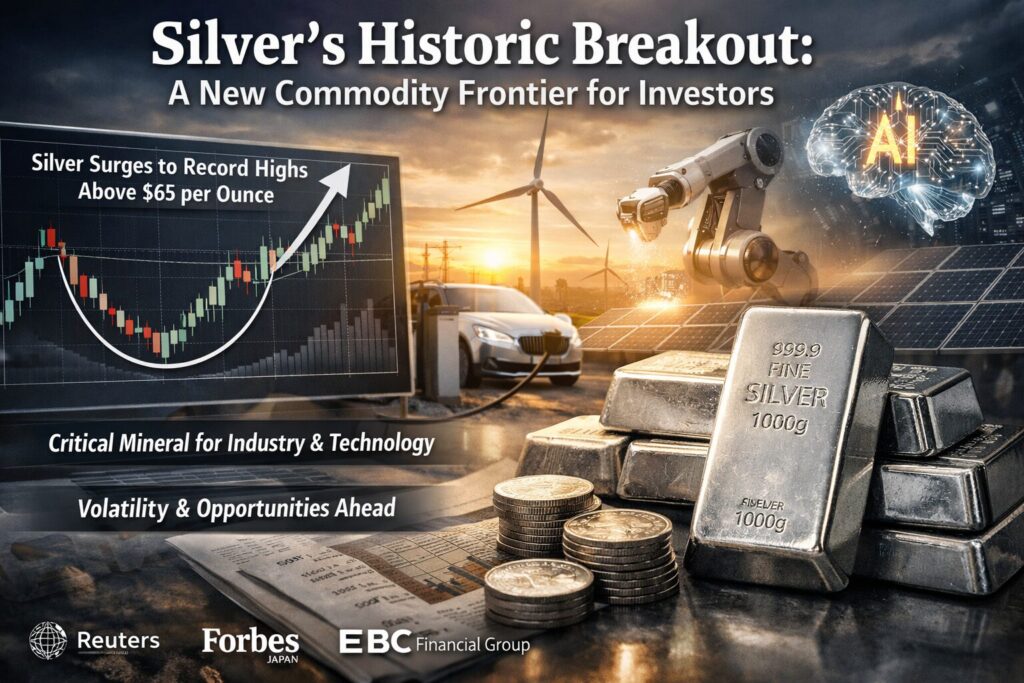
- Silver prices have surged to all-time highs above $65 per ounce, driven by supply shortages, industrial demand, and monetary policy shifts.
- Technical patterns including cup-and-handle breakouts signal potential extended bullish trends.
- Silver’s strategic designation as a critical mineral strengthens long-term industrial demand narratives.
- Investors face volatility risks amid record inflows and evolving macroeconomic conditions.
- Relative performance vs. gold and upcoming catalysts (renewables, AI, EV) could maintain silver’s momentum.
1. The Breakthrough Rally: Silver’s Record Surges
In late 2025, silver prices have shattered historical benchmarks, with spot prices climbing well above $65 per ounce, marking one of the most dramatic rallies in the metal’s market history. According to multiple market reports, silver reached $66.87/oz, reflecting over 120% gains in 2025 alone—outpacing gold’s roughly 64% climb this year.
This surge has been confirmed across major trading hubs, where silver’s performance has repeatedly exceeded prior resistance levels such as the $56–$60 range achieved in early December.
<– “Silver Prices 2023–2025 (USD/oz)” –>
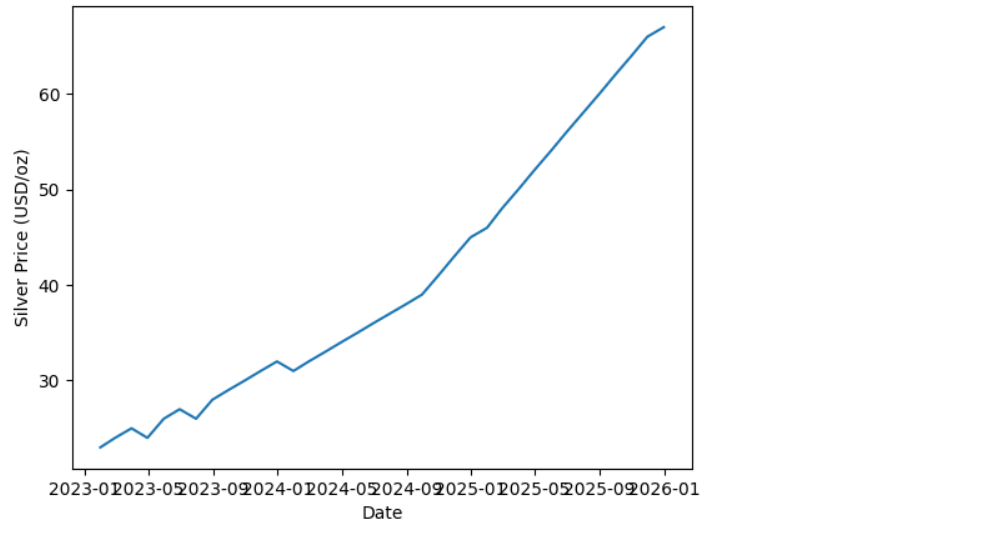
The chart above should show time on the X-axis (monthly from Jan 2023 through Dec 2025) and silver spot price in USD per ounce on the Y-axis, highlighting key breakouts above $50, $56, $60, and $65.
Suggested placement: immediately above this paragraph.
2. Technical Catalysts: Cup-and-Handle and Historical Patterns
Market technicians describe the silver price structure as a classic cup-and-handle breakout, a multi-decade base pattern that often precedes sustained upward trends. Historically, such formations are rare and denote a transition from prolonged consolidation to aggressive trend expansion.
Investors should note that silver has historically exhibited breakout phases only a handful of times in the past 60+ years—underscoring the significance of this cycle. This pattern, coupled with large volume surges and widespread momentum, suggests the current move may be more structural than speculative.
3. Supply Constraints and Industrial Demand
A major structural driver of silver’s rise has been tightening physical supply and weakening inventory levels. Reports indicate global inventories, including Chinese and London stocks, are near decade-lows—a key signal of genuine supply stress in the market.
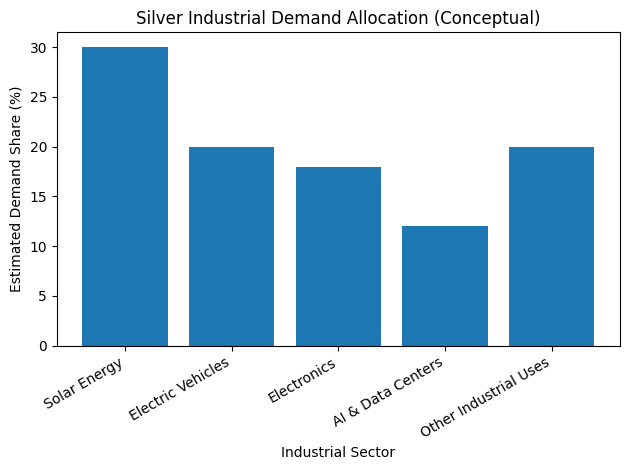
At the same time, silver’s industrial demand has accelerated due to its indispensable role in solar panels, electronics, electric vehicles, and emerging technology sectors such as AI data centers. These applications create fundamental demand vectors that extend beyond precious metal investment flows, distinguishing silver from gold’s primarily monetary and hedge appeal.
4. Policy, Monetary Drivers & Safe-Haven Interest
Silver’s breakout gains coincide with evolving macroeconomic expectations. Markets are pricing in potential U.S. Federal Reserve interest rate cuts, which typically weaken the U.S. dollar and lower the opportunity cost of holding non-yielding assets like precious metals.
Additionally, silver’s addition to the U.S. critical minerals list has elevated its strategic status. This designation signals that policymakers are increasingly attentive to silver’s supply chain and industrial importance—a factor that could encourage regulatory and fiscal support in future infrastructure and technology initiatives.
5. Silver vs. Gold: Relative Performance and Strategic Implications
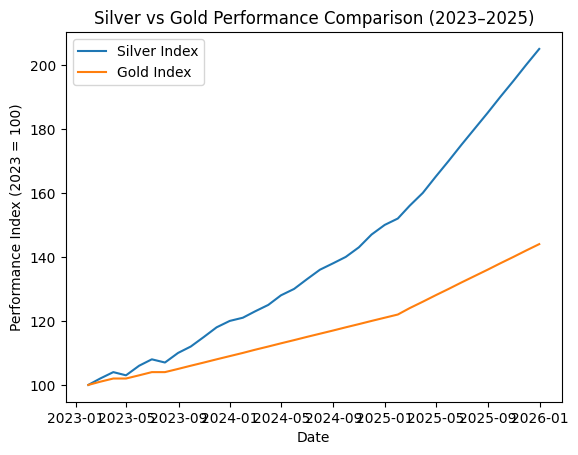
One striking feature of the recent breakout has been silver’s ability to outperform gold on a percentage basis in 2025. For example, in early December, silver surpassed $60 per ounce, while gold also made new highs but at a slower pace.
Silver’s dual identity—as both a precious metal hedge and a critical industrial input—gives it unique strategic positioning relative to gold, which is more singularly viewed as a safe haven. As industrial demand expands, the silver-to-gold ratio may continue to shift in favor of silver during bullish commodity cycles.
6. Risks and Volatility: What Investors Should Watch
Despite the impressive trend, silver remains notoriously volatile. Sharp price swings can occur due to thin liquidity, speculative positioning, and sentiment-driven flows. Reports indicate that after record runs, markets have experienced profit-taking and rapid intraday fluctuations.
Investors should monitor key support levels (e.g., $55–$60), inventory data, and macroeconomic indicators such as interest rate expectations and currency strength for timely risk management.
Conclusion: Silver as a Strategic Frontier Asset
Silver’s 2025 rally represents one of the most transformative episodes in the metal’s market history. With record prices above $65 per ounce, structural supply deficits, robust industrial demand, and favorable macro trends, silver has entered a new phase of investor and strategic interest.
For readers seeking new asset opportunities, silver’s current trajectory highlights its dual potential:
- As a growth-oriented commodity investment, supported by technical breakouts and momentum;
- As a strategic industrial metal, essential for energy, technology, and infrastructure transitions.
While volatility remains a key risk, the confluence of fundamental, technical, and policy drivers suggests silver’s breakout should be taken seriously as a cornerstone opportunity in diversified portfolios.
