
Main Points :
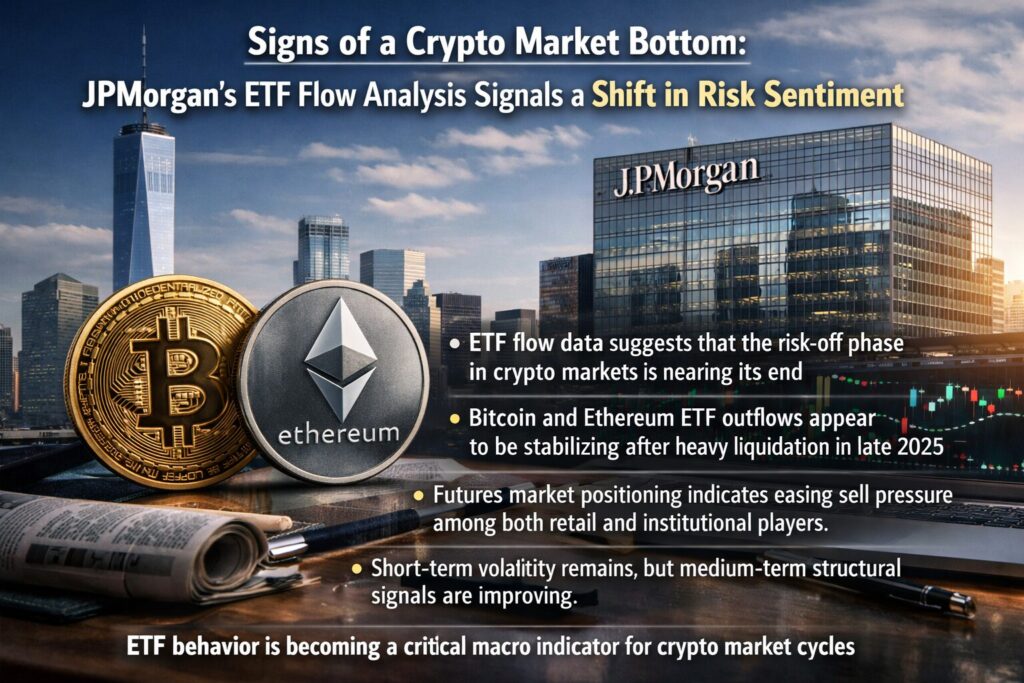
- ETF flow data suggests that the risk-off phase in crypto markets is nearing its end
- Bitcoin and Ethereum ETF outflows appear to be stabilizing after heavy liquidation in late 2025
- Futures market positioning indicates easing sell pressure among both retail and institutional players
- Short-term volatility remains, but medium-term structural signals are improving
- ETF behavior is becoming a critical macro indicator for crypto market cycles
1. Introduction: A Market Searching for Its Floor
The cryptocurrency market entered 2026 under a cloud of uncertainty. After a volatile end to 2025 marked by heavy selling pressure, many investors questioned whether digital assets had finally reached a durable bottom or whether further downside remained. Against this backdrop, a recent analysis by JPMorgan has drawn significant attention.
According to the bank’s analyst team, led by Nikolaos Panigirtzoglou, multiple indicators across ETF flows and futures markets suggest that the worst phase of risk aversion may be behind us. While short-term fluctuations persist, the broader data points toward stabilization rather than continued capitulation.
This article expands on JPMorgan’s findings, integrates recent market data, and places these signals within the broader context of institutional crypto adoption and macro-financial trends.
2. December 2025: A Stark Contrast Between Equities and Crypto
To understand why January 2026 data matters, it is essential to revisit December 2025. During that month, global equity ETFs recorded an unprecedented $235 billion in net inflows, setting a historical record. Investors aggressively reallocated capital into traditional risk assets, encouraged by expectations of monetary easing and resilient corporate earnings.
In contrast, crypto-linked ETFs—particularly Bitcoin and Ethereum products—experienced sustained net outflows. This divergence reflected a clear reduction in crypto exposure by both retail and institutional investors, reinforcing the narrative that digital assets were in a prolonged risk-off phase.
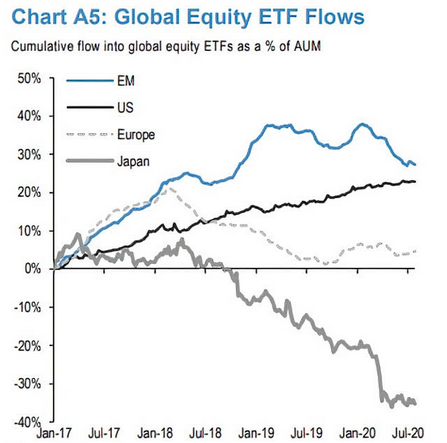
【Global ETF Flows: Equities vs Crypto (Dec 2025)】
<Bar chart comparing net inflows into global equity ETFs ($235B) versus net outflows from Bitcoin and Ethereum ETFs.>
3. January 2026: Early Signs of Stabilization
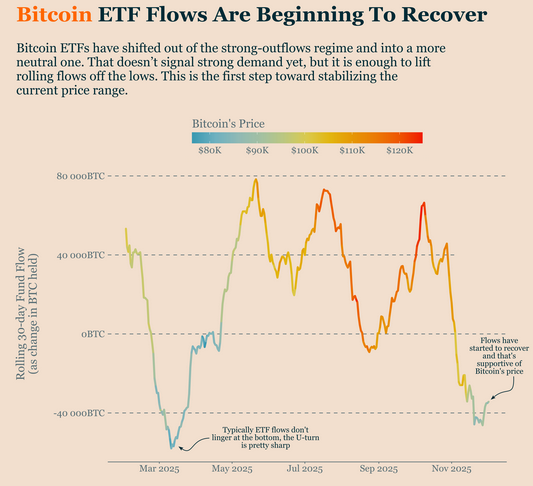
JPMorgan’s report highlights a notable change in January 2026. While crypto ETFs have not yet returned to strong net inflows, the pace of outflows has slowed markedly. Bitcoin and Ethereum ETF flows appear to be forming what analysts describe as the “initial stage of a bottoming process.”
This does not imply an immediate bullish reversal. Instead, it suggests that forced selling and broad de-risking—characteristic of late 2025—may have largely played out. In market cycle terms, this phase often precedes a period of sideways consolidation.
Importantly, ETF flows are particularly valuable indicators because they reflect institutional positioning rather than purely speculative retail behavior.
4. Futures Markets Confirm Easing Sell Pressure
Beyond ETFs, JPMorgan examined positioning data from perpetual futures and CME Bitcoin futures. These markets often provide early insight into leverage dynamics and directional conviction.
The findings show that net short positioning has declined, and liquidation-driven selling has subsided. Open interest remains healthy but is no longer skewed aggressively toward downside bets. This suggests that traders who wanted to exit or hedge their crypto exposure have largely done so.
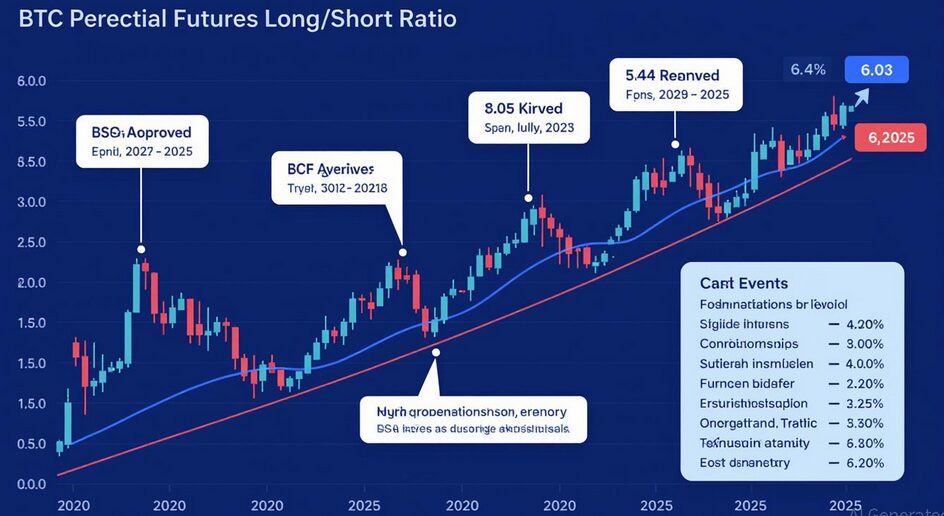
【Bitcoin Futures Positioning and Open Interest Trends】
<Line chart showing declining short interest and stabilizing open interest in CME Bitcoin futures.>
5. Interpreting the “Bottoming” Narrative Carefully
JPMorgan is careful not to declare a definitive market bottom. Instead, the report emphasizes probabilities. The analysts conclude that the widespread position reductions seen in Q4 2025 are “likely behind us,” but they acknowledge that short-term weakness can still occur.
This distinction is crucial. Markets rarely bottom in a straight line. Instead, they often form a base through multiple tests, driven by macro news, regulatory developments, or liquidity shifts.
Recent data illustrates this point clearly.
6. Short-Term Headwinds: Recent ETF Outflows Resume
Following the period analyzed by JPMorgan, crypto ETF markets experienced renewed weakness. Over the three most recent trading days, Bitcoin ETFs recorded net outflows totaling approximately $1.12 billion, including $389.95 million on January 8 alone.
These outflows effectively erased the modest net inflows seen during the first two trading days of 2026. Such movements highlight that while structural selling may be easing, sentiment remains fragile.
【Bitcoin ETF Daily Net Flows (Early January 2026)】
<Daily bar chart showing ETF inflows and outflows, emphasizing the three-day net outflow streak.>
7. Why ETF Flows Matter More Than Ever
ETF flows have become one of the most important indicators in crypto markets for several reasons:
First, ETFs serve as the primary gateway for traditional institutional investors. Pension funds, asset managers, and family offices typically adjust exposure through ETFs rather than spot markets.
Second, ETF activity is closely linked to macro portfolio allocation decisions. When risk appetite improves globally, crypto ETFs often benefit as part of a broader diversification strategy.
Third, ETF flows are transparent and timely, making them useful for detecting regime shifts earlier than on-chain or retail-driven metrics.
8. Broader Market Context: Institutional Crypto Is Maturing
The current environment differs significantly from previous crypto downturns. Infrastructure has matured, regulatory clarity has improved in key jurisdictions, and crypto assets are increasingly treated as part of multi-asset portfolios rather than speculative outliers.
This structural evolution means that downturns may become less violent over time, even if volatility remains elevated. ETF stabilization, even without strong inflows, supports this thesis.
9. Implications for Investors Seeking New Opportunities
For readers interested in discovering new crypto assets or revenue opportunities, the current phase may be more about preparation than aggressive positioning.
Periods of market basing often coincide with:
- Increased development activity
- Strategic partnerships and infrastructure upgrades
- Accumulation by long-term holders rather than momentum traders
Understanding ETF and futures signals can help investors distinguish between temporary noise and meaningful trend shifts.
10. Conclusion: A Fragile but Improving Foundation
JPMorgan’s ETF flow analysis does not promise an immediate bull market. However, it provides evidence that the most intense phase of risk aversion has likely passed. While short-term volatility persists—as shown by recent ETF outflows—the broader indicators point toward stabilization rather than collapse.
For market participants focused on long-term adoption, practical blockchain use cases, and sustainable crypto investment strategies, this phase may represent the early construction of the next market foundation.
The bottom, if not already in place, appears closer than it was just a few months ago.
