
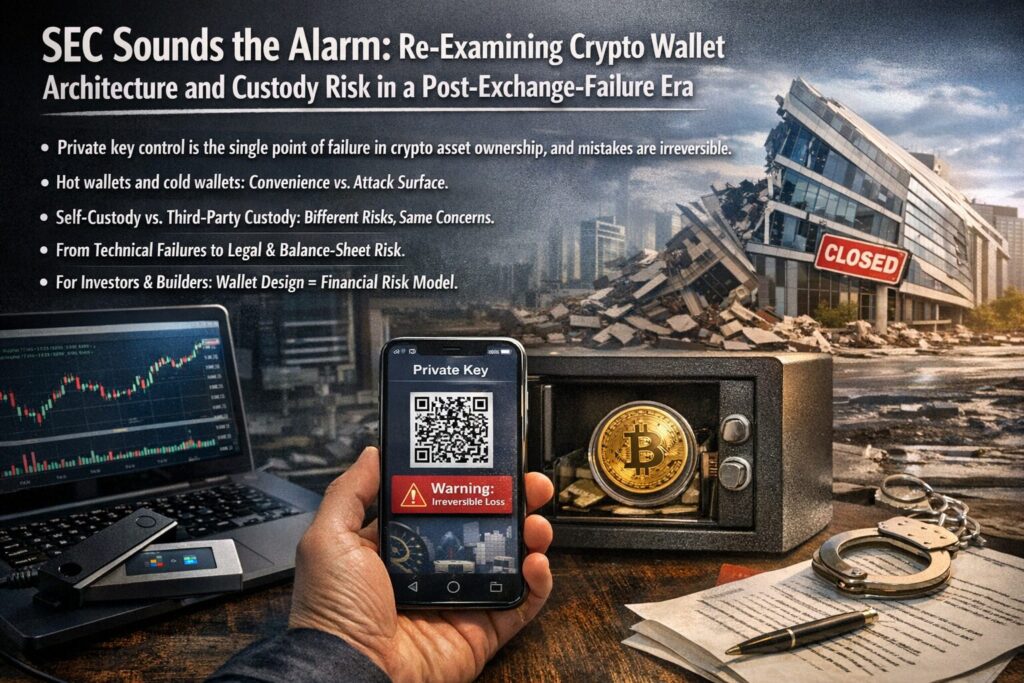
Main Points :
- Private key control is the single point of failure in crypto asset ownership, and mistakes are irreversible.
- Hot wallets and cold wallets represent a trade-off between convenience and attack surface, not “safe vs unsafe.”
- Self-custody and third-party custody each introduce different but equally serious failure modes.
- Custodial risk has shifted from “technical” to “legal and balance-sheet risk” after multiple exchange collapses.
- The SEC’s renewed investor guidance reflects a structural change in how regulators view crypto custody.
- For investors and builders, wallet architecture is no longer a UX decision—it is a financial risk model.
1. Why the SEC Is Re-Educating Investors on Wallet Fundamentals
In 2024, the U.S. Securities and Exchange Commission (SEC) released a new investor alert focusing on cryptocurrency storage methods, wallet structures, and custody risks. At first glance, the document appears elementary—explaining private keys, public keys, hot wallets, and cold wallets. However, the timing and framing signal something deeper.
This is not merely investor education. It is a regulatory response to systemic failures that exposed a widespread misunderstanding of what “ownership” means in crypto markets.
Following the collapse of multiple centralized exchanges and custodians—events that froze or erased billions of dollars’ worth of customer assets—the SEC has shifted emphasis from speculative risk to structural custody risk. In traditional finance, custody is invisible to most investors. In crypto, custody is the investment.
The SEC’s message is clear: if you do not understand how your assets are held, you may not actually own them.
2. How Crypto Wallets Really Work: Keys, Not Coins
At the core of every crypto wallet lies a deceptively simple concept: assets are controlled entirely by cryptographic keys.
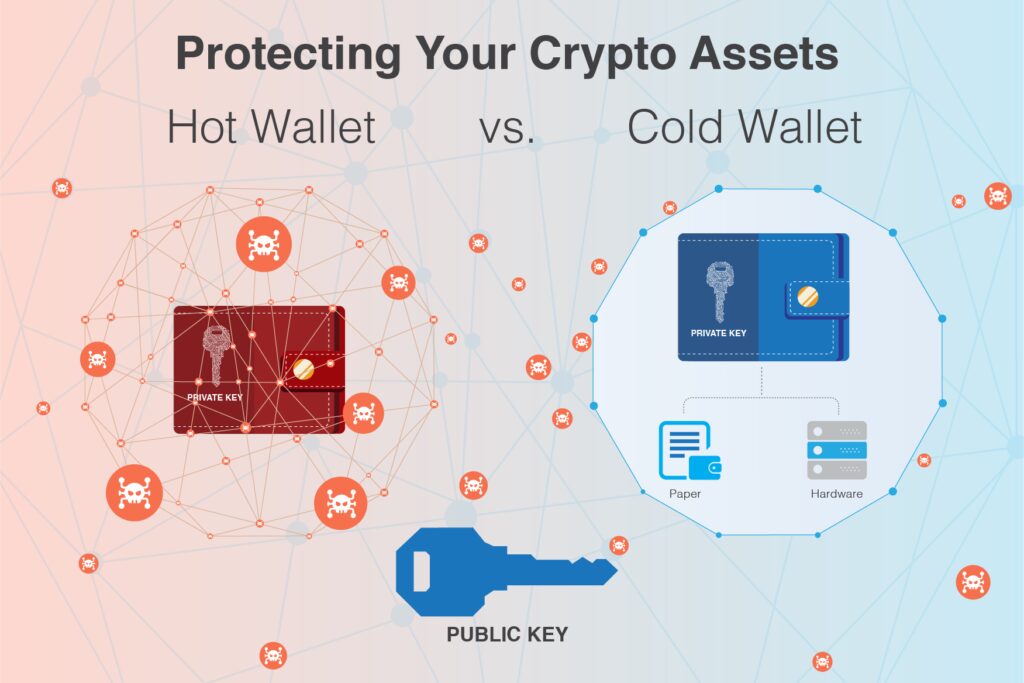
A private key functions as an unchangeable master password. It cannot be reset, replaced, or recovered by any authority. Whoever controls the private key controls the assets—irrevocably.
A public key (or wallet address) is merely an identifier used to receive funds. It grants no authority to move assets.
This asymmetric design is what enables decentralized ownership, but it also introduces absolute finality. If a private key is lost, destroyed, or exposed, the associated assets are effectively gone forever. There is no “forgot password” function in blockchain systems.
The SEC emphasizes this point because many retail investors still conflate account access (e.g., logging into an exchange) with asset ownership. In reality, logging into an exchange often means accessing a claim on assets, not the assets themselves.
3. Hot Wallets vs Cold Wallets: A Risk Trade-Off, Not a Hierarchy
Hot Wallets
Hot wallets are connected to the internet and are designed for frequent transactions. They are widely used by exchanges, DeFi users, and payment applications.
Advantages
- Immediate transaction capability
- Integrated with dApps and trading platforms
- User-friendly interfaces
Risks
- Exposure to malware, phishing, and remote exploits
- Dependence on device security and software integrity
Hot wallets are not inherently unsafe—but they dramatically increase the attack surface.
Cold Wallets
Cold wallets store private keys offline, typically via hardware devices or air-gapped storage.
Advantages
- Strong resistance to remote cyberattacks
- Reduced exposure to online threats
Risks
- Physical loss or damage of the device
- Improper seed phrase storage leading to permanent loss
The SEC notes that cold wallets eliminate online risk but not human or physical risk. A misplaced seed phrase is as fatal as a hacked server.
[Hot Wallet vs Cold Wallet Risk Comparison]
4. Seed Phrases: The Most Underestimated Single Point of Failure
The SEC places particular emphasis on seed phrases—the human-readable backup representation of a private key.
A seed phrase:
- Grants full and irreversible control over assets
- Must never be shared, photographed, or stored digitally
- Must be protected from theft, fire, and loss
Despite this, many losses occur not through hacking but through poor seed phrase practices: cloud backups, screenshots, email storage, or casual sharing.
In effect, the seed phrase turns every user into their own bank vault operator—without professional training.
5. Self-Custody vs Third-Party Custody: Two Different Failure Models
Self-Custody
With self-custody, the investor holds their own private keys.
Strengths
- True asset ownership
- No counterparty risk
- Censorship resistance
Failure Mode
- Irreversible loss through user error
- No recovery mechanism
Third-Party Custody
With third-party custody, a custodian (exchange or wallet provider) controls the private keys on behalf of users.
Strengths
- Easier UX
- Account recovery mechanisms
- Institutional-grade infrastructure
Failure Mode
- Custodian insolvency or fraud
- Regulatory seizure or access suspension
- Asset rehypothecation
The SEC stresses that in many custodial models, customer assets are pooled. In bankruptcy, users may be treated as unsecured creditors rather than owners.
6. Lessons from Recent Exchange Failures
Recent years have shown that custody risk is not theoretical.
Multiple custodians collapsed after:
- Using customer assets for proprietary trading
- Failing to segregate assets
- Misrepresenting reserve holdings
In several cases, customers learned too late that their “balances” were accounting entries, not on-chain assets held in trust.
This has reframed custody from a technical issue into a legal and balance-sheet issue.
7. What the SEC Wants Investors to Ask Custodians
The SEC outlines practical due-diligence questions, including:
- Is the custodian regulated, and by whom?
- Are customer assets segregated on-chain?
- Is insurance provided, and what does it actually cover (USD only or crypto)?
- Are assets rehypothecated or lent out?
- What happens to customer assets in bankruptcy?
- What is the custodian’s complaint and enforcement history?
These questions mirror institutional due diligence standards—now being pushed onto retail investors.
8. Market Trend: Wallet Architecture as a Financial Product
Beyond regulation, the market itself is evolving.
We are seeing:
- Growth of multi-signature wallets
- Account-abstraction wallets with programmable recovery
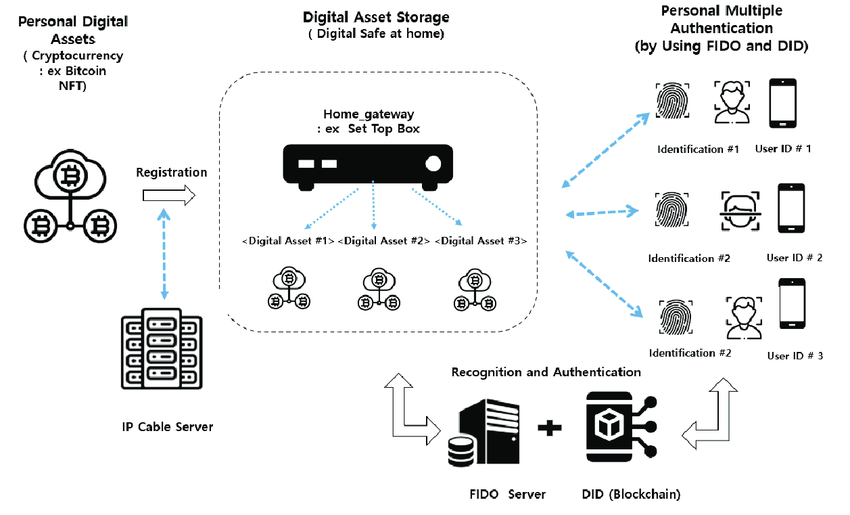
- Hybrid custody models combining user control with institutional safeguards
Wallet design is increasingly treated as a risk-management product, not just a UX layer.
For builders, this means wallet architecture choices directly affect regulatory exposure, user trust, and systemic risk.
[Custody Models and Risk Allocation]
9. Strategic Implications for Investors and Builders
For investors seeking new crypto assets or income opportunities, custody decisions shape risk-adjusted returns more than token selection.
For builders and fintech operators, custody architecture determines:
- Licensing requirements
- Capital adequacy exposure
- Legal liability in insolvency scenarios
The SEC’s alert should be read as a warning shot: custody ignorance is no longer an acceptable risk.
Conclusion: Ownership in Crypto Is a Technical, Legal, and Personal Responsibility
The SEC’s renewed focus on wallet structure and custody risk reflects a maturation of the crypto market. As speculative narratives fade, foundational questions of ownership, control, and responsibility come to the forefront.
Crypto does not fail gracefully. Its strengths—finality, decentralization, and permissionless access—also mean that mistakes are permanent.
Understanding wallet architecture is no longer optional. It is the price of participation in a financial system where you are your own custodian, risk officer, and compliance department.
