
Main Points :
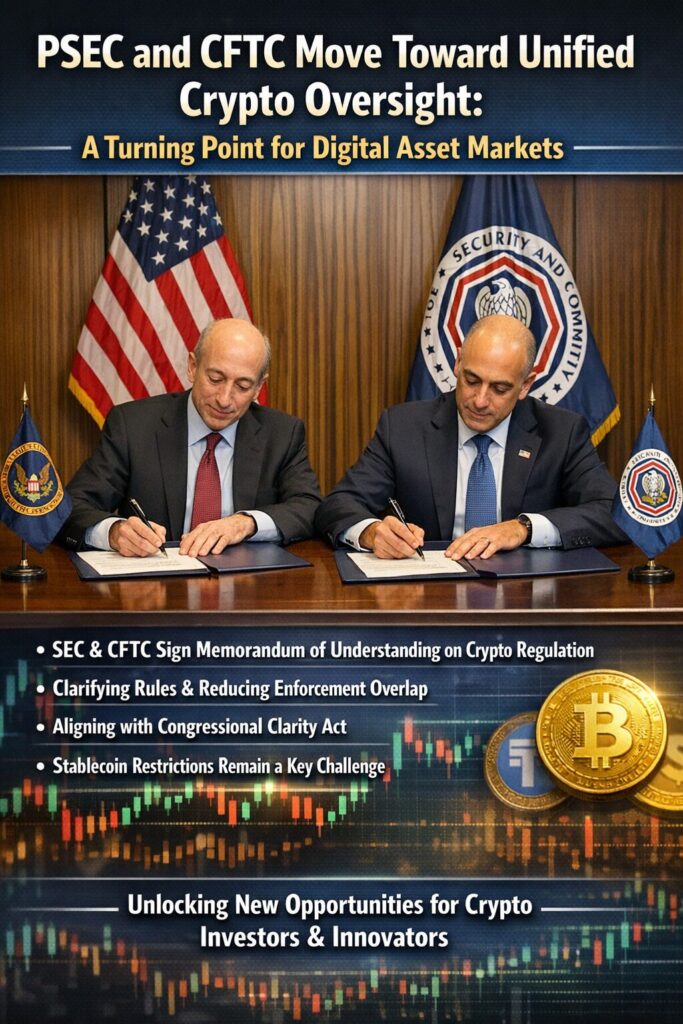
- The SEC and CFTC have signed a Memorandum of Understanding (MoU) to coordinate cryptocurrency oversight in the United States.
- The agreement aims to clarify regulatory boundaries, reduce enforcement overlap, and support sustainable industry growth.
- This move aligns regulators more closely with Congressional efforts such as the CLARITY Act.
- Stablecoin regulation, particularly the prohibition on yield distribution, remains a key unresolved political and industry issue.
- For investors, builders, and institutions, regulatory clarity may unlock new crypto assets, revenue models, and practical blockchain use cases.
1. Introduction: Why This MoU Matters Now
On January 29, 2026, the U.S. cryptocurrency regulatory landscape reached a critical inflection point. The U.S. Securities and Exchange Commission (SEC) and the Commodity Futures Trading Commission (CFTC) formally entered into a Memorandum of Understanding (MoU) aimed at coordinating oversight of digital assets.
Reported by the The Wall Street Journal, this agreement is not merely symbolic. It reflects a strategic shift by U.S. regulators from fragmented enforcement toward a more coherent framework that supports innovation while maintaining market integrity. For global crypto markets, where regulatory uncertainty has long been a brake on institutional adoption, this move could mark the beginning of a new phase.
2. Background: A Longstanding Jurisdictional Divide
For years, the U.S. crypto industry has operated under a cloud of regulatory ambiguity. The SEC has asserted authority over digital assets deemed securities, while the CFTC has claimed jurisdiction over crypto commodities such as Bitcoin. However, many tokens fall into gray areas, leading to overlapping investigations, inconsistent enforcement, and uncertainty for market participants.
This ambiguity has discouraged startups, slowed institutional entry, and pushed some innovation offshore. By formalizing cooperation, the MoU seeks to draw clearer lines—without waiting indefinitely for Congress to act.
3. What the Memorandum of Understanding Actually Does
The MoU outlines mechanisms for:
- Information sharing between the SEC and CFTC
- Coordinated enforcement actions
- Alignment of rulemaking priorities
- Joint engagement with Congress and other stakeholders
According to SEC Chair Paul Atkins, crypto-related legislation is likely to advance this year, and regulators must act within their existing authority while preparing for statutory reforms. The MoU allows both agencies to move forward pragmatically rather than remain paralyzed by jurisdictional disputes.
4. Regulatory Philosophy: Clear Boundaries, Limited Overreach
CFTC Chair Mike Selig emphasized that enforcement should remain strictly within the scope of granted authority. Market participants, he noted, need durable regulatory certainty—not shifting interpretations driven by enforcement actions.
Under the emerging framework:
- The SEC is expected to focus on tokenized securities and investment contracts.
- The CFTC will concentrate on digital assets treated as commodities, including derivatives and spot markets.
This division, while not perfect, provides a functional starting point.
5. Alignment With Congress and the CLARITY Act
The MoU is closely linked to Congressional deliberations on market structure legislation, particularly the CLARITY Act. Regulators are consulting lawmakers to ensure that new rules align with forthcoming statutes, minimizing conflicts between agency regulations and federal law.
This coordination is critical. In past cycles, regulatory rules and legislation often collided, creating compliance burdens and legal risk. A synchronized approach improves predictability for long-term investment and infrastructure development.
6. The Political Roadblock: Stablecoin Yield Prohibitions
Despite progress, significant friction remains—especially around stablecoins. A key provision under debate would prohibit third-party crypto service providers from distributing yield on stablecoins to customers.
This clause has sparked resistance from both the crypto industry and parts of the banking sector. Major exchanges, including Coinbase, withdrew support for the bill, arguing that banning yield mechanisms could stifle innovation and limit consumer choice.
The White House is reportedly convening meetings with banking and crypto executives to resolve this impasse, underscoring how central stablecoins have become to both traditional finance and blockchain-based payment systems.
7. Market Implications: From Enforcement Risk to Strategic Planning
For investors and operators, the MoU signals a shift from ad hoc enforcement toward structured oversight. This reduces “regulatory shock” risk and allows firms to plan product roadmaps, token launches, and compliance investments with greater confidence.
Regulatory Clarity and Market Participation (Illustrative)
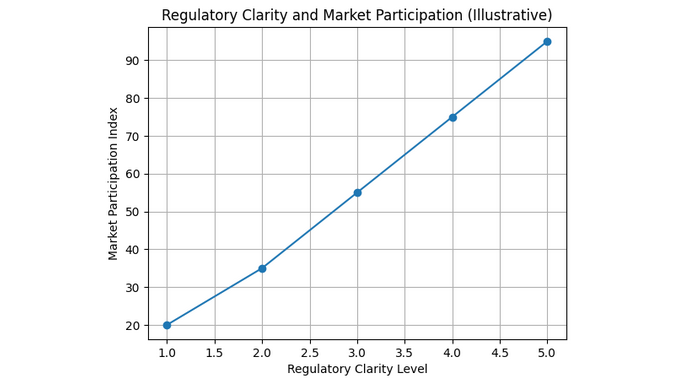
As regulatory clarity improves, market participation—especially from institutions—tends to increase. This dynamic historically correlates with deeper liquidity, more sophisticated products, and higher-quality projects entering the market.
8. Stablecoins, Payments, and Real-World Use Cases
Stablecoins are no longer just trading tools; they underpin cross-border payments, on-chain treasury management, and programmable finance. Any restriction on yield directly affects business models built around cash management and digital dollars.
Stablecoin Market Size in USD (Illustrative)
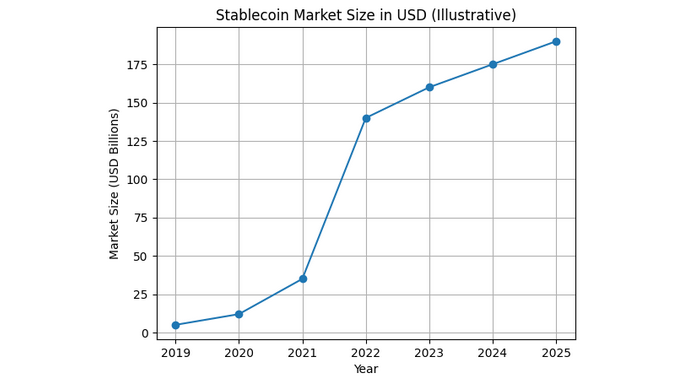
Even under conservative assumptions, the stablecoin market—measured entirely in USD terms—continues to expand. Regulatory clarity could accelerate adoption in remittances, B2B settlements, and fintech integrations.
9. Opportunities for New Crypto Assets and Revenue Models
For readers seeking new crypto assets or revenue sources, the implications are significant:
- Tokenized securities may gain legitimacy under SEC oversight.
- Commodity-like digital assets could see expanded derivatives and hedging markets under CFTC rules.
- Compliance-ready infrastructure providers may become the “picks and shovels” of the next cycle.
Rather than speculative short-term gains, the focus shifts toward sustainable yield, infrastructure fees, and enterprise adoption.
10. Global Context: Why U.S. Leadership Still Matters
While crypto is global, U.S. regulatory posture heavily influences capital flows, exchange listings, and institutional participation worldwide. A coherent U.S. framework strengthens the country’s position in global digital asset markets and reduces regulatory arbitrage.
For international builders, alignment between U.S. regulators may lower the cost of entering or re-entering the American market.
11. Conclusion: A Foundation, Not a Finish Line
The SEC–CFTC Memorandum of Understanding is not the final word on crypto regulation. However, it represents a meaningful step away from fragmentation and toward coordinated governance. For investors, entrepreneurs, and institutions interested in practical blockchain use, this development reduces uncertainty and opens the door to more mature, scalable opportunities.
The remaining challenges—particularly around stablecoins—will shape the next phase. Still, the direction is clear: crypto in the U.S. is moving from regulatory limbo toward structured integration with the broader financial system.
