
Main Points :
- Russia’s Ministry of Finance is considering a standalone legal framework for stablecoins, separate from Bitcoin and other cryptocurrencies.
- Stablecoins are viewed as a potential tool to bypass financial sanctions and facilitate cross-border trade.
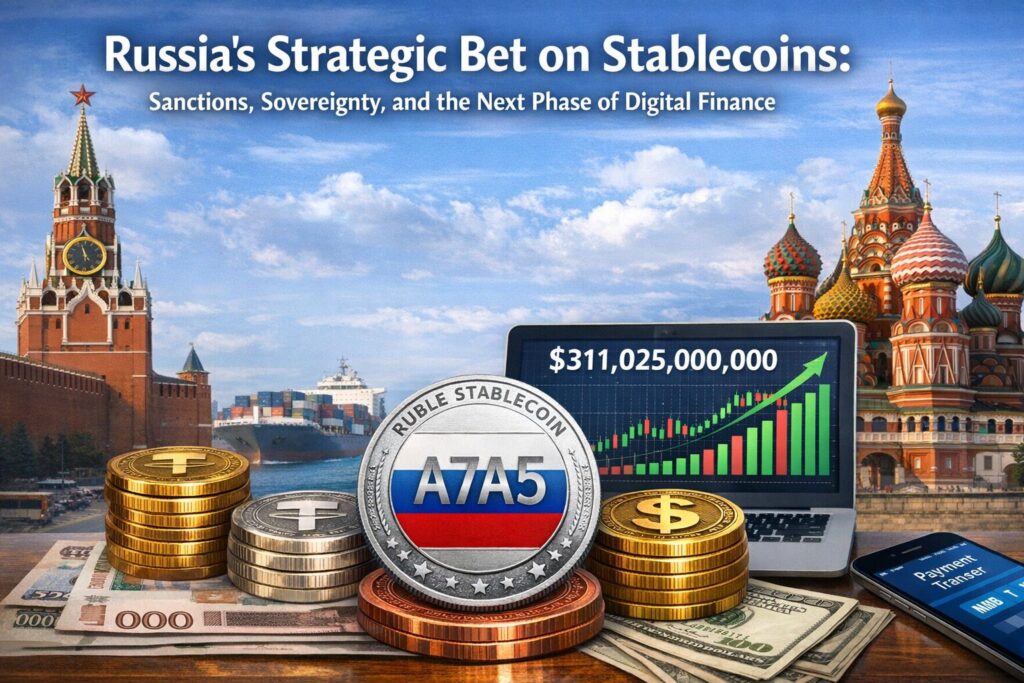
- A ruble-linked stablecoin (A7A5) has already been approved as a “foreign digital right” and used in trade.
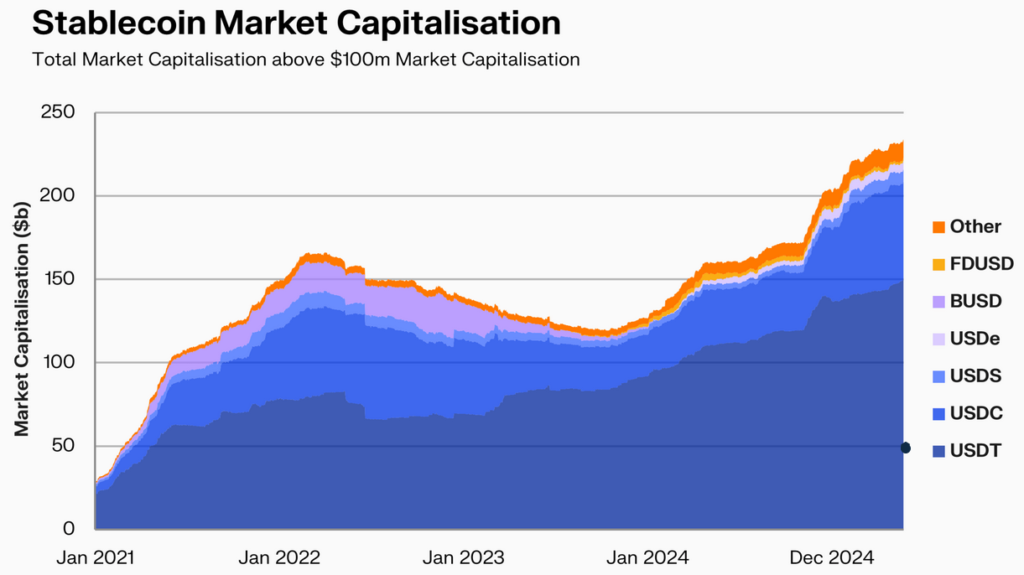
- Global stablecoin markets have grown rapidly, exceeding $311 billion in market capitalization, forcing regulators worldwide to accelerate policy development.
- Russia aims to balance financial sovereignty, international payments, and domestic regulatory control through tailored legislation.
Introduction: Stablecoins at the Center of Geopolitical Finance
The global cryptocurrency industry is entering a new phase where digital assets are no longer merely speculative instruments but increasingly important components of financial infrastructure. Among these digital assets, stablecoins have emerged as one of the most influential innovations, bridging the gap between traditional finance and decentralized networks.
In early March 2026, reports from Russian economic media indicated that Russia’s Ministry of Finance is exploring the creation of a standalone legal framework specifically for stablecoins. Unlike Bitcoin or Ethereum, stablecoins are designed to maintain a stable value—often pegged to fiat currencies such as the U.S. dollar.
For Russia, however, stablecoins represent something more than technological innovation. They may become a strategic financial instrument capable of reshaping international trade flows under sanctions pressure.
The move reflects a broader trend: governments worldwide are recognizing that stablecoins could play a major role in cross-border settlements, financial inclusion, and digital asset markets.
Russia’s Plan for Independent Stablecoin Legislation
According to statements from Alexei Yakovlev, director of the Financial Policy Department at Russia’s Ministry of Finance, stablecoins possess “enormous—almost immeasurable—potential.”
Unlike traditional cryptocurrencies, which are often associated with price volatility and speculative trading, stablecoins function more like digital representations of fiat currency.
Russia currently has no clear legal status for stablecoins, which has created uncertainty for businesses exploring blockchain-based financial tools.
The Ministry of Finance now plans to address this regulatory gap by developing a separate legal framework distinct from existing cryptocurrency exchange regulations.
The proposed approach signals an important shift in regulatory philosophy. Rather than treating all crypto assets as a single category, Russia appears to be moving toward a differentiated regulatory model, where stablecoins are treated as a specialized form of digital financial instrument.
Officials have indicated that the legislation will be developed in close consultation with the Central Bank of Russia and market participants, ensuring that the framework supports both innovation and financial stability.
The central objective is clear: stablecoins must operate “in a way that benefits the domestic economy.”
Stablecoins as a Tool Against Sanctions
The geopolitical context behind this initiative is impossible to ignore.
Since 2022, Russia has faced extensive financial sanctions imposed by the United States, the European Union, and allied countries. These sanctions have significantly restricted Russia’s access to international banking networks such as SWIFT.
Initially, the Russian central bank took a hostile stance toward cryptocurrency, even proposing a complete ban on crypto trading and mining.
However, sanctions pressure forced policymakers to reconsider.
Digital assets—including cryptocurrencies and stablecoins—began to be viewed as alternative financial rails capable of bypassing traditional payment infrastructure.
Stablecoins are particularly attractive for international trade because they combine:
- Blockchain-based settlement
- Price stability relative to fiat currencies
- Fast cross-border transfer capability
This combination allows companies to settle transactions without relying on Western-controlled banking systems.
For sanctioned economies, this feature could prove transformative.
The Ruble-Linked Stablecoin A7A5
Russia has already begun experimenting with stablecoin infrastructure.
In October 2025, the Russian central bank approved a ruble-linked digital asset called A7A5, classifying it as a “foreign digital right.”
This classification allows the asset to be used in international trade settlements.
The coin reportedly processed large transaction volumes shortly after launch, functioning as a bridge between the Russian ruble and widely used stablecoins such as Tether (USDT).
In practical terms, such a structure could allow Russian businesses to conduct trade using a workflow similar to the following:
- Convert rubles into a ruble-pegged stablecoin.
- Swap the stablecoin into USDT or another widely accepted digital asset.
- Transfer funds internationally using blockchain networks.
- Convert the funds into local currencies abroad.
This mechanism could significantly reduce reliance on traditional banking intermediaries.
However, the international community has already responded.
The European Union recently banned trading of A7A5 within EU jurisdictions, highlighting the growing regulatory confrontation around digital assets used in sanctioned economies.
The Explosive Growth of the Stablecoin Market
Russia’s interest in stablecoins comes at a time when the global stablecoin market is expanding at unprecedented speed.
According to data from DeFiLlama, the total stablecoin market capitalization surpassed $311 billion, representing more than 51% growth since early 2025.
Stablecoins have become essential infrastructure for:
- cryptocurrency trading
- decentralized finance (DeFi)
- remittances
- cross-border payments
Global Stablecoin Market Growth
This rapid expansion has drawn the attention of regulators worldwide.
The United States, the European Union, Singapore, Hong Kong, and the United Arab Emirates are all developing comprehensive stablecoin regulations.
Major financial institutions—including PayPal, Visa, Stripe, and JPMorgan—are also experimenting with stablecoin-based settlement systems.
In many ways, stablecoins are evolving into a parallel global payment infrastructure.
Global Regulation Is Accelerating
Russia is not alone in exploring stablecoin regulation.
Across the world, governments are racing to define legal frameworks that address:
- consumer protection
- reserve transparency
- anti-money-laundering compliance
- systemic financial risk
The European Union’s MiCA regulation, which came into force in stages between 2024 and 2025, represents one of the most comprehensive attempts to regulate digital assets.
MiCA introduced strict requirements for stablecoin issuers, including:
- capital reserves
- redemption rights
- transparency obligations
Meanwhile, the United States is debating multiple stablecoin bills in Congress.
Some proposals seek to classify stablecoin issuers as regulated financial institutions, while others emphasize innovation-friendly frameworks.
Asia is also emerging as a regulatory hub.
Hong Kong and Singapore have both introduced licensing regimes designed to attract institutional-grade stablecoin projects.
This global regulatory race highlights a key reality:
Stablecoins are no longer a niche technology—they are becoming core infrastructure for the digital economy.
Stablecoins vs. Bitcoin: Russia’s Regulatory Distinction
One of the most interesting aspects of Russia’s proposal is its intention to separate stablecoin regulation from broader cryptocurrency policy.
Russian officials have explicitly stated that stablecoins differ fundamentally from mainstream cryptocurrencies such as Bitcoin.
Bitcoin is primarily treated as:
- a speculative asset
- a decentralized store of value
- a volatile commodity
Stablecoins, by contrast, are viewed as digital settlement tools.
By establishing an independent legal framework, Russia aims to encourage stablecoin use in cross-border payments while maintaining strict oversight of domestic financial stability.
This distinction mirrors emerging regulatory philosophies elsewhere.
Many policymakers increasingly see stablecoins not as cryptocurrencies but as digital representations of money itself.
Use Cases Beyond Sanctions
Although sanctions avoidance is a major motivation, stablecoins have broader practical applications.
Stablecoin Use Case Distribution
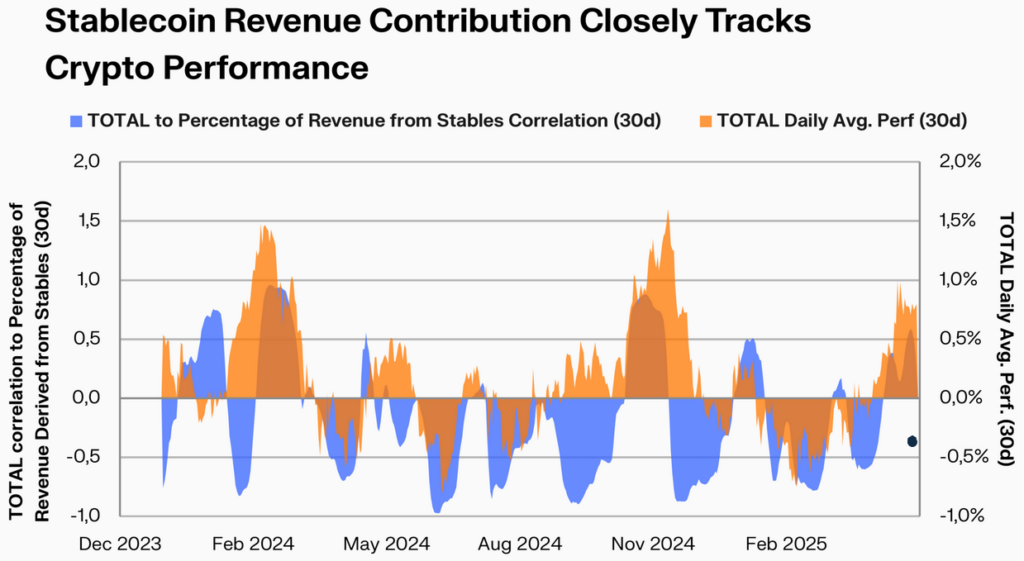
Stablecoins are already widely used for:
- international remittances
- decentralized lending
- crypto trading liquidity
- corporate treasury management
For emerging markets, stablecoins also provide protection against currency volatility and capital controls.
Companies operating in unstable financial environments increasingly hold reserves in digital dollars such as USDT or USDC.
For entrepreneurs and developers, stablecoins offer opportunities to build:
- payment gateways
- remittance platforms
- DeFi lending protocols
- tokenized asset markets
In other words, stablecoins are not simply financial instruments—they are programmable money.
Russia’s Crypto Regulation Timeline
Russia’s broader cryptocurrency regulatory framework is approaching a critical moment.
A law governing cryptocurrency exchanges is expected to be finalized in 2026, with a planned implementation date of July 1, 2026.
Following the passage of this legislation, the development of the independent stablecoin law is expected to accelerate.
Major financial institutions—including the Moscow Exchange and the Saint Petersburg Exchange—are reportedly preparing to launch cryptocurrency trading services once the regulatory framework is established.
If implemented successfully, Russia could develop a state-aligned digital asset ecosystem designed to support international trade and domestic financial innovation.
Conclusion: Stablecoins as the Next Battlefield in Financial Power
The debate over stablecoins is no longer merely technological.
It has become a contest over financial sovereignty, geopolitical influence, and the future architecture of global payments.
Russia’s exploration of a standalone stablecoin law reflects this reality.
Faced with sanctions and restricted access to traditional financial networks, the country is seeking to leverage blockchain technology to rebuild international payment channels.
At the same time, the explosive growth of the global stablecoin market suggests that this technology will continue to reshape financial systems worldwide.
For investors, entrepreneurs, and policymakers, the message is clear:
Stablecoins are emerging as one of the most important financial innovations of the decade.
Whether used for decentralized finance, international trade, or digital payment networks, they are rapidly becoming a foundational layer of the global economy.
Russia’s upcoming legislation may therefore represent not only a national policy shift—but also another milestone in the global transformation of money itself.
