
Main Points :
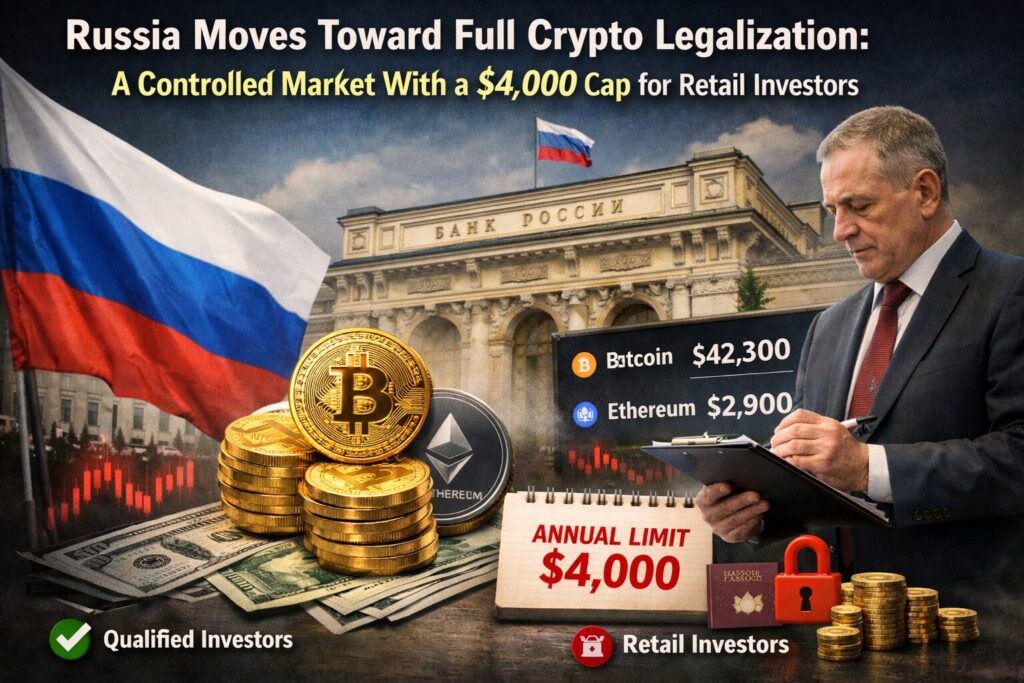
- Russia plans to introduce a comprehensive legal framework for crypto assets by July 1, 2027, marking a decisive shift from regulatory ambiguity to structured legalization.
- The framework distinguishes between qualified investors and retail (non-qualified) investors, applying different risk controls and purchase limits.
- Retail investors will face a strict annual purchase cap of $4,000, while qualified investors will not be subject to a hard ceiling but must pass risk-assessment tests.
- The Russian central bank is expected to approve a whitelist of major cryptocurrencies, such as Bitcoin and Ethereum, while banning privacy-focused coins.
- This policy reflects a broader global trend: governments are increasingly embracing crypto not as a speculative frontier, but as a regulated financial infrastructure.
Introduction: Russia’s Strategic Pivot on Crypto Assets
Russia has long maintained an ambivalent stance toward cryptocurrencies. While acknowledging their technological potential, regulators have historically viewed crypto assets as threats to monetary sovereignty, capital controls, and financial stability. That position is now undergoing a decisive transformation.
According to reporting by NADA NEWS and CoinDesk, Russia plans to introduce a comprehensive regulatory framework for cryptocurrencies by July 1, 2027. This move signals not merely incremental reform, but a structural shift toward legalization under strict state oversight.
For global crypto investors, blockchain entrepreneurs, and institutions exploring new revenue streams, Russia’s approach offers a compelling case study: a large economy attempting to harness crypto innovation while tightly controlling retail risk and illicit finance.
The Core of the New Framework: Investor Classification
At the heart of Russia’s crypto policy lies a two-tier investor system, modeled loosely on frameworks used in traditional securities markets.
Qualified Investors: Freedom With Responsibility
Qualified investors—typically high-net-worth individuals, institutional players, or those who pass formal suitability tests—will be permitted to purchase crypto assets without explicit monetary caps. However, they must undergo mandatory risk-assessment examinations, ensuring they understand volatility, custody risks, and regulatory limitations.
This reflects a broader regulatory philosophy: sophisticated capital can access innovation freely, provided it demonstrates informed consent.
Retail Investors: A $4,000 Safety Barrier
Non-qualified (retail) investors, by contrast, will face a strict annual purchase limit of $4,000 across approved crypto assets.
From a policy perspective, this cap serves multiple objectives:
- Limiting household exposure to high-volatility assets
- Reducing systemic risk during speculative bubbles
- Allowing gradual market participation without destabilizing capital flows
While critics argue that such limits constrain financial freedom, regulators see them as essential guardrails in an emerging asset class.
Approved Assets and Prohibited Coins: The Central Bank’s Role
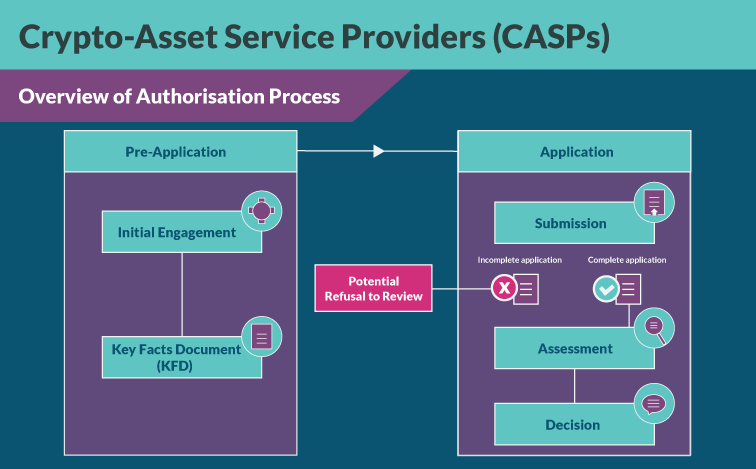
Russia’s central bank is expected to publish a list of approved cryptocurrencies for general trading. Early indications suggest that major, liquid assets such as Bitcoin and Ethereum will be included.
In contrast, privacy-focused cryptocurrencies—such as Monero and Zcash—are likely to be banned outright due to their resistance to transaction tracing.
This distinction underscores a central theme: Russia is not rejecting crypto, but selectively integrating it into a compliance-driven financial system.
Legal Consequences: Crypto Crimes as Banking Crimes
One of the most consequential aspects of the proposal is enforcement. Illegal crypto transactions may be penalized under statutes equivalent to illegal banking activity, significantly raising the legal stakes.
This approach aligns crypto regulation with traditional financial crime frameworks, signaling that digital assets are no longer treated as a legal gray zone, but as part of the formal financial order.
Global Context: Russia Is Not Alone
Russia’s move mirrors a wider international trend.
- The European Union’s MiCA framework emphasizes investor classification and asset whitelisting.
- Singapore and Hong Kong have adopted licensing regimes that tightly regulate retail participation.
- Even traditionally skeptical jurisdictions are shifting toward regulated inclusion rather than prohibition.
For blockchain businesses, this signals a maturation phase: compliance, not novelty, is becoming the decisive factor for market access.
Market Impact and Opportunities for Investor
For Crypto Investors
The $4,000 retail cap may dampen speculative surges, but it also creates regulatory clarity—a key prerequisite for institutional capital.
For Blockchain Businesses
Regulated environments favor:
- Infrastructure providers
- Compliance-first exchanges
- Custody, analytics, and reporting solutions
Russia’s framework could catalyze demand for enterprise-grade blockchain services, especially those aligned with AML and transaction monitoring.
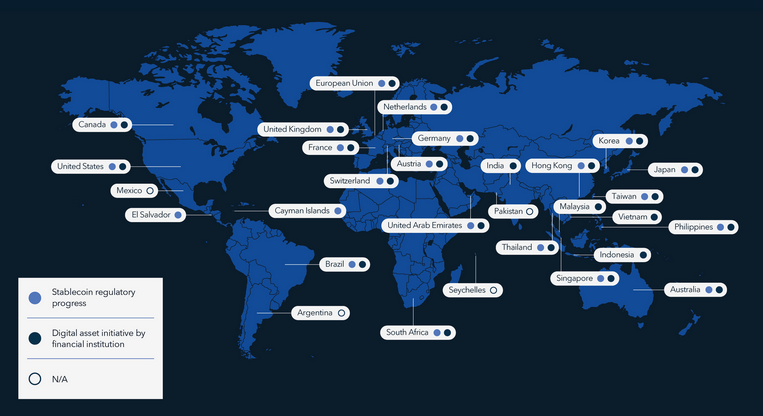
Comparison of Retail Crypto Investment Limits by Country (USD)
Strategic Implications: From Speculation to Infrastructure
Russia’s approach highlights a critical evolution in crypto policy: governments are no longer asking whether crypto should exist, but how it should be structured.
For readers seeking the next generation of crypto opportunities, the signal is clear:
- Pure speculation faces tightening constraints
- Compliance-aligned innovation gains strategic advantage
- Blockchain’s future lies in integration with regulated finance, not opposition to it
Conclusion: A Controlled Opening With Global Significance
Russia’s planned crypto legalization represents a carefully calibrated opening—welcoming innovation while imposing firm limits on retail risk and illicit use.
For investors, it offers predictability over permissiveness.
For entrepreneurs, it rewards infrastructure, compliance, and real-world utility.
For the global crypto ecosystem, it reinforces a defining narrative of the late 2020s: crypto is becoming financial infrastructure.
Those who adapt to this reality will find opportunity not in regulatory arbitrage, but in building the systems that regulated markets require.
