
Key Takeaways :
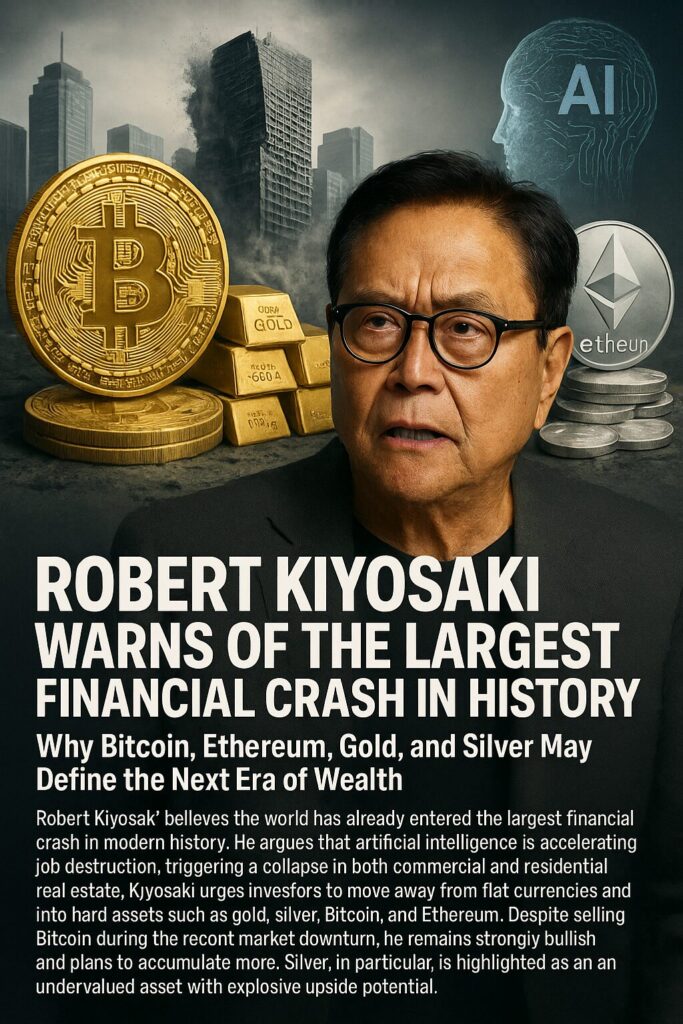
- Robert Kiyosaki believes the world has already entered the largest financial crash in modern history.
- He argues that artificial intelligence is accelerating job destruction, triggering a collapse in both commercial and residential real estate.
- Kiyosaki urges investors to move away from fiat currencies and into hard assets such as gold, silver, Bitcoin, and Ethereum.
- Despite selling Bitcoin during the recent market downturn, he remains strongly bullish and plans to accumulate more.
- Silver, in particular, is highlighted as an undervalued asset with explosive upside potential.
- For prepared investors, systemic collapse may represent an unprecedented wealth-building opportunity rather than a catastrophe.
Introduction: A Familiar Warning, Delivered With Greater Urgency
Robert Kiyosaki, the globally renowned author of Rich Dad Poor Dad, has once again issued a stark warning to the world. According to Kiyosaki, the global economy has already crossed a critical threshold and entered what he describes as “the biggest financial crash in history.”
This is not a new claim from a sensationalist commentator. Kiyosaki has spent decades warning about structural weaknesses in the global financial system—particularly the dangers of excessive debt, fiat currency debasement, and overreliance on centralized monetary authorities. What makes his latest warning notable is not only its intensity, but its timing: he argues that the collapse he predicted more than a decade ago is no longer theoretical. It is unfolding now, simultaneously across the United States, Europe, and Asia.
For investors seeking new crypto assets, alternative income sources, and practical blockchain use cases, Kiyosaki’s message deserves careful examination—not as prophecy, but as a framework for understanding systemic risk and opportunity.
“The Biggest Crash Has Begun”: Revisiting Kiyosaki’s Long-Term Thesis
On November 22, Kiyosaki wrote on X that the largest financial crash in history had officially begun. He referenced his 2013 book Rich Dad’s Prophecy, in which he warned that a massive economic collapse would follow decades of artificial growth fueled by debt and monetary manipulation.
According to Kiyosaki, the key problem is not a single market or country. Instead, it is the global nature of the breakdown. He argues that the U.S. economy, long viewed as the anchor of global finance, is weakening under the weight of unsustainable government debt and structural job erosion. At the same time, Europe faces stagnation, demographic decline, and fiscal strain, while Asia struggles with slowing growth and overleveraged property markets.
In Kiyosaki’s view, these pressures are converging rather than offsetting one another, creating a synchronized global downturn that traditional policy tools are ill-equipped to stop.
AI as an Accelerant: Job Destruction and the Real Estate Domino Effect
One of the most distinctive aspects of Kiyosaki’s recent commentary is his emphasis on artificial intelligence as a catalyst for economic collapse.
He argues that AI is not merely a productivity tool—it is a force that fundamentally reshapes labor demand. As AI systems replace human workers across finance, administration, logistics, customer service, and even creative industries, millions of jobs may disappear faster than new roles can be created.
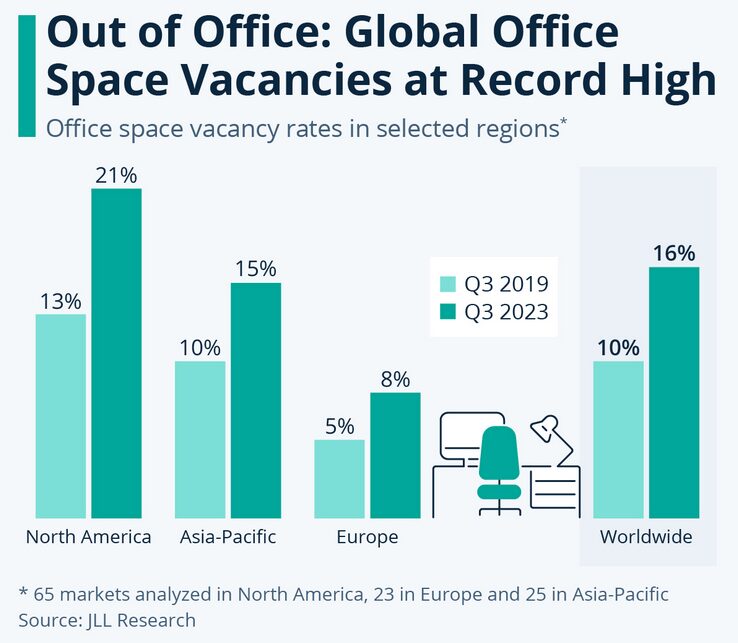
The consequence, according to Kiyosaki, is a collapse in demand for both office and residential real estate. If fewer people need to commute, fewer offices are required. If incomes become unstable or disappear entirely, housing demand weakens. This creates a feedback loop: falling property values damage bank balance sheets, tighten credit, and amplify the downturn.
Global Office and Residential Real Estate Stress Indicators
(Conceptual visualization comparing vacancy rates and price indices)
Hard Assets as Financial Armor: Gold, Silver, Bitcoin, and Ethereum
As in his previous warnings, Kiyosaki’s solution is clear: exit fiat currencies and accumulate hard assets.
He consistently frames fiat money—especially the U.S. dollar—as fundamentally flawed due to unlimited supply and political manipulation. In contrast, he views gold, silver, and decentralized digital assets as forms of “real money” that cannot be printed at will.
This time, his recommendation explicitly includes Bitcoin and Ethereum alongside precious metals. Bitcoin, in particular, is portrayed as a hedge against monetary debasement and systemic banking risk. Ethereum, while more technologically complex, is increasingly viewed as critical infrastructure for decentralized finance, tokenization, and programmable money.
Importantly, Kiyosaki does not frame crypto as a short-term trade. Instead, he treats it as a long-term hedge against structural instability.
Selling Bitcoin During a Crash—and Buying More Later
One point that surprised many observers was Kiyosaki’s admission that he sold approximately $2.25 million worth of Bitcoin during the recent market crash. However, he framed this not as a loss of conviction, but as an example of disciplined capital management.
According to Kiyosaki, taking profits during periods of extreme volatility allows investors to redeploy capital at lower prices later. He emphasized that his long-term bullish stance on Bitcoin remains unchanged, and that he intends to use fresh cash flow to accumulate more BTC as conditions evolve.
This approach reflects a broader principle relevant to crypto investors: conviction in an asset does not preclude tactical risk management.
Silver: The Most Underrated Hard Asset?
While Bitcoin often dominates headlines, Kiyosaki has recently devoted unusual attention to silver. He describes it as both “the best” and “the safest” asset, citing its dual role as a monetary metal and an industrial input.
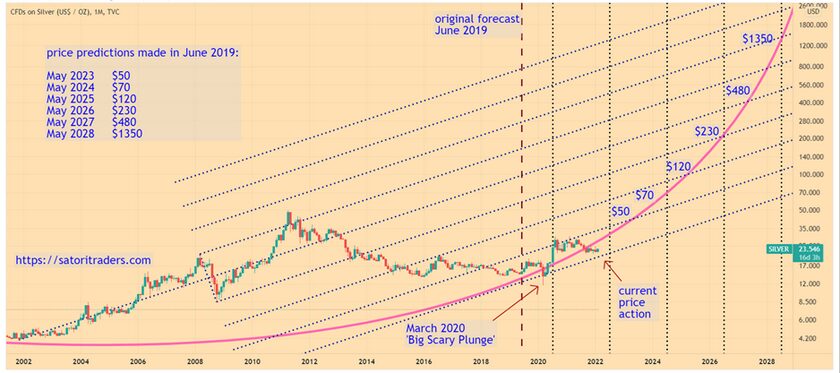
He publicly stated that silver is currently priced around $50 and could rise to $70 in the near term, with a long-term projection of $200 by 2026. While such forecasts are speculative, they highlight a broader thesis: silver’s supply constraints and industrial demand—particularly in solar energy, electronics, and electric vehicles—may create asymmetric upside.
Silver Price vs Industrial Demand Growth
(Conceptual visualization of long-term demand drivers)
Crisis as Opportunity: Wealth Creation Amid Systemic Collapse
Despite his dire warnings, Kiyosaki repeatedly emphasizes that economic collapse does not affect everyone equally. In his words, when millions lose everything, those who are prepared can become significantly wealthier.
Preparation, in this context, means understanding monetary systems, owning assets outside the traditional banking system, and maintaining flexibility. For crypto-native investors, this aligns closely with self-custody, decentralized finance, and blockchain-based settlement systems that operate independently of fragile intermediaries.
From this perspective, blockchain is not merely a speculative playground—it is an alternative financial rail designed for precisely the kind of instability Kiyosaki predicts.
Implications for Blockchain and Crypto Practitioners
For readers interested in the practical use of blockchain, Kiyosaki’s thesis reinforces several key trends:
- Demand for non-custodial wallets and self-sovereign asset management is likely to grow.
- Tokenized real-world assets may emerge as alternatives to traditional real estate exposure.
- Stablecoins and on-chain settlement systems could gain importance as trust in banks erodes.
- Ethereum and other programmable chains may become foundational infrastructure rather than speculative assets.
These developments suggest that the next phase of crypto adoption may be driven less by hype and more by necessity.
Conclusion: A Warning, Not a Guarantee—But One Worth Preparing For
Robert Kiyosaki’s warning of the largest financial crash in history may or may not unfold exactly as he predicts. However, his core message is consistent and difficult to dismiss: the current financial system is under severe strain, and traditional assumptions about safety and stability deserve re-examination.
For investors and builders focused on crypto, blockchain, and alternative assets, this moment may represent a transition point. Whether through Bitcoin, Ethereum, precious metals, or decentralized financial infrastructure, the tools to navigate systemic risk already exist.
As Kiyosaki suggests, the question is not whether disruption is coming—but whether you are prepared to turn it into opportunity.
