
Main Points :
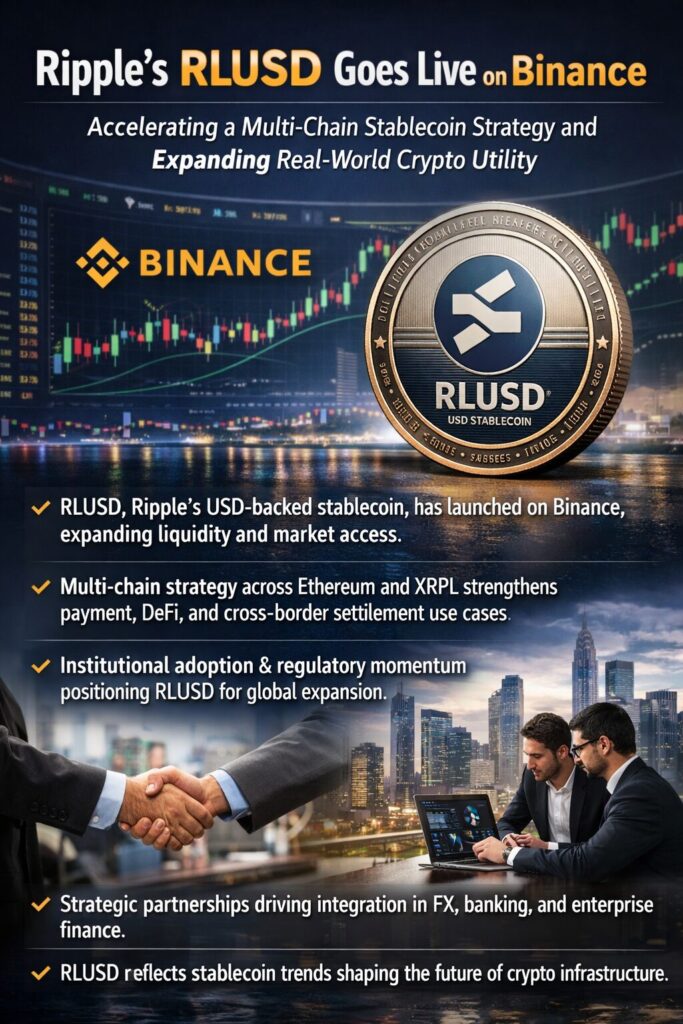
- RLUSD’s listing on Binance marks a structural expansion of Ripple’s stablecoin ecosystem, integrating it into the world’s largest crypto exchange liquidity network.
- Multi-chain deployment across Ethereum and XRPL creates a hybrid financial infrastructure combining smart contracts and high-speed settlement.
- Institutional adoption is accelerating, with integrations into FX markets, regulated banks, and cross-border payment rails.
- RLUSD is positioning itself not merely as a stablecoin, but as financial infrastructure, bridging crypto-native DeFi, TradFi, and regulated digital finance.
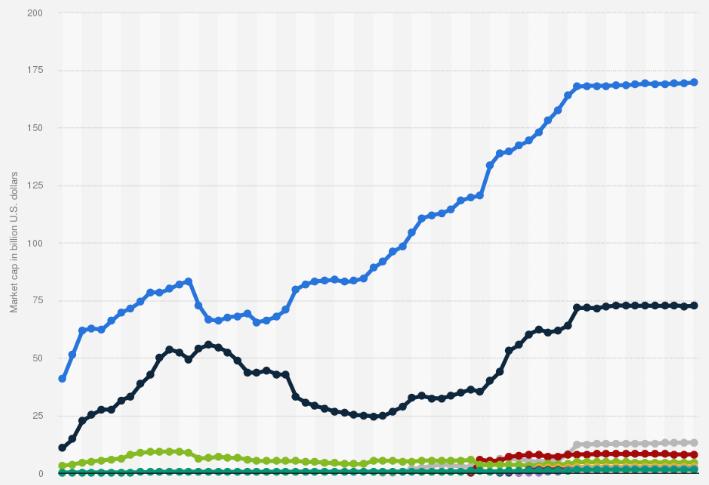
- The global stablecoin market trajectory toward a $1.5 trillion market by 2026 makes RLUSD a strategic asset for long-term capital flows, liquidity provision, and enterprise finance.
Binance Listing: RLUSD Enters Global Liquidity Infrastructure
The listing of RLUSD on Binance represents far more than a routine exchange onboarding. It signals the formal entry of Ripple’s stablecoin into global-scale liquidity infrastructure. With trading pairs such as RLUSD/USDT and XRP/RLUSD, RLUSD is now embedded directly into one of the deepest liquidity venues in the digital asset market.
At launch, RLUSD operates on Ethereum, with XRPL integration scheduled next. This dual-chain structure is strategically significant. Ethereum provides access to DeFi, smart contracts, composability, and institutional-grade tokenization frameworks, while XRPL offers high-speed, low-cost settlement optimized for payments and remittances.
Binance’s zero-fee trading campaigns further accelerate liquidity bootstrapping, enabling rapid market depth formation and price stability during the early phase of adoption. This approach mirrors the playbook used by major exchanges when onboarding strategically important infrastructure tokens rather than speculative assets.
From a market-structure perspective, RLUSD is being positioned not as a retail trading instrument, but as a settlement layer, treasury instrument, and enterprise liquidity medium.
Asset Backing, Transparency, and Institutional Trust
RLUSD is backed 1:1 by a reserve structure consisting of U.S. dollars, short-term U.S. Treasuries, and cash equivalents. Monthly attestations provide transparency and regulatory alignment, addressing one of the central trust deficits that historically plagued algorithmic and under-collateralized stablecoins.
With a market capitalization exceeding $1.3 billion, RLUSD has already crossed the threshold where institutional adoption becomes structurally viable. Liquidity scale matters: enterprise finance does not integrate assets measured in millions, but in billions.
Brad Garlinghouse has emphasized that Binance listing dramatically improves developer accessibility and institutional entry points. This matters because infrastructure adoption is path-dependent: once enterprise systems integrate a settlement asset, switching costs become high.
RLUSD is not being framed as a consumer stablecoin; it is being framed as infrastructure-grade money.
Multi-Chain Architecture: Ethereum + XRPL as a Financial Hybrid Model
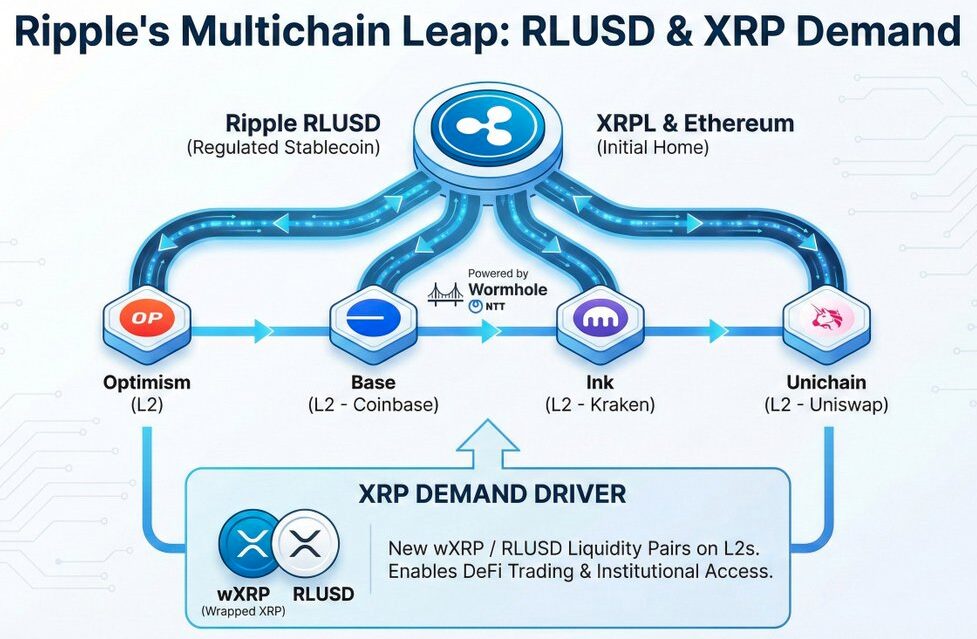
RLUSD’s dual-chain deployment creates a hybrid financial architecture:
Ethereum Layer
- Smart contracts
- DeFi integration
- Tokenized securities
- On-chain treasury management
- Automated market making (AMM)
- Institutional DeFi frameworks
XRPL Layer
- High-speed settlement
- Ultra-low transaction fees
- Payment rails
- Cross-border remittance infrastructure
- Enterprise-grade throughput
- Regulatory-friendly transaction design
This architecture allows RLUSD to operate simultaneously in:
- DeFi economies
- Enterprise payment systems
- Cross-border remittance corridors
- FX settlement networks
- Tokenized asset markets
This is structurally different from single-chain stablecoins, which are constrained by network limitations. RLUSD becomes chain-agnostic infrastructure rather than ecosystem-dependent liquidity.
Global Adoption and Regulatory Alignment
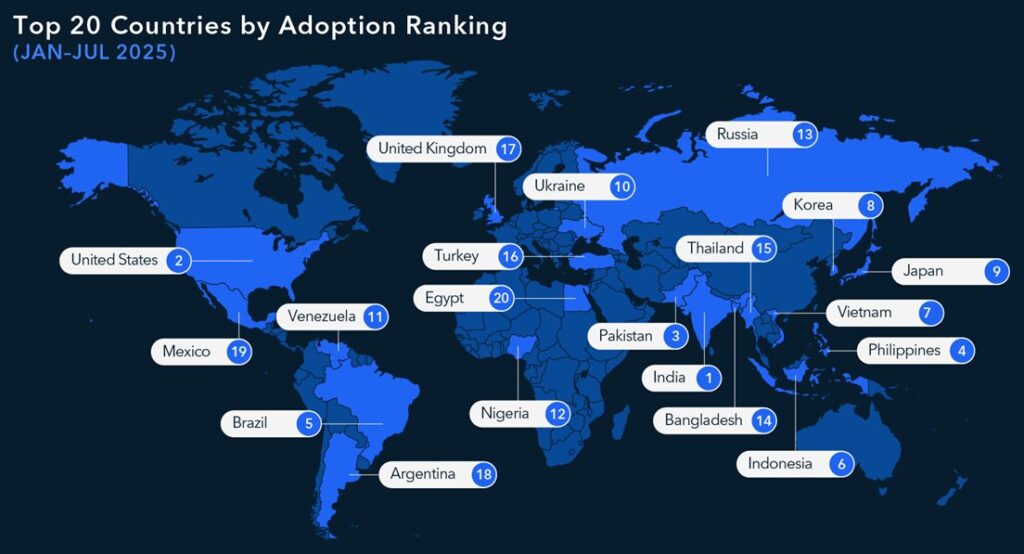
RLUSD’s expansion is not limited to crypto-native platforms. Strategic integrations are underway with:
- Facilita Pay
- Ripio
- OSL
- Bitpanda
- Amina Bank
These partnerships extend RLUSD into regulated financial environments across the Middle East, Africa, Europe, and Latin America.
Most notably, the Abu Dhabi Financial Services Authority has approved RLUSD as a reference asset within fiat systems. This is a critical regulatory signal: RLUSD is being recognized not merely as a crypto token, but as a financial reference instrument.
This positions RLUSD within emerging frameworks of regulated digital money, where stablecoins serve as programmable fiat representations.
Institutional Market Integration: FX, Banking, and Capital Markets
Ripple’s $150 million investment into LMAX Group integrates RLUSD into FX trading infrastructure. This is a major structural development: RLUSD is being connected directly to global foreign exchange markets.
This creates the foundation for:
- On-chain FX settlement
- Stablecoin-based liquidity provision
- Real-time treasury operations
- Cross-border corporate cash management
- Tokenized forex instruments
- Automated hedging systems
Additionally, Ripple’s preliminary approval for a Luxembourg electronic money institution (EMI) license positions RLUSD for regulated EU operations. This aligns with the projected stablecoin market growth toward $1.5 trillion by 2026.
RLUSD is not competing with USDT or USDC at the retail payment layer — it is positioning itself as institutional settlement infrastructure.
Economic Utility: Beyond Payments into Financial Infrastructure
RLUSD’s real value proposition lies in system-level utility, not transactional convenience.
Enterprise Use Cases
- Treasury management
- Liquidity provisioning
- Internal corporate settlements
- Trade finance
- Supply chain finance
- FX hedging
- Tokenized asset settlement
DeFi Integration
- Collateralization
- Yield strategies
- On-chain credit markets
- Automated treasury optimization
- DAO financial management
- Tokenized bond markets
Financial Engineering Layer
RLUSD becomes programmable capital:
- Yield-bearing strategies
- Automated treasury allocation
- Smart contract escrow
- Conditional payments
- Cross-chain liquidity routing
Strategic Implications for Investors, Builders, and Institutions
For investors, RLUSD represents exposure to infrastructure-layer value, not speculative volatility.
For builders, RLUSD provides:
- Stable settlement layer
- Regulatory-aligned liquidity
- Multi-chain deployment flexibility
- Enterprise-grade integration potential
For institutions, RLUSD offers:
- Digital settlement rails
- Programmable money
- Regulatory-aligned stable asset
- Global liquidity access
- Risk-managed capital mobility
Conclusion: RLUSD as Financial Infrastructure, Not Just a Stablecoin
RLUSD’s Binance listing is not simply an exchange event — it is a structural milestone in Ripple’s long-term financial architecture strategy. Through multi-chain deployment, institutional integration, regulatory alignment, and enterprise finance positioning, RLUSD is evolving into digital financial infrastructure rather than a transactional token.
The convergence of:
- Multi-chain operability
- Institutional FX integration
- Regulatory recognition
- Enterprise partnerships
- Global liquidity access
positions RLUSD as a foundational layer for the next generation of blockchain finance.
For investors, it represents infrastructure exposure.
For enterprises, it represents programmable money.
For institutions, it represents regulated digital liquidity.
For builders, it represents a stable financial substrate.
RLUSD is not competing for retail payments — it is competing to become the settlement layer of the digital financial system.
