
Key Takeaways :
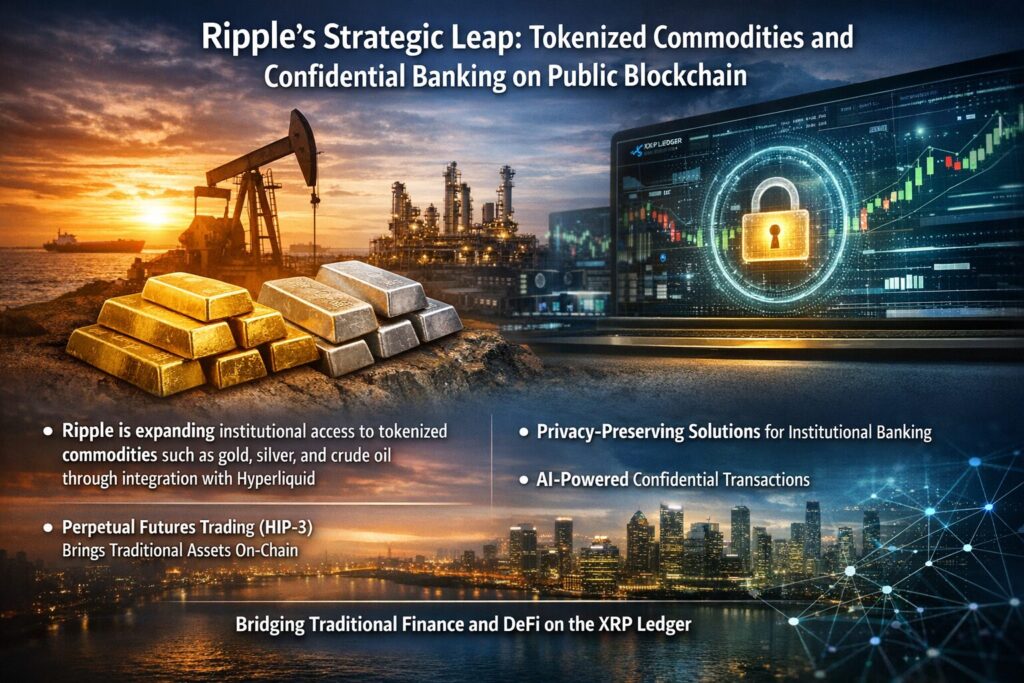
- Ripple is expanding institutional access to tokenized commodities such as gold, silver, and crude oil through integration with Hyperliquid
- The introduction of perpetual futures (via HIP-3) enables on-chain trading of traditional assets at institutional scale
- XRP Ledger is evolving to support privacy-preserving transactions tailored for banks
- AI-driven security and confidential transaction frameworks aim to solve a long-standing barrier for institutional adoption
- The convergence of TradFi and DeFi is accelerating, positioning XRP infrastructure as a bridge between both worlds
1. Expanding Into Tokenized Commodities Markets
Institutional Access to Gold, Oil, and Beyond
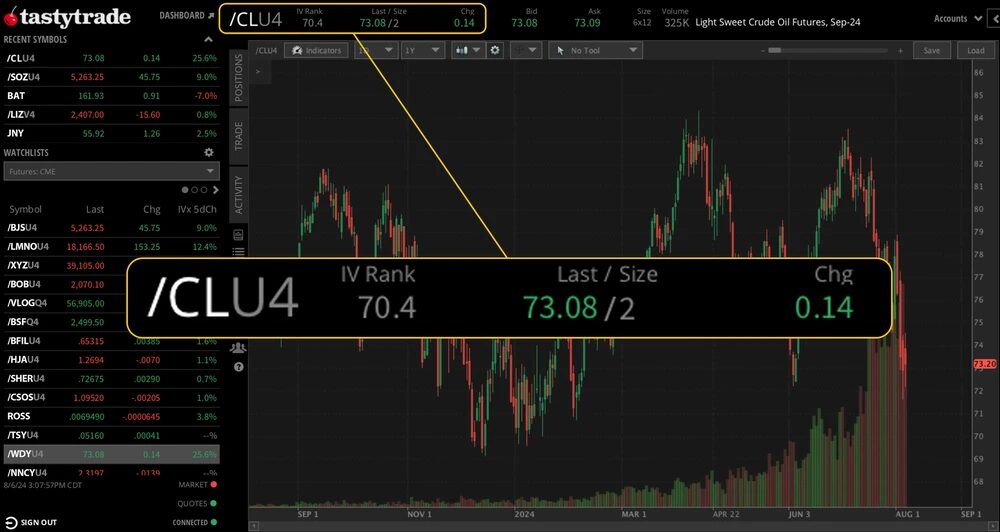
The recent expansion of Ripple’s institutional platform, Ripple Prime, marks a significant evolution in how traditional financial assets are accessed and traded. By deepening its integration with Hyperliquid, Ripple is opening the door to on-chain perpetual futures trading for commodities such as gold, silver, and crude oil.
This is not merely a technical upgrade—it represents a structural shift in market access. Traditionally, commodities futures markets have been dominated by centralized exchanges like CME Group, requiring brokers, margin accounts, and significant capital commitments. Ripple’s approach fundamentally changes this dynamic.
Through HIP-3-enabled instruments, institutions can now gain exposure to commodity markets directly on-chain, eliminating multiple intermediaries while maintaining the sophistication required for professional trading environments.
Why This Matters for Crypto Investors
For readers seeking new revenue opportunities, this development is particularly significant. Tokenized commodities introduce:
- New hedging instruments within crypto portfolios
- Correlation diversification beyond purely digital assets
- Yield strategies through perpetual futures funding rates
Moreover, pricing remains effectively anchored to global markets but expressed in blockchain-native infrastructure, often denominated in stablecoins or USD equivalents (e.g., gold ≈ $2,300 per ounce, crude oil ≈ $80 per barrel depending on market conditions).
2. The Rise of Hybrid Finance: TradFi Meets DeFi
A Structural Convergence
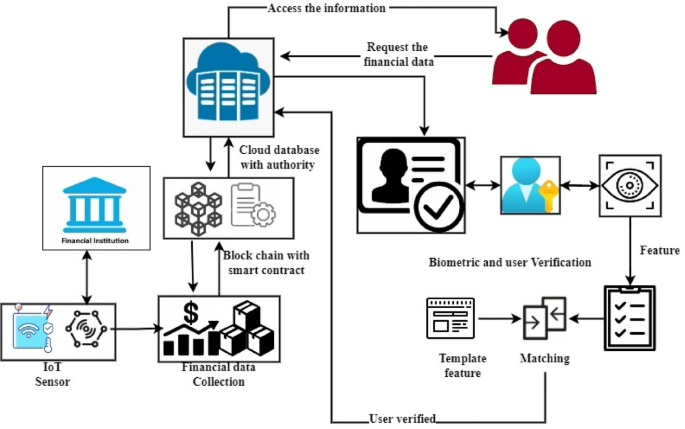
The integration between Ripple Prime and Hyperliquid highlights a broader trend: the merging of traditional finance (TradFi) and decentralized finance (DeFi). This hybrid model is becoming increasingly attractive to institutions that seek efficiency without sacrificing compliance.
Platforms like BlackRock and JPMorgan Chase have already begun experimenting with tokenized assets and blockchain settlement layers. Ripple’s approach differs in that it leverages a public blockchain infrastructure while attempting to embed institutional-grade features directly into it.
Competitive Positioning
Compared to fully centralized platforms, Ripple offers:
- Transparency via public ledger infrastructure
- Programmability for financial instruments
- Reduced counterparty risk
Compared to purely decentralized platforms, it adds:
- Institutional onboarding frameworks
- Compliance-friendly architecture
- Enhanced security and privacy layers
This dual positioning could be a key differentiator in the next phase of blockchain adoption.
3. Solving the Privacy Problem in Public Blockchains
The Core Barrier: Transparency vs Confidentiality
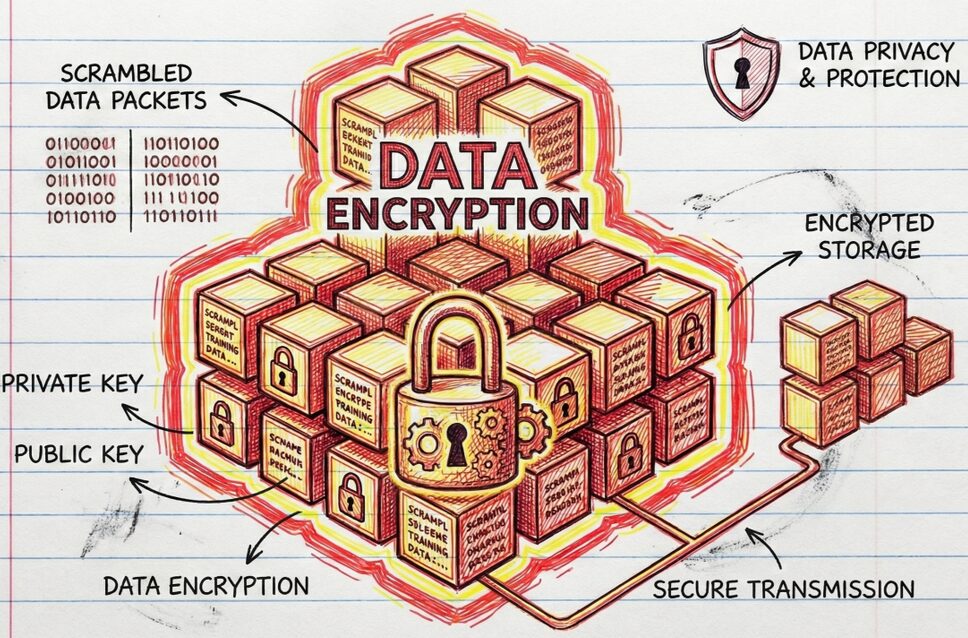
Public blockchains like XRP Ledger are inherently transparent. While this transparency is valuable for auditability, it presents a major obstacle for financial institutions that must protect sensitive transactional data.
Banks require confidentiality in areas such as:
- Treasury management
- Client transactions
- Liquidity movements
- Risk exposure
Without privacy, institutional adoption remains limited.
Ripple’s Approach: Confidential Transactions + AI
Ripple is addressing this challenge through two major innovations:
1. Privacy-Enhanced Transactions
The introduction of confidential transaction mechanisms aims to obscure sensitive data while maintaining verifiability. This could involve cryptographic techniques similar to:
- Zero-knowledge proofs (ZKPs)
- Encrypted transaction metadata
- Selective disclosure frameworks
2. AI-Driven Security Layer
AI integration introduces adaptive monitoring systems capable of:
- Detecting anomalous transaction patterns
- Enhancing fraud detection
- Supporting compliance automation
This combination allows Ripple to target a critical institutional requirement: privacy without sacrificing compliance or security.
Tokenized Commodities Market Growth Projection

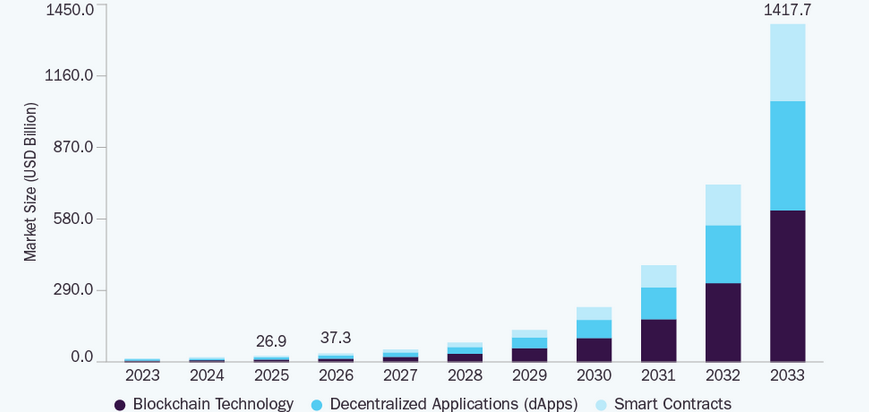
Below is a conceptual chart illustrating projected growth in tokenized commodity trading volume (USD):
4. Strategic Implications for the XRP Ecosystem
Expanding Utility Beyond Payments
Historically, XRP has been positioned primarily as a cross-border payment asset. However, these developments significantly expand its role:
- Collateral in derivatives markets
- Liquidity bridge for tokenized assets
- Settlement layer for institutional trading
This diversification strengthens the long-term value proposition of the XRP ecosystem.
Institutional Liquidity Inflow
As institutional players enter tokenized commodities markets, liquidity depth is expected to increase. This can lead to:
- Tighter spreads
- Increased trading volumes
- More sophisticated financial instruments
Such developments tend to reinforce market stability while opening new speculative and arbitrage opportunities.
5. Risks and Challenges
Regulatory Uncertainty
While Ripple is advancing technologically, regulatory clarity remains uneven across jurisdictions. Key concerns include:
- Classification of tokenized commodities
- Derivatives regulation
- Cross-border compliance
Authorities such as the U.S. Securities and Exchange Commission and global regulators continue to shape the legal landscape.
Technical Complexity
Implementing privacy on public blockchains without compromising performance is non-trivial. Potential risks include:
- Increased computational overhead
- Latency issues
- Integration challenges for institutions
Market Adoption Risk
Even with strong infrastructure, adoption depends on:
- Institutional trust
- Liquidity availability
- User experience
6. The Bigger Picture: A New Financial Infrastructure
Ripple’s recent developments reflect a broader shift toward programmable finance, where assets, contracts, and transactions exist natively on blockchain infrastructure.
The combination of:
- Tokenized real-world assets
- Institutional-grade access
- Privacy-preserving mechanisms
signals the emergence of a new financial paradigm.
This aligns with macro trends such as:
- The tokenization of real-world assets (RWA)
- The digitization of capital markets
- The rise of decentralized yet compliant financial systems
Conclusion
Ripple’s integration with Hyperliquid and the introduction of privacy-enhanced banking features represent a pivotal moment in the evolution of blockchain finance.
By enabling on-chain trading of commodities like gold and oil while simultaneously addressing institutional concerns around confidentiality, Ripple is positioning itself at the intersection of TradFi and DeFi.
For investors and builders alike, the implications are profound:
- New asset classes are becoming accessible on-chain
- Institutional participation is accelerating
- Blockchain is moving beyond speculation into real economic infrastructure
If successfully executed, these developments could redefine not only the role of XRP but also the architecture of global finance itself.
