

Main Points :
- Ripple has obtained authorization from the UK Financial Conduct Authority (FCA) as an Electronic Money Institution (EMI) and completed its cryptoasset registration.
- This approval allows Ripple to significantly expand regulated payment and settlement services in the UK market.
- The move reflects the UK’s growing role as a global hub for compliant blockchain and digital asset infrastructure.
- Ripple positions blockchain-based payments as a means to unlock trillions of dollars in idle capital and transform cross-border value transfer.
- For investors and practitioners, the development signals accelerating institutional adoption of regulated crypto payment rails.
1. Introduction: A Strategic Regulatory Milestone
Ripple’s announcement on January 9, 2026, that it has secured authorization from the UK Financial Conduct Authority (FCA) marks a pivotal moment not only for the company itself, but also for the broader blockchain payments industry. By obtaining an Electronic Money Institution (EMI) license and completing its cryptoasset business registration, Ripple has crossed a major regulatory threshold that enables it to scale payment services across one of the world’s most influential financial centers.
For readers searching for new digital assets, emerging revenue opportunities, and real-world blockchain applications, this development underscores a crucial theme of 2026: regulatory clarity is becoming the main catalyst for adoption.
2. What the FCA Authorization Means in Practice
The FCA is widely regarded as one of the world’s strictest financial regulators. Approval is neither automatic nor symbolic. It requires robust governance, compliance frameworks, AML/CFT controls, operational resilience, and consumer protection mechanisms.
By securing EMI status, Ripple can:
- Issue and manage electronic money in the UK.
- Provide regulated payment services to institutions and enterprises.
- Integrate digital assets into compliant cross-border settlement flows.
This places Ripple alongside traditional fintech payment providers, but with blockchain-native infrastructure at its core.
[“Regulated Blockchain Payments Framework in the UK”]

3. The UK as a Core Pillar of Ripple’s Global Strategy
Ripple emphasized that this approval demonstrates its deep and ongoing commitment to the UK. Since 2016, London has hosted Ripple’s largest office outside the United States. Over the years, the company has expanded headcount, invested in local talent, and actively supported blockchain developer ecosystems.
This long-term presence matters. In contrast to jurisdictions where crypto firms operate through regulatory gray zones, Ripple has consistently pursued regulator-first expansion. The UK, with its sophisticated financial markets and globally respected regulatory regime, now becomes a launchpad for enterprise-grade blockchain payments.
4. Executive Perspective: From Experimentation to Infrastructure
Ripple President Monica Long framed the announcement in broader historical terms. According to her, global finance is moving beyond the experimental phase of blockchain adoption. Digital assets are transitioning into core economic infrastructure.
Her statement highlights two powerful ideas:
- Blockchain is no longer about proof-of-concept pilots.
- Regulated deployment can unlock trillions of dollars in dormant capital.
This framing aligns closely with trends seen in other markets, where tokenized deposits, on-chain settlement, and real-time cross-border payments are increasingly viewed as efficiency upgrades rather than speculative experiments.
5. Why Regulatory Clarity Accelerates Adoption
Cassy Craddock, Managing Director for the UK and Europe at Ripple, reinforced this view by pointing to the FCA’s strict compliance standards. Far from being an obstacle, regulatory rigor acts as a confidence multiplier for enterprises.
In regions where rules are clear:
- Banks integrate blockchain rails faster.
- Corporates adopt digital asset payments with less legal risk.
- Institutional liquidity enters the market more readily.
The UK’s approach mirrors trends observed in jurisdictions such as Singapore and parts of the EU, where well-defined frameworks have driven measurable increases in enterprise blockchain usage.
6. Market Context: Global Momentum in Regulated Crypto Payments
Ripple’s FCA approval does not exist in isolation. Across global markets in late 2025 and early 2026, several themes have converged:
- Traditional financial institutions are exploring tokenized money and settlement layers.
- Stablecoins and blockchain-based payments are increasingly used for treasury and cross-border operations.
- Regulators are shifting from enforcement-only postures to structured licensing regimes.
These trends indicate that the next growth phase of crypto will be less about retail speculation and more about infrastructure and cash-flow-driven use cases.
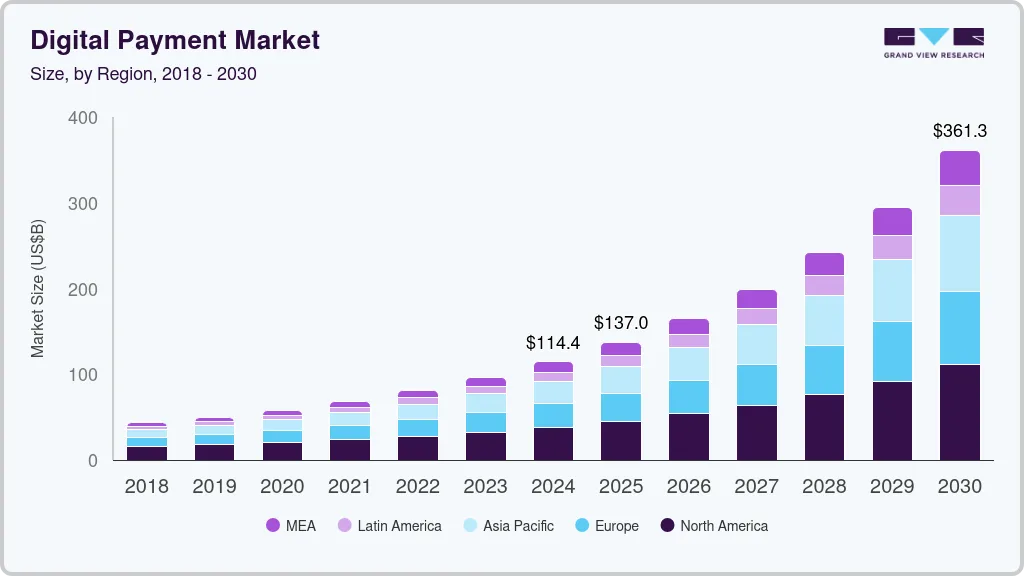
[“Traditional Cross-Border Payments vs Blockchain-Based Settlement”]
7. Economic Implications: Unlocking Idle Capital
One of Ripple’s most compelling arguments is economic rather than technological. Legacy cross-border payment systems often trap liquidity in nostro/vostro accounts, creating inefficiencies measured in trillions of dollars globally.
Blockchain-based settlement:
- Reduces pre-funded capital requirements.
- Shortens settlement cycles from days to seconds.
- Improves transparency and auditability.
For enterprises, this translates into working capital optimization, not just cost reduction. For investors, it signals a shift toward blockchain projects with predictable, utility-driven revenue models.
8. Strategic Implications for Digital Asset Investors
From an investment perspective, Ripple’s FCA authorization strengthens several narratives:
- Regulated infrastructure providers may outperform purely speculative tokens.
- Jurisdictions with strong regulators can become adoption hubs.
- Digital assets linked to payment, settlement, and liquidity management have clearer paths to monetization.
This does not eliminate volatility, but it reshapes the risk profile. Projects embedded in compliant financial systems are less likely to face existential regulatory shocks.
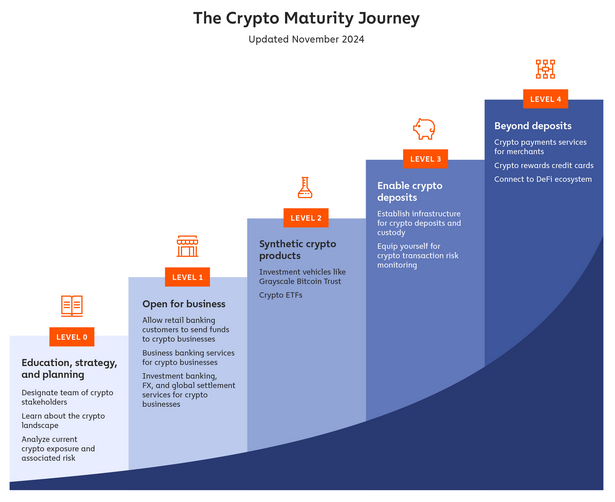
[“Enterprise Blockchain Adoption Curve Under Regulatory Clarity”]
9. Broader Industry Impact: A Signal to Policymakers
Ripple’s success also sends a message to policymakers worldwide. Clear rules attract capital, talent, and long-term investment. Ambiguity drives innovation elsewhere.
As more countries compete to host digital asset infrastructure, the UK’s FCA approval process positions the country as a credible alternative hub amid ongoing regulatory fragmentation globally.
10. Conclusion: From Compliance to Competitive Advantage
Ripple’s FCA authorization is more than a licensing headline. It represents a strategic convergence of regulation, technology, and market demand. For the blockchain industry, it reinforces the idea that compliance is no longer a constraint—it is a competitive advantage.
For readers interested in new crypto assets, future revenue streams, and practical blockchain use cases, this development highlights where the next wave of value creation is likely to occur: regulated, enterprise-grade digital asset infrastructure embedded within global financial systems.
