
Main Points :
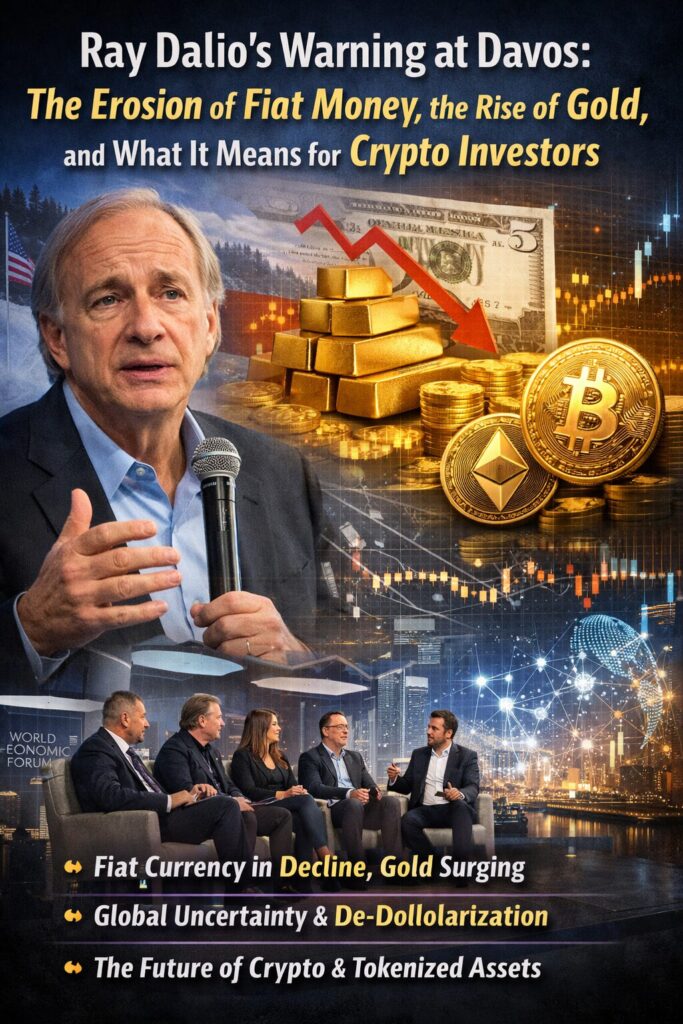
- Ray Dalio warns that the global fiat currency system is gradually breaking down, as central banks rethink how they store value.
- Gold has outperformed most major asset classes recently, signaling deep structural anxiety in monetary policy rather than a short-term trade.
- Political uncertainty—especially around U.S. trade policy and tariffs—accelerates de-dollarization trends and reserve diversification.
- Crypto leaders at Davos argue that tokenization and blockchain-based financial infrastructure can modernize capital markets.
- For investors and builders, the convergence of gold, crypto, and tokenized assets represents not competition, but a layered monetary future.
1. A Stark Warning from Ray Dalio at Davos
Ray Dalio, founder of Bridgewater Associates and one of the most influential macro investors of the modern era, issued a clear and unsettling warning during interviews at the World Economic Forum in Davos.
Speaking against a backdrop of geopolitical tension, trade uncertainty, and shifting monetary policy, Dalio stated that the global monetary order—long anchored by fiat currencies and sovereign debt—is “breaking down.” His message was not framed as an imminent collapse, but as a structural transition already underway.
According to Dalio, both sides of the fiat system—the issuers of currency (central banks and governments) and the holders of currency (investors, institutions, and foreign governments)—are increasingly uneasy. This mutual distrust undermines fiat money’s historical role as a reliable store of value.
Dalio emphasized that central banks are no longer holding fiat currency and sovereign debt in the same way they once did, marking a fundamental shift in reserve management behavior.
2. Why Gold Is Sending a Loud Signal
One of Dalio’s most striking observations was that gold was the best-performing major market last year, outperforming technology stocks and other risk assets.
This is not merely a speculative rally. Historically, gold rallies during periods of:
- Monetary debasement
- Rising geopolitical risk
- Declining confidence in government debt
- Structural inflation pressures
Gold’s performance reflects systemic concern, not short-term fear.
【“Gold vs. Major Asset Classes (2023–2025, USD)”】
Line chart comparing gold, S&P 500, Nasdaq, and US Treasuries in USD terms.
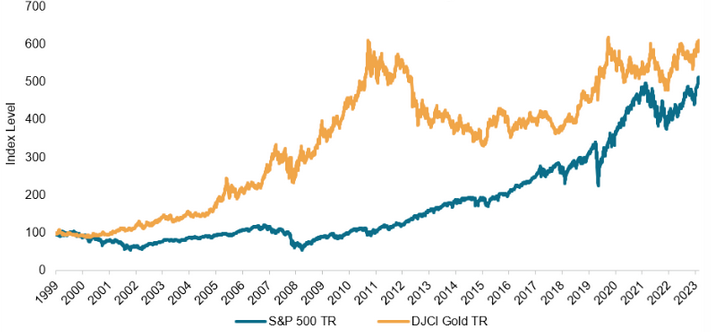
Dalio’s implication is subtle but powerful: gold is not winning because it is exciting, but because fiat money is losing credibility.
3. Political Uncertainty and the Return of Trade Wars
Dalio’s comments came only hours after Donald Trump suggested the possibility of new tariffs on European countries, following disputes involving Denmark and Greenland.
Trade wars introduce several destabilizing effects:
- Currency weaponization – Exchange rates become political tools
- Inflationary pressure – Tariffs raise import costs in USD terms
- Reserve diversification – Countries reduce exposure to the USD
Dalio has previously warned that aggressive trade policy accelerates fragmentation in the global monetary system. Even the possibility of such policies leads central banks to hedge preemptively.
This is one reason gold—and increasingly digital assets—benefit during periods of policy unpredictability.
4. Central Banks, Fiat Fatigue, and De-Dollarization
At the core of Dalio’s argument is a quiet but persistent trend: central banks are diversifying away from fiat currencies, especially the U.S. dollar.
This does not mean abandoning fiat entirely. Instead, it reflects a move toward plural reserve systems, including:
- Gold
- Alternative currencies
- Commodity-linked assets
- In some cases, exploratory digital assets
【“Central Bank Gold Reserves as % of Total Reserves (USD)”】
Bar chart showing increased gold allocation among major central banks.
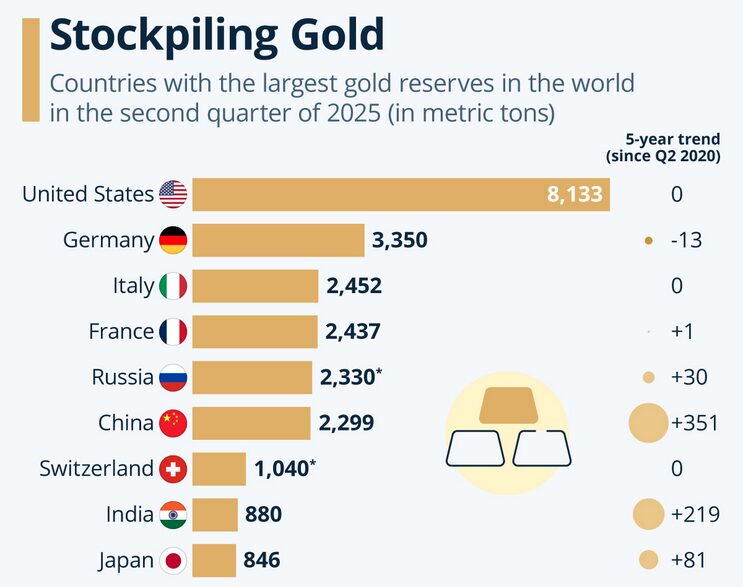
This shift matters because fiat money relies on confidence and coordination. When that coordination weakens, value migrates toward assets perceived as neutral, scarce, or politically independent.
5. Crypto Leaders Gather in Davos: A Parallel Conversation
While traditional finance leaders debated inflation and geopolitics, crypto executives were also active at Davos, positioning blockchain as part of the solution—not the problem.
Among them was Brian Armstrong, CEO of Coinbase, who emphasized that crypto can:
- Modernize financial infrastructure
- Democratize access to capital markets
- Enable tokenization of real-world assets
Armstrong highlighted tokenization as a key theme: the ability to represent equities, bonds, funds, and commodities directly on blockchain rails.
This narrative aligns with Dalio’s concerns. If fiat systems are strained, financial plumbing must evolve—and blockchain offers an alternative settlement and ownership layer.
6. Gold vs. Crypto: Not a Rivalry, but a Spectrum
A common misconception is that gold and crypto compete for the same role. In reality, they occupy different positions on the monetary spectrum:
| Asset | Primary Role | Key Strength |
|---|---|---|
| Gold | Store of value | 5,000+ years of trust |
| Bitcoin | Digital scarcity | Censorship resistance |
| Stablecoins | Transaction medium | USD-denominated efficiency |
| Tokenized assets | Capital access | Programmable ownership |
Dalio himself has historically acknowledged Bitcoin as a form of digital gold, even while favoring physical gold for central bank reserves.
For investors seeking new revenue sources, the insight is critical: the future is multi-asset, not winner-takes-all.
7. Practical Implications for Investors and Builders
For readers interested in new crypto assets, yield opportunities, and practical blockchain use, Dalio’s warning translates into several actionable themes:
1. Asset Allocation
- Blend traditional hedges (gold) with digital scarcity (BTC).
- Evaluate exposure in USD terms to avoid currency illusion.
2. Tokenization Opportunities
- Watch for platforms enabling compliant tokenization of funds, bonds, and commodities.
- Regulatory clarity is becoming a competitive advantage.
3. Infrastructure over Speculation
- Value accrues to rails: custody, settlement, compliance tooling.
- Long-term winners resemble financial infrastructure, not meme assets.
8. A Monetary Transition, Not a Crisis
Dalio’s message is often misinterpreted as apocalyptic. In reality, he is describing a transitionary phase—similar to past shifts from gold standards to fiat, or from fixed to floating exchange rates.
What makes this era unique is that technology now offers alternatives:
- Gold anchors value physically
- Crypto anchors value digitally
- Tokenization bridges legacy finance and blockchain
These systems can coexist.
Conclusion: Reading the Signals, Not the Headlines
Ray Dalio’s remarks at Davos are less about fear and more about signal detection. Gold’s rise, central bank behavior, political uncertainty, and crypto’s maturation all point toward the same conclusion:
The world is moving away from a single, unquestioned monetary anchor toward a diversified, layered financial system.
For investors and builders focused on the next generation of value creation, this is not a warning to retreat—but an invitation to position intelligently across gold, crypto, and real-world tokenization.
