
Main Points :
- PsiQuantum has begun building a facility designed to host a 1-million-qubit quantum computer, a scale far beyond current machines.
- Some scientists believe such systems could theoretically break modern cryptographic systems, including those used in cryptocurrencies like Bitcoin.
- Industry leaders argue the real threat is still at least a decade away, and cryptographic upgrades could be implemented before that happens.
- Research suggests only a small portion of Bitcoin wallets are currently vulnerable even if a quantum attack became possible.
- The debate highlights an important strategic question for the crypto ecosystem: how to prepare for a quantum future while maintaining network stability today.
Introduction: Quantum Computing Enters a New Phase
Quantum computing has long been discussed as the ultimate technological wildcard for modern cryptography. While classical computers rely on bits that represent either 0 or 1, quantum computers operate with qubits, which can exist in multiple states simultaneously due to quantum superposition and entanglement. This property allows them to perform certain calculations exponentially faster than traditional machines.
Recently, the conversation intensified after PsiQuantum announced progress toward building a facility capable of housing a 1-million-qubit quantum computer. If realized, this machine would represent a monumental leap in computational power—potentially equivalent to the processing capability of tens of billions of conventional computers.
The announcement immediately triggered debate across the cryptocurrency community. The core concern is simple: could a sufficiently powerful quantum computer break the cryptographic algorithms that protect blockchain networks such as Bitcoin?
While many experts believe the threat is still distant, the development has revived discussions about quantum-resistant cryptography, blockchain upgrades, and the long-term resilience of digital assets.
The PsiQuantum Project: A Million-Qubit Vision
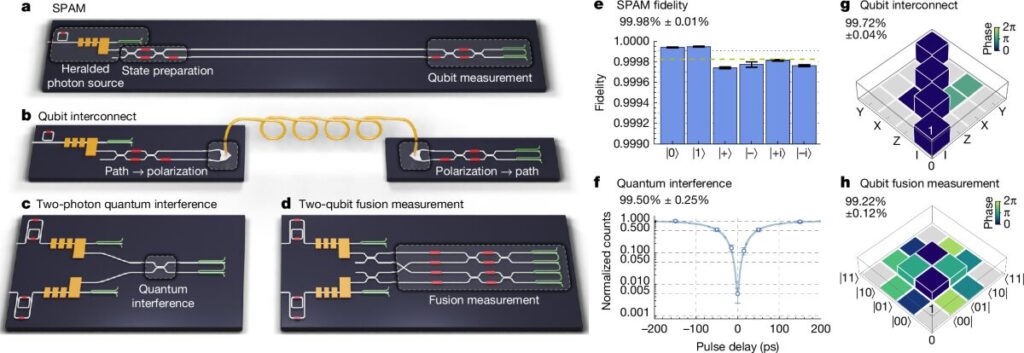
PsiQuantum’s latest announcement signals that the race toward practical quantum computing is accelerating.
The company, founded by leading quantum physicists, is pursuing a photonic quantum computing architecture—a design that uses particles of light (photons) rather than superconducting circuits to encode qubits. This approach aims to overcome one of the biggest barriers in quantum engineering: scalability.
In 2025, PsiQuantum reportedly secured around $1 billion in funding to construct a large-scale facility with partners including semiconductor and AI infrastructure companies such as NVIDIA.
The goal is ambitious: create a fault-tolerant quantum computer capable of operating even when errors occur. Error correction is crucial because quantum systems are extremely fragile—minor environmental disturbances can easily disrupt calculations.
A machine with 1 million qubits could theoretically perform calculations far beyond anything achievable today. According to the company’s projections, such a system could enable breakthroughs in several fields:
- advanced AI training and simulation
- pharmaceutical discovery
- materials science
- complex financial modeling
- climate simulation
But alongside these beneficial applications lies a controversial implication: cryptography might become vulnerable.
Why Quantum Computing Raises Concerns for Bitcoin
To understand the concern, it is necessary to look at how Bitcoin security works.
Bitcoin relies on two major cryptographic mechanisms:
- SHA-256 hashing
- Elliptic Curve Digital Signature Algorithm (ECDSA)
Hashing secures the mining process and blockchain integrity, while ECDSA protects wallet ownership by linking a public key with a private key.
A sufficiently powerful quantum computer running Shor’s algorithm could theoretically derive a private key from a public key, allowing an attacker to steal funds from exposed wallets.
However, there are several important nuances.
First, Bitcoin addresses do not expose their public keys until a transaction is made. Many wallets still hold coins whose public keys have never been revealed.
Second, even if a quantum computer could break a key, it would need to do so before the network confirms the transaction, which is not trivial.
Researchers also debate how many qubits are required. Recent estimates suggest:
- ~100,000 logical qubits might break a 2048-bit RSA key.
- Bitcoin uses 256-bit elliptic curve cryptography, which could require different resources.
Current machines are nowhere near this scale.
For comparison, one of the largest experimental systems today reportedly contains about 6,100 qubits, meaning the million-qubit milestone remains extremely ambitious.
The Bitcoin Community’s Response
Within the Bitcoin ecosystem, reactions to quantum computing developments range from cautious monitoring to proactive planning.
Prominent figures such as Adam Back, CEO of Blockstream, have stated that quantum computers are unlikely to pose a serious threat for at least a decade.
This timeline provides developers with an important strategic advantage: blockchains can upgrade their cryptography.
Possible countermeasures include:
- migrating to quantum-resistant signature algorithms
- implementing post-quantum cryptography (PQC)
- introducing soft forks or hard forks to upgrade address formats
Such transitions are not unprecedented. Bitcoin has already undergone cryptographic upgrades in the past, such as:
- SegWit (Segregated Witness)
- Taproot, which introduced Schnorr signatures.
A similar process could introduce post-quantum signature schemes, ensuring the network remains secure even in a quantum era.
How Much Bitcoin Is Actually Vulnerable?
Interestingly, the amount of Bitcoin potentially exposed to quantum attacks may be much smaller than many assume.
Research from digital asset investment firm CoinShares estimated that only around 10,230 BTC would currently be vulnerable to a theoretical quantum attack.
At today’s approximate Bitcoin price, that equates to roughly $728 million.
While this is a significant amount of money, it represents a very small fraction of the network’s total value, which is estimated at around $1.4 trillion.
Moreover, even if those coins were compromised, analysts suggest the event would resemble a large market transaction rather than a systemic collapse.
This estimate assumes that attackers could only target wallets where:
- the public key has already been revealed
- coins remain unspent
- the address has not migrated to new security schemes
In practice, many users could protect themselves simply by moving funds to new addresses.
The Broader Industry Trend: Preparing for Post-Quantum Cryptography
The debate around quantum computing and Bitcoin is part of a larger shift happening across the entire cybersecurity industry.
Organizations worldwide are preparing for a post-quantum cryptography transition.
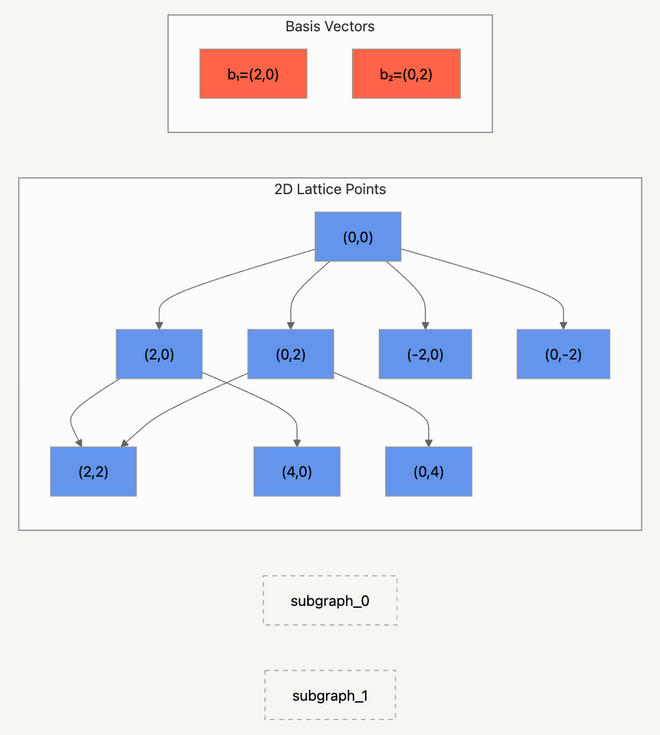
In 2024, the National Institute of Standards and Technology finalized several new cryptographic standards designed to resist quantum attacks. These algorithms are based on mathematical problems believed to be difficult even for quantum computers.
Examples include:
- lattice-based cryptography
- hash-based signatures
- multivariate polynomial cryptography
Technology companies, financial institutions, and governments are already exploring how to migrate infrastructure to these new standards.
For blockchain networks, this migration may involve:
- new wallet address formats
- upgraded consensus rules
- compatibility layers to protect legacy funds
While complex, the process is manageable—and arguably inevitable.
Implications for Crypto Investors and Builders
For investors searching for the next revenue opportunity in blockchain, the quantum debate highlights several emerging sectors.
- Post-Quantum Cryptography Projects
Startups focused on quantum-resistant encryption could become essential infrastructure providers. - Quantum-Secure Blockchain Protocols
New chains may market themselves as “quantum-safe” from inception. - Security Upgrades for Existing Networks
Services that help migrate wallets or upgrade cryptographic infrastructure could see significant demand. - Quantum-Powered Finance and AI
Ironically, the same technology that threatens cryptography may also enable new financial modeling tools.
The intersection between quantum computing, AI, and blockchain may ultimately produce entirely new categories of digital infrastructure.
Conclusion: A Long-Term Challenge, Not an Immediate Crisis
The construction of a million-qubit quantum computing facility marks an important milestone in the evolution of computing. If successful, the technology could revolutionize industries ranging from medicine to artificial intelligence.
However, the idea that quantum computers will soon break Bitcoin’s cryptography is widely considered premature.
Several realities temper the concern:
- Practical quantum computers remain years away.
- Only a small fraction of Bitcoin is currently vulnerable.
- Cryptographic upgrades can be implemented well before the threat materializes.
In many ways, the debate illustrates the resilience of blockchain systems. Unlike static infrastructure, decentralized networks can evolve through community consensus and technological upgrades.
Rather than signaling the end of Bitcoin, the rise of quantum computing may simply mark the next phase of cryptographic innovation—one that pushes the entire digital economy toward stronger security.
For investors, developers, and institutions exploring blockchain technology, the message is clear: prepare for a quantum future, but do not fear it.
