
Main Points :
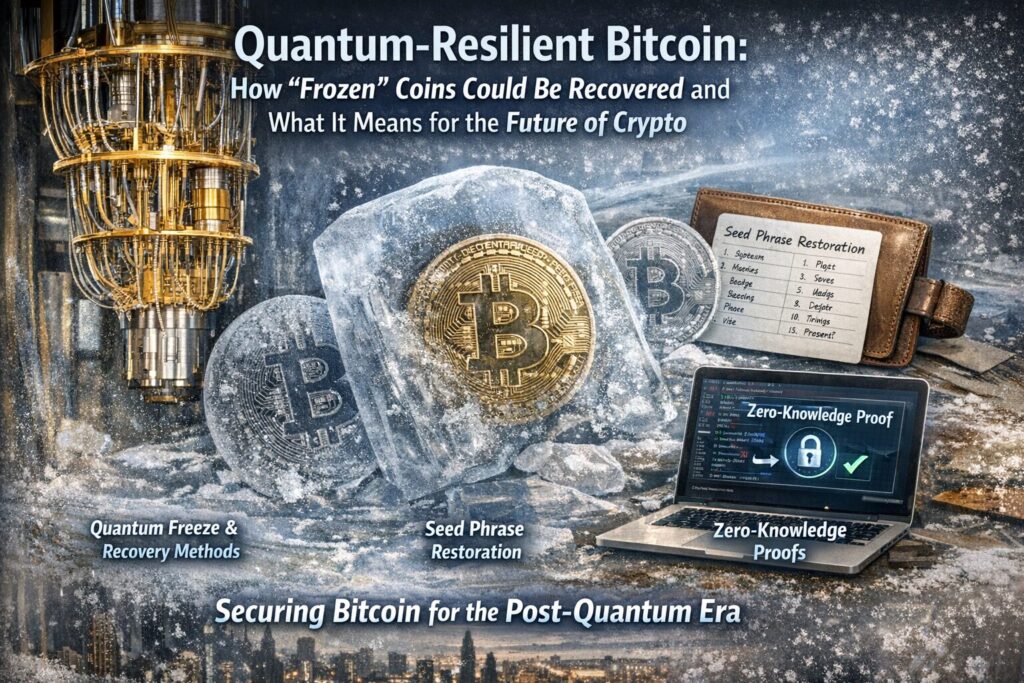
- Quantum computing is no longer a theoretical risk; it is shaping concrete discussions about Bitcoin’s long-term security.
- A proposed “quantum freeze” could temporarily lock vulnerable Bitcoin, but recovery mechanisms are now emerging.
- BitMEX Research proposes multiple recovery paths, including seed phrase–based recovery and zero-knowledge proofs.
- Nearly all existing Bitcoin could theoretically remain recoverable, preserving economic continuity.
- These proposals have major implications for investors, protocol governance, and practical blockchain use cases.
1. The Quantum Threat Moves From Theory to Design Constraint
For years, quantum computing has been discussed in crypto circles as a distant, almost science-fiction-like concern. Today, that narrative is shifting. Research teams, governments, and private companies are steadily advancing quantum hardware, forcing blockchain designers to treat quantum resistance not as an abstract future upgrade, but as a concrete design constraint.
Bitcoin, which relies on elliptic curve cryptography (ECDSA) for private key security, is theoretically vulnerable to sufficiently powerful quantum computers. If such machines become practical, they could derive private keys from exposed public keys, allowing attackers to spend coins they do not own.
In response, a growing faction of researchers has proposed a radical but protective measure: a “quantum freeze.” Under this idea, Bitcoin associated with cryptographically vulnerable address types would be frozen before large-scale quantum attacks become feasible. While effective in preventing theft, this approach introduces a serious concern—what happens to legitimate owners of frozen coins?
This is where the latest proposal from BitMEX Research becomes critical.
2. What Is a “Quantum Freeze” and Why It Is Controversial
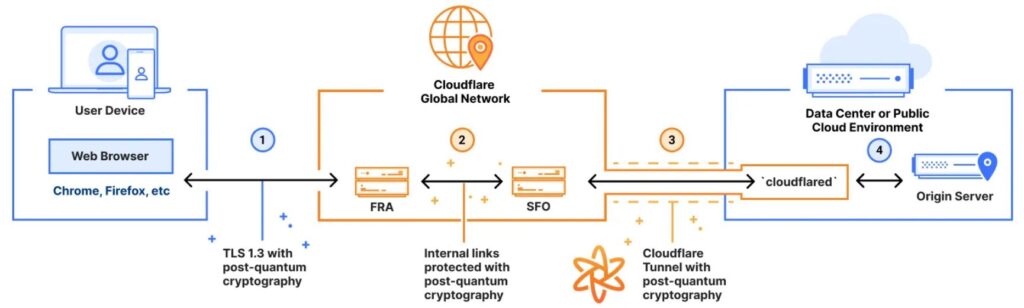
A quantum freeze refers to a protocol-level rule that prevents certain Bitcoin outputs from being spent once they are deemed quantum-vulnerable. Typically, this applies to older address formats where public keys are already revealed on-chain.
The benefit is straightforward: attackers cannot exploit quantum algorithms to drain these coins.
The downside is equally severe: innocent holders could permanently lose access to their assets if no recovery path exists. Given Bitcoin’s immutable supply and its role as digital property, such an outcome would be economically and politically unacceptable.
This tension—between network security and property rights—has slowed consensus around quantum mitigation strategies. BitMEX Research’s contribution is notable because it reframes the debate. Instead of asking whether freezing is acceptable, it asks how frozen assets can be safely recovered.
3. BitMEX Research’s Recovery Framework: An Overview
BitMEX Research published a detailed proposal outlining three recovery mechanisms that could allow legitimate owners to reclaim frozen Bitcoin after a quantum freeze.
These methods are not mutually exclusive. Instead, they form a layered toolkit designed to cover different wallet types, user behaviors, and timelines.
Before diving into each method, one crucial point must be emphasized: all of these approaches require protocol upgrades. They are not quick patches, but long-term architectural changes that would likely be introduced through soft forks or carefully coordinated consensus changes.
4. Commitment-Based Recovery: Cryptographic Proof Before the Freeze
The first proposed method is commitment-based recovery.
In this model, Bitcoin holders pre-commit certain cryptographic data to the blockchain before a quantum freeze is activated. Later, once recovery is permitted, they reveal a secret—such as a private key or derived proof—that matches the earlier commitment, allowing them to reclaim the frozen coins.
This approach resembles time-locked safes or cryptographic escrow systems. Its main strengths are simplicity and strong cryptographic guarantees.
However, it has a major limitation: it is typically usable only once per address. If a user fails to prepare in advance, or loses the secret, recovery becomes impossible. This makes it suitable for sophisticated users and institutions, but less ideal for retail holders.
5. Seed Phrase–Based Recovery: Leveraging Wallet Architecture
The second method focuses on something almost every Bitcoin user already relies on: seed phrases.
Modern wallets generate private keys from a 12- to 24-word mnemonic seed phrase. Importantly, while quantum computers threaten certain public-key cryptography schemes, the entropy and structure of mnemonic seed phrases remain effectively quantum-resistant.
BitMEX Research proposes that frozen coins could be reclaimed by proving ownership of the original seed phrase and regenerating keys under a new, quantum-safe signature scheme.
This approach has several advantages:
- It aligns with existing wallet UX.
- It covers a vast majority of Bitcoin in circulation.
- It does not require users to take action before a freeze occurs.
The main challenge lies in implementation complexity. Wallet software, key derivation paths, and consensus rules would all need careful coordination to avoid introducing new attack vectors.
6. Zero-Knowledge Proof Recovery: Maximum Flexibility, Maximum Complexity
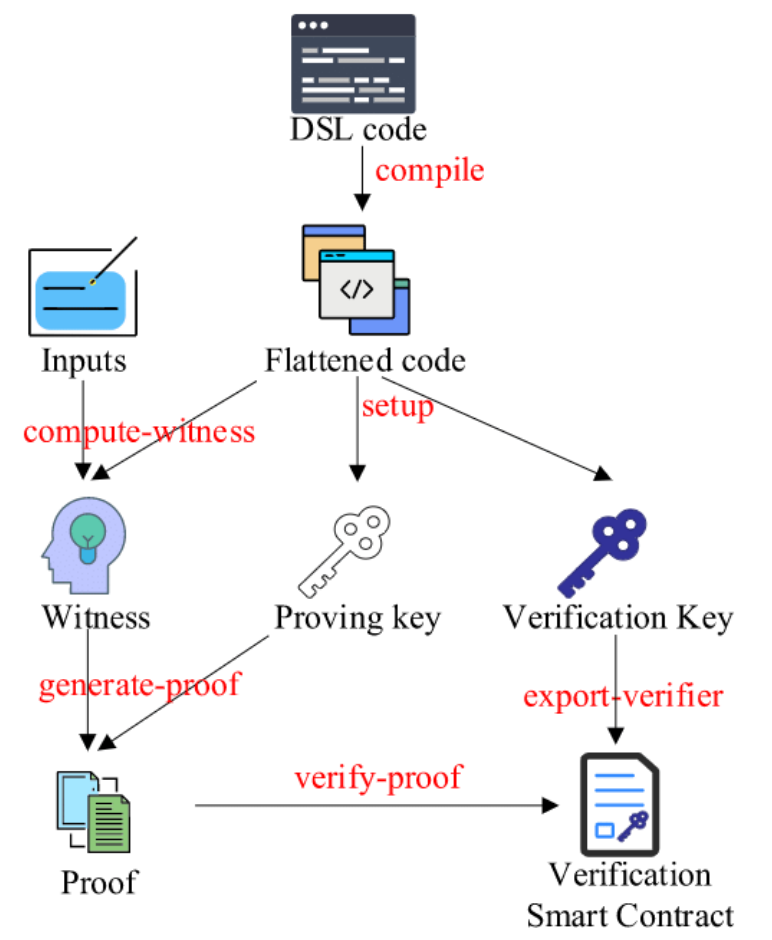
The most advanced proposal involves zero-knowledge proofs (ZKPs).
Using ZKPs, a user could prove ownership of a seed phrase—or the ability to derive the correct private key—without revealing any sensitive data on-chain. This is especially powerful in a post-quantum world, as it minimizes information leakage even under advanced adversarial models.
A key advantage of this approach is timing flexibility. Users would not need to rush before quantum computers arrive. Recovery could occur calmly and securely after the threat becomes real.
The trade-off is complexity. ZKP systems are computationally heavy, difficult to audit, and expensive to integrate at the protocol level. Nevertheless, their inclusion signals how far Bitcoin’s design philosophy has evolved beyond its early simplicity.
7. How Much Bitcoin Is Actually at Risk?
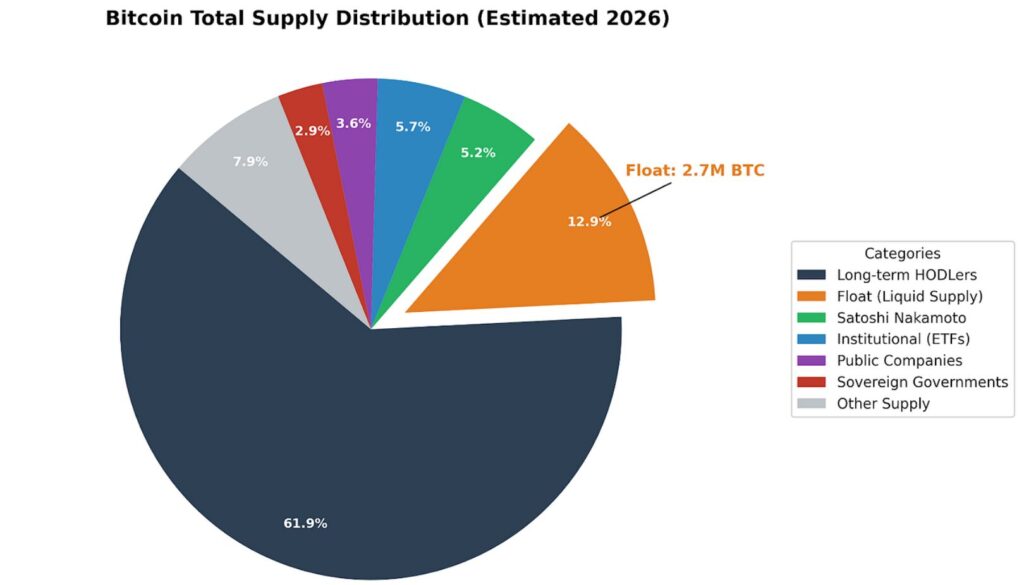
According to BitMEX Research, nearly all of the approximately 20 million Bitcoin currently in existence could be recovered using one of these methods. Only edge cases—such as coins controlled by lost keys without seed phrases—would remain permanently inaccessible.
This is a crucial insight. It means that quantum preparedness does not necessarily imply mass wealth destruction. Instead, it suggests a path toward orderly cryptographic migration, similar in spirit to past upgrades like SegWit or Taproot, but far more consequential.
8. Economic and Investment Implications
For investors searching for the next source of yield or long-term value, quantum resilience may sound like a purely defensive topic. In reality, it opens several strategic angles:
- Demand for quantum-safe wallets and custody services.
- New infrastructure providers specializing in post-quantum cryptography.
- Layer-2 and sidechain experiments that adopt quantum resistance earlier than Bitcoin itself.
Rather than undermining Bitcoin’s value proposition, credible quantum planning may strengthen it by reinforcing confidence in its longevity as a $1-trillion-class asset.
9. Practical Blockchain Use Cases Beyond Bitcoin
The implications extend beyond Bitcoin. Enterprises evaluating blockchain for settlement, identity, or tokenization increasingly ask one question: Will this system still be secure in 20 or 30 years?
Quantum-aware design is rapidly becoming a baseline requirement, not a premium feature. Projects that internalize this lesson early may gain an adoption advantage—especially in regulated industries.
10. Conclusion: Quantum Risk as a Catalyst, Not a Death Sentence
Quantum computing represents one of the most profound technological challenges Bitcoin has ever faced. Yet, as the BitMEX Research proposal demonstrates, it also serves as a catalyst for deeper maturity in protocol design.
Freezing vulnerable coins is not the end of the story. Recovery mechanisms—grounded in seed phrases, cryptographic commitments, and zero-knowledge proofs—offer a path that preserves both security and property rights.
For builders, investors, and institutions alike, the message is clear: the future of crypto will belong to systems that plan for threats before they arrive.
