
Main Points :
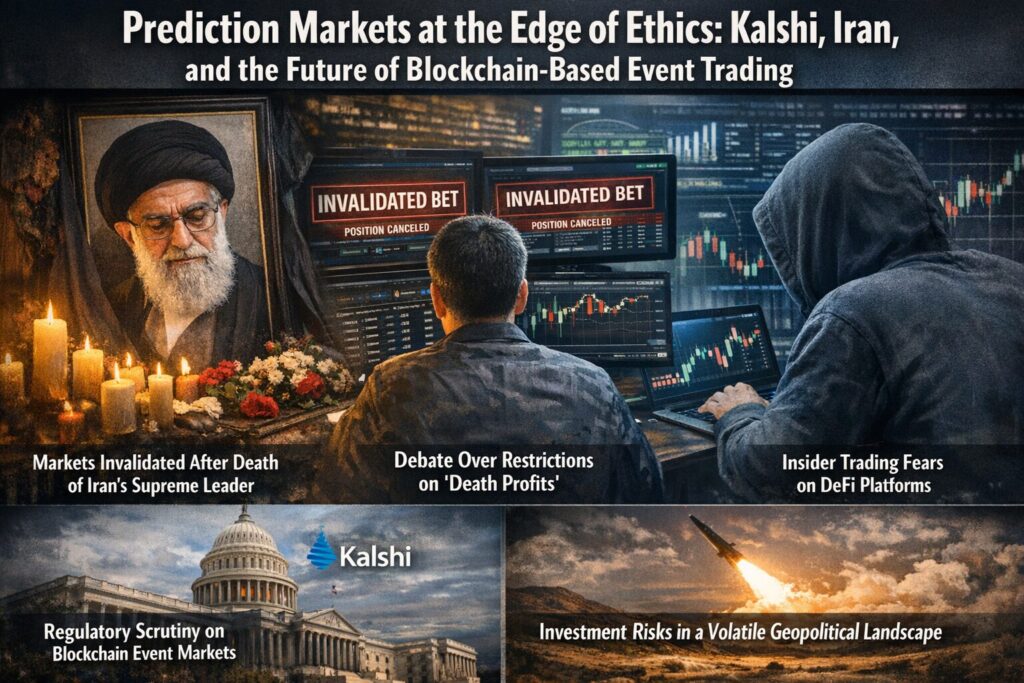
- Kalshi invalidated certain positions following the reported death of Iran’s Supreme Leader.
- The platform enforces long-standing rules prohibiting markets that profit directly from death.
- Critics argue the intervention restricts trader autonomy.
- Insider trading concerns are rising across decentralized prediction platforms.
- Blockchain-based event markets are expanding rapidly, alongside regulatory scrutiny.
- Investors seeking new yield opportunities must understand governance risk, liquidity structure, and geopolitical exposure.
1. Kalshi’s Decision and the Death-Related Market Exclusion Rule
Kalshi, a U.S.-regulated prediction market platform, recently faced controversy after invalidating positions tied to a market concerning Iran’s Supreme Leader, Ayatollah Ali Khamenei. Following state media reports of his death amid escalating geopolitical tensions, certain traders had opened or increased positions. However, Kalshi’s co-founder Tarek Mansour clarified publicly that the platform does not list markets directly tied to death, nor does it permit financial gain derived explicitly from death outcomes.
According to Mansour, if a market’s potential outcome involves death, the rules are structured to prevent participants from profiting from that death. In this case, Kalshi refunded all transaction fees related to the “Ali Khamenei to step down as Supreme Leader” market. Traders holding positions prior to the reported death were paid based on the last trading price before the event. Those who entered after the reported death received refunds reflecting the difference between their higher entry price and the prior market price.
This move reflects Kalshi’s attempt to balance ethical boundaries with open market mechanics. However, it triggered backlash from users who argued that the platform retroactively altered economic outcomes.
2. The Governance Dilemma: Neutral Infrastructure or Ethical Gatekeeper?
Prediction markets occupy a unique intersection between financial speculation and information aggregation. Platforms like Kalshi operate under U.S. regulatory oversight, positioning themselves differently from decentralized competitors such as Polymarket.
While decentralized platforms argue that code-based execution ensures neutrality, centralized or regulated platforms must address reputational, ethical, and regulatory constraints. The exclusion of “death markets” is not new, but enforcement during high-volatility geopolitical moments highlights an important question:
Should prediction markets function as purely neutral infrastructure, or must they act as ethical gatekeepers?
For investors exploring prediction markets as a yield-generating strategy, governance risk becomes a material variable. Unlike Bitcoin or Ethereum, where protocol rules are deterministic and transparent, event markets may introduce discretionary decisions under extraordinary circumstances.
3. Rising Insider Trading Concerns in Geopolitical Markets
In February, reports indicated that six wallets on Polymarket profited approximately $1 million by betting that the United States would strike Iran before the end of the month. On-chain analysis suggested that these wallets were created shortly before the events and placed concentrated bets on Iran-related markets. Some positions were reportedly filled hours before initial explosions were heard in Tehran.
Such trading patterns raised suspicions of insider access to sensitive geopolitical intelligence.
Insider Profit Distribution
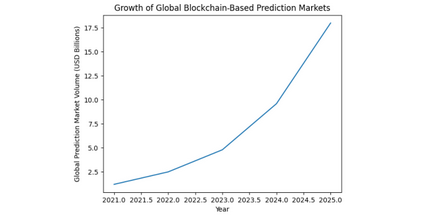
This pattern mirrors traditional financial markets, where information asymmetry has long driven enforcement actions. However, decentralized platforms complicate jurisdictional enforcement. Blockchain transparency makes flows visible, but identity attribution remains difficult.
In a separate case earlier in the year, U.S. authorities reportedly arrested an individual suspected of leaking information tied to a military operation in Venezuela. On-chain analytics firm Lookonchain suggested that wallets associated with accurate bets preceding the operation may have been linked to the leak.
For yield-seeking investors, the implication is profound: prediction markets price geopolitical risk faster than traditional assets—but they also amplify information asymmetry risk.
4. The Explosive Growth of Blockchain-Based Prediction Markets
Despite controversies, the sector continues expanding.
Prediction Market Growth
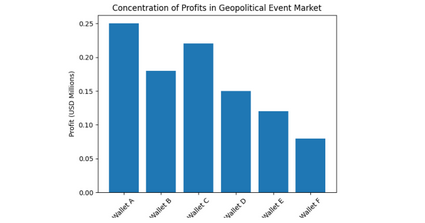
Blockchain-based prediction market volume has grown exponentially over the past five years. As macro volatility increases—war, elections, regulatory crackdowns—demand for real-time probabilistic pricing rises.
Unlike traditional derivatives, prediction markets allow binary or scalar event exposure without needing leverage accounts or complex margin structures. For example:
- Election outcome exposure
- Central bank rate decisions
- ETF approvals
- Military conflict escalation probabilities
For investors seeking alternative yield streams, prediction markets offer:
- Short-duration trading cycles
- High implied volatility premiums
- Arbitrage opportunities between centralized and decentralized platforms
However, liquidity depth remains fragmented, and sudden rule enforcement—like Kalshi’s recent decision—can alter payoff expectations.
5. Regulatory Arbitrage vs. Institutional Legitimacy
Kalshi operates within U.S. Commodity Futures Trading Commission (CFTC) oversight. Polymarket, by contrast, has historically faced regulatory friction in the U.S. and operates more globally.
The strategic divergence is critical:
- Regulated platforms may attract institutional capital.
- Decentralized platforms may offer broader event categories and fewer content restrictions.
- Governance enforcement differs dramatically.
Investors must price regulatory stability into expected returns. A platform that enforces ethical exclusions may reduce reputational risk but introduce intervention risk. A decentralized platform may eliminate intervention risk but heighten enforcement uncertainty.
6. Prediction Markets Within the Broader Crypto Ecosystem
Prediction markets are increasingly intersecting with other blockchain primitives:
- Decentralized identity (for compliance gating)
- Oracle networks (for outcome verification)
- Stablecoins (for settlement)
- Cross-chain liquidity bridges
Moreover, they coexist with the rapid expansion of tokenized real-world assets (RWA).
Tokenized RWA Market Growth
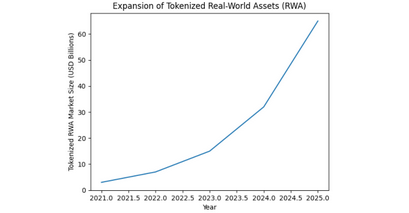
As RWA markets expand into U.S. Treasuries, private credit, and commodity-backed tokens, prediction markets may evolve into risk-pricing layers for real-world assets. For example:
- Probability of sovereign default
- Likelihood of regulatory approval for asset tokenization
- Geopolitical disruption probabilities impacting supply chains
This convergence positions prediction markets not merely as speculative tools but as decentralized risk intelligence layers.
7. Practical Considerations for Yield-Oriented Investors
For readers searching for new crypto income streams, several practical factors must be assessed:
- Governance Transparency
Understand whether platform rules allow discretionary invalidation. - Liquidity Depth
Thin markets create slippage risk. - Information Asymmetry
Geopolitical markets are particularly vulnerable. - Counterparty Structure
Regulated custodial settlement differs from smart-contract escrow. - Jurisdictional Exposure
Regulatory shifts can freeze markets or wallets. - Correlation Profile
Event markets may hedge macro crypto exposure.
Investors may also explore structured strategies:
- Market-making across event spreads
- Arbitraging implied probabilities vs. news flow
- Combining prediction positions with options or futures hedges
8. Ethical Markets as a Competitive Advantage?
Kalshi’s enforcement of a “no death profit” rule may initially appear restrictive. However, institutional capital often prefers defined ethical frameworks.
As digital asset markets mature, platforms that proactively embed compliance may attract pension funds, asset managers, and regulated brokers. The tradeoff becomes clear:
Short-term retail flexibility vs. long-term institutional scalability.
Conclusion: The Next Evolution of Event-Driven Crypto Finance
The Kalshi episode highlights a central tension in blockchain finance: decentralized efficiency versus regulated legitimacy. Prediction markets are becoming high-speed information exchanges, pricing geopolitical, regulatory, and macroeconomic probabilities in real time.
For investors seeking the next revenue stream in crypto, prediction markets represent a frontier asset class—but one embedded with governance risk, insider asymmetry, and regulatory evolution.
As blockchain infrastructure converges with real-world assets and compliance frameworks, the platforms that balance transparency, liquidity, and ethical clarity may ultimately dominate.
The future of prediction markets will not be determined solely by volatility or speculation. It will be shaped by how platforms manage edge cases—like death-related markets—and whether they can transform probabilistic betting into institutional-grade risk intelligence.
For yield-oriented crypto participants, the opportunity is real—but so is the complexity.
