
Main Points :
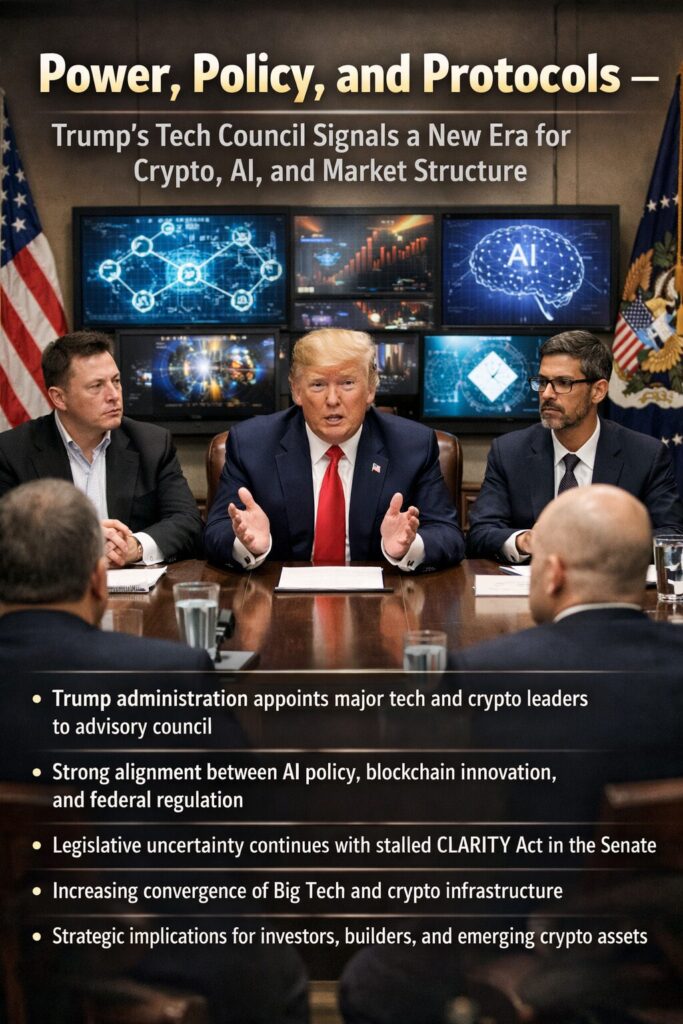
- Trump administration appoints major tech and crypto leaders to advisory council
- Strong alignment between AI policy, blockchain innovation, and federal regulation
- Legislative uncertainty continues with stalled CLARITY Act in the Senate
- Increasing convergence of Big Tech and crypto infrastructure
- Strategic implications for investors, builders, and emerging crypto assets
1. A New Power Structure: Government Meets Big Tech and Crypto
The re-establishment of the Presidential Council of Advisors on Science and Technology under the Trump administration marks a decisive shift in how the United States approaches emerging technologies. By appointing 13 members from the worlds of cryptocurrency, artificial intelligence, and big technology, the administration is signaling not just interest—but alignment.
Among the appointees are Mark Zuckerberg, Jensen Huang, Larry Ellison, and Fred Ehrsam. This is not a symbolic gesture. These individuals represent infrastructure-level control over social platforms, AI compute, cloud architecture, and crypto liquidity.
The council, co-chaired by David Sacks and Michael Kratsios, is tasked with advising on science, education, and innovation policy. However, the composition of its members suggests something deeper: a consolidation of influence between public governance and private technological power.
From an investment perspective, this signals a new phase where regulatory clarity and infrastructure development will be co-designed by those who build the systems themselves.
2. AI Strategy and Federal Dominance Over Regulation
Just one week prior to these appointments, the White House released a national AI strategy aimed at centralizing regulatory authority at the federal level. The proposal explicitly seeks to override fragmented state-level regulations.
This move is critical. For years, inconsistent regulations across U.S. states have slowed innovation in both AI and crypto. A unified federal approach could accelerate deployment of blockchain-based systems, especially in financial services, identity verification, and cross-border payments.
For builders and investors, this reduces regulatory arbitrage but increases predictability. In practical terms, this may lead to:
- Faster approval cycles for crypto-based financial products
- Increased institutional participation
- Standardized compliance frameworks across states
This environment strongly benefits infrastructure tokens and platforms that align with compliance-first architectures.
3. The CLARITY Act: A Bottleneck in Market Evolution
Despite executive momentum, legislative progress remains uneven. The CLARITY Act—designed as a comprehensive digital asset market structure bill—passed the House in July 2025 but remains stalled in the Senate.
Key issues include:
- Congressional recess delays
- Government shutdown risks
- Industry concerns over stablecoin yield restrictions
Additionally, the Senate Agriculture Committee advanced its own proposal, but the Banking Committee—essential for aligning with securities law—has delayed review.
A major turning point came when Brian Armstrong expressed opposition to the current draft, highlighting industry dissatisfaction.
Timeline of the CLARITY Act and U.S. Crypto Regulatory Progress
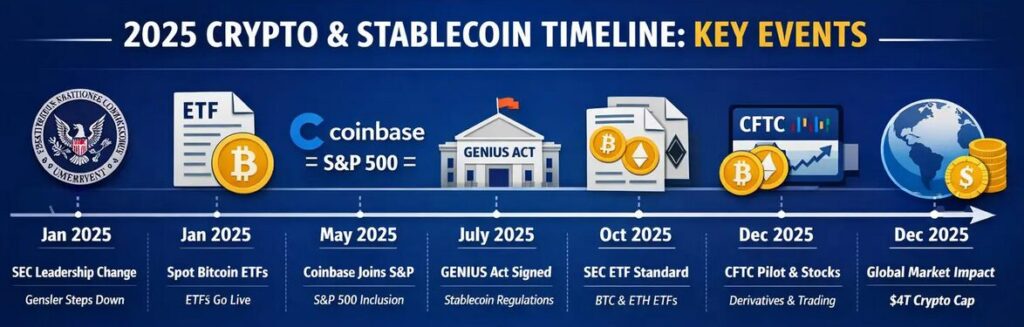
The stagnation reflects a broader tension: innovation is accelerating faster than legal frameworks can adapt. For market participants, this creates both risk and opportunity. Early positioning in compliant ecosystems could yield outsized returns once clarity is achieved.
4. The Convergence of AI, Blockchain, and Infrastructure
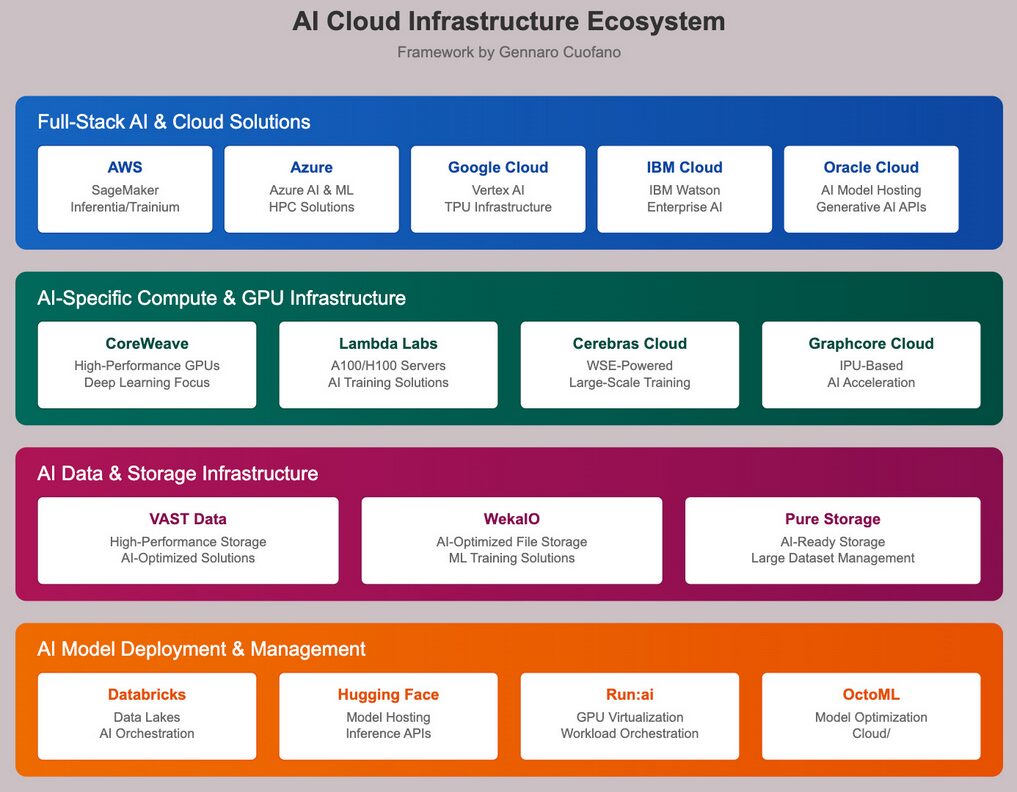
What makes this advisory council particularly significant is not just who is included—but what sectors they represent.
- AI compute (NVIDIA)
- Social and data platforms (Meta)
- Cloud infrastructure (Oracle)
- Crypto exchanges (Coinbase)
This convergence suggests a future where:
- AI agents transact using blockchain rails
- Identity systems are decentralized yet regulated
- Financial systems integrate stablecoins and tokenized assets
Figure 2: Convergence of AI, Blockchain, and Cloud Infrastructure
For investors, this points toward multi-layer opportunities:
- Layer 1 and Layer 2 blockchains
- AI-integrated decentralized applications
- Tokenized real-world asset platforms
5. Political Alignment and Strategic Capital Flows
Many of the appointed members have demonstrated prior alignment with the Trump administration. This is not incidental—it reflects a broader trend where political alignment increasingly shapes technological direction.
For example:
- Jensen Huang has engaged in semiconductor export policy discussions
- Mark Zuckerberg has maintained direct communication with the administration
- Tech executives have participated in White House strategy sessions
This alignment may influence:
- Capital allocation into specific sectors
- Favorable regulatory treatment for certain technologies
- Strategic partnerships between government and private firms
6. Market Implications: Where the Opportunities Lie
For readers seeking new crypto assets and revenue opportunities, the implications are clear:
1. Regulatory-Aligned Projects
Projects that prioritize compliance, identity, and auditability will likely gain traction.
2. Infrastructure Tokens
Tokens tied to computation, data availability, and cross-chain communication may outperform.
3. Stablecoin Ecosystems
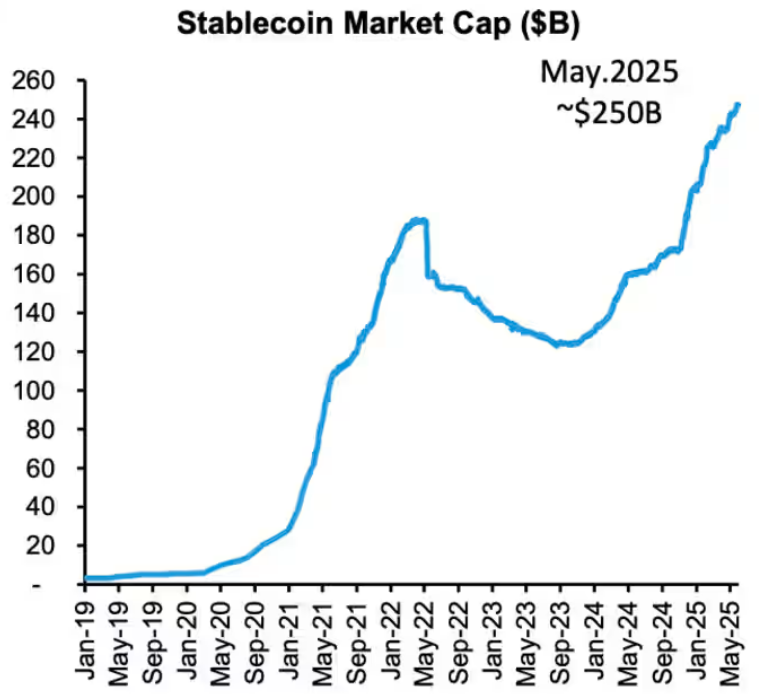
Despite regulatory scrutiny, stablecoins remain central to institutional adoption.
4. AI + Crypto Hybrid Models
Projects combining AI automation with blockchain settlement represent a high-growth frontier.
Projected Growth of Regulated Crypto Markets and Institutional Adoption
7. Conclusion: A Structural Shift, Not a Policy Event
The formation of this advisory council is not merely a policy update—it represents a structural realignment of power between government, technology, and finance.
For the first time, the architects of digital infrastructure are directly shaping national policy. This reduces friction between innovation and regulation, potentially accelerating adoption cycles.
However, risks remain:
- Legislative delays
- Regulatory overreach
- Market concentration among major players
For investors and builders, the key is to position within this convergence—where compliance, infrastructure, and innovation intersect.
