
Main Points :
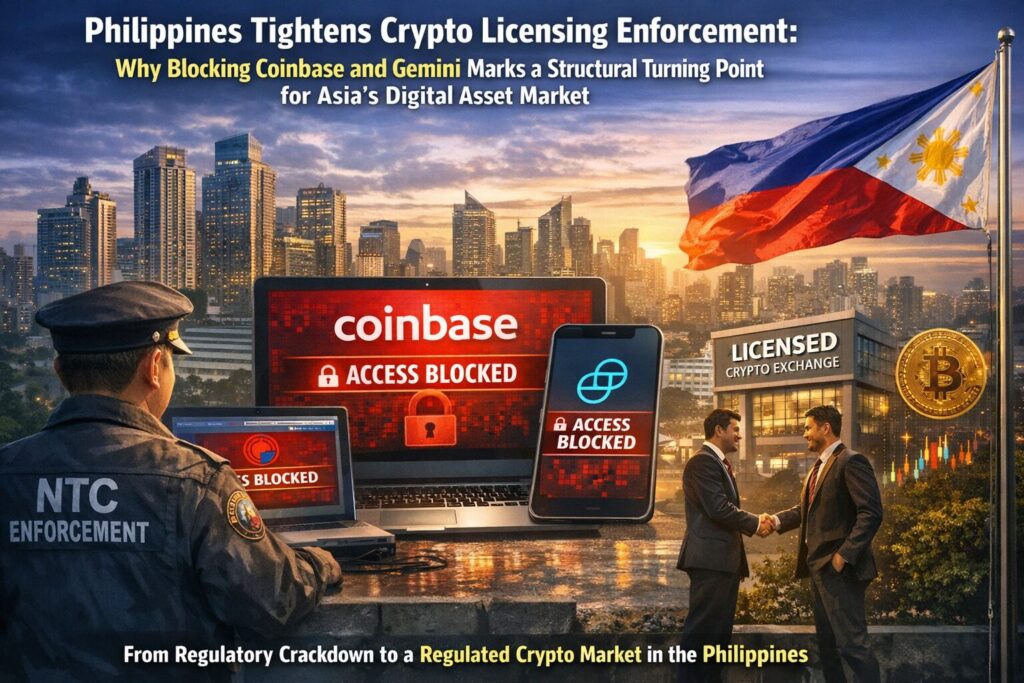
- Philippine regulators have begun ISP-level blocking of major global crypto platforms, including Coinbase and Gemini, for operating without local licenses.
- The move signals a decisive shift from regulatory tolerance to strict enforcement, with licensing now the primary gatekeeper for market access.
- Earlier actions against Binance set a clear precedent, including ISP blocking and app-store takedowns.
- While offshore platforms face exclusion, licensed and compliant firms are expanding, creating new institutional and retail crypto opportunities inside the Philippines.
- For investors and builders, the Philippines is evolving into a regulated, infrastructure-driven crypto market, not a gray-zone frontier.
1. A Sudden Blackout: Coinbase and Gemini Become Inaccessible in the Philippines
In late 2025, users across the Philippines began reporting that they could no longer access Coinbase and Gemini. The disruption was not isolated or technical in nature; multiple internet service providers simultaneously blocked access, confirming that the action was regulatory rather than operational.
Local media reports revealed that the blocking followed directives from the National Telecommunications Commission (NTC), acting on the findings of the Bangko Sentral ng Pilipinas (BSP). According to these reports, approximately 50 online trading platforms were identified as operating without the required licenses.
Notably, authorities did not publish a full public list. This opacity underscores a critical message: regulatory permission is no longer optional, and enforcement can occur without prolonged public consultation.
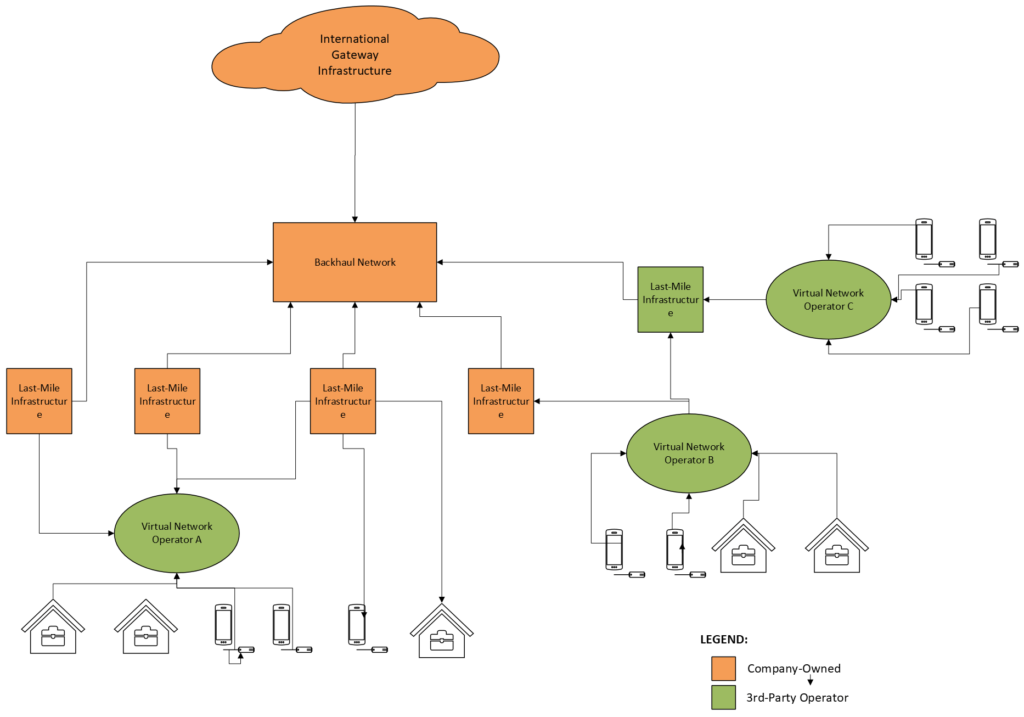
[ISP-level blocking mechanism and regulatory flow in the Philippines]
2. From Regulatory Ambiguity to Enforcement-First Policy
For several years, the Philippine crypto market existed in a semi-tolerated state. Offshore exchanges served Filipino users freely, even when local licensing had not been completed. That era has now ended.
The BSP’s recent actions represent a policy inflection point. Rather than warning letters or symbolic advisories, regulators are now using hard infrastructure controls—ISP blocking and app-store removals—to enforce compliance.
This approach mirrors global regulatory trends seen in jurisdictions such as the EU and parts of East Asia, where market access is conditional on licensing, reporting, and consumer protection frameworks.
For crypto operators, the message is simple:
No license, no market.
3. The Binance Precedent: A Blueprint for Enforcement
The blocking of Coinbase and Gemini did not occur in isolation. It follows a well-documented enforcement pathway first applied to Binance.
In December 2023, Philippine authorities issued Binance a 90-day compliance window, explicitly framed as a user exit period. The Securities and Exchange Commission clarified that the grace period existed to allow Filipino users to withdraw funds safely.
By March 25, 2024, the NTC ordered ISPs to block Binance’s website. Roughly one month later, both Apple and Google were instructed to remove the Binance app from local app stores, completing a full-spectrum access shutdown.
Subsequent warnings were also issued against other global exchanges such as OKX, Bybit, and KuCoin, reinforcing that size and brand recognition offer no regulatory immunity.
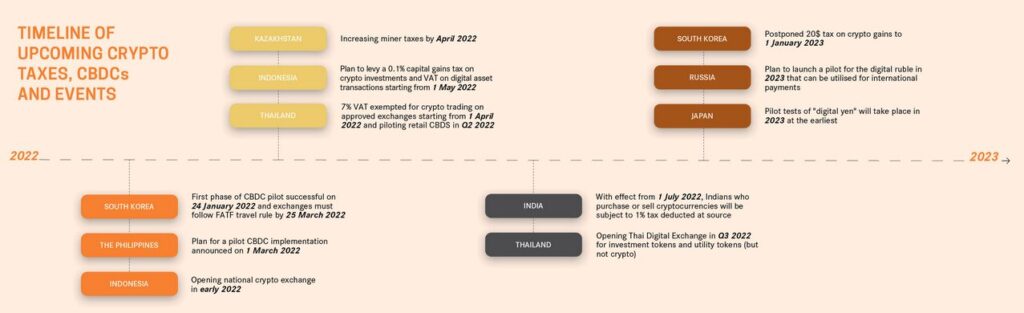
[Timeline of enforcement actions against offshore exchanges]
4. Why Licensing Matters: Regulatory Logic Behind the Crackdown
From the regulator’s perspective, the crackdown is not anti-crypto. Instead, it is pro-market but pro-order.
Key policy objectives include:
- Consumer protection against fraud, insolvency, and misrepresentation
- Anti–money laundering (AML) and counter-terrorist financing controls
- Systemic risk management, particularly as crypto integrates with payments
- Data localization and reporting visibility
Without a local license, offshore exchanges fall outside these safeguards. Blocking access is therefore viewed as a risk containment tool, not an ideological stance against digital assets.
5. Compliance Creates Opportunity: Licensed Players Expand
While unlicensed platforms are being excluded, licensed operators are rapidly expanding their offerings, signaling that the Philippines remains open to crypto—under the right framework.
5.1 PDAX and Stablecoin Payroll Adoption
On November 19, regulated exchange PDAX partnered with a payroll service provider to enable stablecoin salary payments for remote workers.
This model addresses real economic needs:
- Cross-border freelancers
- Dollar-denominated income stability
- Faster settlement with lower fees
The initiative demonstrates how compliance enables innovation, rather than suppressing it.
5.2 Digital Banks Enter Crypto via Partnerships
On December 8, digital bank GoTyme launched crypto services through a partnership with US fintech Alpaca. Users can now buy and custody 11 different cryptocurrencies directly within a regulated banking app.
This development is critical: crypto is no longer a fringe activity but is becoming embedded within mainstream financial infrastructure.
5.3 WIBS and Blockchain-Native Financial Services
Alongside these trends, WIBS PHP Inc. has launched a blockchain-native financial service within a licensed framework.
Operating since November, WIBS integrates fiat currency, electronic money, and digital assets into a single regulated platform.
Its focus on faster and lower-cost cross-border remittances highlights how compliant institutions are embedding blockchain into core financial infrastructure, rather than treating crypto as a standalone product.
6. Market Impact: What This Means for Investors and Builders
For investors seeking new opportunities, the Philippine market is undergoing structural maturation.
6.1 Fewer Exchanges, Higher Trust
Short-term, users face reduced access to global platforms. Long-term, this leads to:
- Higher trust in licensed platforms
- Improved consumer safeguards
- Better fiat–crypto integration
6.2 Infrastructure Over Speculation
Opportunities are shifting away from pure speculation toward:
- Payments and remittances
- Stablecoins and on-chain settlement
- Regulated custody and compliance tooling
- B2B crypto infrastructure
For builders, regulatory alignment is now a competitive advantage, not a cost burden.
7. Strategic Outlook: The Philippines as a Regulated Crypto Hu
The Philippines is positioning itself as a regulated digital asset hub in Southeast Asia, balancing innovation with oversight.
This model resembles Japan’s approach more than laissez-faire markets. For long-term participants, this environment offers:
- Predictability
- Institutional participation
- Sustainable growth
The blocking of Coinbase and Gemini is therefore not an endpoint, but a signal of market redefinition.
Conclusion: Enforcement Is the Price of Legitimacy
The Philippine government’s decision to block major global exchanges marks a decisive end to regulatory ambiguity. Crypto in the Philippines is no longer about who can reach users fastest, but who can meet regulatory standards.
For investors, entrepreneurs, and institutions, the lesson is clear:
The next phase of crypto growth belongs to those who can operate within the system, not outside it.
