
Main Points :
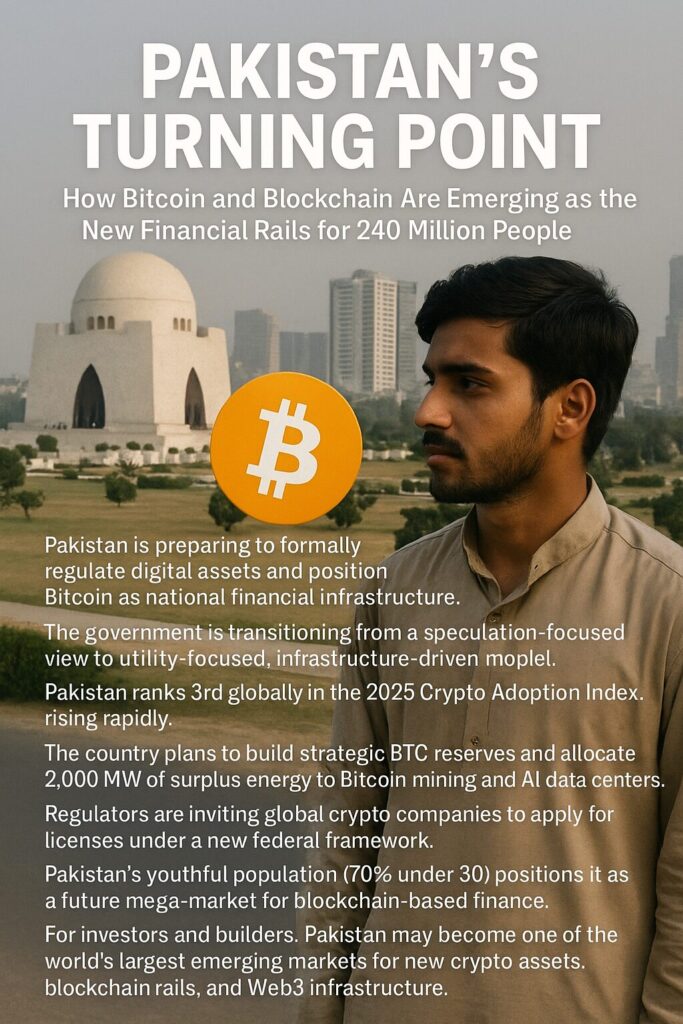
- Pakistan is preparing to formally regulate digital assets and position Bitcoin as national financial infrastructure.
- The government is transitioning from a speculation-focused view to a utility-focused, infrastructure-driven model.
- Pakistan ranks 3rd globally in the 2025 Crypto Adoption Index, rising rapidly.
- The country plans to build strategic BTC reserves and allocate 2,000 MW of surplus energy to Bitcoin mining and AI data centers.
- Regulators are inviting global crypto companies to apply for licenses under a new federal framework.
- Pakistan’s youthful population (70% under 30) positions it as a future mega-market for blockchain-based finance.
- For investors and builders, Pakistan may become one of the world’s largest emerging markets for new crypto assets, blockchain rails, and Web3 infrastructure.
SECTION 1 — A New Vision for Pakistan’s Financial Infrastructure
Pakistan is undergoing a strategic shift in its national economic vision. At the Bitcoin MENA Conference, Bilal Bin Saqib—Chairman of the Pakistan Virtual Asset Regulatory Authority (PVARA) and former Special Assistant to the Prime Minister—announced that Bitcoin and blockchain should form the core of the country’s new financial rails. This message represents a dramatic policy transformation for a nation historically skeptical toward crypto.
Saqib argued that Pakistan can no longer rely solely on traditional economic models and needs a “new engine”—an engine he believes lies in digital assets and decentralized infrastructure. Instead of viewing Bitcoin as a speculative asset, Pakistan’s leadership now frames it as critical infrastructure for payments, remittances, financial inclusion, and global competitiveness.
He noted that if countries like El Salvador, with a population of only six million, could integrate Bitcoin at a national scale, then Pakistan—with its population forty times larger—could achieve far more.
SECTION 2 — The Demographic Advantage: A Nation Ready for Digital Rails
One of Pakistan’s greatest strengths is its youthful population. With 70% of its 240 million citizens under age 30, digital adoption is extremely rapid. This demographic is already mobile-first, internet-native, and eager for alternative income streams—conditions that make Pakistan a fertile ground for crypto adoption and blockchain-enabled financial services.
In emerging markets like Pakistan, traditional banking has struggled to reach rural and low-income areas. Blockchain-based systems—especially mobile wallets, stablecoins, and Bitcoin Lightning rails—can leapfrog traditional infrastructure at a lower cost and with higher transparency.
SECTION 3 — Pakistan Rises to Rank 3 Globally in Crypto Adoption
In the 2025 Chainalysis Global Crypto Adoption Index, Pakistan jumped six positions to reach 3rd place, surpassing many advanced economies and showing one of the fastest adoption rates globally.
“Pakistan’s Rise in the Global Crypto Adoption Index (2020–2025)”
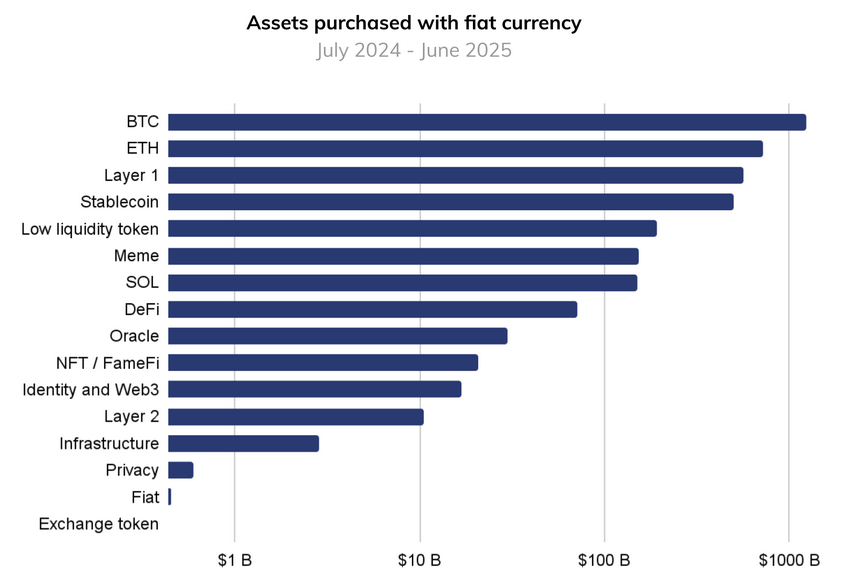
This explosive rise reflects not only individual users’ interest but also a growing appetite among small and medium enterprises using USDT and BTC for cross-border settlements, hedging, and remittance optimization.
For investors and builders, this ranking signals a shift: Pakistan is no longer a frontier market—it is becoming a strategic Web3 economy.
SECTION 4 — Building Bitcoin Reserves: A Sovereign Strategy
In May, Saqib announced that Pakistan is exploring the establishment of strategic Bitcoin reserves, similar to central bank gold holdings. This suggests a fundamental shift in national financial strategy—the use of Bitcoin as:
- a macro-level hedge against currency instability
- a reserve asset for long-term economic security
- a tool to attract foreign investment in digital infrastructure
Developing markets suffering from inflation or capital controls increasingly view Bitcoin as an alternative store of value. Pakistan’s move signals the beginning of a broader global south trend.
SECTION 5 — Allocating 2,000 MW of Surplus Energy to BTC Mining and AI
Another major development is the allocation of 2,000 megawatts of surplus power to Bitcoin mining and AI data center development. This allocation has several objectives:
- monetizing unused or excess electricity
- drawing foreign capital into energy, mining, and AI sectors
- supporting domestic job creation in advanced technology fields
- positioning Pakistan as a regional hub for digital infrastructure
“Pakistan’s Surplus Power Allocation to Bitcoin Mining & AI (in MW)”
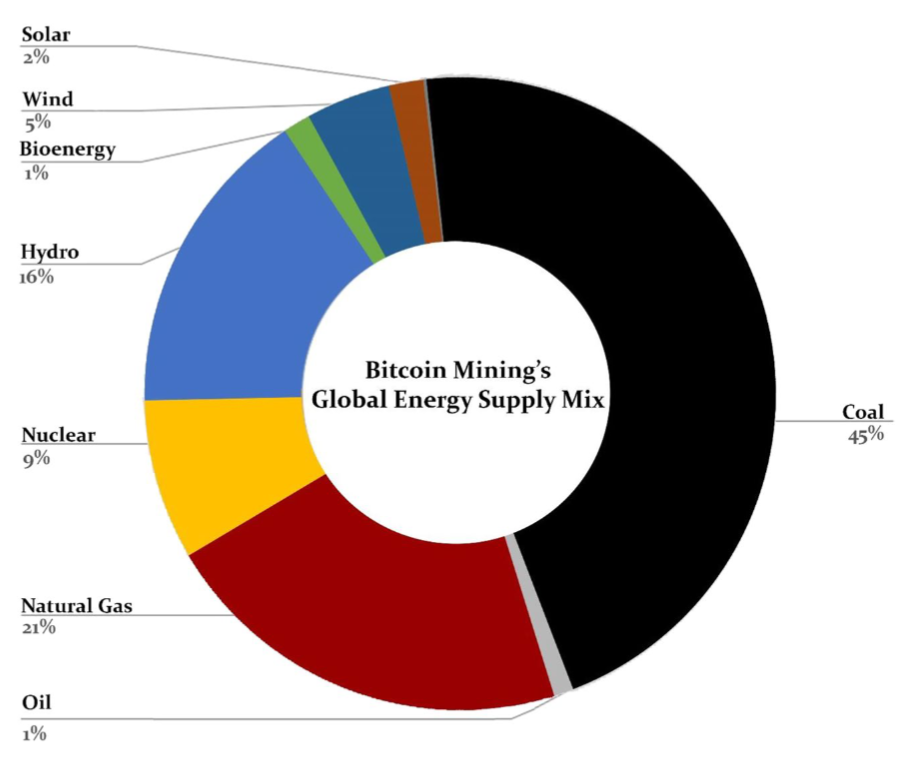
For crypto miners and AI infrastructure operators, Pakistan’s low energy costs and government openness represent a powerful incentive.
SECTION 6 — Opening the Market: New Licensing Framework for Global Exchanges
In September, PVARA invited global exchanges, wallet providers, and digital asset companies to submit Expressions of Interest (EOI) for operating licenses under a new national regulatory framework.
The goal is to transform Pakistan from a large unregulated market into a stable, compliant, investment-ready digital asset ecosystem.
This regulatory shift offers:
- clear legal pathways for exchanges and custodians
- compliance-ready infrastructure for institutional market entry
- safer environments for users
- economic incentives for Web3 companies to establish local operations
This is particularly significant because Pakistan has historically experienced unregulated crypto flows, scams, and informal trading systems. A regulated framework will redirect capital toward legitimate platforms and new financial products.
SECTION 7 — Implications for Global Crypto Markets
Pakistan’s transformation has broad implications:
1. New Demand Source for BTC and Stablecoins
With 240 million people, even modest adoption levels could increase demand for Bitcoin, USDT, and emerging altcoins used for payments or savings.
2. Infrastructure Growth: Wallets, Layer-2s, Remittances
Pakistan is a major remittance hub. Using stablecoins or Lightning Network can drastically lower costs and improve settlement times.
3. Opportunity for Builders
Blockchain developers providing:
- identity solutions
- compliance tools
- payment rails
- DEX/CEX operations
- asset tokenization services
will find Pakistan a rapidly expanding market.
4. Massive Growth in Mining & AI Data Sectors
The 2,000 MW allocation is large enough to attract global-scale mining firms and cloud AI companies.
5. Geopolitical Significance
As global south nations like Pakistan adopt Bitcoin for infrastructure, the geopolitical landscape of reserve assets and financial rails will shift.
SECTION 8 — What This Means for Investors Seeking New Crypto Opportunities
For readers exploring new crypto assets, emerging markets, or practical blockchain applications, Pakistan represents:
- a fast-growing adoption base
- a government supportive of Bitcoin as infrastructure
- new opportunities in mining, AI, wallets, and L2 solutions
- an environment where stablecoins and tokenized assets could flourish
- potential for sovereign-level Bitcoin accumulation to influence markets
Emerging markets often become early adopters of technology that lowers friction. Pakistan’s moves suggest it may become Asia’s next major blockchain hub.
Conclusion
Pakistan is entering a new era. Its government views Bitcoin not as a speculative instrument but as the foundation for the next generation of financial rails. With strategic BTC reserves, a licensing framework, surplus energy allocation, and a young population eager for digital opportunities, Pakistan could become one of the world’s most important emerging crypto economies.
For investors, builders, and innovators, Pakistan represents a rare combination of population scale, regulatory transformation, and technological ambition—conditions that often precede explosive market growth.
