
Key Points :
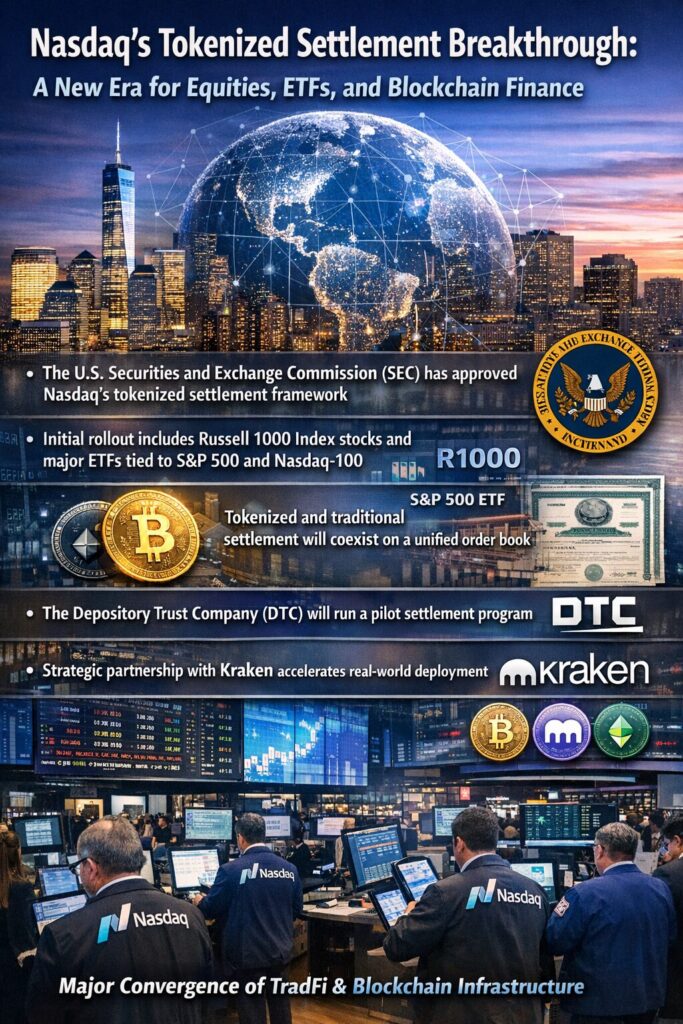
- The U.S. Securities and Exchange Commission (SEC) has approved Nasdaq’s tokenized settlement framework
- Initial rollout includes Russell 1000 Index stocks and major ETFs tied to S&P 500 and Nasdaq-100
- Tokenized and traditional settlement will coexist on a unified order book
- The Depository Trust Company (DTC) will run a pilot settlement program
- Strategic partnership with Kraken accelerates real-world deployment
- This marks a major convergence between traditional finance (TradFi) and blockchain infrastructure
Introduction: From Experimentation to Institutional Adoption
The approval granted by the U.S. Securities and Exchange Commission on March 18, 2026, represents one of the most consequential developments in the convergence of traditional financial markets and blockchain technology. By authorizing Nasdaq to implement tokenized settlement for equities and exchange-traded funds (ETFs), regulators have effectively moved tokenization from theoretical potential into operational reality.
This initiative, formalized under rule change SR-NASDAQ-2025-072, enables Nasdaq to participate in a pilot program administered by the Depository Trust Company (DTC), the backbone of U.S. securities clearing and settlement. The implications extend far beyond faster settlement times—they signal a structural transformation in how financial assets are issued, traded, and recorded.
For investors seeking new crypto assets, revenue streams, and practical blockchain applications, this development provides a critical signal: tokenization is no longer speculative—it is becoming foundational.
Unified Order Book: Bridging Traditional and Tokenized Markets
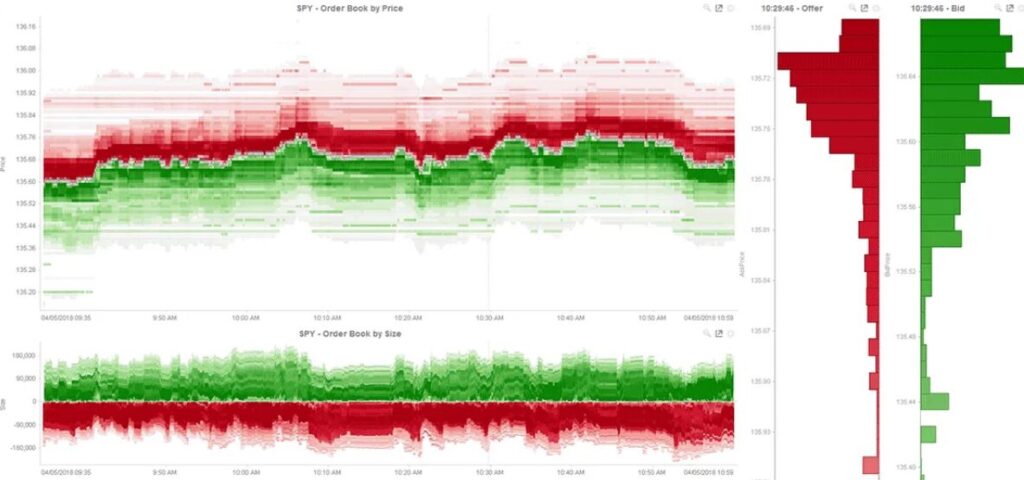
One of the most innovative aspects of Nasdaq’s implementation is the integration of tokenized and traditional settlement within a single order book. Investors will be able to select their preferred settlement method—either conventional clearing or tokenized settlement—via an “order flag” at the time of trade execution.
This design avoids one of the most critical risks in financial innovation: liquidity fragmentation. Historically, new trading mechanisms often create separate pools of liquidity, reducing efficiency and increasing spreads. Nasdaq’s unified model ensures that both settlement types compete on equal footing, preserving price discovery and execution quality.
From a systems perspective, this is a profound architectural shift. Rather than replacing legacy infrastructure outright, Nasdaq is layering blockchain-based settlement into existing market microstructure. This hybrid approach significantly lowers adoption friction and allows institutional participants to transition gradually.
Scope of the Pilot: High-Quality Assets First
The initial rollout focuses on some of the most liquid and widely held assets in global markets. These include constituents of the Russell 1000 Index, as well as major ETFs tracking benchmarks like the S&P 500 and Nasdaq-100.
This choice is strategic. By starting with large-cap equities and index ETFs, Nasdaq ensures:
- Deep liquidity and stable pricing
- Strong institutional participation
- Lower operational risk during early-stage deployment
In essence, the pilot prioritizes reliability over experimentation. It is designed not to test whether tokenization works, but to validate how it performs at scale under real market conditions.
The Role of DTC: Reimagining Settlement Infrastructure
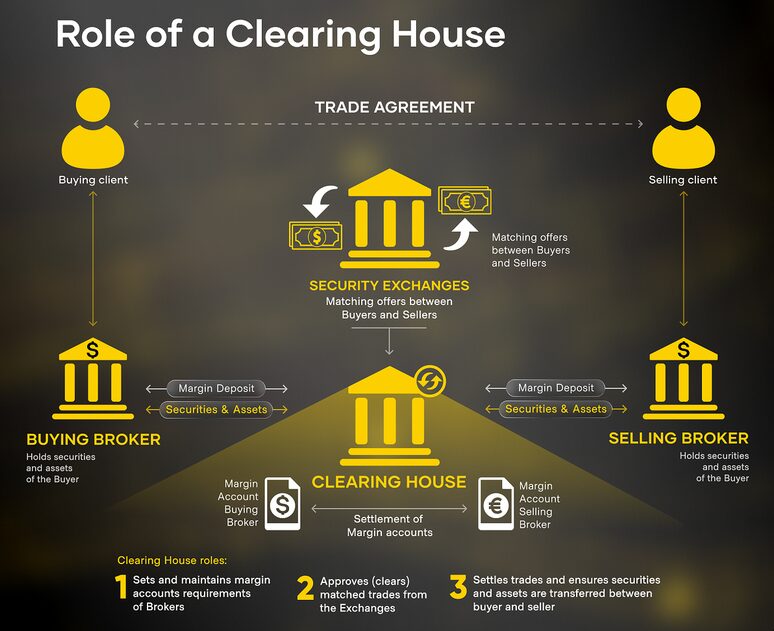
The involvement of the Depository Trust Company is particularly significant. As the central securities depository (CSD) for the United States, DTC processes trillions of dollars in transactions daily.
Traditionally, U.S. equity markets operate on a T+1 settlement cycle (previously T+2), meaning trades take one business day to finalize. Tokenized settlement has the potential to reduce this to near real-time (T+0), fundamentally altering capital efficiency and counterparty risk dynamics.
Key improvements include:
- Reduced settlement time: Near-instant finality
- Lower counterparty risk: Fewer open exposures
- Improved capital efficiency: Faster reuse of funds
- Enhanced transparency: Immutable transaction records
However, rather than eliminating DTC, this model transforms its role—from a central reconciler to a coordinator of hybrid settlement systems.
Nasdaq and Kraken: A Strategic Convergence
Nasdaq’s earlier partnership with Kraken, announced on March 10, 2026, plays a critical role in this transition. The collaboration focuses on building infrastructure for tokenized equities, combining Nasdaq’s institutional credibility with Kraken’s expertise in digital asset custody and blockchain systems.
This partnership reflects a broader industry trend: traditional exchanges are increasingly collaborating with crypto-native firms rather than competing with them.
For market participants, this convergence suggests:
- Faster institutional adoption of blockchain rails
- Standardization of tokenized asset frameworks
- Expansion of cross-market liquidity between crypto and equities
Why Tokenization Matters: Beyond Speed
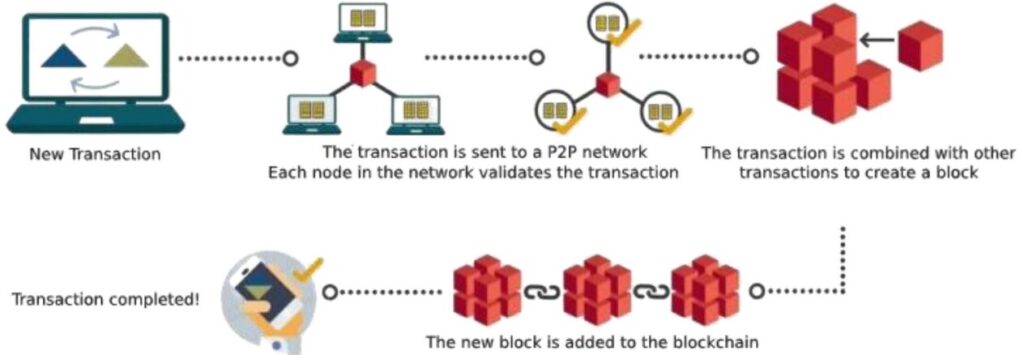
While faster settlement is often highlighted, the true value of tokenization lies in its broader impact on financial systems.
1. Liquidity Enhancement Without Fragmentation
Unlike earlier blockchain experiments that created isolated trading venues, Nasdaq’s model integrates tokenization into existing liquidity pools.
2. Cost Reduction
By automating reconciliation and reducing intermediaries, tokenized systems can significantly lower operational costs across clearing, custody, and reporting.
3. Programmability
Tokenized securities can embed logic such as dividend distribution, compliance checks, and corporate actions directly into smart contracts.
4. Global Accessibility
In the long term, tokenization could enable 24/7 trading and cross-border participation, expanding access to U.S. equities globally.
Market Implications: Opportunities for Crypto and Beyond
For readers focused on discovering new crypto assets and revenue opportunities, this development carries several important implications.
First, it validates the infrastructure layer of blockchain rather than any single token. Projects involved in tokenization, custody, compliance, and settlement may see increased demand.
Second, it signals growing institutional acceptance. When a major exchange like Nasdaq integrates blockchain into its core operations, it reduces regulatory uncertainty across the sector.
Third, it opens new hybrid asset classes. Tokenized equities could eventually interact with decentralized finance (DeFi), enabling:
- Collateralized lending using tokenized stocks
- Yield strategies combining equities and crypto
- Cross-chain financial products
Future Outlook: From Pilot to Standardization
The current program is explicitly a pilot, meaning its long-term success depends on regulatory evaluation and operational performance. Future developments may include:
- Expansion beyond the Russell 1000 Index
- Inclusion of additional asset classes such as bonds or private equity
- Full adoption of tokenized settlement as a market standard
If successful, this initiative could mirror the evolution of electronic trading in the early 2000s—initially optional, but eventually dominant.
Market Structure Evolution
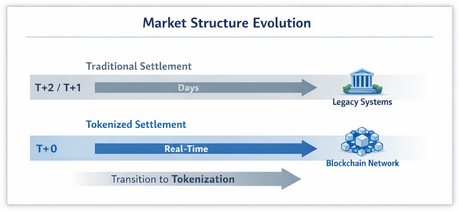
(Illustration: Traditional vs Tokenized Settlement Timeline)
Unified Order Book Architecture
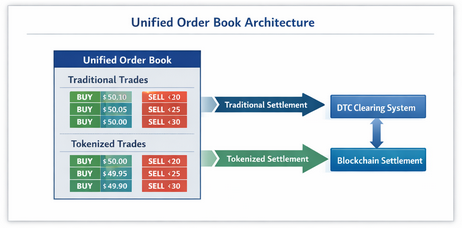
(Illustration: Coexistence of Traditional and Tokenized Trades)
Tokenization Value Chain
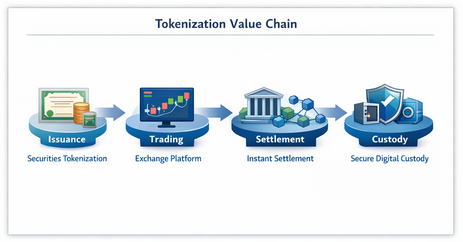
(Illustration: Issuance → Trading → Settlement → Custody)
Conclusion: The Institutionalization of Tokenization
Nasdaq’s move into tokenized settlement is not merely a technological upgrade—it is a paradigm shift. By integrating blockchain-based processes into one of the world’s most established financial systems, this initiative bridges the long-standing divide between traditional finance and digital assets.
For investors, developers, and institutions, the message is clear: tokenization is transitioning from innovation to infrastructure. The next phase of financial markets will not be defined by whether blockchain is used, but by how effectively it is integrated.
