

Main Points :
- MSCI decided not to exclude Digital Asset Treasury Companies (DATCOs) from its equity indexes, triggering an immediate positive market reaction.
- Strategy (formerly MicroStrategy), the largest Bitcoin treasury holder, benefited directly, highlighting the importance of passive index flows.
- The decision signals institutional tolerance for crypto-heavy balance sheets, at least in the medium term.
- Corporate crypto treasuries have expanded beyond Bitcoin into Ethereum and Solana, marking a new phase of balance-sheet experimentation.
- The sustainability of crypto treasury strategies depends on accounting treatment, volatility management, and regulatory clarity.
1. Why MSCI’s Decision Matters
Morgan Stanley Capital International (MSCI), one of the most influential index providers in global capital markets, announced that it would not immediately exclude Digital Asset Treasury Companies (DATCOs) from its indexes. This decision may sound technical, but its implications are profound.
Indexes are not just benchmarks; they are capital allocation engines. Trillions of dollars track MSCI indexes through ETFs and passive funds. Remaining in an index ensures continuous demand for a company’s shares, while exclusion can trigger forced selling worth billions of dollars.
The market understood this instantly. Shares of Strategy, led by Michael Saylor, surged roughly 5% in after-hours trading, reversing losses from regular trading hours.
MSCI clarified that it would conduct a broader consultation to better distinguish:
- Investment-oriented entities, and
- Operating companies that hold digital assets as part of their core business strategy.
This nuance is critical. It suggests MSCI is not rejecting crypto treasuries outright—but rather refining how they are classified.
2. What Is a Digital Asset Treasury Company (DATCO)?
MSCI defines a Digital Asset Treasury Company as a firm where digital assets account for more than 50% of total assets on the balance sheet.
This threshold captures companies like Strategy, whose corporate identity has become inseparable from Bitcoin accumulation. As of early 2026, Strategy holds approximately 673,783 BTC, making it the largest corporate holder of Bitcoin globally.
For passive funds, classification matters more than ideology. If DATCOs were removed, index funds would be forced to divest regardless of fundamentals—potentially draining tens of billions of dollars in liquidity from these stocks.
3. Market Reaction: A Case Study in Passive Capital Power
(Stock price reaction of Strategy following MSCI announcement)
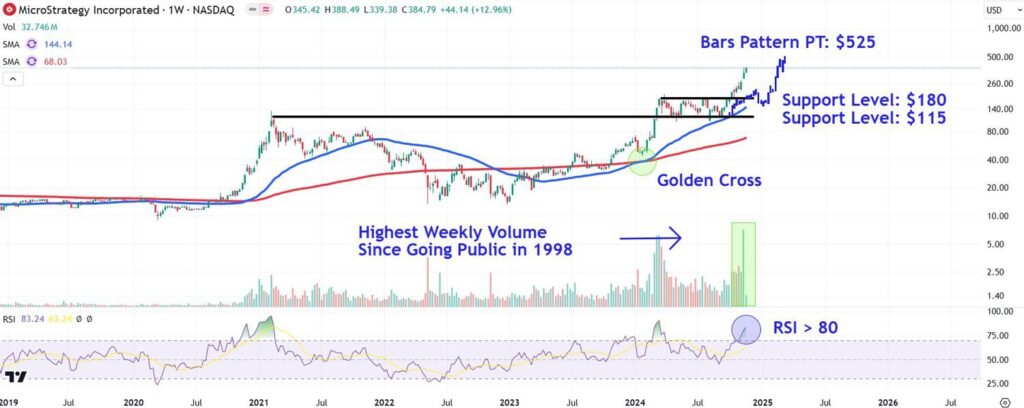
During regular trading hours, Strategy shares fell about 4.1%. After MSCI’s announcement, the stock rebounded sharply in extended trading.
This price action underscores a key reality of modern markets:
Index eligibility can matter more than earnings in the short term.
Passive capital does not analyze narratives—it follows rules. MSCI’s decision preserved Strategy’s access to this capital.
4. The Rise—and Pause—of Corporate Crypto Treasuries
Between 2024 and 2025, corporate adoption of crypto treasuries accelerated dramatically. Initially inspired by Strategy’s Bitcoin playbook, dozens of companies followed suit.
By late 2025:
- 190+ publicly listed companies held Bitcoin on their balance sheets.
- Several firms diversified into Ethereum and Solana, seeking yield, staking income, or ecosystem exposure.
However, the momentum stalled in the second half of 2025. Rising volatility, regulatory uncertainty, and accounting losses led to sharp stock declines among crypto-heavy firms.
MSCI’s decision therefore arrives at a crucial moment—offering temporary relief and strategic breathing room.
5. Institutional Perspective: Why MSCI Chose Caution Over Exclusion
From MSCI’s standpoint, abrupt exclusion would have raised three problems:
- Consistency Risk
MSCI aims to measure operating company performance, not investment vehicles. But many DATCOs still generate operating revenue. - Market Disruption
Forced selling by passive funds could destabilize markets and undermine index credibility. - Precedent Risk
Excluding crypto-heavy firms today could invite pressure to exclude other asset-heavy models tomorrow (e.g., commodity treasuries).
Instead, MSCI opted for consultation—signaling that crypto exposure alone is not yet disqualifying.
6. Beyond Bitcoin: The Next Evolution of Treasury Strategy
(Growth of corporate digital asset treasuries by asset type)
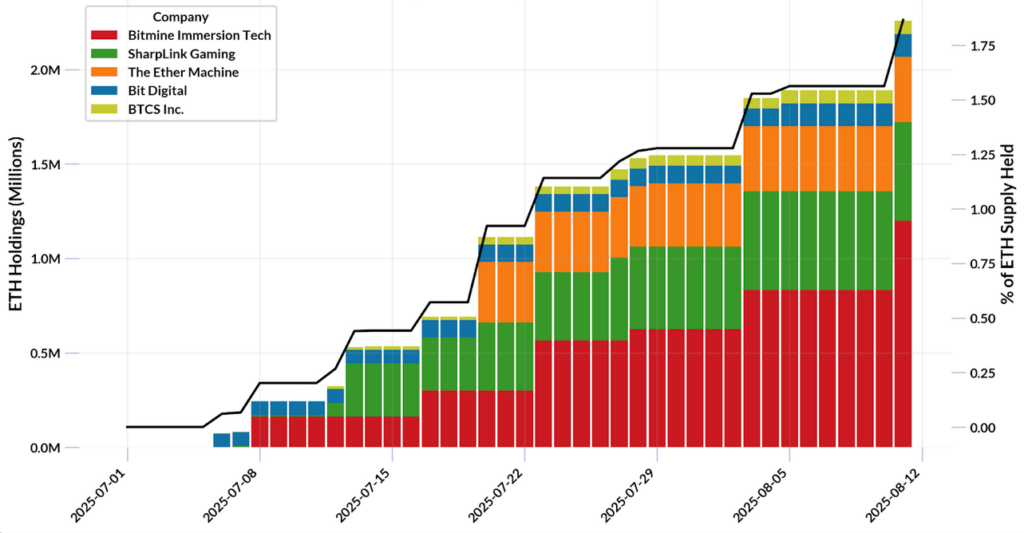
A notable shift in 2025 was diversification:
- Ethereum treasuries explored staking yield.
- Solana treasuries targeted ecosystem growth and high-throughput use cases.
This evolution reframes corporate crypto holdings from:
“Speculative reserve” → “Strategic digital infrastructure exposure”
For readers seeking new revenue models, this is the most important trend to watch.
7. Risks That Still Remain
Despite MSCI’s supportive stance, risks persist:
- Accounting volatility: Mark-to-market losses can distort earnings.
- Regulatory divergence: Treatment varies widely by jurisdiction.
- Index reclassification risk: Future MSCI reviews may tighten criteria.
Companies must now demonstrate that crypto treasuries enhance—not replace—core business operations.
8. Implications for Investors and Builders
For investors:
- DATCO stocks are increasingly proxy instruments for institutional crypto exposure.
- Index inclusion reduces tail risk but does not eliminate volatility.
For builders and CFOs:
- Treasury strategy must be integrated with risk management, disclosures, and governance.
- Passive capital tolerance creates opportunity—but only temporarily.
Conclusion
MSCI’s decision to keep Digital Asset Treasury Companies within its indexes is more than a technical adjustment—it is a strategic pause in the institutional reclassification of crypto-native balance sheets.
For Strategy and its peers, this provides continued access to passive capital and market liquidity. For the broader ecosystem, it signals that crypto treasuries are no longer fringe experiments, but neither are they fully normalized.
The next phase will be defined not by accumulation alone, but by how effectively digital assets are operationalized within real businesses.
