
Main Points :
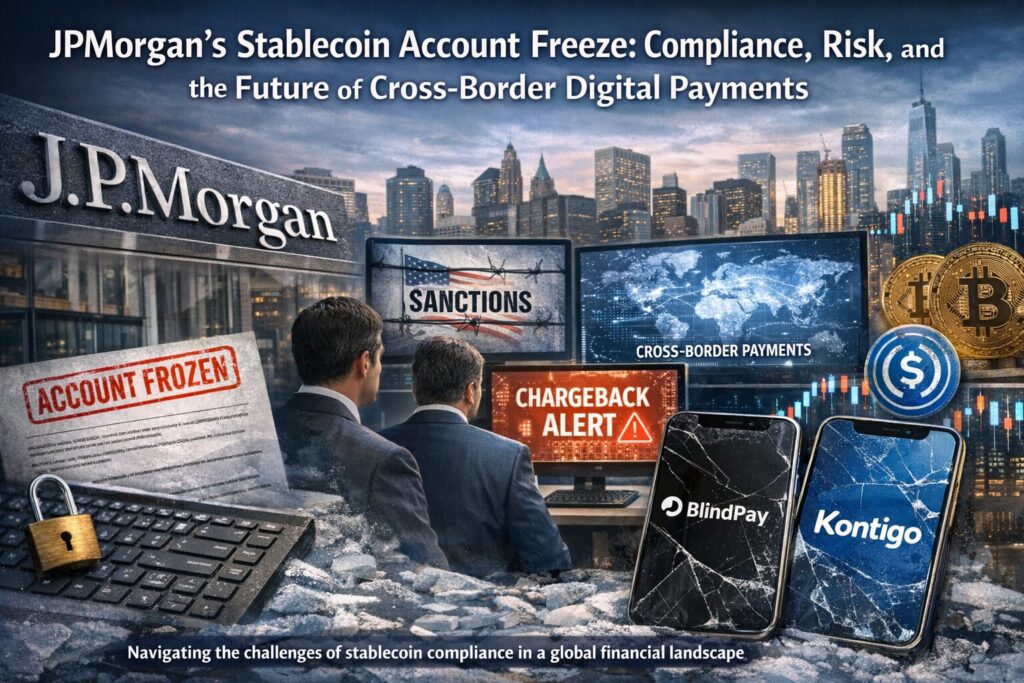
- JPMorgan Chase froze bank accounts linked to two stablecoin-related startups, BlindPay and Kontigo, citing compliance and risk-exposure concerns rather than a rejection of stablecoins themselves.
- The case highlights the growing tension between innovative stablecoin payment models and traditional banking compliance frameworks, especially in sanctioned or high-risk jurisdictions.
- Chargeback spikes, sanctions exposure, and cross-border payment risks were central triggers, showing how operational metrics can directly affect banking relationships.
- Despite this incident, global momentum toward stablecoin adoption continues, with major financial institutions preparing for issuance and integration ahead of 2026.
- For founders, investors, and operators, the episode underscores that compliance architecture—not token design alone—will determine scalability and survival.
1. What Happened: JPMorgan’s Decision in Context
In late 2025, JPMorgan Chase froze bank accounts connected to two stablecoin-related startups, BlindPay and Kontigo. Both companies were venture-backed and operated in or around jurisdictions subject to U.S. sanctions, most notably Venezuela.
Importantly, JPMorgan clarified that the action was not a judgment on stablecoins as a business model. The bank continues to serve stablecoin issuers and related firms and has even supported public listings in the sector. Instead, the freeze followed internal compliance reviews after transactions linked to sanctioned regions and operational risk indicators were flagged.
This distinction matters. It signals that stablecoins remain bankable, but only within strict compliance boundaries that mirror—or exceed—those applied to traditional cross-border finance.
2. The Startups Involved: BlindPay and Kontigo
Both BlindPay and Kontigo were part of the broader wave of fintech startups aiming to use stablecoins as settlement rails for faster and cheaper international payments.
- BlindPay focused on digital payment flows leveraging stablecoins for remittances and online transactions.
- Kontigo positioned itself as a cross-border payment facilitator for emerging markets.
Both startups were supported by Y Combinator, a signal of early-stage credibility, and accessed banking services indirectly through Checkbook, a U.S.-based digital payments firm partnered with major banks.
This layered structure—startup → payments intermediary → global bank—is increasingly common in crypto-adjacent finance. However, it also means that risk can propagate upward, ultimately landing on the balance sheet of the largest institution in the chain.
3. Why Accounts Were Frozen: Sanctions and Compliance Risk
3.1 Sanctions Exposure
According to reporting and statements from involved parties, JPMorgan’s review identified transactions connected to regions under U.S. sanctions. Even indirect exposure can trigger immediate action under U.S. banking law.
From a compliance perspective:
- Banks must assume strict liability for sanctions breaches.
- The cost of a single violation can exceed tens or hundreds of millions of dollars in fines, all denominated in U.S. dollars ($).
- As a result, risk tolerance approaches zero once a sanctions nexus is suspected.
JPMorgan emphasized that the freeze followed existing banking rules and occurred only after potential violations were identified.
4. The Role of Chargebacks: An Underappreciated Trigger
4.1 Rising Chargebacks as a Red Flag
A second, equally important factor was a sharp increase in chargebacks linked to the startups’ activities. PJ Gupta, CEO of Checkbook, explained that chargebacks surged after BlindPay and Kontigo expanded their online customer bases.
Chargebacks are more than an operational nuisance:
- They generate direct financial losses for banks.
- They significantly increase monitoring and compliance costs.
- In cross-border contexts, especially involving high-risk regions, they act as early indicators of fraud or AML weaknesses.
Gupta summarized the situation bluntly, stating that the startups had effectively “created a flow of funds” that pushed risk metrics beyond acceptable thresholds.
5. Disputes and Pushback from Founders
Kontigo’s co-founder Jesus Castillo strongly disputed allegations that the company facilitated transfers from Venezuela without proper identity verification.
According to Castillo:
- Kontigo did not allow anonymous or unverified transfers.
- The company complied with KYC requirements applicable to its operations.
- The narrative around improper activity oversimplified complex cross-border payment flows.
This dispute highlights a recurring issue in crypto-finance: compliance is not binary. A startup may meet its own regulatory interpretation while still failing to satisfy the far stricter risk models of a Tier-1 global bank.
6. What This Means for Stablecoins as a Business Model
6.1 Stablecoins Are Not the Problem
JPMorgan explicitly stated that the freeze had “nothing to do with stablecoin companies” as a category. In fact:
- Major banks continue to onboard stablecoin issuers.
- Several global institutions are preparing bank-issued or bank-supported stablecoins ahead of 2026.
- Stablecoins remain central to discussions around faster settlement, 24/7 payments, and programmable money.
The implication is clear: the rails are acceptable; the traffic must be controlled.
7. Industry-Wide Trends Toward 2026
Suggested insertion point: after this section header in publication layout
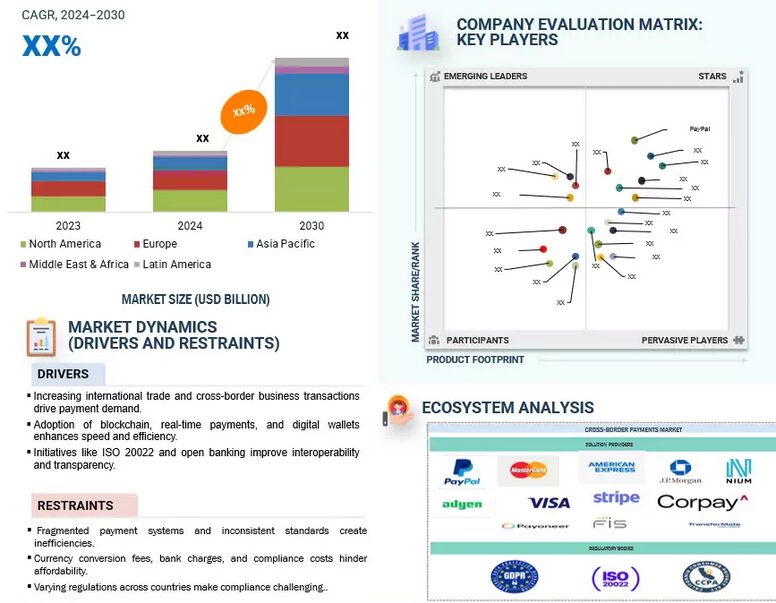
Global momentum toward stablecoin adoption continues to accelerate:
- Banks and payment networks are testing stablecoin settlement for wholesale payments.
- Regulators are moving from outright skepticism to structured frameworks.
- Enterprises are exploring stablecoins for treasury management and cross-border B2B payments.
Analysts increasingly expect that by 2026:
- Stablecoin settlement volumes will represent a material share of cross-border digital payments, measured in trillions of U.S. dollars ($).
- Compliance-ready issuers and intermediaries will dominate, while lightly governed startups struggle to maintain banking access.
8. Practical Lessons for Founders and Investors
For readers seeking new crypto assets, revenue opportunities, or practical blockchain applications, several lessons stand out:
- Banking relationships are the real moat
Token economics matter less than the ability to maintain compliant fiat on- and off-ramps. - Operational metrics can kill a business
Chargebacks, customer complaints, and transaction anomalies are existential risks. - Jurisdictional exposure must be engineered out early
Serving sanctioned or high-risk regions without robust controls invites immediate shutdown. - Stablecoins favor institutions, not rebels
The next growth phase benefits players who align with banks, not those trying to bypass them.
9. Conclusion: A Preview of the Next Stablecoin Era
JPMorgan’s freezing of accounts linked to BlindPay and Kontigo is not an anti-crypto signal. Instead, it is a preview of the next phase of stablecoin adoption, where innovation is welcome—but only inside hardened compliance frameworks.
For builders and investors, the message is unambiguous: the future of stablecoins belongs to those who can operate at bank-grade standards. As 2026 approaches, success will be defined less by disruption and more by disciplined integration with the global financial system.
