

Main Points :
- The meme coin sector has rebounded sharply from historically low dominance levels, recovering above $50 billion in total market capitalization.
- Major meme coins such as PEPE, BONK, FLOKI, DOGE, and SHIB have posted double- to triple-digit percentage gains since the start of 2026.
- Historically, meme coin dominance bottoming near 3% has preceded broader altcoin market rallies, signaling a revival of market risk appetite.
- Institutional exposure via regulated financial products, including leveraged Dogecoin ETFs, marks a structural shift in meme coin participation.
- While infrastructure activity on chains like Solana and Base is accelerating, concentration risk and volatility remain significant concerns.
1. Meme Coins Stage a Comeback From Historic Lows
After a prolonged period of underperformance, meme coins have staged a dramatic recovery, reigniting debate over whether a speculative bubble is forming once again—or whether the market is entering a renewed risk-on phase.
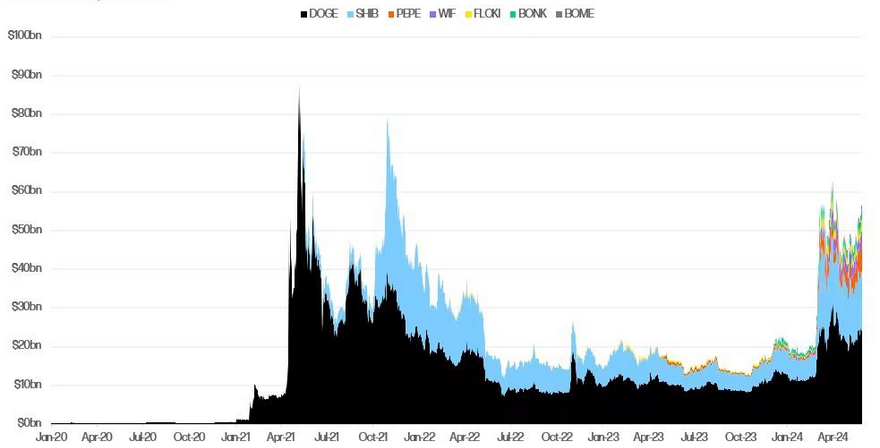
According to aggregated market data, the total market capitalization of meme coins has climbed back above $51.6 billion, up more than 20% in the first week of 2026 alone. This marks a sharp reversal from late 2025, when meme assets had fallen to their lowest relative influence within the altcoin market in years.
Tokens such as PEPE and BONK, which had been written off by many investors as relics of the previous cycle, have surprised the market with gains exceeding 30%–50% in a matter of days. Legacy meme assets including DOGE and SHIB have also resumed strong upward momentum, driven by renewed trading activity and speculative inflows.
This rebound is not occurring in isolation. Instead, it reflects a broader shift in market psychology—one where investors appear increasingly willing to reallocate capital toward high-beta, narrative-driven assets.
2. Meme Coin Dominance: A Contrarian Indicator Returns
One of the most closely watched indicators supporting this thesis is meme coin dominance within the altcoin market.
Data from on-chain analytics providers shows that meme coin dominance peaked near 11% in November 2024, before entering a prolonged decline. By December 2025, the metric had fallen to approximately 3.2%, marking a historic low.
Notably, previous cycles show that when meme coin dominance approaches this level, it has often coincided with exhaustion in defensive positioning and preceded broad-based altcoin rallies. Analysts interpret this as a sign that speculative capital has largely exited the market—creating conditions for a renewed expansion phase.
The current rebound from that 3% level is therefore seen by many market participants as a signal of recovering risk appetite, rather than an isolated meme-driven anomaly.
3. Market Data Confirms Accelerating Momentum
Independent data sources reinforce this narrative.
Santiment reports that the meme coin sector expanded by more than 20% in market capitalization during the first week of January 2026, with multiple assets recording outsized gains. CoinGecko estimates place the sector’s valuation at approximately $51.6 billion, making it once again a material component of the broader crypto market.
Example: 7-Day Performance Snapshot (USD)
| Token | 7-Day Gain |
|---|---|
| PEPE | +54% |
| USELESS | +54% |
| MOG | +38% |
| DOG | +36% |
| BONK | +30%+ |
These figures underscore a key characteristic of the current move: capital is flowing not only into blue-chip meme assets, but also into smaller, higher-risk tokens, suggesting a broad-based speculative revival.
Meme Coin Market Capitalization & Dominance (2024–2026)
4. Institutional Access Changes the Market Structure
One of the defining differences in this cycle is how investors are gaining exposure to meme coins.
Bloomberg analysts have highlighted the strong early-2026 performance of regulated financial products such as leveraged Dogecoin ETFs offered by firms like 21Shares. While DOGE has long been traded on spot exchanges, these products allow exposure through traditional brokerage accounts—broadening the investor base significantly.
This development suggests that meme coins are no longer confined to on-chain retail speculation. Instead, they are increasingly integrated into the regulated financial ecosystem, attracting capital from investors who may never directly interact with decentralized wallets or exchanges.
From a structural standpoint, this represents a meaningful shift: meme coins are evolving from purely internet-native assets into instruments accessible within legacy financial infrastructure.
5. Blockchain Infrastructure Benefits From Meme Activity
The resurgence of meme coins is also driving increased activity at the infrastructure layer.
On Solana, rapid token issuance, high transaction throughput, and low fees have made it a favored environment for meme projects. Similarly, Base, the Layer 2 network supported by Coinbase, has seen a sharp uptick in token launches and decentralized exchange volume.
For developers and infrastructure providers, this surge translates into higher network usage, increased fee generation, and broader experimentation with tokenized communities and micro-economies.
In this sense, meme coins function as a stress test—and a growth catalyst—for blockchain scalability and user experience.
6. Concentration Risk Remains a Critical Concern
Despite the optimism, significant risks persist.
A defining feature of many meme coins is high ownership concentration. A small number of whale wallets often control a large portion of circulating supply, creating structural fragility. Sudden sell-offs by these holders can trigger sharp price collapses, regardless of broader market sentiment.
Additionally, meme-driven rallies tend to amplify volatility. While this can create short-term profit opportunities, it also increases the likelihood of rapid drawdowns—particularly for late entrants.
For investors and operators alike, this underscores the importance of risk management, transparency, and liquidity monitoring when engaging with the meme coin sector.
7. Bubble or Signal? Interpreting the Current Cycle
Is this rally a speculative bubble—or an early signal of a broader market expansion?
The answer likely lies somewhere in between.
On one hand, the speed and magnitude of recent gains echo past speculative manias. On the other, the macro context differs: institutional access is broader, infrastructure is more mature, and meme coins now coexist with real economic activity across DeFi, NFTs, and Layer 2 ecosystems.
Rather than viewing meme coins solely as frivolous speculation, many analysts now treat them as sentiment indicators—assets that reveal shifts in collective risk tolerance before those shifts appear elsewhere in the market.
Conclusion: What Meme Coins Reveal About Crypto’s Next Phase
The resurgence of meme coins in early 2026 is more than a curiosity. It reflects a deeper transformation in crypto market dynamics—one where speculation, infrastructure, and traditional finance increasingly intersect.
For readers seeking new digital assets, alternative revenue opportunities, or practical blockchain use cases, meme coins offer both opportunity and warning. They highlight where capital is flowing first, but also where discipline is most urgently required.
Whether this cycle culminates in excess or expansion, one thing is clear: meme coins are once again shaping the narrative—and the risk profile—of the crypto market as a whole.
