
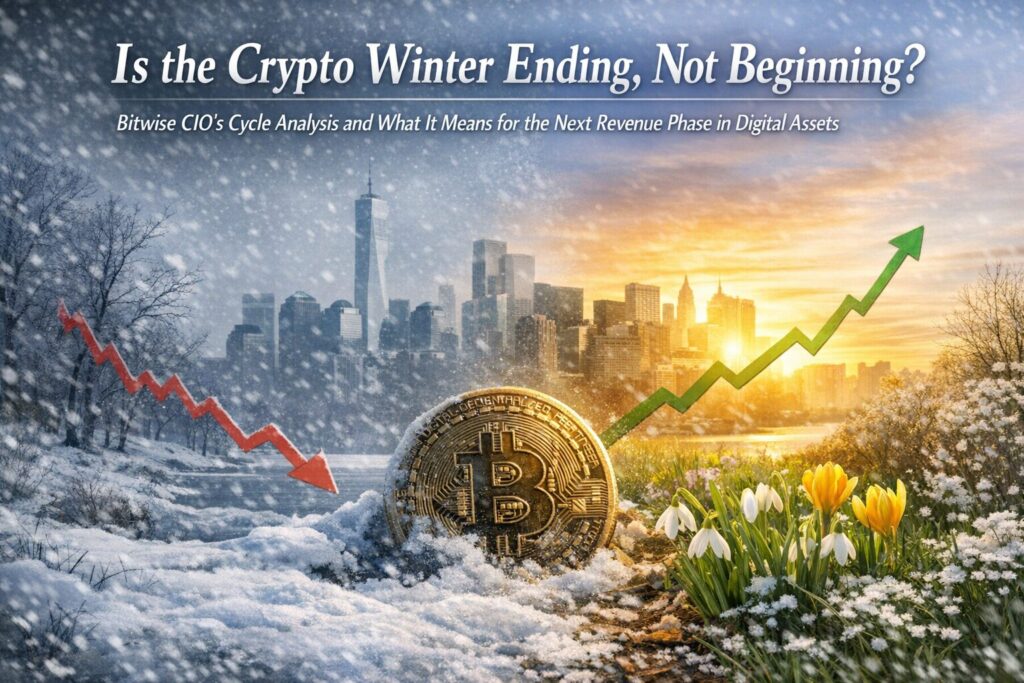
Main Points :
- The current crypto market resembles a true “winter” phase, not a temporary correction, according to Matt Hougan of Bitwise.
- Historical Bitcoin cycles suggest that market bottoms tend to occur roughly 13 months after peak prices, implying the current winter may be nearing its end.
- ETF-driven demand and crypto treasury buyers have masked underlying weakness in much of the altcoin market since early 2025.
- Regulatory clarity, stablecoins, tokenization, and institutional adoption continue to accumulate quietly during bear markets.
- For investors and operators, crypto winters are historically the best time to build revenue models, infrastructure, and real-world use cases.
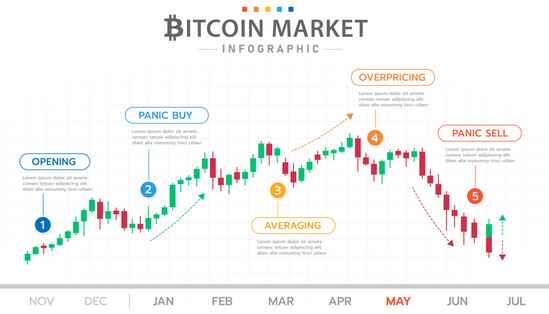
1. Not a Correction, but a Real Crypto Winter
In early February 2026, Bitwise CIO Matt Hougan released a market memo arguing that the crypto market is not merely experiencing a pullback but is in a full-fledged winter phase—one that likely began in January 2025.
At the time of his analysis, Bitcoin had declined approximately 39% from its all-time high, a magnitude of drawdown that historically aligns not with mid-cycle volatility but with structural bear markets. According to Hougan, this downturn reflects familiar forces seen in previous cycles: excessive leverage, speculative excess, and profit-taking by early entrants.
Leverage-driven trading amplifies both upside and downside. When optimism fades, forced liquidations accelerate declines, draining liquidity and confidence from the market. What distinguishes a crypto winter from a correction is not only price behavior but investor psychology—a shift from excitement to exhaustion.
Hougan emphasizes that true winters do not end with panic, but with apathy.
2. Bitcoin’s Historical Cycles: Why 13 Months Matters
A central pillar of Hougan’s argument lies in historical cycle analysis. In both the 2017–2018 and 2021–2022 Bitcoin cycles, market bottoms formed approximately 13 months after peak prices.
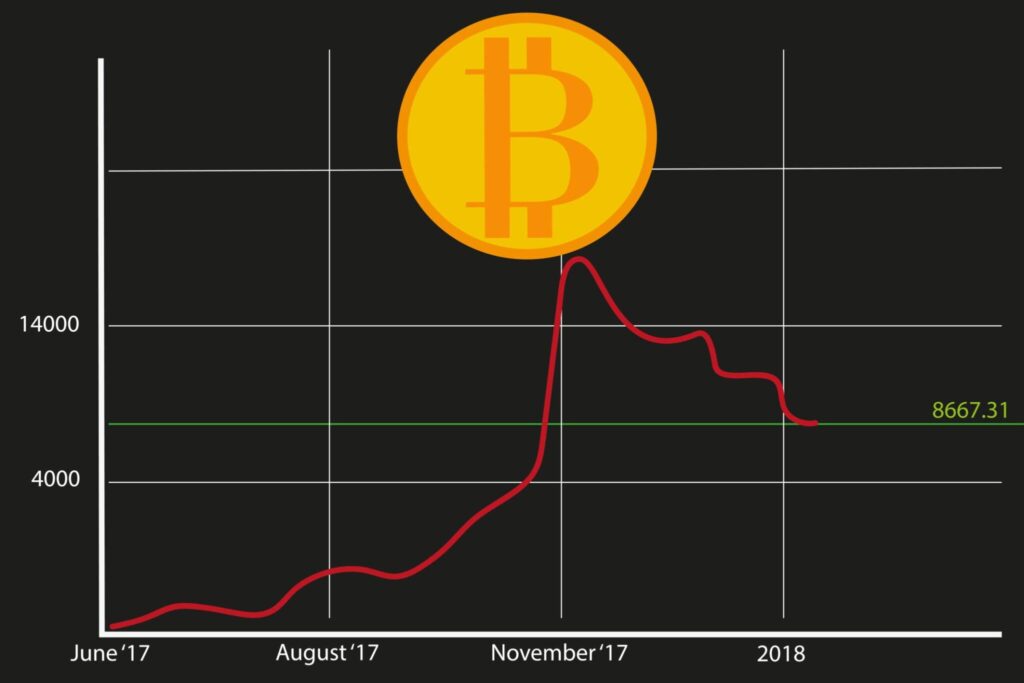
Applying this framework to the current cycle yields an interesting implication:
If the effective winter began in January 2025, the market may be approaching a cyclical bottom around February–March 2026.
Importantly, this does not imply immediate bullish conditions. Historically, the transition from bottoming to recovery often includes long periods of sideways movement. However, it does suggest that the worst phase of capital destruction may already be behind us.
3. Why the Winter Was Hard to See: ETFs and Treasury Buyers
One apparent contradiction is that Bitcoin managed to reach new highs as late as October 2025, despite Hougan’s claim that winter began months earlier.
His explanation is structural.
ETF approvals and corporate crypto treasury strategies created artificial demand concentration in a limited set of assets—primarily Bitcoin and a handful of large-cap tokens. This distorted market-wide signals.
Hougan categorizes crypto assets into three groups:
- Assets benefiting from both ETFs and crypto treasury demand
- Assets benefiting only from ETF approvals
- Assets benefiting from neither
Tokens in the third category—primarily mid- and small-cap altcoins—began sustained declines as early as January 2025, confirming that for most retail investors, the winter had already started.
In other words, institutional capital delayed the visible symptoms, but did not prevent the winter.
4. Why Positive News Doesn’t Work in a Bear Market
A common frustration during crypto winters is the apparent irrelevance of good news.
During the current downturn:
- Regulatory frameworks have continued to mature
- Institutional adoption has expanded
- Stablecoins and tokenization initiatives have accelerated
- Political support has improved, including the nomination of Bitcoin-friendly figures such as Kevin Warsh to lead the Federal Reserve
Yet prices remain subdued.
Hougan’s explanation is blunt: in real winters, good news is ignored. But ignored does not mean erased. These developments accumulate as latent energy, setting the stage for future expansion once sentiment shifts.
5. The Quiet Growth Areas: Where Builders Should Be Looking
For readers seeking new revenue opportunities and practical blockchain applications, this phase is particularly important.
Historically, the most durable crypto businesses were built during bear markets:
- Stablecoin settlement infrastructure
- Tokenized real-world assets (RWAs)
- Custody, compliance, and reporting systems
- Payment rails and cross-border settlement tools
While speculative trading volumes shrink, enterprise and institutional experimentation accelerates. Tokenization of bonds, funds, and commodities—mostly denominated in USD—continues to expand quietly, often outside retail attention.
6. What Could End the Winter?
Hougan outlines several possible catalysts:
- A renewed global risk-on macro environment driven by economic growth
- Legislative breakthroughs such as a comprehensive Crypto Market Structure (Clarity) Act
- Sovereign or quasi-sovereign Bitcoin adoption
- Or simply the passage of time, allowing excess leverage and weak projects to wash out
Historically, crypto winters do not end with a single headline but with a structural shift in market participation.
7. Strategic Implications for Investors and Operators
For investors, approaching the end of a winter means focusing less on short-term price action and more on survivability and positioning.
For operators and builders, winters are when:
- Regulatory alignment can be achieved calmly
- Infrastructure can be built without speculative pressure
- Real revenue models can be tested against realistic demand
The next bull market rarely rewards those who arrive late. It rewards those who prepared quietly while others lost interest.
Conclusion: Winter as an Opportunity, Not a Threat
Matt Hougan’s analysis reframes the current market not as the beginning of prolonged decline, but as a late-stage winter nearing resolution.
For those searching for the next crypto asset, the next yield source, or the next real-world blockchain application, this phase is not a warning sign—it is an invitation.
Crypto winters end not in fear, but in silence. And history suggests that when silence is deepest, the foundations of the next cycle are already being laid.
