**Is 2026 the Final Peak for Gold and Silver? A Veteran Analyst Warns of the End of a Long-Term Cycle — and What It Means for Capital in the Digital Asset Era**
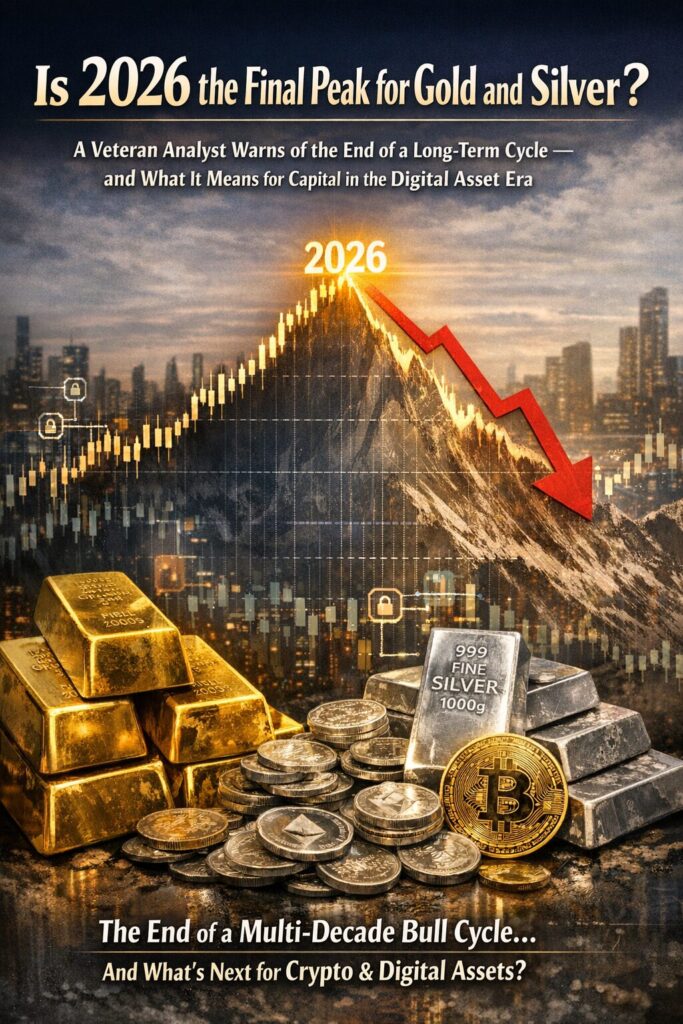
Gold and silver may be approaching the final phase of a multi-decade bull cycle, potentially peaking around 2026.
Short-term upside remains possible, but long-term risk is shifting decisively toward a prolonged bear market.
Market cycles, not macro narratives, ultimately dictate price direction in precious metals.
The potential end of the precious-metal cycle carries important implications for crypto assets, digital stores of value, and blockchain-based capital allocation.
1. A Warning from the Cycle, Not the Headlines
In an interview first reported by Kitco News, veteran market analyst Avi Gilburt, founder of ElliottWaveTrader, delivered a message that runs counter to much of today’s bullish precious-metal commentary.
According to Gilburt, the powerful rally in gold and silver that began after the 2015–2016 lows is no longer in its early or even middle stages. Instead, it may be entering its final chapter. While prices could still rise in the coming months, he cautions investors against assuming that recent strength represents the beginning of an entirely new era.
“This is not the start of something new,” Gilburt explains. “It is far more likely the end of a very long cycle.”
This perspective reframes gold and silver not as perpetual safe havens immune to market rhythms, but as assets governed by the same cyclical forces that shape equities, bonds, and increasingly, digital assets.
2. Understanding the Long-Term Precious Metals Cycle
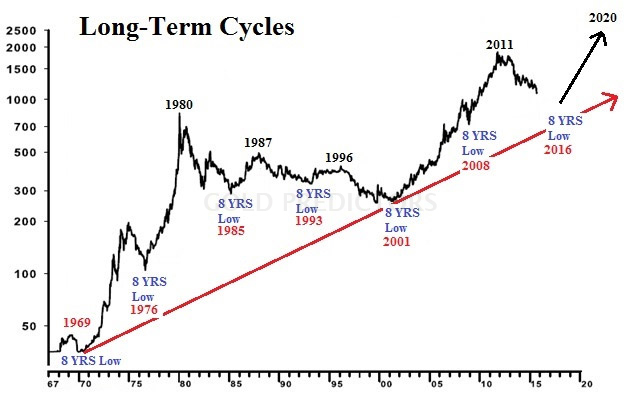
To grasp Gilburt’s warning, it is essential to zoom out beyond short-term price fluctuations. Following gold’s historic peak near $1,920 in 2011, precious metals entered a brutal, multi-year bear market. Investor interest faded, exchange-traded fund (ETF) holdings declined, and gold was widely dismissed as a “dead asset.”
That pessimism laid the foundation for the next cycle. Between 2015 and 2016, gold and silver established durable lows, initiating a powerful advance that accelerated during periods of monetary easing, pandemic-era stimulus, and rising geopolitical uncertainty.
However, cycles are not infinite. Gilburt views the current phase as the late stage of a nearly decade-long advance — one that historically tends to resolve with a final surge, followed by a multi-year reset.
3. Why Technical Levels Matter More Than Narratives
One of Gilburt’s most controversial assertions is his dismissal of macroeconomic storytelling. Inflation fears, central bank policy, geopolitical tensions — while emotionally compelling — do not ultimately determine price direction in his framework.
Instead, he emphasizes technical structures and wave patterns. For gold, the battlefield lies around the mid-$4,000 range. A sustained struggle near this level could trigger a sharp pullback, even if headlines remain bullish.
[Long-term gold price chart with resistance near $4,000]
Such a pullback would not necessarily mark the end. Historically, late-cycle markets often produce one final rally after shaking out overconfident participants. But that rally, Gilburt warns, would likely be the last before a prolonged downturn.
4. Silver: Volatility, Drama, and a Potential Final Surge
Silver, as usual, tells a more dramatic story. Known for its volatility and emotional trading behavior, silver often outperforms gold during late-cycle phases.
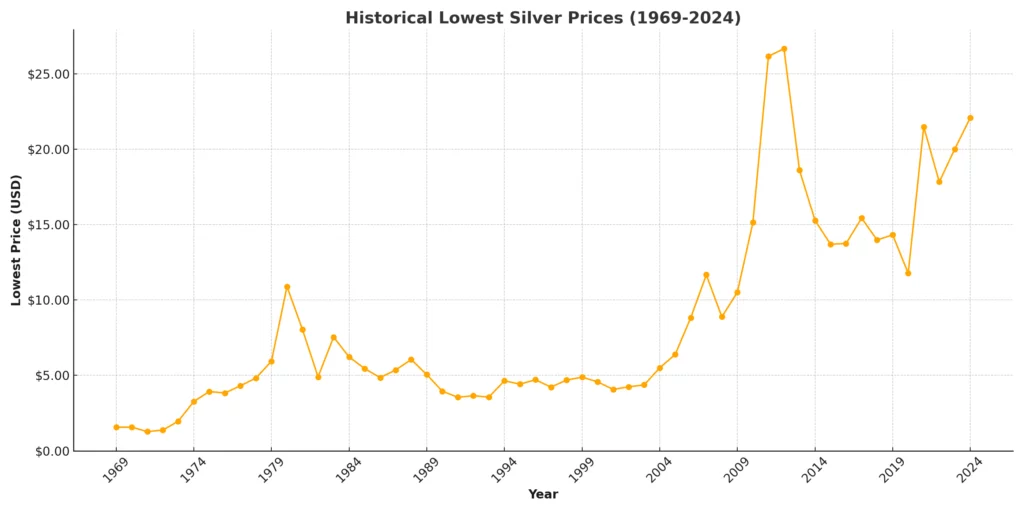
Gilburt outlines a scenario in which silver could make a final advance toward the $75–$80 range, provided key support levels hold.
Yet this upside comes with a warning. Silver’s history suggests that such explosive moves are often followed by grinding, demoralizing declines. Investors who assume silver “only goes up” may find themselves trapped in a long reset that tests both patience and conviction.
5. 2026: A Cyclical Inflection Point
The year 2026 emerges as a focal point in Gilburt’s analysis. Not because of a specific economic forecast, but because of where it sits within the broader time structure of the cycle.
If the pattern holds, gold and silver could transition from late-cycle exuberance into the early stages of a multi-year bear market around this period. Such transitions are rarely obvious at the time. They often occur amid widespread optimism and convincing narratives explaining why “this time is different.”
History suggests otherwise.
6. What This Means for Crypto and Digital Assets
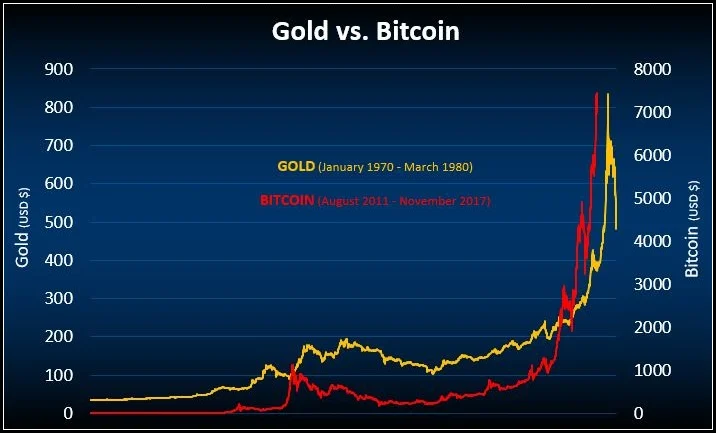
For readers interested in crypto and blockchain, this analysis carries deeper implications. Bitcoin and other digital assets have increasingly been compared to gold — as stores of value, inflation hedges, or alternatives to fiat currency.
If gold and silver are nearing a cyclical peak, capital may eventually rotate elsewhere. Some of that capital could flow into digital assets that offer programmability, yield, or integration with real-world financial infrastructure.
[Comparative timeline of gold cycles and Bitcoin adoption phases]
Unlike precious metals, blockchain-based assets introduce new dimensions: smart contracts, decentralized finance, tokenized real-world assets, and autonomous settlement systems. These features may allow digital assets to capture value even during periods when traditional “safe havens” stagnate.
7. Defensive Thinking in a Late-Cycle World
Gilburt’s core advice is not panic, but defense. Investors should resist the urge to extrapolate recent gains indefinitely. Risk management, position sizing, and an awareness of cyclical timing become increasingly critical as markets mature.
For those building portfolios that include both precious metals and crypto, this may be a moment to reassess balance — not abandoning gold or silver outright, but recognizing that their risk-reward profile may be shifting.
Conclusion: The End of One Cycle, the Beginning of Another
Gold and silver have served humanity as monetary anchors for thousands of years. Yet even these ancient assets are not immune to cycles. If Avi Gilburt’s analysis proves correct, the coming years may mark the closing chapter of a long precious-metal bull market.
For investors, especially those exploring blockchain and digital assets, this transition is not merely a warning — it is an opportunity. The end of one cycle often seeds the beginning of another. Understanding where we stand in time may be more valuable than any single narrative.
About Us and Media
Blockchain and cryptocurrency media covering and exposing the practical application development on the blockchain industry and undiscovered coins.
Click edit button to change this text. Lorem ipsum dolor sit amet, consectetur adipiscing elit
Manage Consent
To provide the best experiences, we use technologies like cookies to store and/or access device information. Consenting to these technologies will allow us to process data such as browsing behavior or unique IDs on this site. Not consenting or withdrawing consent, may adversely affect certain features and functions.
Functional Always active
The technical storage or access is strictly necessary for the legitimate purpose of enabling the use of a specific service explicitly requested by the subscriber or user, or for the sole purpose of carrying out the transmission of a communication over an electronic communications network.
Preferences
The technical storage or access is necessary for the legitimate purpose of storing preferences that are not requested by the subscriber or user.
Statistics
The technical storage or access that is used exclusively for statistical purposes.The technical storage or access that is used exclusively for anonymous statistical purposes. Without a subpoena, voluntary compliance on the part of your Internet Service Provider, or additional records from a third party, information stored or retrieved for this purpose alone cannot usually be used to identify you.
Marketing
The technical storage or access is required to create user profiles to send advertising, or to track the user on a website or across several websites for similar marketing purposes.