
Main Points :
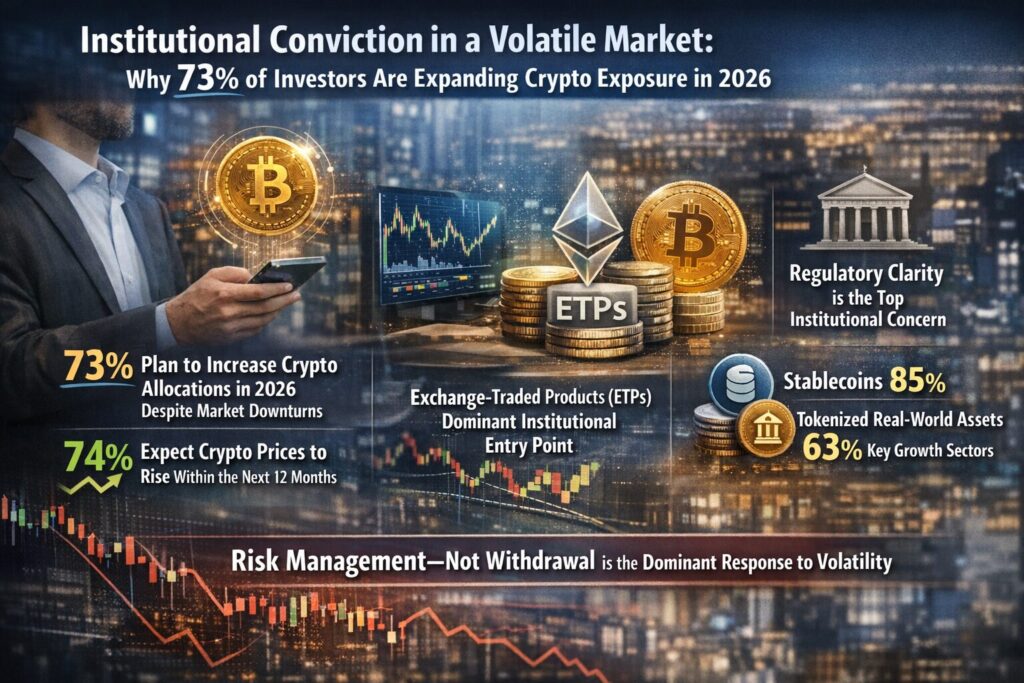
- 73% of institutional investors plan to increase crypto allocations in 2026 despite recent market downturns
- 74% expect crypto prices to rise within the next 12 months
- Exchange-Traded Products (ETPs) are becoming the dominant institutional entry point
- Regulatory clarity—especially market structure—is the top institutional concern
- Stablecoins (85%) and tokenized real-world assets (63%) are emerging as key growth sectors
- Risk management—not withdrawal—is the dominant response to volatility
1. Institutional Confidence Amid Market Decline
Despite a significant downturn in cryptocurrency markets since October 2025, institutional sentiment remains strikingly bullish. According to a January 2026 survey conducted by Coinbase involving 351 institutional investors, a strong majority—73%—intend to increase their allocation to digital assets over the coming year. Even more notably, 74% of respondents expect cryptocurrency prices to rise within the next 12 months.
This divergence between price performance and institutional sentiment highlights a structural shift in how digital assets are perceived. Rather than reacting to short-term volatility, institutions appear to be positioning themselves for long-term adoption cycles. This behavior mirrors earlier phases in traditional asset classes such as emerging markets or technology equities, where early institutional adoption preceded sustained price appreciation.
In practical terms, this signals that current market conditions may represent accumulation phases rather than exit points for large capital allocators. For readers seeking new income opportunities or early positioning in emerging crypto sectors, this institutional behavior is a critical signal.
2. The Rise of Regulated Access: ETPs as the Institutional Gateway
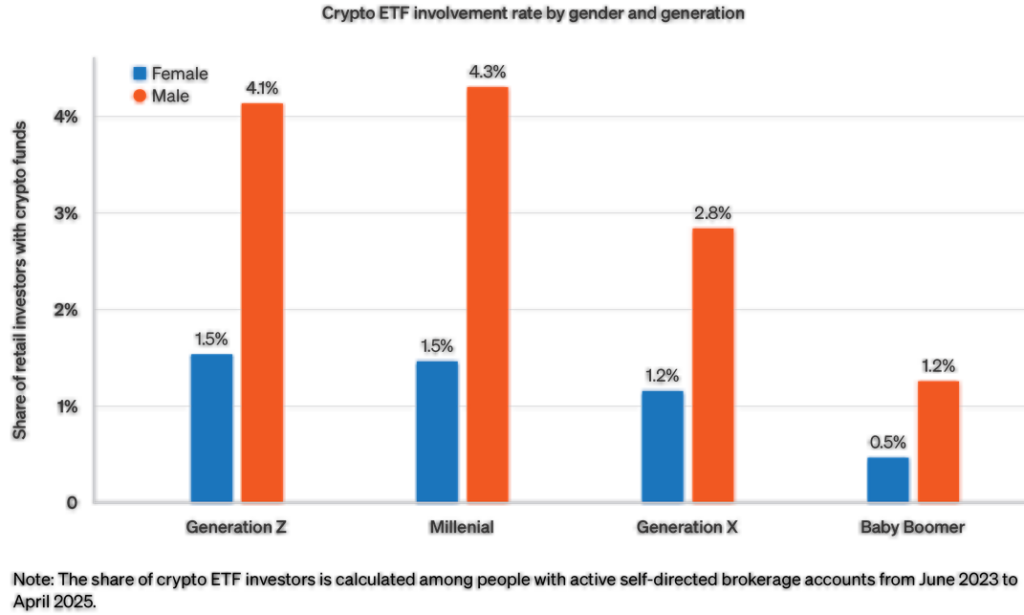
One of the most significant findings from the survey is that approximately two-thirds of institutional investors are using Exchange-Traded Products (ETPs) as their primary investment vehicle for crypto exposure.
This trend reflects two key developments:
- Increasing comfort with crypto as an asset class
- A strong preference for regulated, familiar investment structures
ETPs provide exposure to digital assets without requiring direct custody, private key management, or interaction with decentralized infrastructure. This lowers operational risk and aligns with institutional compliance requirements.
From a strategic perspective, this suggests that future capital inflows into crypto markets may increasingly be channeled through traditional financial rails rather than native crypto platforms. This has several implications:
- Liquidity concentration in major assets (BTC, ETH)
- Growth of custodial and compliance infrastructure providers
- Reduced volatility over time due to structured inflows
For builders and investors, this also indicates that integrating with traditional financial systems—rather than competing against them—may be the more scalable approach.
3. Regulation as a Catalyst, Not a Barrier
Contrary to earlier narratives in the crypto industry, regulation is no longer viewed as a constraint but rather as a necessary foundation for institutional growth.
More than 75% of survey respondents identified “market structure clarity” as the most important regulatory priority. This includes:
- Clear classification of digital assets (securities vs commodities)
- Defined trading rules and compliance obligations
- Standardized reporting and custody frameworks
This aligns with ongoing legislative discussions in the United States and other major jurisdictions, where policymakers are working to establish comprehensive digital asset frameworks.
The implication is clear: regulatory clarity will unlock significantly larger pools of institutional capital. In fact, many institutions are already prepared to scale their exposure once these uncertainties are resolved.
For crypto entrepreneurs, especially those building regulated products such as exchanges, wallets, or payment systems, aligning early with regulatory expectations is not optional—it is a competitive advantage.
4. Volatility Is Changing Behavior—But Not Reducing Exposure
Interestingly, nearly half (49%) of institutional investors reported that recent market volatility has not caused them to reduce exposure. Instead, it has led to more sophisticated risk management practices.
These include:
- Enhanced liquidity management
- More precise position sizing
- Increased use of hedging strategies (e.g., derivatives)
- Portfolio diversification across asset types
This represents a maturation of the market. Rather than exiting during downturns, institutions are adapting their strategies to operate within volatility.
For advanced investors and operators, this suggests that tools enabling risk management—such as derivatives platforms, liquidity aggregation, and real-time analytics—will become increasingly important components of the crypto ecosystem.
5. Stablecoins: From Utility to Core Financial Infrastructure
One of the most striking findings of the survey is the widespread adoption of stablecoins. A remarkable 85% of respondents indicated that they are either already using stablecoins or planning to use them for payments and treasury management.
The primary use cases include:
- Cross-border payments
- Internal treasury operations
- Settlement between counterparties
This reflects a broader trend: stablecoins are evolving from a niche crypto tool into a core component of global financial infrastructure.
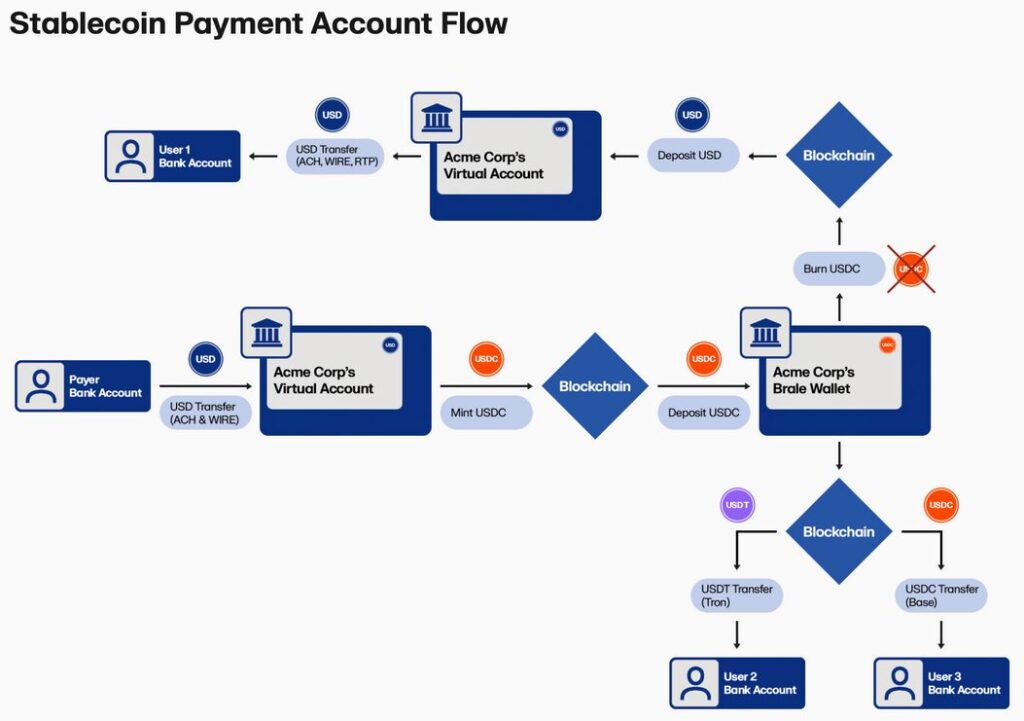
The anticipated passage of regulatory frameworks such as the GENIUS Act in the United States is expected to further accelerate adoption. According to the survey:
- 83% believe regulation will increase institutional use of stablecoins
- 69% expect it to drive broader adoption of stablecoin-based transactions
For companies like WIBS PHP operating in EMI and VASP environments, this is particularly relevant. Stablecoins can significantly reduce settlement time, FX costs, and counterparty risk—especially in cross-border remittance corridors.
6. Tokenized Real-World Assets (RWA): The Next Frontier
Another major area of institutional interest is tokenized real-world assets (RWA). The survey indicates:
- 63% of investors are interested in RWAs as an investment opportunity
- 61% believe RWAs will significantly impact market structure in the coming years
RWAs include assets such as:
- Government bonds
- Real estate
- Private credit
- Commodities
Tokenization allows these traditionally illiquid assets to be:
- Fractionalized
- Traded 24/7
- Settled instantly
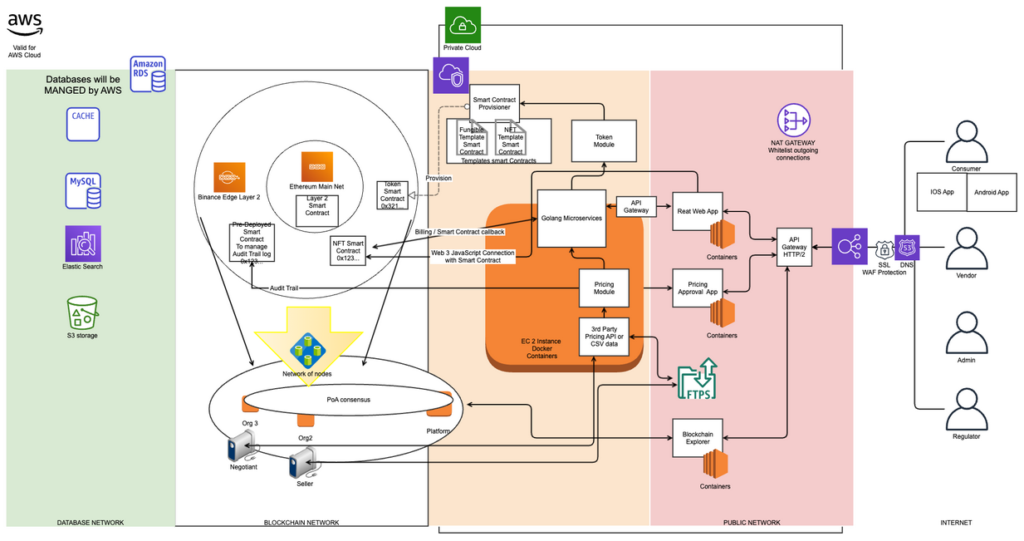
Recent developments across the industry reinforce this trend. Major financial institutions—including BlackRock, JPMorgan, and Franklin Templeton—have already launched or are piloting tokenized funds and on-chain settlement systems.
From a business perspective, RWAs represent one of the most practical and scalable applications of blockchain technology. Unlike speculative tokens, RWAs are directly tied to cash flows and real economic activity.
For builders, this opens opportunities in:
- Tokenization platforms
- Compliance and identity layers
- Secondary trading infrastructure
- Custody and settlement systems
7. Strategic Implications for Investors and Builders
The findings from this survey, combined with broader market trends, point to a clear conclusion: institutional capital is not retreating from crypto—it is preparing for expansion.
Key strategic takeaways include:
- Accumulation Phase
Current market weakness may represent a long-term accumulation opportunity rather than a structural decline. - Shift Toward Regulated Infrastructure
Products that align with regulatory frameworks will attract the majority of institutional capital. - Stablecoins as Core Rails
Payment and treasury applications will drive real-world adoption faster than speculative trading. - RWAs as the Bridge to Traditional Finance
Tokenization will connect crypto markets with trillions of dollars in traditional assets. - Risk Management as a Growth Sector
Tools enabling institutional-grade risk control will become essential infrastructure.
Conclusion
The 2026 outlook for institutional crypto investment reveals a market that is evolving, not contracting. While retail sentiment often follows price movements, institutional players are guided by structural trends, regulatory developments, and long-term strategic positioning.
The fact that 73% of institutions plan to increase their crypto exposure—despite a recent downturn—signals a fundamental shift in the role of digital assets within global finance.
At the same time, the rise of stablecoins and tokenized real-world assets demonstrates that the industry is moving beyond speculation toward practical, revenue-generating applications.
For investors seeking new opportunities, the message is clear: the next phase of crypto growth will not be driven solely by price cycles, but by integration into real financial systems.
For builders, the opportunity lies in bridging these worlds—combining the innovation of blockchain with the trust, compliance, and scale of traditional finance.
