

Main points :
- Up to 15–20% of crypto/Web3 firms may already have been infiltrated by North Korean–linked operatives posing as legitimate remote workers.
- Roughly 30–40% of job applications received by some Web3 companies are estimated to be impostors using forged identities and third-country fronts.
- Between 2017 and 2023, North Korea is estimated to have stolen around $3 billion in crypto via at least 58 cyberattacks, with funds suspected of supporting nuclear and missile programs.
- In 2024 alone, North Korea is believed to have stolen more than $600 million in cryptocurrency, and a record $1.5 billion hack on Bybit in 2025 has been attributed to DPRK-linked actors.
- Attack patterns are shifting from pure hacks to HR and recruitment channels: fake remote jobs, freelance profiles, and identity brokers in countries like the Philippines or Ukraine.
- The U.S., Japan, and South Korea have issued joint statements demanding better defenses from the crypto industry and confirming that stolen funds feed weapons programs.
- For builders, this is not just a compliance problem: robust OPSEC, hiring controls, and security-first architecture are now prerequisites for listing tokens, securing institutional partnerships, and protecting revenue.
1. A New Phase of the Crypto War: Infiltration from the Inside
The article you provided highlights a stark warning from Pablo Sabbatella, founder of Web3 audit firm opsek and member of security collective SEAL. On November 22, 2025, he warned that North Korean operatives may have already infiltrated as many as 15–20% of crypto companies, primarily via remote-work hiring channels. According to his estimate, around 30–40% of job applications that some Web3 firms receive are in fact forged or fronted by North Korean IT workers.
This is not a theoretical risk. Over the past few years, crypto has become a core funding stream for North Korea’s weapons programs. UN reports and allied governments estimate that DPRK-linked hackers have stolen about $3 billion in crypto between 2017 and 2023, with the money suspected of funding nuclear and ballistic-missile development.
What began as “external” hacks on exchanges and DeFi protocols has now evolved into a more dangerous pattern: the enemy is applying for a job inside your company. For founders, token issuers, and DeFi builders, this means that the attack surface is no longer just smart contracts or bridges. It includes your recruitment pipeline, HR processes, and remote-work infrastructure.
2. How the Infiltration Works: Fake Remote Workers and Identity Fronts
2.1 The front-person model and the 80/20 split
According to Sabbatella’s analysis, North Korean IT workers rarely apply under their real identities. Instead, they:
- Use job platforms and freelance marketplaces to find remote roles in crypto, Web3, and fintech.
- Rely on fronts in third countries – for example, individuals living in places like the Philippines or Ukraine – to present a seemingly legitimate identity and bank account to employers.
- Once hired, the salary is split roughly 80/20, with 80% flowing back to North Korea and 20% kept by the front or broker.
This structure allows the DPRK to bypass sanctions and KYC, turning ordinary payroll flows into a covert funding rail. U.S. authorities and international media have documented similar patterns in non-crypto sectors, where North Korean remote IT workers funnel income back to the regime using forged documents, stolen identities, and shell companies.
Once inside a crypto firm as a “normal” developer, DevOps engineer, or security contractor, these operatives gain:
- Access to internal repositories and build pipelines
- Credentials or secrets for cloud infrastructure, wallets, or signing services
- Visibility into security architecture, monitoring gaps, and incident-response readiness
From here, the step from “employee” to “inside attacker” is dangerously small.
3. From Job Application to Attack: OPSEC Failures in Crypto
3.1 Why Sabbatella calls Web3 “the worst OPSEC in IT”
Sabbatella describes the crypto sector as having “the worst operational security in the IT industry.” Many Web3 projects are small, fast-moving teams where founders are juggling fundraising, token listings, exchange relations, and community building. Under pressure to ship quickly, they:
- Onboard remote workers with minimal background checks
- Grant broad GitHub or infrastructure access to contractors
- Mix personal and corporate devices, often on unmanaged laptops
- Lack clear network segmentation or least-privilege controls
This creates a perfect environment for malware installation, credential harvesting, and quiet data exfiltration.
Once a North Korean–linked operator is onboarded, they can:
- Introduce malware into CI/CD pipelines, libraries, or internal tools
- Map out private keys, admin panels, or signing workflows
- Exfiltrate KYC data, internal trading strategies, or exchange integrations
- Plant backdoors that allow secondary Lazarus-group operations later
These are no longer “smash and grab” exploits. They are long-term embedded campaigns that treat Web3 firms as both targets and stepping stones in a larger global laundering network.
4. The Broader Threat Landscape: From Bybit to DeFi and Mixers
The infiltration issue sits on top of an already massive record of direct DPRK crypto thefts:
- UN and expert estimates: about $3 billion stolen between 2017 and 2023 across 58 cyberattacks on exchanges, DeFi protocols, and other platforms.
- 2022 was described as a record year for North Korean crypto theft, according to UN reporting.
- In 2024, the U.S., South Korea, and Japan assessed that North Korea stole over $600 million in cryptocurrency, with thefts across 47 incidents.
- In 2025, the FBI attributed a $1.5 billion hack on Bybit to DPRK-linked actors, marking the largest virtual-asset heist in history.
These funds are laundered through:
- Mixers and privacy tools, such as Tornado Cash, which was sanctioned after being used to launder more than $455 million from a major DPRK-linked hack.
- Layered transfers across multiple chains, including swapping stolen assets into more liquid tokens or stablecoins.
- Off-ramping through OTC brokers, payment firms, and weakly regulated exchanges, including in Southeast Asia.
To visualize the scale and evolution of the threat, you can use the following conceptual figure:
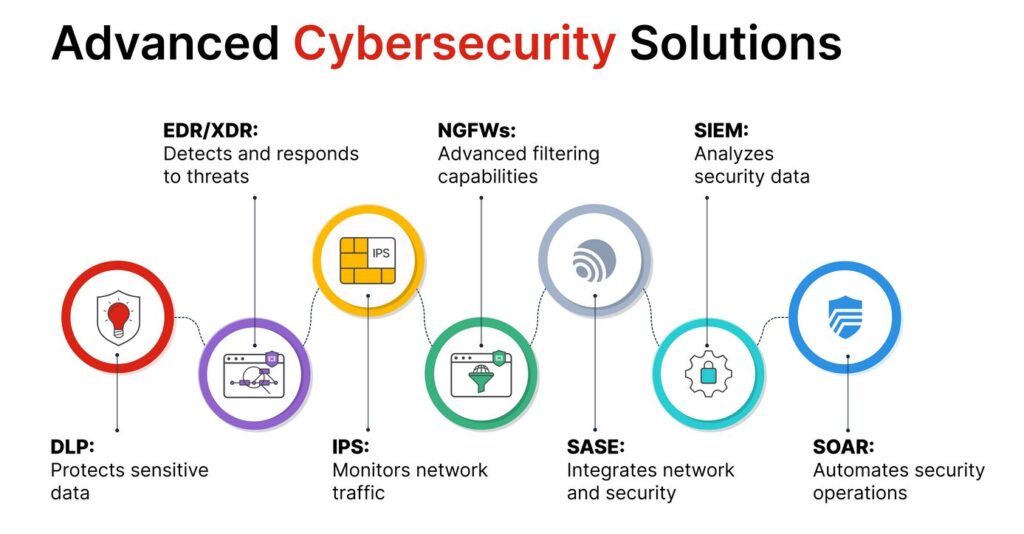
For builders, the main message is that North Korean operations are now diversified: some teams specialize in protocol or bridge exploits; others focus on infiltrating companies through remote work and insider attacks.
5. Global Response: Joint Statements, Sanctions, and Industry Pressure
5.1 U.S.–Japan–South Korea alignment
On January 14, 2025, the U.S., Japan, and South Korea released a joint statement calling out North Korean cryptocurrency thefts and urging both governments and private firms to strengthen defenses and cooperate on asset recovery.
Key points from this and related statements:
- DPRK’s cyber program is described as a “significant threat to the integrity and stability of the global financial system.”
- The three countries committed to preventing thefts, recovering stolen funds, and denying North Korea access to revenue for weapons programs.
- Authorities are explicitly warning the crypto industry—exchanges, DeFi protocols, wallet providers, and infrastructure firms—that stronger OPSEC and counter-infiltration measures are expected, not optional.
In November 2025, the U.S. Treasury’s OFAC sanctioned individuals and entities involved in laundering cybercrime proceeds and funds derived from North Korean IT worker schemes, highlighting again that fake remote workers are now a top enforcement priority. U.S.
6. Attack Vectors: From Fake Job Offers to Supply-Chain Attacks
6.1 Fake job offers and poisoned code
Recent investigations show that North Korean actors are spamming the crypto industry with highly credible job offers and candidate profiles, sometimes even impersonating well-known companies or using cloned LinkedIn and GitHub identities.
Typical patterns include:
- Fake recruiter outreach offering above-market salaries and “remote-friendly” terms.
- “Test tasks” or “trial contributions” that ask the target to run a binary or integrate a malicious library.
- Long-term contractor roles where the attacker slowly contributes poisoned code to internal systems or open-source dependencies.
This blends social engineering with supply-chain compromise, making it extremely hard to detect—especially in open, remote-friendly Web3 teams.
6.2 Visualizing infiltration channels
You can think of the threat landscape as a mix of several major vectors:
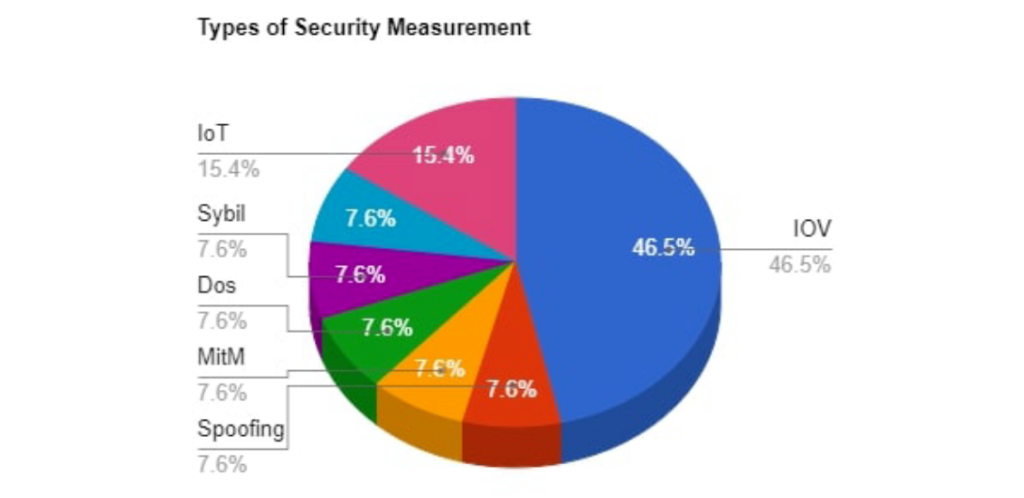
While classic exchange and bridge hacks remain substantial, the combination of fake remote jobs and IT worker schemes is gaining share as a preferred method of infiltration. For North Korea, this approach has an added advantage: it creates steady, recurring revenue from salaries, separate from one-off hack payouts.
7. What Crypto Builders and Investors Should Do Now
For readers who are exploring new crypto assets, next revenue sources, or practical blockchain applications, this topic might sound like pure “defense” rather than opportunity. In practice, it is both.
Projects that demonstrate serious OPSEC and insider-risk controls will increasingly stand out in:
- Exchange listing reviews
- Institutional due-diligence (funds, banks, payment partners)
- Regulatory licensing processes
Below are concrete measures that founders, token issuers, and infrastructure builders can adopt today.
7.1 Secure hiring and identity verification
- Multi-layer identity checks for remote hires
- Require government ID plus live video verification, and cross-check IP locations with stated residence.
- Use KYB/KYC providers that specialize in synthetic identity and sanctions screening.
- Be skeptical of “too perfect” profiles with very broad skill sets and indistinct work histories.
- Country-of-origin risk scoring
- Flag applicants from high-risk routes commonly used by DPRK fronts (e.g., mismatched IP locations, payments routed through unusual third-country banks).
- For critical roles (devops, security, wallet engineering), consider restricting to vetted jurisdictions or requiring stronger documentation.
- Contractor segregation
- Separate core infrastructure and signing logic from general development.
- Limit access for contractors to narrow, clearly defined repositories and revoke access automatically when contracts end.
7.2 Network, access, and code-security controls
- Zero-trust and least-privilege
- Implement role-based access control (RBAC) with minimal privileges per role.
- Enforce multi-factor authentication everywhere, especially for admin panels and signing services.
- Segmented environments
- Isolate production, staging, and development environments.
- Use bastion hosts, VPNs, and device posture checks before granting access.
- Secure SDLC and supply-chain defenses
- Use signed commits, reproducible builds, and dependency scanning.
- Integrate SAST/DAST tools and periodic manual code reviews, especially around wallet logic and bridge contracts.
- Insider-risk monitoring
- Log and review privileged actions (key changes, policy edits, large transfers).
- Set up alert thresholds for unusual behavior (off-hours access from new IPs, large code changes by new hires, etc.).
7.3 Strategic opportunity: security as a revenue driver
For entrepreneurs and token hunters, this threat also creates new markets and monetization paths:
- SaaS OPSEC platforms for Web3 teams: automated identity checks, access analytics, and incident playbooks.
- On-chain risk scoring for wallets and projects, integrating DPRK-linked addresses and behavioral flags.
- Decentralized insurance and parametric covers that reward protocols with strong internal security and transparent hiring governance.
- Security-focused L1s/L2s and toolchains that embed least-privilege controls and compliance hooks at the protocol layer.
Tokens and projects that can prove measurable reductions in insider and nation-state risk are more likely to attract institutional flows, insurance coverage, and enterprise customers.
8. Conclusion: Infiltration Risk as a Core Part of Crypto’s Next Cycle
The warning that “up to 20% of crypto firms may already be infiltrated” is not merely sensational. It reflects a convergence of:
- A state actor (North Korea) under heavy sanctions and searching for dollar-equivalent income
- A global, remote-first industry (crypto and Web3) with uneven security culture
- A pool of eager founders and investors, more focused on product, tokenomics, and marketing than on OPSEC
The result is a quiet, ongoing campaign where job offers, GitHub contributions, and Slack accounts are weapons alongside smart-contract exploits and bridge hacks.
For serious builders, the response must go beyond patching individual vulnerabilities. It requires:
- Viewing hiring and HR as critical security perimeters
- Embedding zero-trust principles into infrastructure and development workflows
- Treating nation-state cyber programs as structural realities, not one-off black-swans
In the next cycle, crypto projects that survive and thrive will be those that combine innovation with rigorous security discipline. For investors searching for the next asset or revenue stream, a project’s stance on North Korean–style threats—fake workers, insider risk, and supply-chain compromise—should be a core part of due diligence.
Security is no longer just a cost center. In a world where adversaries are literally trying to join your team, it is part of the product, part of the brand, and a major driver of long-term value.