

Main Points :
- India has formally integrated cryptocurrency exchanges into its anti-money laundering (AML) regime, registering 49 platforms under direct supervision.
- The Financial Intelligence Unit (FIU) now oversees crypto exchanges under the same legal standards applied to banks and financial institutions.
- This move reflects a global regulatory shift: crypto markets are no longer treated as peripheral but as part of the core financial system.
- High-risk activities such as fraud, illegal online gambling, and unreported remittances remain key enforcement targets.
- For crypto businesses and investors, India’s approach provides regulatory clarity—while sharply raising compliance costs and operational discipline.
- The Indian model offers important lessons for emerging markets balancing innovation, financial inclusion, and crime prevention.
Introduction: India’s Strategic Turn Toward AML-Centric Crypto Governance
India has taken a decisive step in redefining how cryptocurrency markets are regulated. By placing crypto exchanges squarely within its anti-money laundering (AML) framework, the country has moved beyond ambiguity and informal oversight into a phase of full institutional supervision.
According to the latest annual report covering fiscal years 2024–2025, 49 cryptocurrency exchanges are now registered and monitored under India’s Financial Intelligence Unit (FIU). This development marks a structural shift: crypto exchanges are no longer treated as experimental technology platforms but as regulated financial intermediaries subject to the same compliance expectations as banks.
Rather than banning crypto outright, India has opted for a regulatory strategy centered on transparency, traceability, and enforcement. This approach reflects both domestic policy priorities and alignment with global AML standards promoted by bodies such as the FATF.
India’s FIU-Centered Regulatory Architecture
Centralized Oversight Under the FIU
India has consolidated crypto oversight under a single authority: Financial Intelligence Unit – India. Operating under the Ministry of Finance, the FIU serves as the national hub for collecting, analyzing, and acting on suspicious financial activity.
Under this framework:
- 49 crypto exchanges are officially registered.
- 45 platforms have completed domestic regulatory review.
- 4 overseas-operated exchanges have finalized registration procedures with Indian authorities.
All registered entities are required to submit transaction reports, maintain robust customer due diligence systems, and cooperate fully with regulatory audits.
This centralized model contrasts with fragmented regulatory approaches seen in some jurisdictions, where responsibility is split among multiple agencies. India’s structure enables faster enforcement, clearer accountability, and uniform application of AML rules.
Legal Foundation: Bringing Crypto Under the PMLA
Virtual Digital Assets as Regulated Financial Activity
The current enforcement regime stems from India’s 2023 policy decision to classify Virtual Digital Asset (VDA) service providers as reporting entities under the Prevention of Money Laundering Act (PMLA).
This classification effectively places crypto exchanges on the same legal footing as:
- Commercial banks
- Securities brokers
- Payment service providers
As a result, crypto platforms must now meet obligations that include:
- Know Your Customer (KYC) verification
- Customer risk profiling
- Ongoing transaction monitoring
- Suspicious Transaction Reports (STRs)
- Record retention and audit readiness
This legal clarity has ended years of regulatory uncertainty for crypto businesses operating in or serving the Indian market.
High-Risk Activity Patterns Identified by Regulators
What the FIU Is Actually Seeing
The FIU’s analysis of suspicious transaction reports has revealed consistent patterns of crypto misuse, including:
- Online fraud and scam-related payments
- Illegal online gambling and betting platforms
- Unreported cross-border remittances
- Abuse of peer-to-peer (P2P) trading channels
- Payments linked to illicit digital content and services
In several cases, crypto wallets were traced to payments for illegal services, demonstrating that blockchain transparency—when combined with regulatory oversight—can support effective financial investigations.
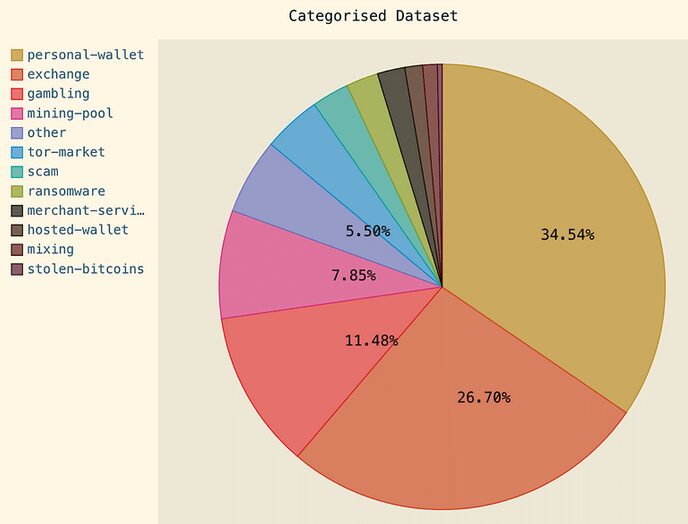
【High-Risk Crypto Use Cases Identified by India’s FIU】
<A pie chart showing the relative share of suspicious crypto activity: fraud, gambling, P2P misuse, unreported remittances, and other illicit uses.>
AML Obligations Imposed on Registered Exchanges
Operational and Governance Requirements
Registered crypto exchanges in India must now comply with a comprehensive AML framework, including:
- Verification of user identity and beneficial ownership
- Identification of wallet owners
- Monitoring transfers from exchange wallets to private wallets
- Reporting suspicious behavior without delay
- Disclosure of banking relationships
- Appointment of a designated compliance officer
- Periodic internal and external audits
- Risk-based customer due diligence
These requirements significantly raise the operational bar, particularly for smaller or offshore exchanges seeking access to Indian users.
Enforcement in Practice: Fines and Penalties
Real Consequences for Non-Compliance
India’s AML regime is not symbolic. During fiscal year 2024–2025, regulators imposed penalties totaling approximately $3.4 million (converted from INR at prevailing rates) on crypto platforms that failed to meet AML obligations.
These enforcement actions signal that registration alone is insufficient; continuous compliance is mandatory. The FIU has also begun identifying geographic regions and digital assets statistically associated with higher illicit risk, further sharpening its supervisory focus.
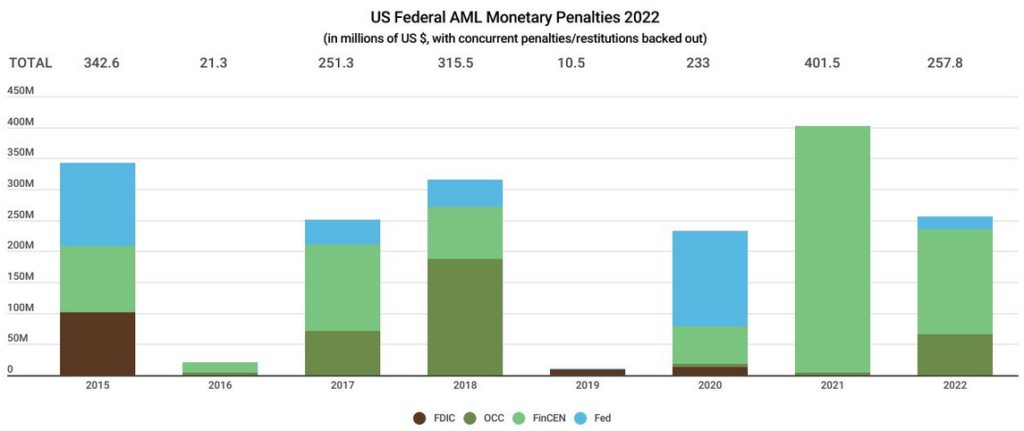
【AML Enforcement Actions Against Crypto Platforms in India (2024–2025)】
<A bar chart showing total fines imposed and number of enforcement actions.>
How India’s Approach Fits Global Regulatory Trends
India’s AML-centric model mirrors developments in other major markets:
- European Union: MiCA and AMLA frameworks integrate crypto into financial supervision.
- United States: Increased enforcement via FinCEN and DOJ without comprehensive federal licensing.
- Japan: Strict registration, segregation of assets, and travel rule compliance.
- Singapore: Licensing under the Payment Services Act with strong AML emphasis.
India’s distinctive feature is its single-agency enforcement model, which reduces regulatory arbitrage and accelerates policy execution.
Implications for Crypto Businesses and Investors
For Exchanges and Service Providers
- Higher compliance costs but clearer operating rules
- Reduced regulatory ambiguity for long-term planning
- Stronger trust signals for institutional partners
For Investors and Users
- Greater protection against fraud and platform failure
- Improved transparency of fund flows
- Potential reduction in anonymous or gray-market access
For market participants seeking sustainable growth rather than speculative arbitrage, India’s framework provides a more predictable environment.
Strategic Outlook: Regulation Without Prohibition
Importantly, Indian authorities have repeatedly emphasized that they are not attempting to eliminate crypto markets. Instead, the policy objective is to ensure that crypto activity occurs within a transparent, auditable, and enforceable legal framework.
By embedding crypto into its AML system, India signals that digital assets are now a permanent component of the financial ecosystem—subject to the same expectations of integrity and accountability.
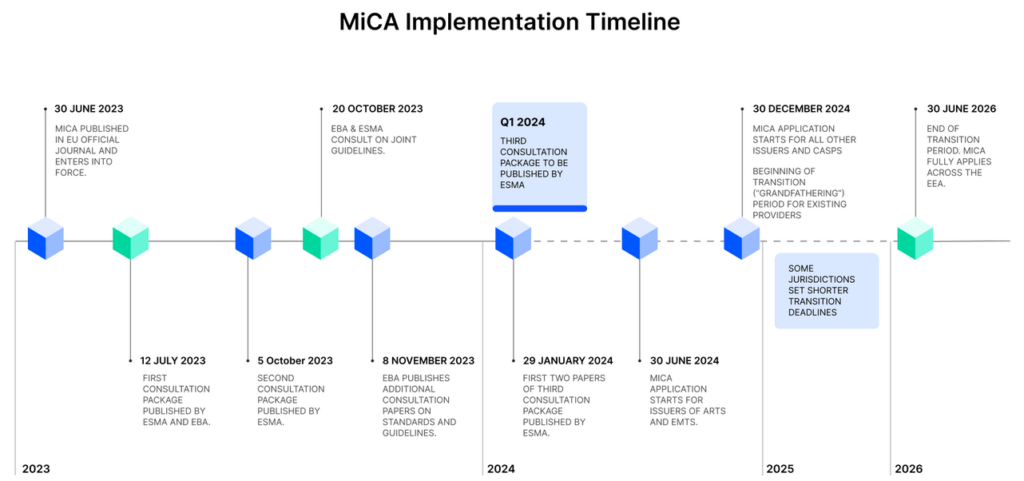
【India’s Crypto Regulatory Evolution Timeline】
<A timeline chart showing milestones from early ambiguity to full AML supervision.>
Conclusion: What India’s AML Move Really Means
India’s decision to place crypto exchanges under full AML supervision represents more than a regulatory update—it marks a philosophical shift. Crypto is no longer treated as an exception or a loophole but as part of the financial system’s core infrastructure.
For builders, investors, and policymakers worldwide, India’s approach offers a compelling case study: regulation does not have to stifle innovation, but innovation must operate within enforceable rules.
As emerging markets grapple with the dual goals of financial inclusion and crime prevention, India’s FIU-led model is likely to influence the next generation of crypto regulation globally.
