
Main Points :
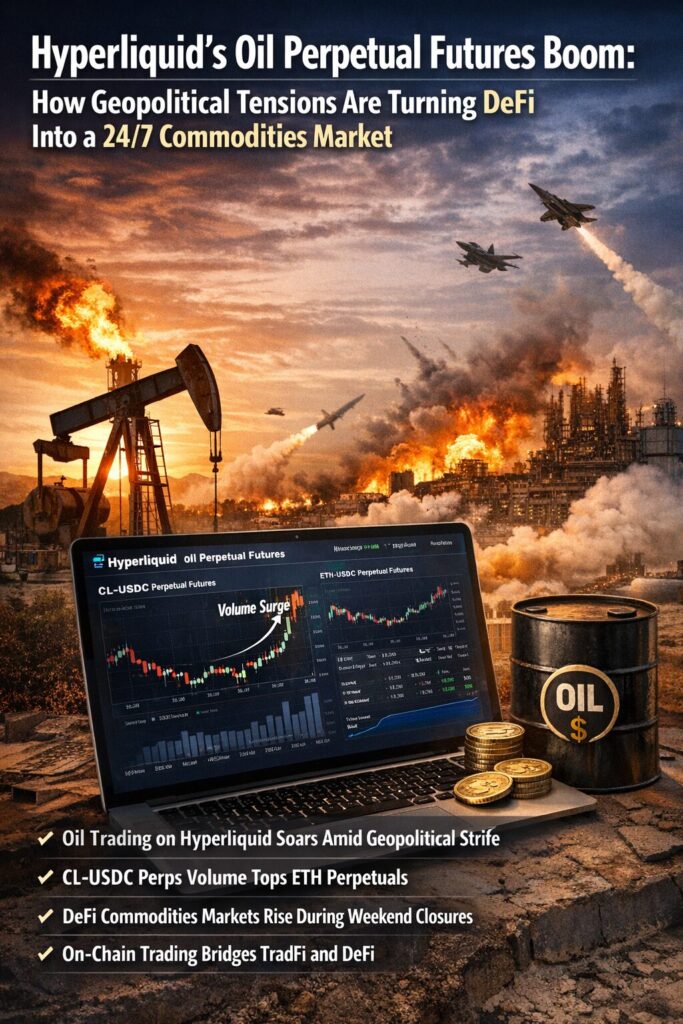
- Oil trading on Hyperliquid surged following geopolitical tensions involving Iran, the U.S., and Israel.
- The oil perpetual futures pair CL-USDC briefly surpassed Ethereum perpetual futures trading volume on the platform.
- DeFi derivatives markets are evolving into alternative venues for commodities trading, especially during weekend market closures.
- Hyperliquid’s HIP-3 upgrade allows anyone to create perpetual futures markets, accelerating innovation but also increasing risk.
- The rise of on-chain commodities trading signals a broader convergence between traditional financial assets and decentralized infrastructure.
Introduction: A New Kind of Commodities Market
In early March 2026, geopolitical tensions in the Middle East triggered a dramatic surge in oil trading activity—not only in traditional energy markets but also on decentralized cryptocurrency platforms. One of the most striking developments occurred on Hyperliquid, a high-performance decentralized derivatives exchange, where the trading volume of oil perpetual futures rapidly increased following escalating tensions involving Iran, the United States, and Israel.
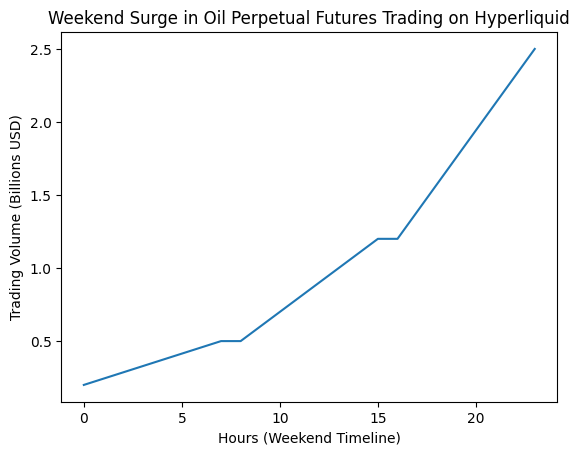
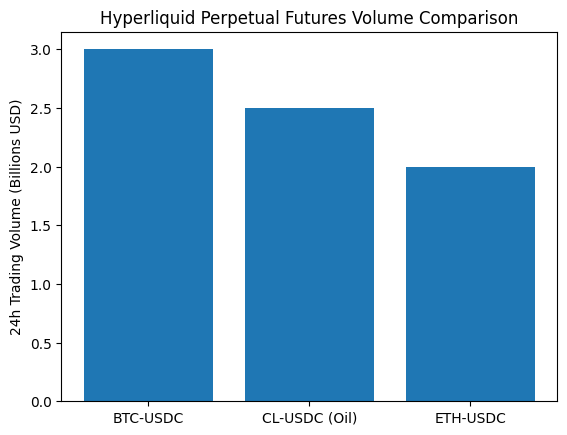
According to data reported by the protocol’s ecosystem participants, the trading volume of two oil perpetual futures contracts—CL and Brent Oil—surpassed $2.5 billion after traditional commodity markets closed for the weekend. At one point, the CL-USDC trading pair became the second most traded perpetual futures pair on Hyperliquid, exceeding even Ethereum perpetual futures volume, and trailing only Bitcoin.
This development highlights an emerging trend: decentralized finance (DeFi) platforms are increasingly acting as global, 24-hour markets for commodities and macro assets when traditional markets are closed. For crypto investors searching for new opportunities and practical blockchain applications, this shift could mark a fundamental transformation in how financial markets operate.
1. Geopolitical Risk and the Surge in Oil Trading
The catalyst for this surge was the escalation of geopolitical tensions involving Iran. Reports indicated that military action initiated by the United States and Israel against Iran in late February led to sudden volatility in global oil prices.
Whenever geopolitical risk threatens supply chains in the Middle East—one of the world’s most critical energy-producing regions—oil markets tend to react quickly. Traders anticipate disruptions to supply routes such as the Strait of Hormuz, through which a significant portion of global oil exports passes.
Traditionally, oil traders rely on exchanges such as the New York Mercantile Exchange (NYMEX) or ICE Futures Europe. However, these markets close during weekends and have limited trading hours.
This limitation creates a gap during periods of extreme uncertainty. News events often occur outside market hours, leaving traders unable to hedge risk immediately.
That gap is precisely where decentralized platforms like Hyperliquid are beginning to play a role.
Because decentralized exchanges operate 24 hours a day, seven days a week, traders can react to geopolitical events in real time—even when traditional markets are closed.
The weekend spike in Hyperliquid’s oil trading volume suggests that crypto infrastructure may increasingly function as a global risk-management layer for macroeconomic assets.
2. Understanding Perpetual Futures
To understand the significance of this trend, it is important to examine the financial instrument at the center of the activity: perpetual futures.
Perpetual futures are a type of derivative contract similar to traditional futures but with a crucial difference—they do not have an expiration date.
Instead of expiring monthly or quarterly, these contracts allow traders to maintain positions indefinitely by paying or receiving funding rates, which keep the contract price aligned with the underlying asset.
Key characteristics include:
- No expiration date
- Continuous price discovery
- Ability to maintain leveraged positions indefinitely
- Funding mechanisms to anchor prices to the underlying market
Perpetual futures originated in the cryptocurrency industry, particularly on platforms such as BitMEX in the mid-2010s. Since then, they have become the dominant derivatives product in crypto markets.
However, what is happening on Hyperliquid represents the next phase: extending perpetual futures beyond crypto assets into commodities and macro markets.
This is a significant evolution. It effectively means that blockchain-based trading systems can replicate—and potentially improve upon—traditional financial derivatives markets.
3. The Role of Hyperliquid and HIP-3
Hyperliquid is designed as a high-speed decentralized derivatives platform capable of processing large volumes of trades while maintaining on-chain settlement.
A key technological development behind the oil trading surge is HIP-3, short for Hyperliquid Improvement Proposal 3.
HIP-3 allows developers or protocols to launch their own perpetual futures markets on the Hyperliquid ecosystem, provided certain conditions are met.
This means that:
- Anyone can create a new derivatives market
- Liquidity providers can build specialized trading environments
- New asset classes can be listed quickly
One such protocol is XYZ Protocol, developed by the team behind trade[XYZ]. This decentralized exchange built on Hyperliquid introduced oil perpetual futures markets such as:
- CL-USDC (Crude Oil)
- Brent Oil
These markets mirror traditional oil derivatives but operate entirely on blockchain infrastructure.
(Graph showing surge in CL-USDC trading volume on Hyperliquid)
Suggested chart:
- X-axis: Time
- Y-axis: Trading Volume ($)
- Highlight weekend spike above $2.5B
4. Oil Trading Volume Surpasses Ethereum
At the peak of the recent surge, the CL-USDC perpetual futures pair became the second most traded contract on Hyperliquid, behind only Bitcoin.
This means it surpassed:
- ETH-USDC perpetual futures
- Most altcoin derivatives pairs
This is a remarkable milestone for a commodity-based derivative within a crypto ecosystem.
Historically, crypto derivatives markets have been dominated by digital assets such as Bitcoin and Ethereum. Commodities rarely attracted comparable trading activity.
However, recent macroeconomic uncertainty—including inflation, geopolitical conflict, and commodity supply disruptions—has revived investor interest in real-world assets (RWAs).
In this context, decentralized derivatives markets provide several advantages:
- 24/7 availability
- Permissionless access
- Global liquidity pools
- Transparent settlement
For traders in Asia, Europe, and North America alike, the ability to hedge oil exposure outside traditional exchange hours is extremely valuable.
5. The Rise of On-Chain Commodities
The surge in oil trading on Hyperliquid is not an isolated phenomenon.
Earlier in 2026, the platform reported record open interest levels exceeding approximately $800 million equivalent across various perpetual futures markets.
This growth was partly driven by increased trading in precious metals such as gold and silver, which also saw price increases during periods of economic uncertainty.
Across the broader crypto ecosystem, several trends reinforce the rise of tokenized commodities:
- Tokenized gold platforms such as PAXG and XAUT
- Synthetic asset protocols
- Real-world asset (RWA) tokenization initiatives
- On-chain derivatives markets
Major financial institutions have also begun exploring similar infrastructure.
For example:
- BlackRock and Franklin Templeton have launched tokenized funds.
- CME Group is experimenting with blockchain settlement systems.
- Several DeFi protocols are building synthetic commodities markets.
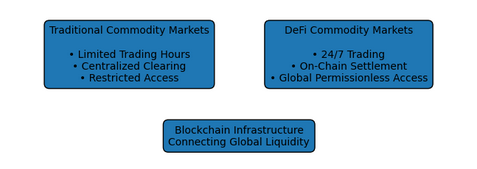
The implication is clear: blockchain infrastructure may become a parallel financial system capable of trading everything from cryptocurrencies to oil, gold, and equities.Insert Diagram Image Here
(Traditional vs DeFi Commodity Markets)
Diagram concept
Traditional Market
→ Exchange Hours
→ Centralized Clearing
→ Limited Access
DeFi Market
→ 24/7 Trading
→ On-Chain Settlement
→ Global Access
6. Risks and Market Warnings
Despite the excitement surrounding this development, Hyperliquid has issued warnings regarding the risks of trading these new markets.
One important factor is that some trading pairs—such as CL-USDC—are created by independent protocols rather than the Hyperliquid core team.
This introduces several potential risks:
Liquidity Risk
If trading activity drops, traders may face difficulty entering or exiting positions without significant price impact.
Price Volatility
Commodity markets can experience sharp price swings during geopolitical crises.
Liquidation Risk
Perpetual futures often involve leverage, which increases the probability of forced liquidation during volatile market conditions.
Hyperliquid has advised traders to carefully review the details of each trading pair before participating, especially those launched by third-party protocols.
7. What This Means for Crypto Investors
For investors searching for new crypto opportunities, the rise of on-chain commodities markets presents several strategic implications.
1. Expansion of Tradable Assets
Crypto exchanges may increasingly list macro assets, including:
- Oil
- Gold
- Agricultural commodities
- Stock indices
This dramatically expands the scope of blockchain trading.
2. Arbitrage Opportunities
Because decentralized markets operate continuously while traditional exchanges close, price discrepancies may emerge.
Traders who monitor both systems could exploit cross-market arbitrage opportunities.
3. New Protocol Tokens
Protocols enabling these markets—such as those building derivatives infrastructure—may become important investment targets in the crypto ecosystem.
4. Institutional Adoption
As liquidity increases, institutional traders may begin using DeFi platforms as hedging tools for global macro exposure.
8. The Future of DeFi Derivatives
Looking forward, decentralized derivatives markets could evolve into one of the largest sectors within the cryptocurrency industry.
Several factors support this trajectory:
- Increasing regulatory clarity for digital assets
- Improvements in blockchain scalability
- Growing institutional interest in tokenization
- Rising demand for global, 24-hour financial markets
Hyperliquid’s oil trading surge may therefore represent an early signal of a much larger structural shift.
In the long term, the boundaries between traditional finance (TradFi) and decentralized finance (DeFi) may become increasingly blurred.
Conclusion: A 24/7 Global Financial Layer
The recent surge in oil perpetual futures trading on Hyperliquid illustrates how decentralized finance is evolving beyond its cryptocurrency origins.
What began as a niche innovation in digital asset derivatives is gradually transforming into a global, around-the-clock financial marketplace capable of handling macroeconomic assets.
For traders and investors, the implications are profound:
- Commodities markets may no longer be restricted by exchange hours.
- Blockchain platforms could become essential tools for risk management during geopolitical crises.
- DeFi derivatives protocols may emerge as some of the most important infrastructure in the future financial system.
If this trend continues, the next generation of financial markets may operate not only on Wall Street or major commodity exchanges—but also on decentralized networks accessible from anywhere in the world.
