
Main Points :
- State-level interventions have repeatedly tested Bitcoin’s resilience, and each time the protocol has emerged stronger through self-healing mechanisms.
- The sharp decline in hashrate following China’s mining crackdown is not a weakness, but a systemic purification that accelerates decentralization.
- Geographic redistribution of mining is fundamentally transforming the global energy structure, pushing Bitcoin toward renewable and stranded energy sources.
- Bitcoin is evolving into a politically neutral, censorship-resistant global asset detached from any single nation’s sovereignty.
- For investors and builders, understanding these structural shifts is more important than reacting to short-term metrics.
1. State Intervention as Proof of Protocol Immortality and Self-Healing
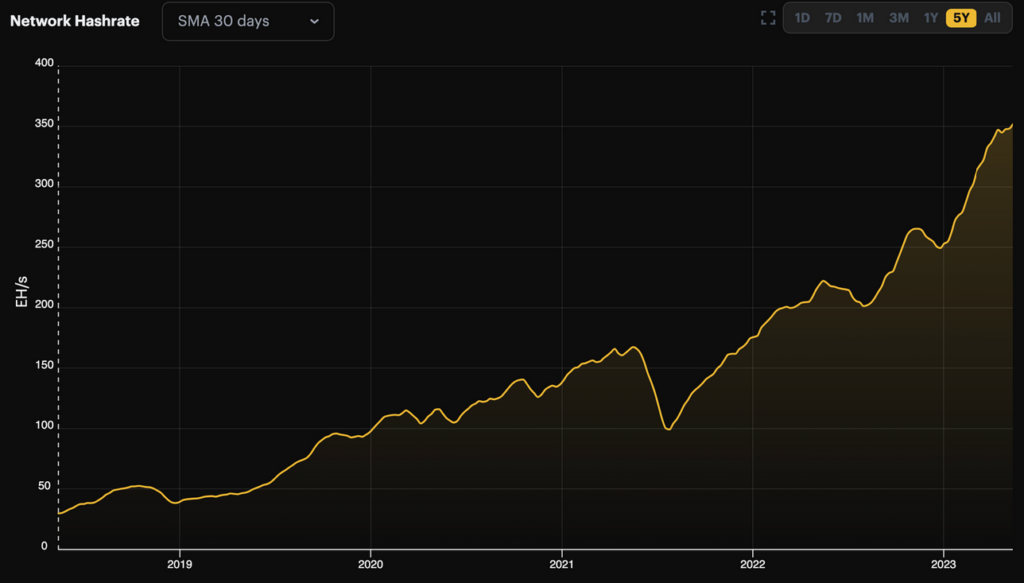
The history of digital assets is, in many ways, a recurring confrontation between sovereign power and decentralized protocol. The latest chapter—China’s large-scale mining shutdown—appears at first glance to be another existential threat. The global Bitcoin hashrate fell sharply, reaching its lowest levels since 2024, triggering headlines that questioned the network’s security and stability.
Yet this surface-level interpretation misses the core reality. What actually occurred was not systemic failure, but systemic purification.
Bitcoin was architected from its inception to withstand precisely this type of concentrated political interference. Hashrate, while critical, is not static power—it is mobile, adaptive, and incentive-driven. When a single jurisdiction exerts overwhelming control, it introduces centralization risk. The forced shutdown of Chinese mining operations removed that imbalance almost overnight.
Crucially, Bitcoin’s difficulty adjustment mechanism—executed approximately every two weeks—acts as an autonomous stabilizer. Even if a significant portion of computational power disappears, the network recalibrates itself to restore block production efficiency without any human intervention. No central bank, regulator, or emergency committee is required.
This self-healing capability is not merely a technical feature; it is the foundation of Bitcoin’s credibility as a trust-minimized system. Traditional financial infrastructure relies on discretion, emergency authority, and political coordination. Bitcoin relies on mathematics and game theory.
In this light, the hashrate collapse was not a sign of vulnerability but evidence that the protocol successfully expelled an oversized political actor and emerged structurally healthier. The more aggressively power intervenes, the more decentralized—and ultimately uncontrollable—the network becomes.
“Bitcoin Global Hashrate Before and After China Mining Ban”
2. Geographic Redistribution and the Transformation of Energy Economics
The computational power displaced by China’s crackdown did not vanish. It migrated.
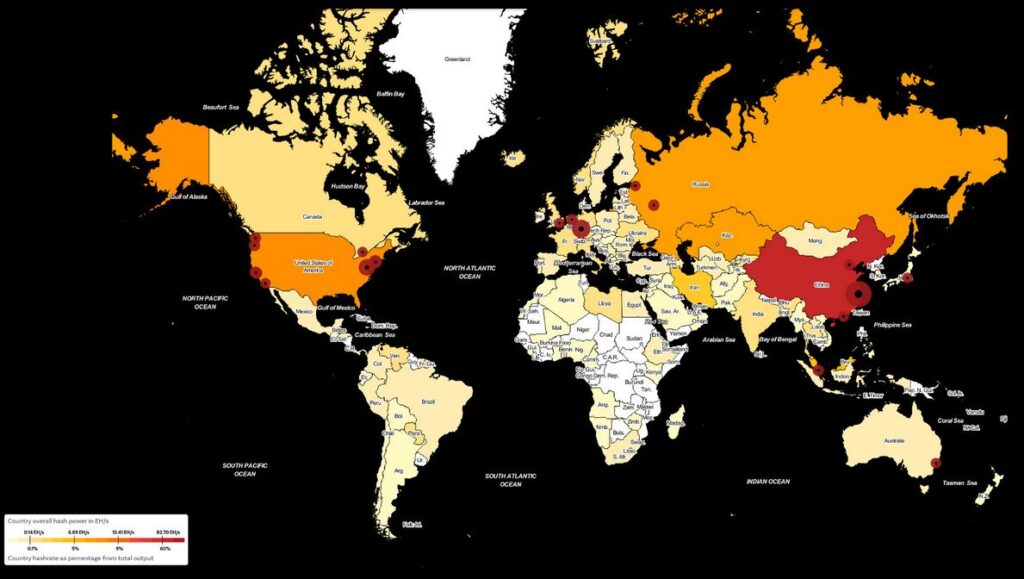
Mining equipment, capital-intensive and globally mobile, began relocating toward jurisdictions with clearer legal frameworks and more favorable energy economics. North America, Northern Europe, Latin America, and parts of Central Asia rapidly absorbed this displaced hashrate.
This geographic shift is catalyzing a profound transformation in Bitcoin’s energy profile.
Where Chinese mining was heavily dependent on coal-fired power and seasonal hydro arbitrage, new mining hubs increasingly rely on renewable, stranded, or underutilized energy sources. Scandinavian hydropower, geothermal energy in El Salvador, excess natural gas flaring in North America, and hydroelectric surpluses in Latin America are becoming dominant inputs.
This evolution directly challenges the long-standing narrative that Bitcoin mining is inherently environmentally destructive. Instead, mining is emerging as a flexible, location-agnostic buyer of last-resort energy—monetizing power that would otherwise be wasted.
More importantly, states are beginning to recognize Bitcoin not as a threat, but as an economic and energy partner. Countries that integrate mining into their national energy strategies gain grid stability, foreign capital inflows, and technological infrastructure without sacrificing monetary sovereignty.
Decentralization, paradoxically, is being strengthened by geopolitical pluralism. When mining power is distributed across dozens of jurisdictions, no single government can exert meaningful control. If one node fails, others instantly compensate.
This multipolar structure represents the near-completion of Bitcoin’s decentralization thesis. The network no longer belongs to any nation—it belongs to the planet.
“Global Bitcoin Mining Relocation Map and Energy Sources”
3. Bitcoin’s Final Evolution into a Politically Neutral Global Asset
Beneath the noise of fluctuating metrics lies a deeper transformation: Bitcoin’s maturation into a politically neutral, universally accessible asset.
For years, critics argued that Bitcoin’s reliance on Chinese mining posed an existential risk. Ironically, state intervention resolved that vulnerability far more effectively than market forces ever could. The forced decentralization of hashrate has elevated Bitcoin’s status from speculative instrument to geopolitical hedge.
Institutional investors allocating billions—often exceeding $10 billion per fund—are not betting on price volatility alone. They are betting on an asset class that operates independently of monetary policy, political cycles, and capital controls.
As long as electricity exists somewhere on Earth and the internet remains accessible, Bitcoin continues to function. No sanction, decree, or military action can shut it down globally.
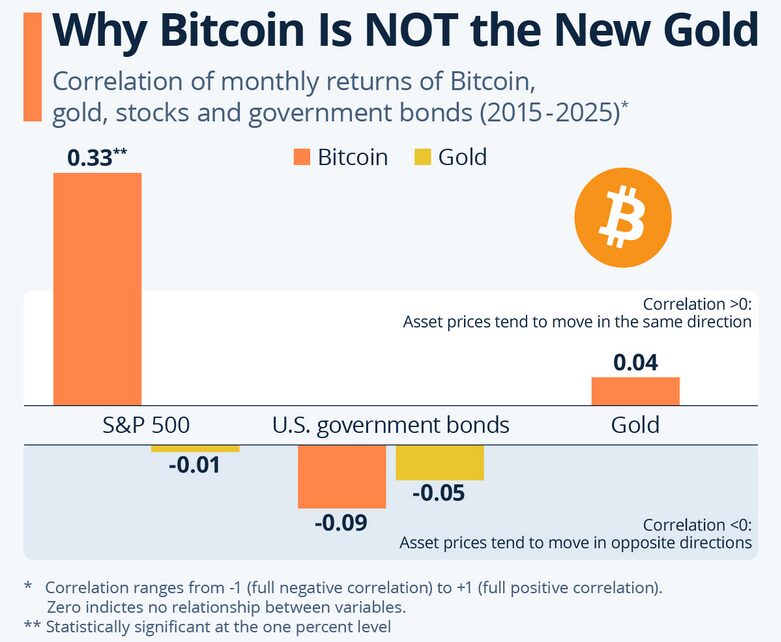
This detachment from national risk profiles positions Bitcoin as a unique form of neutral collateral—an asset without flag, border, or issuer. In an era of rising geopolitical fragmentation, this neutrality is no longer theoretical; it is economically valuable.
The events since 2024 mark a decisive turning point. Bitcoin has transitioned from a system tested by political power into one hardened by it. Each intervention strips away residual dependencies and pushes the network closer to its ideal state.
For investors, builders, and policymakers alike, the lesson is clear: short-term disruptions are not failures. They are the price of long-term robustness.
“Bitcoin as a Neutral Asset vs Fiat and Gold (Risk Comparison)”
Conclusion: From Shock to Structural Strength
The temporary decline in hashrate was never the story. The story is what emerged afterward.
Bitcoin has demonstrated—once again—that it cannot be subordinated by sovereign power. Instead, each attempt at control accelerates its evolution toward greater decentralization, resilience, and neutrality.
What we are witnessing is not volatility, but maturation. Not fragility, but antifragility.
As the network sheds geographic concentration and political exposure, it advances toward its final form: a global commons of value, maintained by incentives rather than authority.
For those seeking new digital assets, new revenue models, and practical blockchain applications, this moment offers clarity. The future belongs not to systems that demand trust, but to those that mathematically eliminate the need for it.
Bitcoin, in breaking free from the chains of the nation-state, is completing its transformation into humanity’s most robust expression of digital value.
