
Main Points :
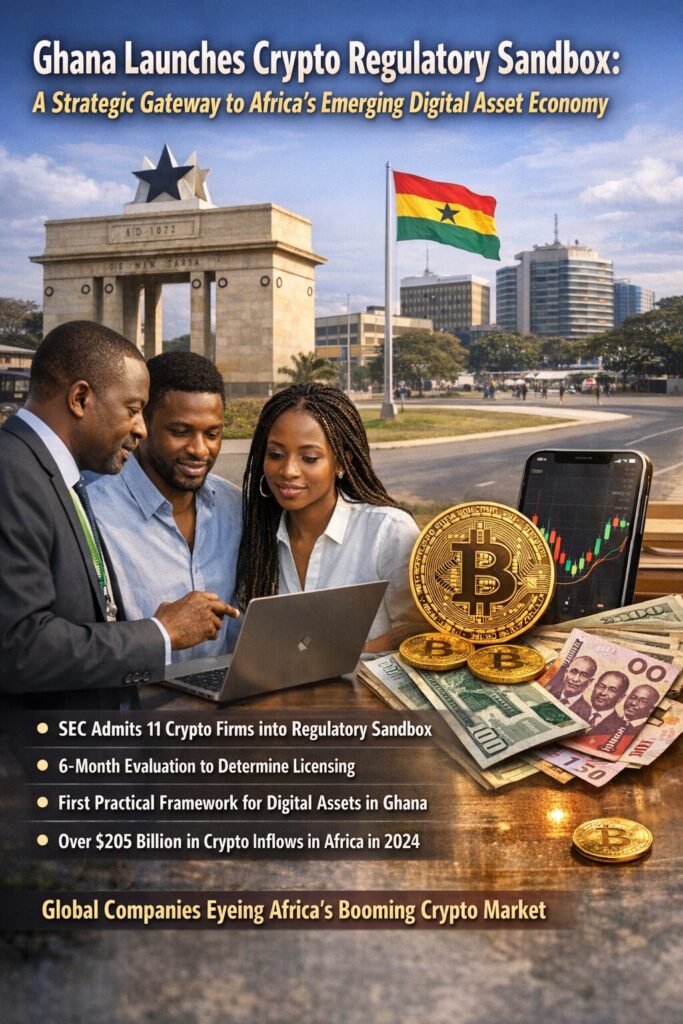
- Ghana’s Securities and Exchange Commission (SEC) has admitted 11 cryptocurrency firms into a regulatory sandbox.
- A 6-month evaluation will determine whether these companies can proceed toward full licensing.
- The sandbox represents Ghana’s first practical regulatory framework for digital assets.
- The program is linked to the Virtual Asset Service Provider (VASP) Act approved last year.
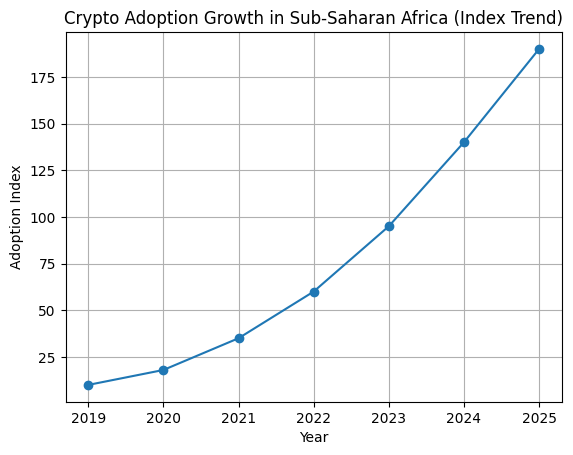
- Crypto adoption across Sub-Saharan Africa continues to accelerate, with over $205 billion in crypto inflows recorded in 2024.
- Global companies are increasingly entering African markets as regulatory clarity improves.
1. Ghana Takes Its First Major Step Toward Digital Asset Regulation
Ghana has officially entered the global race to regulate and integrate digital assets into its financial system. The country’s Securities and Exchange Commission (SEC) announced that it has admitted 11 cryptocurrency companies into a newly launched regulatory sandbox program designed to test digital asset services under controlled supervision.
The sandbox represents Ghana’s first operational framework for monitoring and regulating crypto businesses. The initiative follows the passage of the Virtual Asset Service Provider (VASP) Act in December, which established a legal foundation for cryptocurrency activities in the country.
Under the program, crypto platforms are allowed to operate in a limited and supervised environment, enabling regulators to observe how these businesses function in real market conditions. The approach is designed to balance innovation with consumer protection, a challenge that regulators worldwide are currently facing.
The companies admitted into the sandbox include:
- Africoin
- Blu Penguin
- Goldbod
- Hanypay
- Hyro Exchange
- HSB Global
- KoinKoin
- Whitebits
- Vaulta
- XChain
- Bsystem
Each company will operate within the sandbox for 12 months, during which regulators will monitor trading activity, user account management, compliance practices, and operational transparency.
This initiative places Ghana among a growing group of countries experimenting with crypto regulatory sandboxes, a model already implemented in jurisdictions such as Singapore, the United Kingdom, and the United Arab Emirates.
“Crypto Adoption Growth in Sub-Saharan Africa (2019-2025)”
2. How the Sandbox Works: Testing Innovation Without Systemic Risk
The core idea behind a regulatory sandbox is simple but powerful: allow companies to test new technologies while limiting risk to the broader financial system.
In Ghana’s sandbox program, participating firms are allowed to offer their services to a restricted number of users while regulators monitor key operational metrics.
These include:
- Transaction monitoring systems
- Customer onboarding and KYC processes
- AML/CFT compliance mechanisms
- Custody and protection of customer funds
- Internal audit and transaction record management
This controlled environment enables regulators to observe real-world crypto operations without exposing the national financial system to large-scale risks.
The sandbox also gives companies the opportunity to refine their products before full-scale commercialization.
For regulators, the sandbox serves as a data collection mechanism. By observing actual transaction flows, user behavior, and operational risks, the SEC can build a more informed regulatory framework for the future.
3. Six-Month Review: The Path Toward Full Licensing
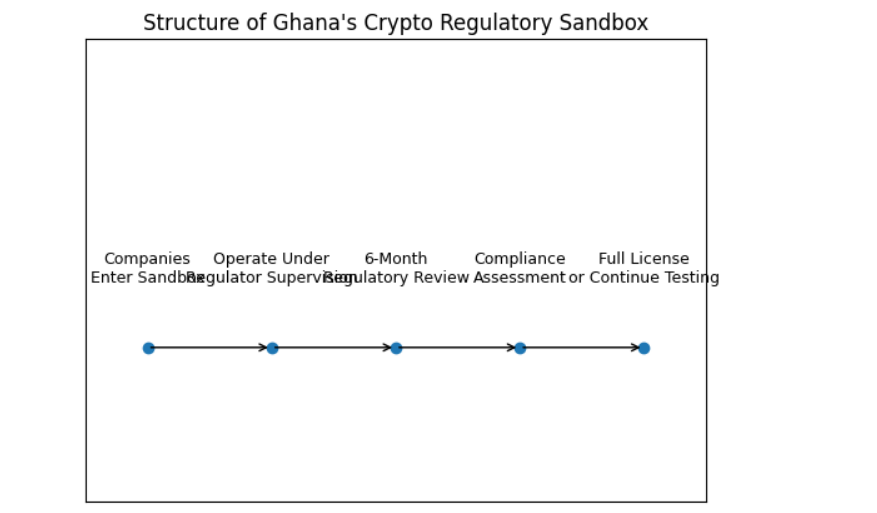
A key milestone in the sandbox program will occur six months after the start of operations.
At that point, Ghana’s SEC will conduct a formal evaluation of each participating company.
The assessment will examine:
- Compliance with regulatory standards
- Effectiveness of AML/CFT controls
- Customer protection measures
- Operational transparency
- Risk management practices
Companies that successfully meet the required standards may be allowed to proceed toward obtaining a full operating license.
This licensing would enable them to operate legally within Ghana’s regulated financial environment.
On the other hand, firms that fail to meet regulatory expectations will remain within the sandbox until the completion of the full testing period.
This phased approach allows regulators to encourage innovation while maintaining strict oversight of financial integrity and consumer protection.
“Structure of Ghana’s Crypto Regulatory Sandbox”
4. Coordination Between the SEC and the Bank of Ghana
Although the VASP Act grants oversight authority primarily to the Securities and Exchange Commission, the regulatory framework also requires close coordination with the Bank of Ghana.
This dual-supervision model reflects the complex nature of digital assets, which often combine characteristics of:
- financial securities
- payment instruments
- digital commodities
The Bank of Ghana will monitor how crypto companies interact with the country’s banking infrastructure, ensuring that the integration of digital asset services does not destabilize traditional financial institutions.
Such cooperation between financial regulators has become increasingly common globally.
For example:
- In the United States, crypto oversight is shared between the SEC, CFTC, and banking regulators.
- In the European Union, the MiCA framework involves multiple supervisory authorities.
- In Singapore, the Monetary Authority of Singapore (MAS) oversees both securities and payment services.
By adopting a collaborative regulatory approach, Ghana aims to create a balanced environment that supports innovation while maintaining financial stability.
5. Crypto Adoption in Africa Is Accelerating Rapidly
Ghana’s regulatory initiative comes at a time when cryptocurrency usage across Africa is expanding at an extraordinary pace.
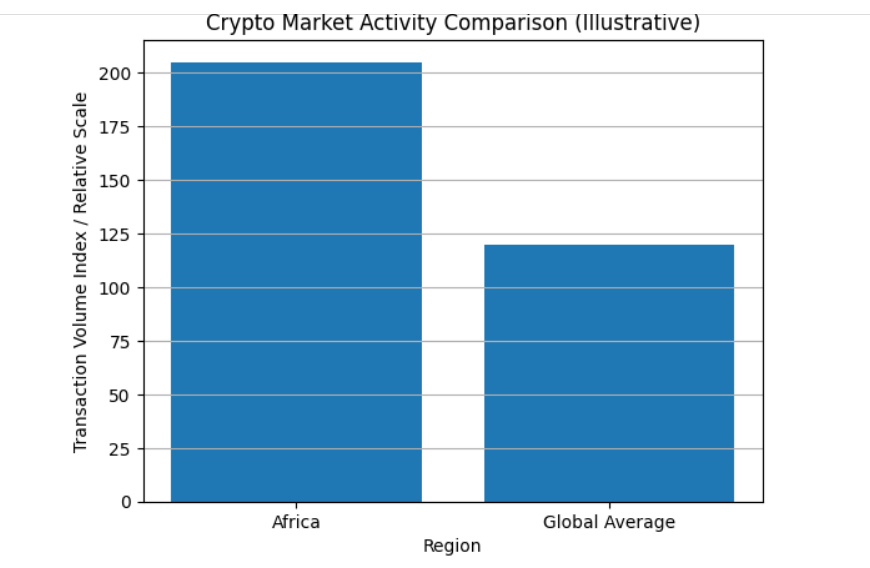
According to blockchain analytics firm Chainalysis, Sub-Saharan Africa recorded over $205 billion in cryptocurrency transaction volume between July 2023 and June 2024.
Several factors are driving this rapid growth:
1. Currency Instability
Many African economies face persistent currency depreciation and inflation. Cryptocurrencies provide an alternative store of value for individuals seeking protection against local currency volatility.
2. Remittance Demand
Africa has one of the world’s largest remittance markets. Digital assets can significantly reduce the cost and speed of cross-border transfers.
Traditional remittance services often charge 5%–10% transaction fees, whereas blockchain-based transfers can reduce costs dramatically.
3. Financial Inclusion
Millions of people across Africa remain unbanked or underbanked. Mobile-based crypto wallets offer access to financial services without requiring traditional banking infrastructure.
These factors make Africa one of the fastest-growing crypto markets in the world.
“Africa Crypto Market Growth vs Global Average”
6. Global Companies Are Targeting African Markets
As regulatory clarity improves, international crypto companies are beginning to expand aggressively into African markets.
Earlier this month, Blockchain.com announced plans to enter Ghana, aiming to build digital asset services across the continent.
Other major developments include:
- Visa expanding stablecoin payment infrastructure across Africa and the Middle East
- Crypto exchanges launching regional payment integrations
- Fintech companies developing mobile-first blockchain wallets
For global crypto firms, Africa represents a high-growth frontier market.
The combination of:
- rapid mobile adoption
- demand for remittances
- regulatory progress
creates an environment where blockchain-based financial services can scale quickly.
7. Why Ghana Could Become a Regional Crypto Hub
Several factors position Ghana as a potential crypto innovation hub in West Africa.
First, the country has demonstrated a willingness to develop clear and structured regulations rather than banning digital assets outright.
Second, Ghana already possesses a relatively advanced mobile payments ecosystem, which can integrate with blockchain-based services.
Third, the regulatory sandbox provides a low-risk testing environment for startups and international companies alike.
If the program proves successful, Ghana could attract significant foreign investment and blockchain innovation.
The sandbox may also serve as a model for other African countries considering similar regulatory approaches.
Conclusion: A Strategic Experiment That Could Shape Africa’s Crypto Future
Ghana’s decision to launch a regulatory sandbox for cryptocurrency companies marks an important milestone in the evolution of digital asset regulation in Africa.
By allowing companies to test their services under supervision, regulators can gain practical insights into how blockchain businesses operate while minimizing risks to the broader financial system.
The six-month evaluation process will play a critical role in determining which companies are ready to operate under a full regulatory license.
At the same time, the initiative reflects a broader global trend: governments are increasingly shifting from outright skepticism toward structured experimentation with crypto technologies.
If Ghana’s sandbox proves successful, it could establish the country as a regional leader in digital asset regulation and blockchain innovation.
For investors, entrepreneurs, and developers seeking the next frontier in the crypto economy, Ghana—and Africa more broadly—may soon become one of the most important regions to watch.
