
Key Points :
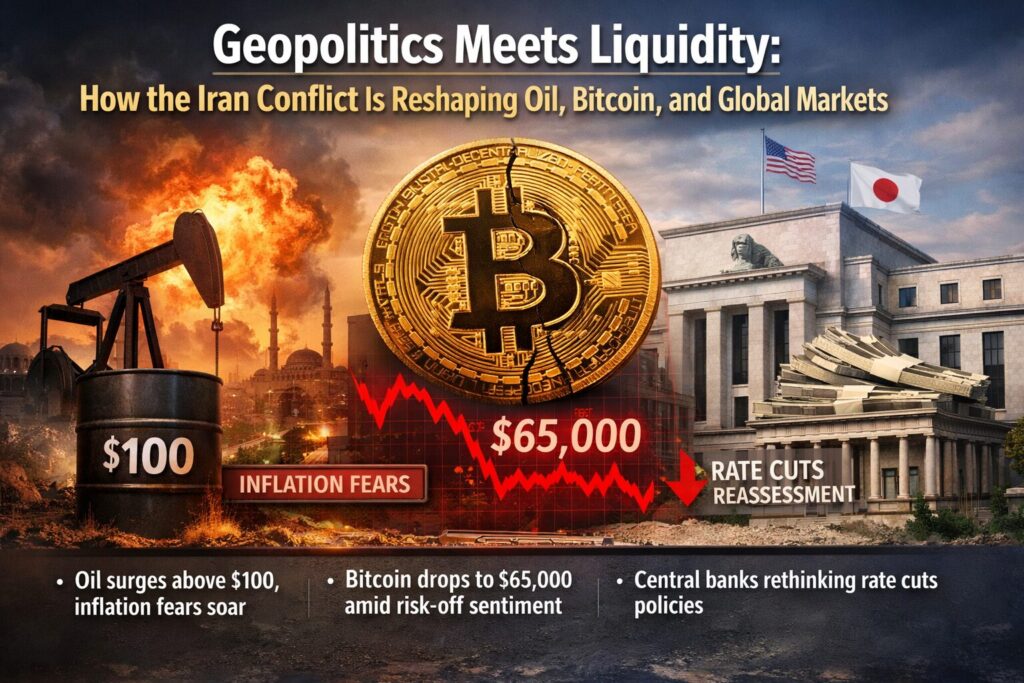
- Oil surged above $100, triggering global inflation fears and liquidity tightening
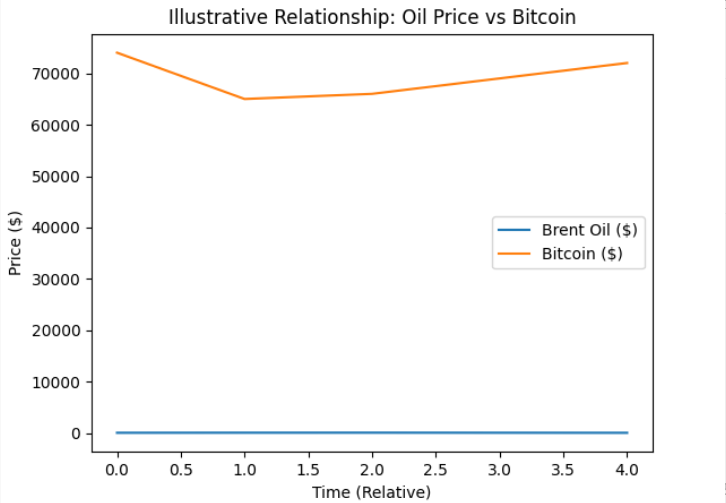
- Bitcoin dropped from ~$74,000 to ~$65,000, reflecting macro-driven risk-off sentiment
- Central banks, including the Federal Reserve and Bank of Japan, are reassessing rate cuts
- Institutional demand for Bitcoin remains strong despite volatility
- Three key signals—oil prices, inflation expectations, and liquidity—will define the next market phase
Introduction: From Military Conflict to Financial Shock
The geopolitical escalation involving Iran, triggered by coordinated actions from the United States and Israel in late February 2026, has rapidly evolved from a regional military confrontation into a global financial shock. Markets that initially reacted cautiously soon entered a state of heightened volatility as energy prices surged, inflation expectations rose, and monetary policy outlooks shifted.
At the center of this transformation lies oil. Brent crude surged from approximately $95 to over $109 within weeks, briefly exceeding $115 at peak tension. This move was not driven by actual supply shortages but by the market’s rapid repricing of risk—particularly the potential disruption of the Strait of Hormuz, a critical artery for global oil supply.
This shock has rippled across asset classes. Equities declined, bond yields rose, and cryptocurrencies—often touted as alternative assets—were pulled into the broader macro cycle.
Oil Shock: The First Domino
The oil market was the first to react—and it reacted violently. Unlike previous geopolitical events where price adjustments took time, this surge was immediate and aggressive. Investors priced in worst-case scenarios, including supply disruptions and prolonged instability in the Middle East.
The implications were far-reaching:
- Energy stocks rallied as higher oil prices boosted profitability
- Transportation and industrial sectors came under pressure due to rising costs
- Investors rotated into defensive assets, increasing volatility across global markets
Historical parallels, such as the Gulf War, suggest that oil shocks can sustain elevated prices for months before stabilizing. However, they also indicate that once supply routes normalize, prices can decline sharply—often catching bearish positions off guard.
This introduces a critical asymmetry: while the upside risk in oil is limited by demand destruction, the downside can be swift if geopolitical tensions ease.
Macro Chain Reaction: Inflation and Interest Rates
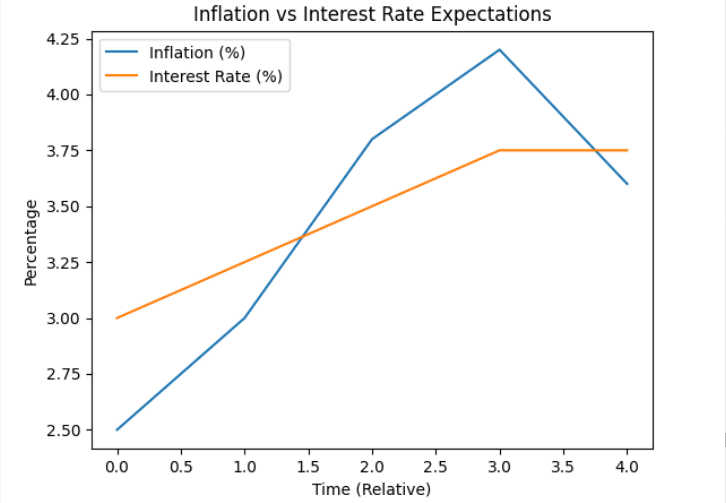
Oil above $100 fundamentally alters the macroeconomic environment. Energy costs feed directly into transportation, manufacturing, and consumer prices, amplifying inflation across the economy.
Organizations like the International Monetary Fund have warned that sustained energy inflation could lead to a stagflationary environment—where growth slows while inflation remains elevated.
This creates a dilemma for central banks:
- Cutting rates risks fueling inflation further
- Holding or raising rates risks slowing economic growth
The Federal Reserve has already responded by maintaining policy rates in the 3.50%–3.75% range, delaying earlier expectations of rate cuts in 2026. Similarly, the Bank of Japan faces mounting pressure as the yen weakens beyond ¥160 per dollar, increasing import costs and inflation.
Bitcoin: A Liquidity-Driven Asset, Not a Safe Haven
Bitcoin’s behavior during this period has been particularly revealing. Often described as “digital gold,” Bitcoin failed to act as a safe haven during the initial shock.
Instead, it followed a familiar pattern:
- Pre-conflict level: ~$74,000
- Panic low: ~$65,000
- Current stabilization: ~$69,000
This movement closely mirrors shifts in liquidity and risk sentiment rather than geopolitical fundamentals.
The mechanism is straightforward:
- Oil rises → inflation expectations increase
- Inflation rises → rate cuts are delayed
- Higher rates → liquidity tightens
- Tight liquidity → risk assets (including crypto) decline
This chain highlights a critical truth: Bitcoin remains highly sensitive to global liquidity conditions.
Range-Bound Market: Waiting for a Signal
Currently, Bitcoin is trading within a range of approximately $65,000 to $73,000. This range reflects a market that is neither collapsing nor confidently recovering.
Key observations:
- The floor (~$65,000) suggests strong underlying demand
- The ceiling (~$73,000) reflects macro constraints
- Volatility remains elevated but direction is unclear
Interestingly, institutional demand remains robust. Bitcoin spot ETFs attracted approximately $1.32 billion in inflows in March, indicating that long-term investors are accumulating despite short-term uncertainty.
This divergence between price action and institutional behavior suggests that the current phase is one of consolidation rather than capitulation.
Japan’s Unique Vulnerability
Japan stands out as particularly exposed to the current environment. With over 90% of its oil imported from the Middle East, rising energy prices directly impact its economy.
The consequences are immediate:
- Increased import costs
- Weaker yen
- Higher domestic inflation
For the Bank of Japan, this creates a policy dilemma. Raising rates could stabilize the currency but risk slowing growth. Maintaining a dovish stance could allow inflation to accelerate further.
This tension is already reflected in market expectations, with increasing probability assigned to future rate hikes.
Three Signals That Will Drive the Next Market Move
As markets transition from reactive shock to strategic positioning, three key signals will determine the next phase:
1. Oil Prices
If oil remains above $100:
- Inflation persists
- Rate cuts are delayed
- Liquidity remains tight
If oil falls to $80–$90:
- Inflation eases
- Central banks regain flexibility
- Risk assets recover
2. Inflation Expectations
Inflation is the bridge between energy markets and monetary policy. Sustained inflation will anchor higher rates, while declining inflation could trigger a pivot.
3. Liquidity Conditions
Ultimately, liquidity drives all risk assets. Bitcoin, equities, and emerging markets will respond primarily to changes in global liquidity rather than isolated events.
Conclusion: A Market Defined by Interconnected Forces
The Iran conflict has demonstrated how quickly geopolitical events can cascade into global financial systems. What began as a military escalation has evolved into a complex interplay between energy markets, inflation dynamics, and monetary policy.
Bitcoin’s role in this environment is becoming clearer. It is not yet a true safe haven but rather a high-beta asset influenced by liquidity cycles. However, strong institutional inflows suggest that its long-term narrative remains intact.
For investors seeking opportunities in crypto and beyond, the path forward is not about predicting geopolitical outcomes but understanding the chain reaction they trigger.
Watch oil. Track inflation. Monitor liquidity.
These are the variables that will define not just Bitcoin’s next move—but the trajectory of global markets as a whole.
