
Main Points :
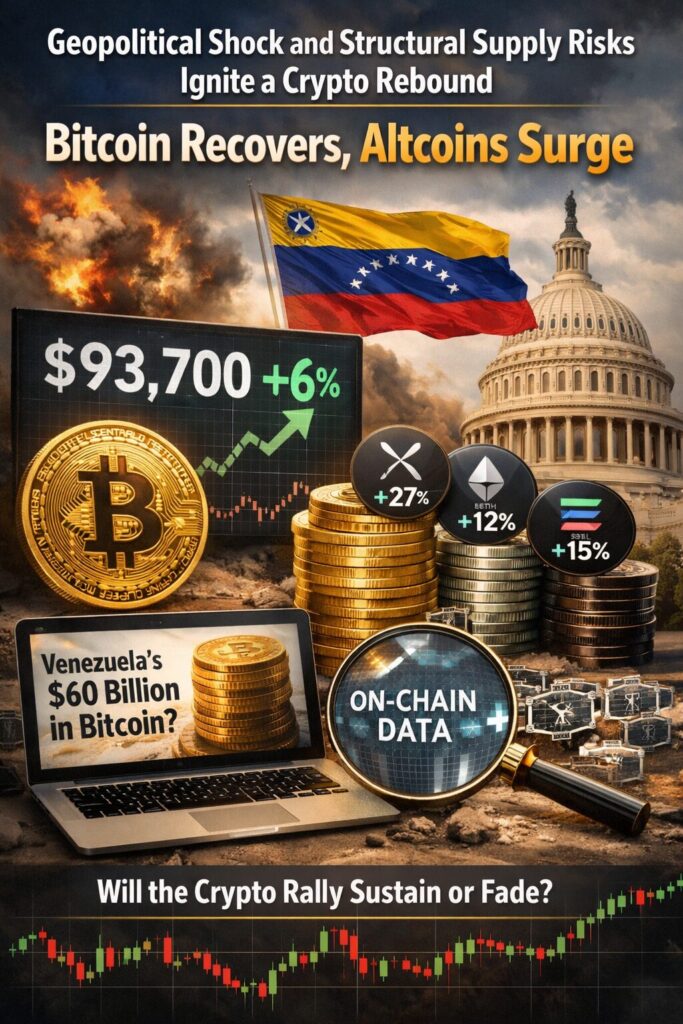
- Bitcoin rebounded to approximately $93,700, up 6% week-on-week, breaking a multi-month downtrend.
- Altcoins followed strongly, with XRP surging 27% weekly, alongside gains in Ethereum and Solana.
- The rebound coincides with renewed geopolitical risk, particularly surrounding Venezuela and U.S. foreign policy.
- Reports alleging Venezuela may secretly hold up to $60 billion worth of Bitcoin introduce a potential structural supply shock.
- While institutional demand via spot ETFs remains supportive, confirmation through verifiable on-chain evidence is still lacking.
- Investors are now watching whether this rally develops into a sustained trend or fades after leverage resets.
1. Bitcoin’s Technical Reversal: From Flash Crash to Recovery
[Bitcoin Weekly Chart with Downtrend Breakout]
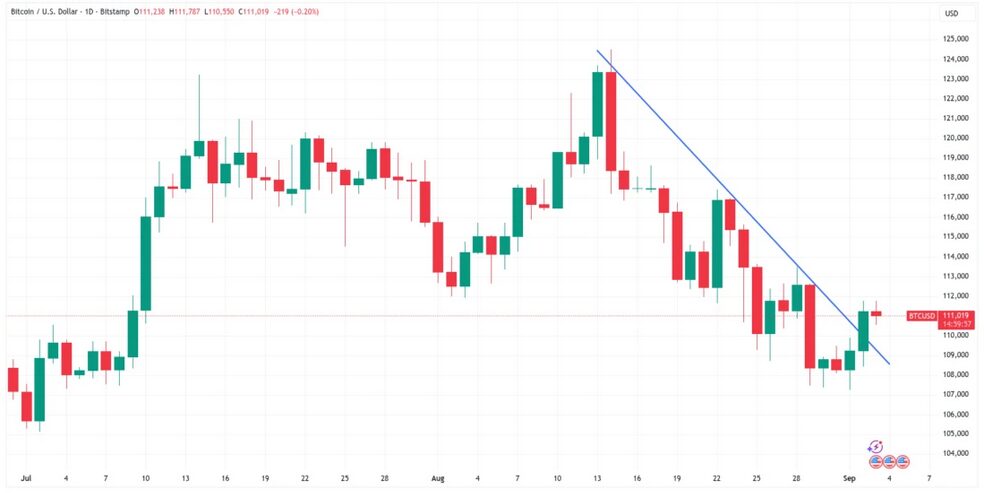
On January 6, the cryptocurrency market witnessed a notable reversal as Bitcoin (BTC) rebounded to around $93,720, marking a 6% increase from the previous week. This recovery comes after an extended corrective phase that began following Bitcoin’s all-time high near $126,000 in October 2025.
That peak was followed by what market participants now refer to as the Trump Tariff Shock—a sudden macro-driven sell-off triggered by tariff escalation fears, resulting in a flash crash and large-scale forced liquidations. Bitcoin briefly plunged into the low $80,000 range, shaking out excessive leverage and weakening short-term sentiment.
From a technical perspective, Bitcoin has been trading below its 50-day simple moving average (SMA), a level often associated with short-term bearish pressure. However, the recent breakout from a multi-month descending trendline is widely viewed as a constructive signal. Analysts now identify $93,000–$95,000 as a key resistance zone; a decisive break could open the path toward reclaiming the $100,000 psychological level.
Despite the volatility, many market strategists argue that Bitcoin’s long-term bullish structure—established since 2023—remains intact, provided institutional spot demand continues to absorb sell pressure.
2. Altcoin Market Awakens: XRP, Ethereum, and Solana Lead
[Major Altcoin Price Performance Comparison]
Bitcoin’s rebound has reignited broader risk appetite across the crypto market, particularly among altcoins that had suffered persistent capital outflows during the recent downturn.
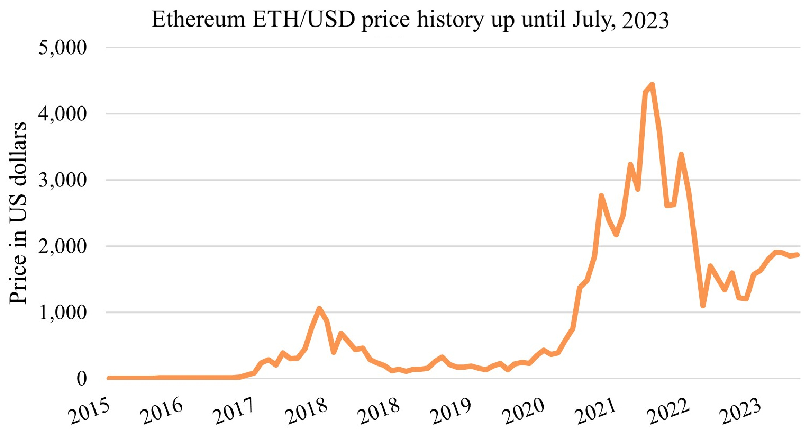
Ethereum (ETH) continued its steady ascent, approaching $3,200, and notably outperforming Bitcoin in percentage terms—a phenomenon often interpreted as an early sign of market rotation. Solana (SOL) rallied toward $137, supported by renewed interest in high-throughput smart-contract platforms.
The standout performer, however, was XRP, which surged to $2.38, posting a 27% weekly gain and reaching its highest level since November. According to data providers such as Messari, this move reflects both short-term momentum and improving medium-term sentiment toward large-cap altcoins.
Historically, periods in which Ethereum and XRP outperform Bitcoin have often coincided with early or mid-stage bull market transitions, though such signals require confirmation through sustained volume and follow-through buying.
3. Shifting Investor Psychology: From Risk Aversion to Strategic Accumulation
Market data suggests that investors are increasingly prioritizing medium- to long-term structural narratives over short-term volatility. Rather than retreating into cash amid geopolitical uncertainty, capital appears to be rotating back into digital assets on perceived pullbacks.
This behavioral shift is particularly evident among institutional participants, whose activity in spot Bitcoin ETFs has remained resilient. The persistence of ETF inflows implies that macro instability—rather than deterring capital—may be reinforcing Bitcoin’s role as a non-sovereign, censorship-resistant asset.
Notably, Ethereum’s recent outperformance relative to Bitcoin is viewed by some analysts as a signal that investors are once again willing to assume incremental risk, a prerequisite for a broader altcoin recovery.
4. Venezuela Enters the Spotlight: Geopolitics Meets Crypto Supply
[Venezuela, Gold, and Bitcoin Flow Conceptual Diagram]
A key narrative underpinning the latest market rally is renewed geopolitical tension involving Venezuela. Reports suggest that U.S. military pressure and the detention of President Nicolás Maduro have heightened uncertainty surrounding the country’s financial assets.
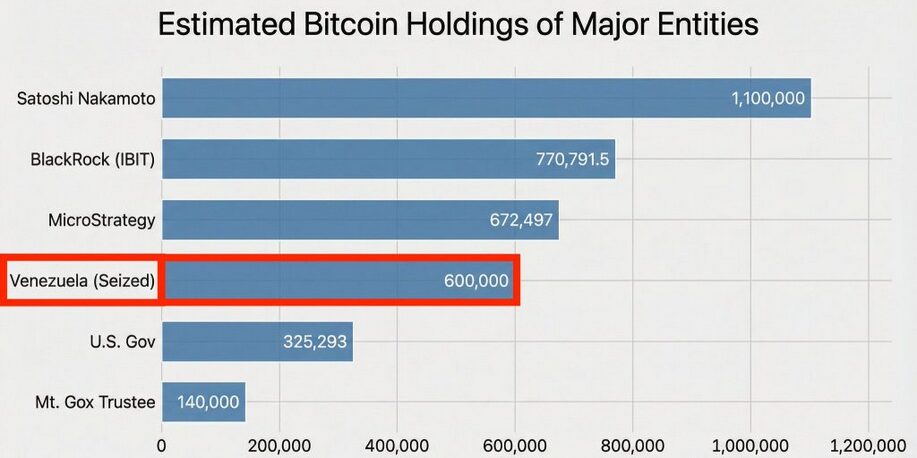
A controversial report published by Project Brazen—titled “The $60 Billion Question: Is Venezuela Secretly a Bitcoin Superpower?”—claims that Venezuela may have covertly accumulated between 600,000 and 660,000 BTC, equivalent to nearly 3% of Bitcoin’s circulating supply.
If accurate, such holdings would exceed those of the United States and rival the scale of corporate accumulators such as MicroStrategy (now rebranded as Strategy). The report alleges that Venezuela converted proceeds from gold sales—estimated at 73 metric tons, generating roughly $2.7 billion—into Bitcoin during the $3,000–$10,000 BTC price range between 2018 and 2020.
5. Sanctions Evasion and the Crypto Pipeline Hypothesis
According to investigative journalists Bradley Hope and Clara Preve, the Maduro regime may have developed a sophisticated pipeline involving:
- Gold exports converted into offshore liquidity
- Oil transactions settled using USDT (Tether)
- Gradual conversion of stablecoins into Bitcoin
- Seizure of assets from domestic miners
- Centralization of digital assets following the discontinuation of the Petro token
The Petro, launched in 2018 as an oil-backed national cryptocurrency, was widely criticized and ultimately abandoned. Its dissolution, however, may have facilitated the consolidation of digital assets under state control.
Should U.S. authorities succeed in securing private keys linked to these holdings, a significant portion of Bitcoin’s supply could become effectively frozen for years during legal proceedings—creating a structural supply shock with long-term bullish implications.
6. The Skeptic’s View: Where Is the On-Chain Evidence?
Despite its provocative claims, the Venezuela Bitcoin thesis faces substantial skepticism. The report itself concedes that no direct on-chain evidence supports the alleged holdings. Blockchain analytics firms such as Arkham Intelligence and Glassnode have not identified wallet clusters consistent with a hoard of this magnitude.
Moreover, official data from Bitcoin Treasuries lists Venezuela’s known holdings at just 240 BTC (approximately $22 million)—a figure vastly smaller than the $60 billion estimate circulating in speculative reports.
As a result, many analysts caution that the narrative remains unverified, urging investors to await confirmation from U.S. government disclosures or independently verifiable blockchain data.
7. Market Outlook: Breakout or Bull Trap?
Looking ahead, the market faces a critical test. Sustained price action above $94,000—supported by spot ETF inflows—could reinforce bullish momentum and pave the way toward $100,000. Conversely, if demand falters following the recent short-covering rally, Bitcoin may retest lower support levels in search of a second bottom.
Investors are now closely monitoring:
- Follow-through buying versus post-liquidation stagnation
- ETF inflow consistency
- On-chain confirmation of large-scale accumulation narratives
Ultimately, the durability of this rebound will depend not on rumors, but on verifiable evidence and sustained capital commitment.
Conclusion
The recent rebound in Bitcoin and the resurgence of altcoins underscore how geopolitical risk, macro uncertainty, and structural supply narratives can converge to reshape market dynamics. While claims surrounding Venezuela’s alleged Bitcoin reserves remain speculative, they highlight the growing intersection between state-level strategy and decentralized assets.
For investors seeking new digital assets, emerging income opportunities, or practical blockchain applications, the current environment offers both promise and peril. As always, disciplined analysis—grounded in data rather than conjecture—will be essential in navigating what may prove to be a pivotal phase in crypto’s evolving market cycle.
