
Key Points :
- AI and stablecoins are outperforming the broader crypto market despite bearish conditions
- Capital is shifting from speculative assets to infrastructure-driven sectors
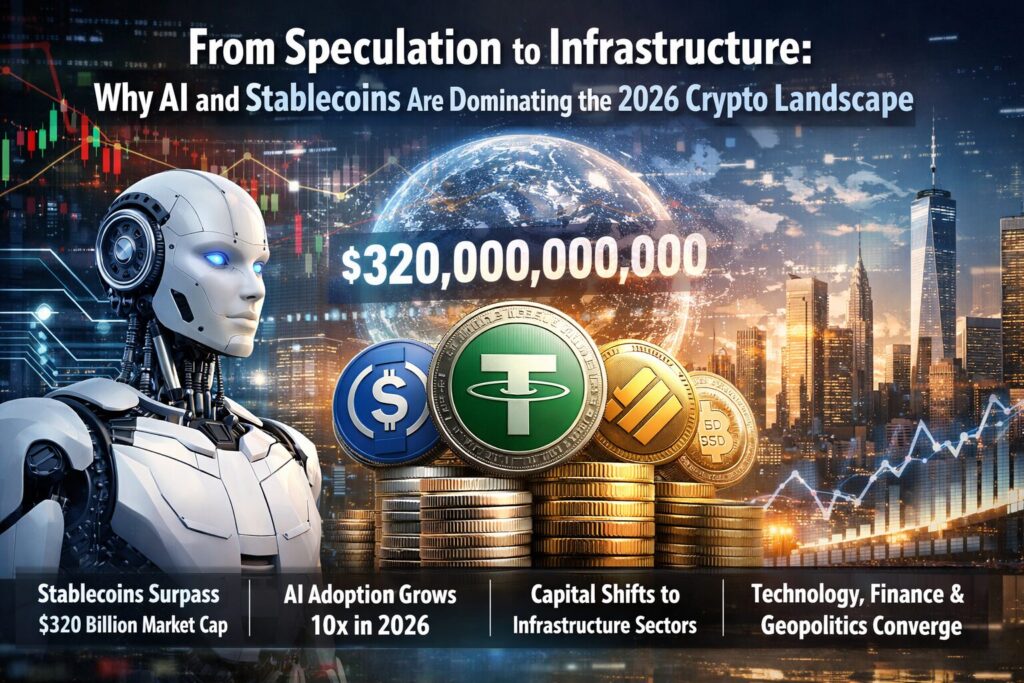
- Stablecoins have reached over $320 billion in market capitalization
- AI adoption (e.g., ChatGPT) has grown nearly 10x, signaling real-world demand
- These sectors sit at the intersection of technology, finance, and geopolitics
- 2026 marks a structural transition—not just another market cycle
Introduction: A Market Redefined
The cryptocurrency market in 2026 is undergoing a profound transformation. Unlike previous cycles dominated by speculative mania and rapid price appreciation, the current environment reflects a deeper structural shift. While Bitcoin has declined approximately 18.5% and the total crypto market capitalization has contracted to around $2.42 trillion, not all sectors are suffering equally.
Two segments—artificial intelligence (AI) and stablecoins—have demonstrated remarkable resilience and growth. These sectors are not merely surviving the downturn; they are thriving, signaling a fundamental change in how capital is allocated within the digital asset ecosystem.
Figure 1 Insertion Point (After Introduction)
The Divergence: Infrastructure vs Speculation
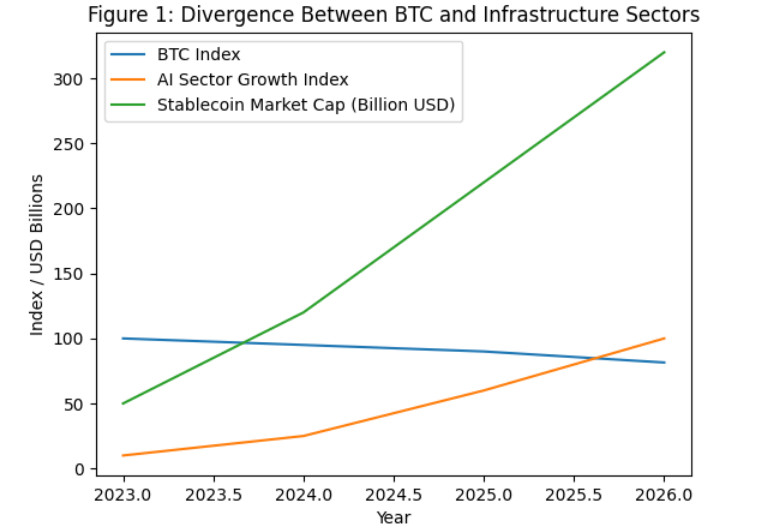
The divergence between declining speculative assets and rising infrastructure sectors is one of the most important narratives of 2026.
Historically, crypto markets have been driven by narratives such as DeFi summer, NFT booms, or meme coin speculation. However, the current cycle reveals a shift toward utility-driven growth.
AI tokens have reached a market capitalization of approximately $17.4 billion, growing over 30% in the past 30 days alone. Projects like Bittensor and NEAR Protocol have recorded significant gains, highlighting investor interest in technologies that deliver real-world functionality.
Meanwhile, stablecoins continue to expand as foundational financial infrastructure. Their role is no longer limited to trading pairs; they now underpin global payments, tokenized assets, and decentralized finance systems.
Stablecoins: The Backbone of Digital Finance
Stablecoins have emerged as one of the most critical components of the crypto ecosystem.
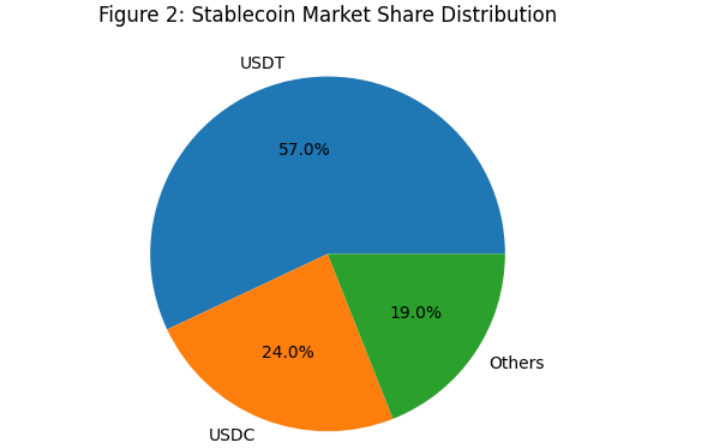
As of March 2026, the total stablecoin market capitalization has reached an all-time high of approximately $320 billion. Among them, USDT dominates with roughly $184 billion, accounting for about 57% of the market.
Figure 2 Insertion Point (Stablecoin Section)
Monthly transaction volumes have also surged, reaching $1.8 trillion in February alone. This level of activity places stablecoins on par with traditional payment infrastructures.
USDC, in particular, has seen explosive growth, with supply increasing by over 220% since late 2023, reaching approximately $78 billion.
What makes stablecoins especially resilient in a bear market is their function:
- Store of value (relative to volatile assets)
- Medium of exchange
- Settlement layer for decentralized finance
- Foundation for tokenized real-world assets (RWA)
Even as speculative assets decline, these use cases remain intact—and in many cases, expand.
AI: The Demand Engine of the New Economy
Parallel to the rise of stablecoins is the explosive growth of AI adoption.
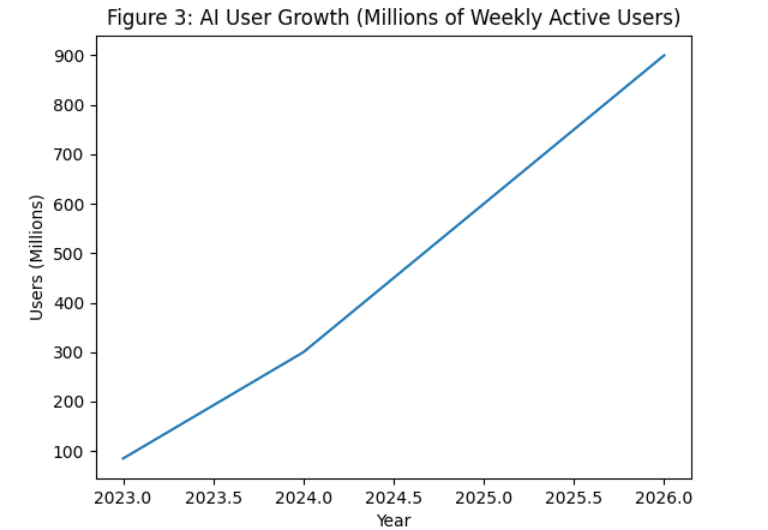
Platforms like ChatGPT have seen weekly active users grow from approximately 85 million in 2023 to 900 million in 2026, representing nearly a 10x increase.
Figure 3 Insertion Point (AI Section)
This growth is not merely technological—it is economic.
AI systems increasingly require:
- Instant micropayments
- Global access to financial infrastructure
- Programmable and automated transactions
Stablecoins naturally fulfill these requirements, acting as the native currency of the internet economy.
This symbiotic relationship between AI and stablecoins is one of the defining characteristics of the current market.
Structural Tailwinds: Technology, Finance, and Geopolitics
The resilience of AI and stablecoins can be explained by their alignment with three major forces:
1. Technology
AI is rapidly improving productivity, automation, and decision-making capabilities across industries.
2. Finance
Stablecoins provide efficient, borderless, and programmable financial infrastructure.
3. Geopolitics
In an increasingly fragmented global economy, stablecoins enable the distribution of dollar liquidity beyond traditional banking systems.
Together, these forces create what analysts describe as “structural tailwinds”—long-term drivers that persist regardless of short-term market conditions.
The Shift in Capital Allocation
Data indicates a clear movement of capital away from speculative sectors toward fundamentally strong projects.
According to industry reports:
- AI sector decline: ~14%
- Consumer/culture: ~31%
- Smart contract platforms: ~21%
- Currency sector: ~21%
Even in a declining market, AI shows the smallest drawdown, reinforcing its relative strength.
Investors are no longer chasing momentum alone. Instead, they are prioritizing:
- Revenue-generating models
- Real-world adoption
- Scalable infrastructure
From Cycle to Paradigm Shift
One of the most important conclusions emerging from 2026 is that this is not just another market cycle.
It represents a transition:
- From speculation → infrastructure
- From hype → utility
- From short-term gains → long-term systems
This shift is similar to the early evolution of the internet, where initial speculation eventually gave way to foundational technologies that defined entire industries.
Implications for Investors and Builders
For investors, this transition suggests a new framework for evaluating opportunities:
- Focus on utility-driven tokens
- Assess real-world adoption metrics
- Prioritize infrastructure layers over applications
- Look for cross-sector synergies (AI + finance)
For builders, the implications are equally significant:
- Integrating stablecoin payments into applications
- Leveraging AI for automation and efficiency
- Designing systems that operate across global markets
Conclusion: The Infrastructure Era Has Begun
The crypto market of 2026 is not defined by price movements alone. Instead, it is shaped by the emergence of foundational technologies that are redefining how value is created and exchanged.
AI and stablecoins are at the center of this transformation.
They represent:
- The intelligence layer (AI)
- The financial layer (stablecoins)
Together, they form the backbone of a new digital economy—one that is less dependent on speculation and more grounded in real-world utility.
The transition from speculation to infrastructure is not a temporary trend. It is the beginning of a new era.
