
Main Points :
- The U.S. Federal Deposit Insurance Corporation (FDIC) has proposed its first formal rule to govern stablecoin issuance by regulated banks under the GENIUS Act.
- The proposal establishes a structured application, review, and appeal process for banks seeking to issue dollar-pegged stablecoins through subsidiaries.
- This marks the first concrete implementation step of the GENIUS Act, the first major crypto-related law passed by the U.S. Congress.
- Capital, liquidity, and risk-management standards for stablecoin issuers are expected to follow within months.
- The move signals a shift from regulatory ambiguity toward a bank-centered stablecoin model, with significant implications for innovation, competition, and global dollar dominance.
1. Introduction: A Turning Point for U.S. Stablecoin Regulation
On December 16, 2025, the U.S. Federal Deposit Insurance Corporation (FDIC) formally approved its first proposed rule governing the issuance of stablecoins by regulated banks under the newly enacted GENIUS Act. This development represents a watershed moment for the U.S. digital asset landscape, as it transitions stablecoins from a largely market-driven phenomenon into a regulated financial instrument embedded within the traditional banking system.
Stablecoins—digital tokens pegged to the U.S. dollar—have become indispensable infrastructure in crypto markets, decentralized finance (DeFi), cross-border payments, and on-chain settlement systems. With daily transaction volumes frequently exceeding hundreds of billions of dollars globally, the absence of a clear U.S. regulatory framework has long been viewed as both a risk and a missed opportunity.
The FDIC’s proposal begins to close that gap.
2. The GENIUS Act: The Legal Foundation Behind the Proposal
The “Guiding and Establishing National Innovation for U.S. Stablecoins Act,” better known as the GENIUS Act, is the first comprehensive crypto-related law passed by the U.S. Congress. Its core objective is to create a unified federal framework for the issuance, oversight, and supervision of dollar-backed stablecoins.
Under the Act:
- Multiple federal regulators are assigned oversight roles depending on the nature of the issuer.
- For insured depository institutions (banks), the FDIC is designated as the primary regulator.
- Stablecoin issuance is explicitly recognized as a regulated financial activity rather than an unclassified technological experiment.
The FDIC’s December proposal is the first operational rulemaking effort under this law, transforming statutory language into an actionable supervisory process.
3. What the FDIC Proposed: Application, Review, and Appeals
The newly released proposal establishes a specialized application process for banks seeking to issue stablecoins through subsidiaries.
Key elements include:
Application Submission
Banks must submit a written application detailing:
- The scope of their proposed stablecoin business
- Financial condition and supporting financial statements
- Governance, internal controls, and risk management frameworks
- A comprehensive plan for safe and sound stablecoin issuance
Review Timeline
- Applications will be formally accepted by the FDIC.
- A 120-day review period is established for regulatory evaluation.
- The FDIC will assess safety, soundness, and compliance with statutory requirements.
Appeal Process
- Rejected applicants will have access to a defined appeals mechanism.
- This adds procedural transparency and reduces regulatory arbitrariness.
FDIC Acting Chairman Travis Hill emphasized that the process is designed to minimize unnecessary regulatory burden while still allowing the agency to fulfill its statutory duty.
4. Governance and Political Context
The proposal was approved unanimously by all three FDIC board members, signaling bipartisan institutional alignment. Acting Chairman Travis Hill—nominated by President Donald Trump and awaiting Senate confirmation—has positioned the agency as supportive of innovation, provided it occurs within a clear supervisory perimeter.
Hill stated that more substantive rules, including capital adequacy, liquidity buffers, and risk management requirements for stablecoin issuers, are expected within the coming months.
This phased approach mirrors how traditional banking activities are often regulated: first establishing entry procedures, then defining prudential standards.
5. Why This Matters: From Crypto-Native to Bank-Native Stablecoins
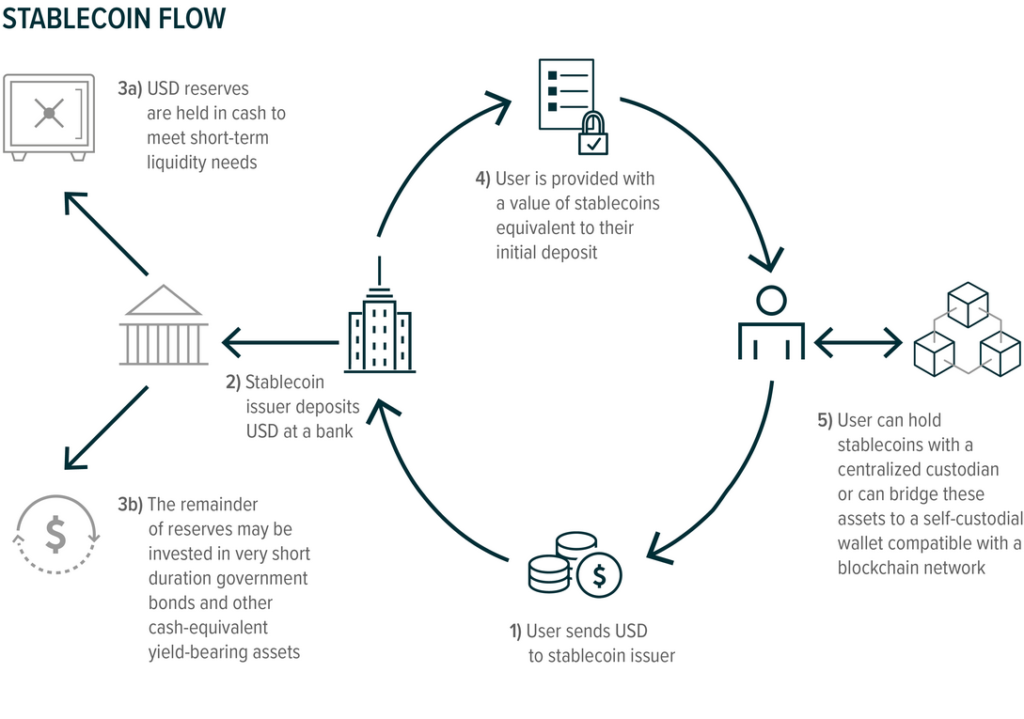
Historically, the stablecoin market has been dominated by non-bank issuers such as Tether (USDT) and Circle (USDC). These entities operate under varying regulatory regimes and, in some cases, outside direct U.S. federal banking supervision.
The FDIC’s proposal signals a strategic pivot:
- Encouraging banks to issue stablecoins directly
- Integrating stablecoins into the insured banking system
- Reinforcing the U.S. dollar’s role as the dominant on-chain settlement currency
For banks, this opens new revenue streams, including:
- Tokenized deposits
- On-chain settlement services
- Cross-border payment infrastructure
- Institutional custody and liquidity services
For crypto markets, it introduces a new class of “bank-grade” stablecoins with potentially higher trust and regulatory clarity.
6. Implications for Innovation and Competition
While regulatory clarity is broadly welcomed, the proposal also raises important competitive questions.
Bank-issued stablecoins may benefit from:
- Easier institutional adoption
- Stronger compliance signaling
- Direct access to payment rails
However, higher compliance costs and prudential requirements could:
- Slow innovation compared to crypto-native issuers
- Concentrate market power among large banks
- Raise barriers to entry for smaller institutions
This tension—between safety and openness—will define the next phase of stablecoin evolution.
7. Global Context: The U.S. Catches Up
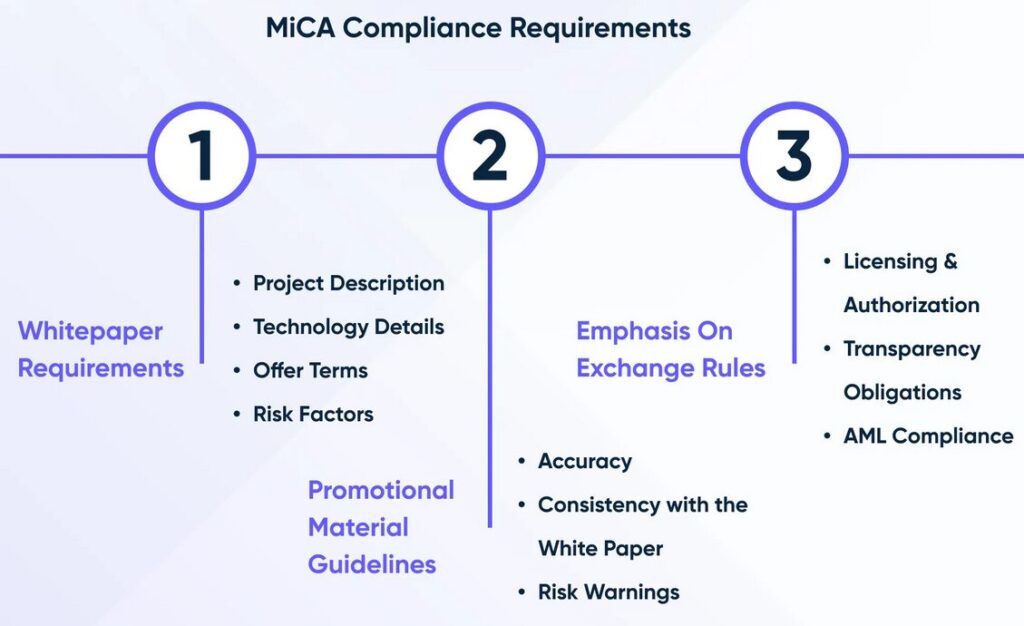
Globally, jurisdictions such as the European Union (MiCA), Singapore, and Japan have already established stablecoin regulatory frameworks. The U.S., despite issuing the world’s reserve currency, has lagged behind in formal rulemaking.
The FDIC’s proposal marks a shift from reactive enforcement to proactive rule-setting, aligning the U.S. more closely with international regulatory norms while preserving its unique banking-centric approach.
8. Capital, Liquidity, and Risk: What Comes Next
The most consequential rules are still forthcoming.
According to the FDIC, future regulations will address:
- Minimum capital requirements for stablecoin issuers
- Liquidity standards to ensure redemption at par ($1 = $1)
- Risk management expectations, including operational and cyber risks
- Segregation and custody of reserve assets
These rules will determine whether bank-issued stablecoins can scale efficiently while maintaining systemic stability.
9. Strategic Outlook for Investors and Builders
For readers seeking new digital assets, revenue opportunities, and practical blockchain use cases, the FDIC’s move offers several signals:
- Infrastructure over speculation: Value creation is shifting toward payment rails, settlement layers, and compliance-ready platforms.
- Tokenized dollars as primitives: Stablecoins are no longer a side product; they are becoming core financial instruments.
- Bank–crypto convergence: Builders who can bridge traditional finance and on-chain systems stand to benefit disproportionately.
This is not the end of stablecoin innovation—it is its institutionalization.
10. Conclusion: The Beginning of a Regulated Dollar Internet
The FDIC’s proposed rule under the GENIUS Act represents the formal entry of U.S. banking regulators into the stablecoin era. By establishing a clear application and review process, the agency has laid the groundwork for a new generation of regulated, dollar-backed digital assets.
While challenges remain—particularly around competition and innovation—the direction is unmistakable. Stablecoins are no longer operating in regulatory gray zones. They are becoming part of the core architecture of the global financial system.
For banks, builders, and investors alike, the message is clear: the next phase of crypto is not about avoiding regulation, but about building within it.
