
Main Points :
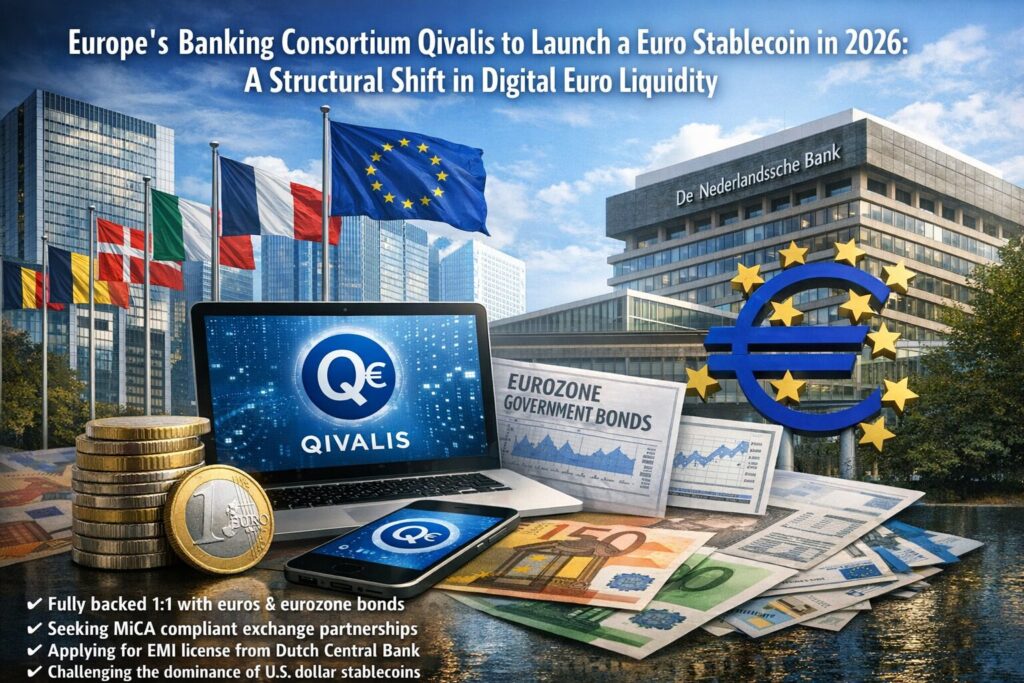
- A consortium of 12 major European banks, Qivalis, plans to launch a euro-denominated stablecoin in late 2026.
- Reserves will be fully backed 1:1 with euros, with at least 40% held as bank deposits and the remainder in short-term eurozone government bonds.
- The consortium will prioritize partnerships with exchanges compliant with the EU’s MiCA regulation.
- Qivalis is applying for an Electronic Money Institution (EMI) license from the Dutch Central Bank.
- The initiative aims to challenge the near-total dominance of U.S. dollar stablecoins, which account for roughly 99% of global stablecoin market capitalization.
1. The Strategic Entry of European Banks into the Stablecoin Market
In March 2026, Spanish financial newspaper Cinco Días reported that Qivalis, a consortium formed by 12 major European banks—including CaixaBank, BNP Paribas, ING, UniCredit, and BBVA—has entered the final stages of negotiations with cryptocurrency exchanges, market makers, and liquidity providers to support the launch of a euro-denominated stablecoin.
The commercial launch is targeted for the second half of 2026. Founded in September 2025 and headquartered in the Netherlands, Qivalis represents one of the most coordinated efforts by traditional European banking institutions to enter the digital asset space directly—not merely as custodians or service providers, but as issuers of programmable digital money.
This move reflects a broader strategic shift: European banks are no longer treating crypto as a peripheral asset class. Instead, they are positioning themselves to shape the infrastructure of digital liquidity.
2. Reserve Architecture: A Bank-Grade Model for Stability
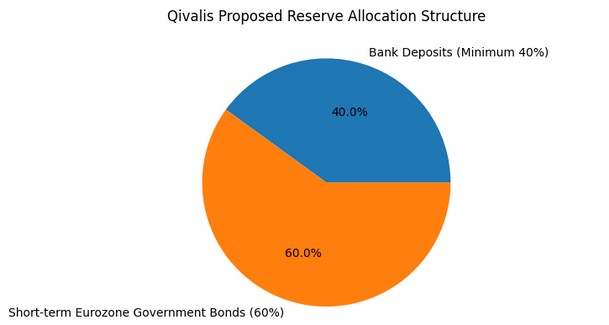
The core of Qivalis’ strategy lies in its reserve structure. According to CFO Floris Lugt, the stablecoin will be backed 1:1 with euros. At least 40% of reserves will be held as bank deposits with highly rated financial institutions. The remainder will be diversified across short-term government bonds issued by eurozone countries.
This structure aims to mitigate sovereign concentration risk. Rather than relying heavily on a single nation’s debt instruments, the portfolio spreads exposure across multiple eurozone issuers. From a risk-management perspective, this resembles a conservative money market fund model—optimized for capital preservation and liquidity.
Additionally, Qivalis promises 24/7 redemption for token holders. This is a crucial feature. In previous stablecoin crises, redemption bottlenecks amplified market panic. By guaranteeing continuous convertibility into euros, Qivalis attempts to position its token as a cash-equivalent instrument rather than a speculative asset.
For investors and businesses exploring new revenue streams, this structure suggests potential for institutional-grade DeFi integrations, euro-based liquidity pools, and lower FX risk exposure compared to dollar-denominated alternatives.
3. MiCA Compliance as a Competitive Differentiator
Markets in Crypto-Assets Regulation (MiCA) is reshaping Europe’s crypto landscape. Unlike fragmented regulatory approaches elsewhere, MiCA establishes a harmonized framework across the European Union.
Qivalis plans to prioritize partnerships with MiCA-compliant exchanges both inside and outside Europe. This decision has several implications:
- It reduces regulatory uncertainty for institutional participants.
- It potentially limits early liquidity to platforms that meet strict compliance standards.
- It creates a regulatory moat around the stablecoin’s ecosystem.
For crypto entrepreneurs and developers, MiCA alignment means integration opportunities will likely favor regulated platforms. This could accelerate the maturation of compliant DeFi protocols and tokenized asset markets within Europe.
4. The Dollar’s 99% Dominance and the Euro’s Opening
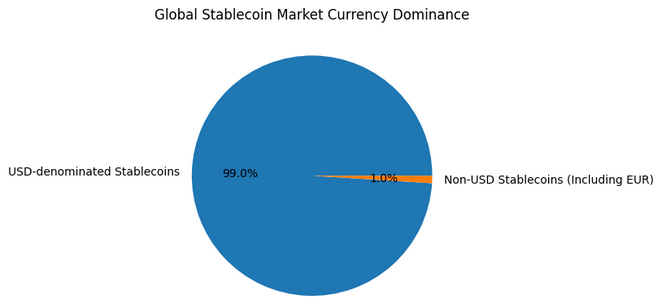
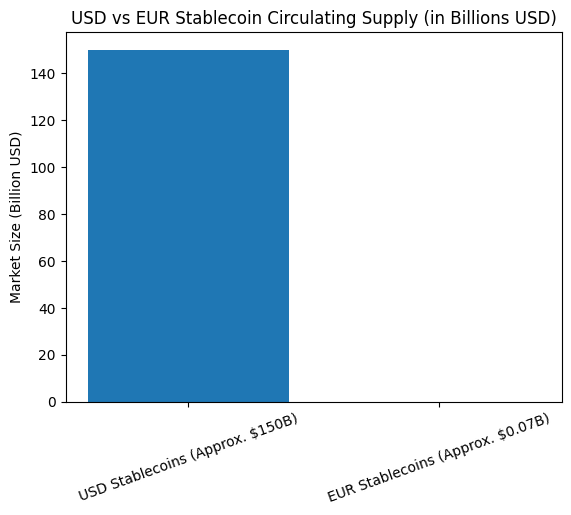
The global stablecoin market is overwhelmingly dollar-centric. Roughly 99% of circulating stablecoin supply is denominated in USD, led by giants such as Tether (USDT) and Circle (USDC).
This dollar hegemony has practical consequences:
- Most DeFi yields are dollar-based.
- Cross-border settlements increasingly use USD stablecoins.
- Emerging markets rely on USD stablecoins as synthetic dollar exposure.
However, this dominance creates a structural imbalance for Europe. If euro liquidity remains underrepresented in digital markets, European businesses face FX exposure and reduced monetary sovereignty in blockchain ecosystems.
Currently, the only notable euro stablecoin in circulation is issued by SG-FORGE, a digital asset subsidiary of Société Générale. Its circulating supply is approximately €64 million (about $70 million at a $1.10 EUR/USD rate). Compared to the hundreds of billions in USD stablecoins, this figure is negligible.
Qivalis aims to change that imbalance.
5. Licensing and Institutional Legitimacy
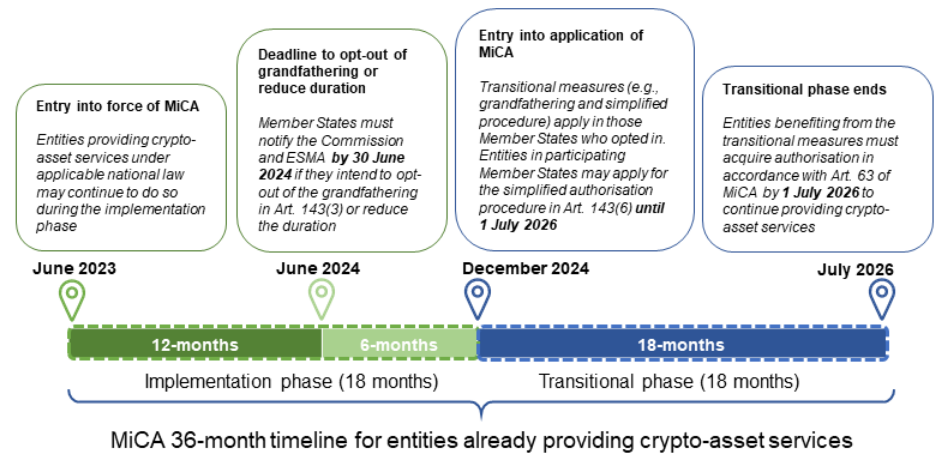
Qivalis is applying for an Electronic Money Institution (EMI) license from De Nederlandsche Bank (DNB). EMI authorization is critical because it anchors the stablecoin within existing European electronic money regulations.
This approach differs from offshore-issued stablecoins that operate in loosely regulated jurisdictions. By embedding itself in EU financial law, Qivalis signals that its product is designed for integration into mainstream banking, payment rails, and potentially even central bank digital euro interoperability.
For fintech operators and payment companies, this could unlock:
- Direct euro stablecoin settlement within regulated frameworks
- Integration with SEPA-based banking systems
- Tokenized securities settlement in euros
6. Broader Market Trends: Stablecoins as Financial Infrastructure
Globally, stablecoins are evolving beyond trading instruments. They are increasingly used for:
- Cross-border B2B settlements
- On-chain treasury management
- Payroll in emerging markets
- Tokenized real-world asset (RWA) settlement
Recent industry developments show growing institutional involvement. Major asset managers have launched tokenized funds. Banks are piloting blockchain settlement networks. Payment processors are integrating stablecoins for remittances.
A euro-denominated stablecoin issued by a major banking consortium could accelerate:
- Euro-based RWA tokenization
- Decentralized finance products targeting European users
- On-chain corporate treasury diversification
For readers seeking the next revenue opportunity, euro liquidity pools, euro-based lending markets, and FX arbitrage strategies between USD and EUR stablecoins could become viable niches.
7. Practical Implications for Crypto Investors and Builders
For investors:
- A credible euro stablecoin may reduce reliance on USD exposure.
- Euro-denominated yield strategies could emerge.
- Cross-currency DeFi arbitrage opportunities may expand.
For developers:
- MiCA-compliant euro liquidity may attract institutional capital.
- Regulated euro on-ramps can reduce friction for European users.
- Integration with tokenized bonds and securities becomes more feasible.
For enterprises:
- Hedging FX risk using euro stablecoins
- Automating supplier payments on-chain
- Structuring programmable escrow systems
8. The Geopolitical Dimension: Monetary Sovereignty on Blockchain
Stablecoins are not just financial products—they are geopolitical instruments. The dominance of USD stablecoins effectively extends U.S. monetary influence into blockchain ecosystems.
A robust euro stablecoin ecosystem could:
- Strengthen Europe’s monetary autonomy
- Reduce systemic reliance on USD liquidity
- Support the euro’s internationalization in digital finance
If Qivalis succeeds, Europe may transition from regulatory leadership (via MiCA) to liquidity leadership in euro-denominated digital assets.
Conclusion: A Turning Point for Euro Digital Liquidity
The planned launch of a euro-backed stablecoin by Qivalis in 2026 represents more than a product release—it signals a structural evolution in Europe’s financial architecture.
By combining bank-grade reserves, MiCA compliance, EMI licensing, and institutional partnerships, Qivalis aims to create a stablecoin that bridges traditional banking and blockchain infrastructure.
For investors, this may open new euro-denominated yield strategies. For developers, it offers compliant liquidity. For Europe, it could redefine the role of the euro in digital markets.
The next phase of crypto will not be defined solely by speculative tokens, but by the currency layers that power programmable finance. In that contest, Qivalis’ euro stablecoin could become a foundational building block.
