
Main Points :
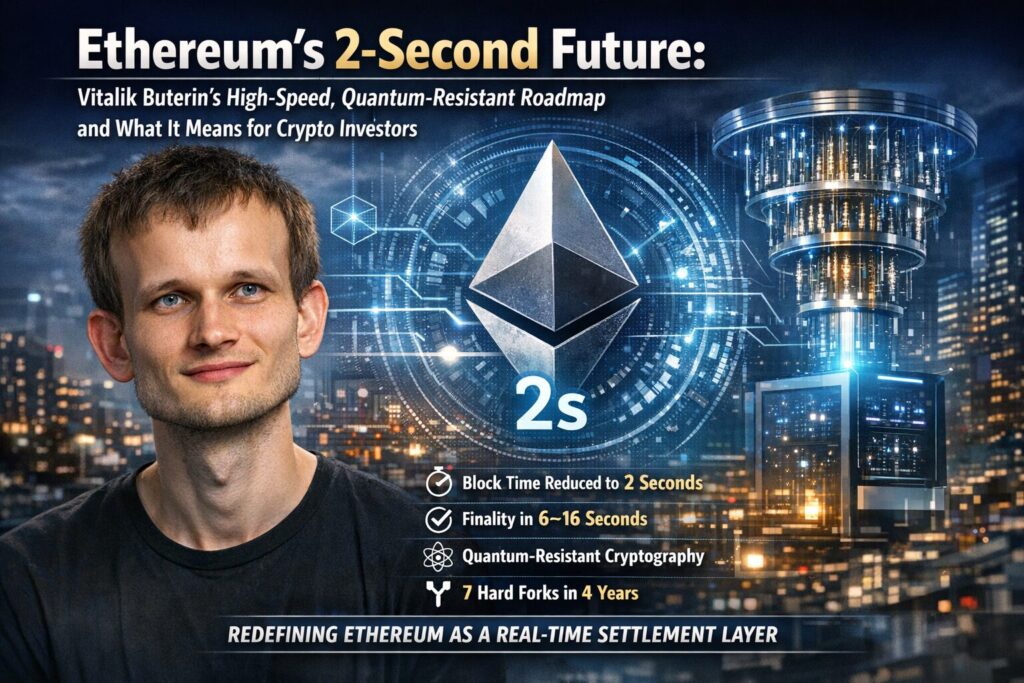
- Ethereum aims to reduce block time from 12 seconds to as low as 2 seconds.
- Transaction finality may shrink from ~16 minutes to as little as 6–16 seconds.
- Slot time and finality will be decoupled and optimized independently.
- Peer-to-peer (P2P) propagation upgrades will reduce redundancy and latency.
- Transition toward quantum-resistant cryptography is embedded in the roadmap.
- Seven hard forks are expected over four years, with “Glamsterdam” and “Hegotá” already scheduled.
- The roadmap repositions Ethereum as a real-time, infrastructure-grade settlement layer.
1. A Turning Point in Ethereum’s Evolution
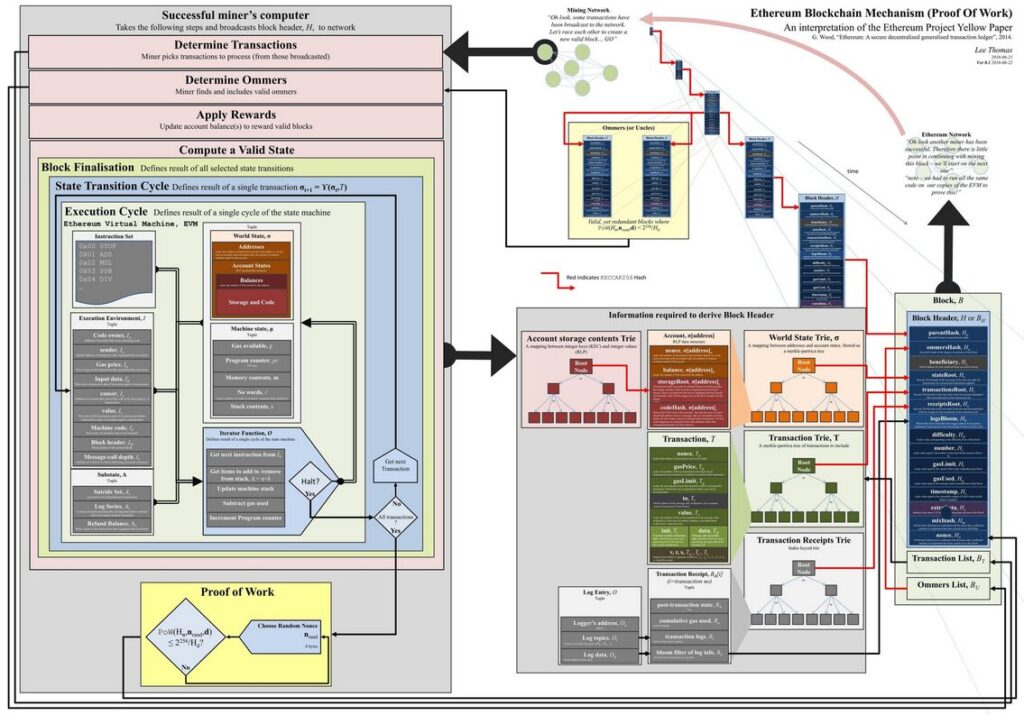
The co-founder of Vitalik Buterin has unveiled additional details regarding Ethereum’s acceleration roadmap, centered on one radical objective: reducing Ethereum’s block generation time from approximately 12 seconds to as little as 2 seconds.
The visual roadmap, referred to as “Strawmap” by the Ethereum Foundation protocol team, places “fast slots” at the top as a largely independent track. According to Buterin, slot time improvements are structurally separable from other roadmap components, allowing Ethereum to iterate on speed without entangling deeper consensus upgrades.
This is not merely a cosmetic update. It represents a philosophical shift: Ethereum aims to transition from a system that feels sequential and delayed to one that behaves more like a real-time distributed computer.
For investors and builders, this signals something crucial: Ethereum is optimizing not only for scalability, but for latency, usability, and infrastructure competitiveness.
2. From 12 Seconds to 2 Seconds: The Slot Compression Strategy
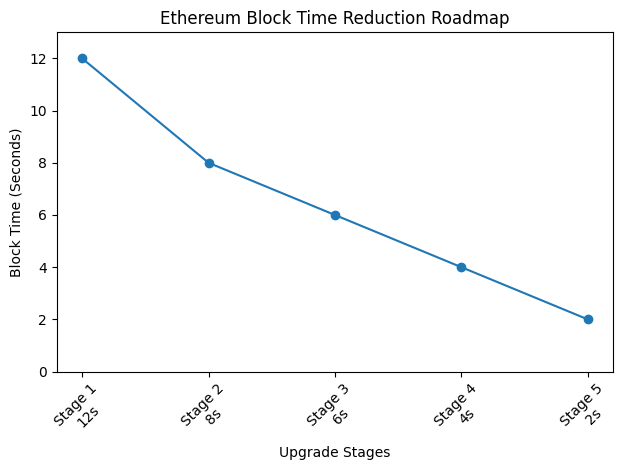
Ethereum currently produces a new block approximately every 12 seconds. The roadmap proposes a staged compression:
- 12 seconds
- 8 seconds
- 6 seconds
- 4 seconds
- 2 seconds
This stepwise reduction minimizes systemic risk while allowing ecosystem adaptation.
Why Slot Time Matters
Slot time determines:
- How quickly transactions enter blocks
- How responsive DeFi protocols feel
- Arbitrage efficiency
- Liquidation timing
- Oracle update latency
- On-chain gaming viability
- UX competitiveness vs Web2 systems
A 2-second block time begins to approach the responsiveness of traditional digital systems. While still decentralized, Ethereum would feel dramatically more fluid.
In practical terms:
If today a transaction confirmation takes 12–24 seconds to feel “in progress,” under a 2-second regime that feedback loop tightens substantially.
For high-frequency trading bots, payment rails, and institutional DeFi settlement, latency reduction directly increases capital efficiency.
3. P2P Upgrades: Cutting Redundancy, Not Security
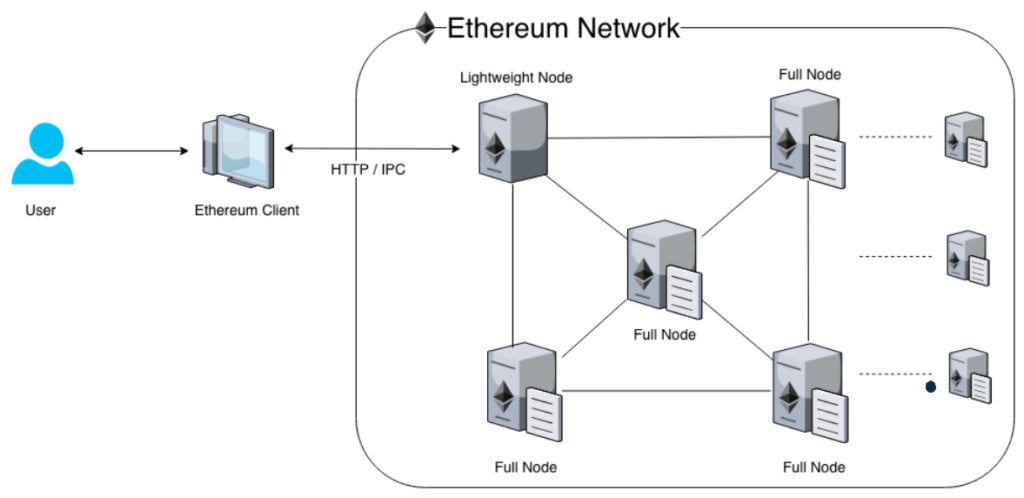
A key enabler is upgrading Ethereum’s peer-to-peer communication layer.
Buterin emphasizes reducing redundant downloads. Instead of nodes repeatedly fetching overlapping data, improved propagation mechanisms allow new blocks to circulate faster and more efficiently.
The claim: shorter slots can be achieved without security trade-offs.
This is critical. Faster blocks without propagation optimization can lead to:
- Increased uncle/orphan rates
- Centralization pressure
- MEV distortion
- Network instability
By addressing propagation first, Ethereum attempts to preserve decentralization while accelerating.
4. Finality: From 16 Minutes to Seconds
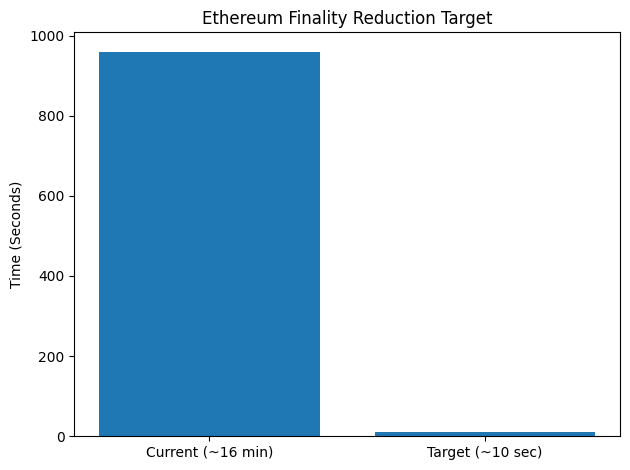
Currently, Ethereum finality — the mathematical guarantee that a transaction is irreversible — takes approximately 16 minutes.
The roadmap targets 6 to 16 seconds.
That is transformative.
Why Finality Matters for Investors
Finality impacts:
- Institutional settlement confidence
- Cross-chain bridge safety
- Stablecoin treasury management
- Tokenized real-world asset clearing
- Enterprise adoption
If Ethereum achieves sub-15-second finality, it rivals many centralized financial settlement systems.
Buterin describes a structural decoupling:
Slot time (block production)
Finality time (irreversibility guarantee)
This separation allows engineering teams to independently optimize responsiveness and cryptographic certainty.
5. The Quantum-Resistant Transition

One of the most profound elements in the roadmap is the migration toward quantum-resistant cryptography.
Specifically, a transition toward hash-based signature schemes.
Buterin suggests that slot mechanisms could become quantum-resistant earlier than finality systems.
What Happens If Quantum Computing Advances Suddenly?
According to the roadmap logic:
- Finality guarantees could weaken
- But block production could continue
- The chain would not immediately halt
This layered defense approach reduces existential risk.
For long-term holders of ETH, this matters deeply. Quantum risk may be distant — or sudden. A staged defense provides resilience.
6. Seven Hard Forks Over Four Years
Ethereum plans approximately seven forks over four years — roughly one every six months.
Two confirmed upgrades:
- Glamsterdam
- Hegotá
Both scheduled for later this year.
This cadence signals aggressive iteration while maintaining predictable governance.
Investors should monitor:
- Validator requirements
- Client implementation changes
- Hardware demands
- Staking yield shifts
- MEV dynamics
Infrastructure operators, especially institutional validators, must prepare for evolving cryptographic and propagation standards.
7. Market Implications: Competitive Positioning
Let us contextualize.
Ethereum competes with:
- High-throughput L1s claiming sub-second finality
- Modular rollup ecosystems
- High-speed PoS chains
- Permissioned financial networks
If Ethereum reaches:
2-second blocks
~10-second finality
Quantum resistance
Modular upgradeability
It strengthens its position as:
- The base settlement layer for tokenized real-world assets
- The core chain for L2 rollups
- A credible institutional-grade infrastructure
Latency improvements also benefit rollups indirectly, reducing L1 posting friction.
8. Economic Effects in Dollar Terms
All financial metrics below are presented in USD ($).
Faster blocks and finality impact:
- MEV extraction timing
- Arbitrage window compression
- Liquidation cascades
- DEX volume velocity
- Derivatives funding intervals
Example scenario:
If a DeFi platform currently processes $500,000,000 in daily volume, and latency reduction increases capital turnover efficiency by even 3%, that implies:
$15,000,000 additional daily capital velocity.
Over a year:
$5,475,000,000 in additional transactional throughput potential.
While theoretical, such shifts compound across the ecosystem.
9. Graphical Analysis (Insert Images Below)
[Block Time Reduction Timeline — 12s to 2s Step Chart]
[Finality Reduction Comparison — 16 minutes vs 10 seconds Bar Chart]
[Latency vs Capital Efficiency Curve]
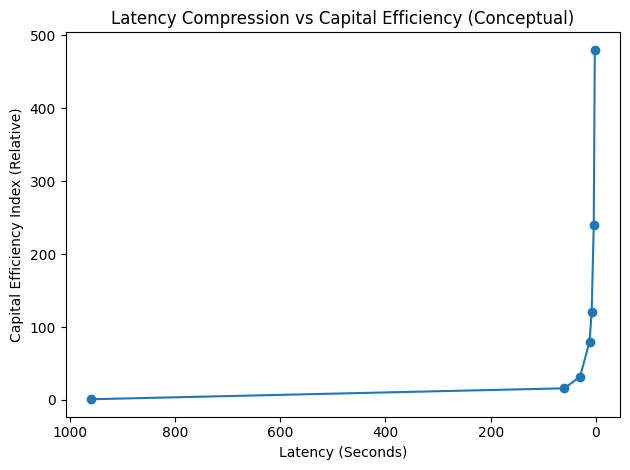
These visual models illustrate how latency compression correlates with economic throughput.
10. Strategic Interpretation
Ethereum’s roadmap is not simply about speed.
It represents:
- Architectural modularization
- Security-layer abstraction
- Quantum-aware defense planning
- Latency competitiveness
- Governance predictability
The decoupling of slot time and finality is particularly important. It allows Ethereum to behave more like a modular operating system than a monolithic protocol.
For builders, this reduces systemic coupling risk.
For investors, this reduces catastrophic upgrade risk.
11. Risks to Monitor
No roadmap is risk-free.
Potential challenges include:
- Increased validator hardware demands
- Network bandwidth pressure
- Synchronization edge cases
- Client diversity strain
- Implementation bugs during rapid fork cadence
Additionally, faster blocks can amplify MEV race conditions if not carefully engineered.
However, Ethereum’s staged approach suggests deliberate risk containment.
12. Conclusion: Ethereum’s Real-Time Era Begins
Ethereum is entering a new epoch.
By targeting 2-second slots and near-instant finality, while embedding quantum resistance, Ethereum positions itself not merely as a blockchain — but as a resilient, real-time settlement engine.
For readers seeking:
- New crypto assets
- Yield opportunities
- Infrastructure leverage plays
- Validator positioning strategies
- L2 ecosystem growth angles
This roadmap matters deeply.
It signals Ethereum’s intent to dominate not through raw TPS marketing, but through architectural refinement and long-term survivability.
The next four years will determine whether Ethereum becomes:
A high-speed global settlement backbone
Or a slow but secure legacy chain
Given the engineering clarity expressed by Buterin and the Ethereum Foundation, the direction appears decisive.
Ethereum is not standing still.
It is accelerating.
