

Main Points :
- Ethereum (ETH) surged above $2,300, rising nearly 10% in a single day.
- Institutional demand accelerated due to spot Ethereum ETFs and staking-enabled investment vehicles.
- BlackRock’s staking-compatible ETH ETF (ETHB) surpassed $100 million in assets within days of launch.
- Public companies are accumulating ETH aggressively; BitMine now holds approximately 4.59 million ETH.
- Large-scale staking strategies are transforming ETH into a yield-generating institutional asset.
Introduction: Ethereum’s Sudden Rally Reflects Deeper Market Transformation
The cryptocurrency market witnessed a notable development as Ethereum (ETH) surged nearly 10%, pushing its price back above $2,300. While short-term volatility is common in digital assets, the drivers behind this rally suggest a more profound transformation occurring within the Ethereum ecosystem.
This surge was not merely the result of speculative retail trading. Instead, it appears to be fueled by institutional capital inflows, the rapid growth of spot exchange-traded funds (ETFs), and aggressive accumulation by publicly listed companies. These developments highlight an emerging trend: Ethereum is evolving from a speculative technology asset into a yield-bearing financial instrument increasingly integrated into traditional finance.
The recent market movements also coincide with Bitcoin’s renewed momentum, which climbed to approximately $74,355, reinforcing broader optimism across the digital asset sector.
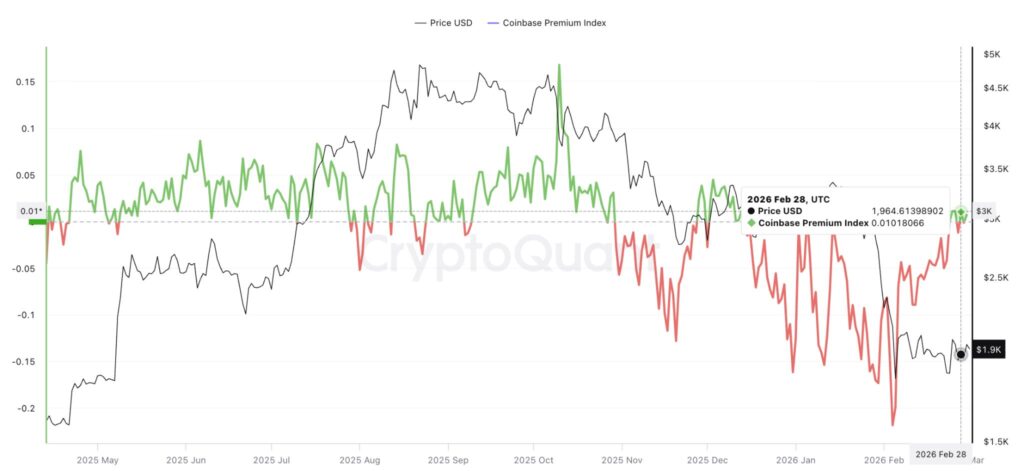
Ethereum Returns to the $2,300 Range
Ethereum’s return to the $2,300 price range marks a psychological milestone for the market. After months of consolidation and volatility, the cryptocurrency has regained momentum thanks to a combination of macroeconomic factors and internal ecosystem growth.
One major driver has been the spillover effect from Bitcoin’s rally. As Bitcoin strengthened amid geopolitical tensions in the Middle East and renewed interest in digital assets as a hedge against macroeconomic uncertainty, investor capital began rotating into major altcoins.
Ethereum, as the second-largest cryptocurrency by market capitalization, often becomes the primary destination for this capital rotation. Institutional investors seeking diversification within the digital asset market frequently shift allocations from Bitcoin into Ethereum and other large-cap altcoins.
This phenomenon appears to be unfolding once again.
As Bitcoin advanced, speculative and institutional capital flowed into Ethereum, amplifying demand in the spot market and driving prices upward.
Spot Ethereum ETFs Ignite Institutional Demand
Perhaps the most significant catalyst behind Ethereum’s surge is the rapid expansion of spot cryptocurrency ETFs in the United States.
A key development came on March 12, when asset management giant BlackRock launched a staking-enabled Ethereum ETF known as ETHB. Unlike traditional ETFs that merely track price exposure, this product incorporates Ethereum’s staking mechanism, allowing investors to capture network rewards.
Within just a few days of trading, the ETF accumulated more than $100 million in assets under management (AUM)—a remarkable milestone demonstrating strong institutional appetite for yield-generating crypto products.
Staking rewards generated within the ETF structure are reportedly redistributed to investors, with approximately 82% of staking rewards returned to shareholders.
This structure effectively transforms Ethereum exposure into something closer to a dividend-like asset, a concept far more familiar to institutional portfolio managers.
The broader ETF market also reflects this growing demand. Across all publicly listed cryptocurrency ETFs in the United States, the market recorded approximately $160 million in net inflows during the week starting March 9.
Much of this capital appears to be shifting from Bitcoin into major altcoins, with Ethereum receiving a substantial portion.
Corporate Accumulation: Public Companies Are Buying Ethereum
Another striking development is the emergence of corporate Ethereum treasuries.
Publicly traded companies are beginning to treat Ethereum similarly to how some corporations accumulated Bitcoin in previous years. Instead of holding ETH purely for speculative purposes, these companies are incorporating Ethereum into long-term treasury and yield strategies.
One prominent example is BitMine, a U.S.-listed company that has dramatically expanded its Ethereum holdings.
On March 15, the firm announced that it had purchased 60,976 ETH within a single week, bringing its total holdings to approximately 4.595 million ETH.
At current prices, this represents a portfolio valued at roughly $10.5 billion.
This scale of accumulation represents one of the largest known corporate Ethereum holdings globally.
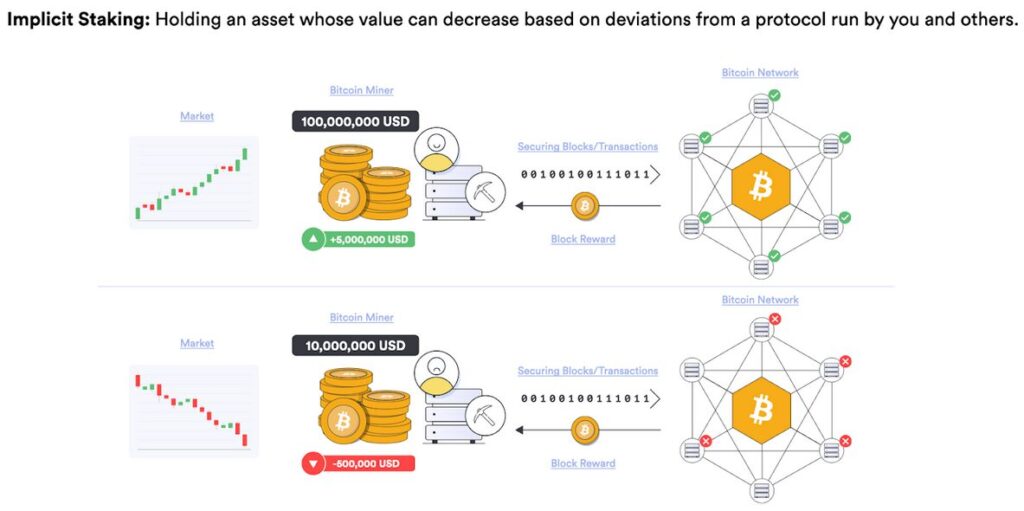
Staking as a New Corporate Revenue Engine
Unlike Bitcoin, Ethereum offers a built-in mechanism for generating yield: staking.
Through staking, ETH holders can lock their assets into the network’s validation process and earn rewards for helping secure the blockchain.
BitMine has already staked approximately 3.045 million ETH, representing a substantial portion of its holdings.
By participating in staking, the company expects to generate consistent revenue streams independent of market price fluctuations.
The firm also plans to launch its own operational infrastructure platform called MAVAN, which is expected to go live in Q1 2026.
According to company estimates, this staking and infrastructure platform could generate approximately $180 million in annual operating income.
This development signals an important shift in how institutional investors evaluate Ethereum.
Instead of viewing it purely as a speculative asset, investors increasingly see ETH as a productive digital commodity capable of generating yield.
Ethereum’s Emerging Role in Institutional Finance
These developments highlight a broader structural transformation in the cryptocurrency market.
Several trends are converging simultaneously:
- Institutional financial products (ETFs)
- Corporate treasury allocations
- Yield-generating blockchain mechanisms
- Growing regulatory clarity
Together, these factors are helping Ethereum transition into a hybrid asset class that sits somewhere between technology infrastructure and financial instrument.
Traditional finance institutions are particularly attracted to Ethereum because it combines price appreciation potential with staking yield.
For portfolio managers, this dual-return profile resembles equity investments that also pay dividends.
As a result, Ethereum may become one of the first blockchain assets to integrate deeply with global capital markets.
The Rotation from Bitcoin to Altcoins
Another notable dynamic is the capital rotation occurring within the cryptocurrency market.
Bitcoin often acts as the entry point for institutional investors entering the digital asset ecosystem. However, once capital becomes comfortable with the asset class, investors begin seeking higher returns elsewhere.
This process frequently leads to capital moving into Ethereum and other large altcoins.
Such rotations historically trigger “altcoin cycles,” during which Ethereum and other blockchain platforms outperform Bitcoin for extended periods.
While it is still early to declare the start of a new altcoin cycle, the recent surge in Ethereum demand suggests that market participants are once again exploring opportunities beyond Bitcoin.
Practical Implications for Crypto Investors
For investors searching for new opportunities within the cryptocurrency sector, Ethereum’s recent surge highlights several important themes:
1. Institutionalization of Ethereum
Large asset managers and corporations are beginning to treat ETH as a strategic financial asset.
2. Yield Generation Through Staking
Staking transforms ETH from a passive holding into a productive asset.
3. ETF Accessibility
Spot ETFs allow traditional investors to gain Ethereum exposure without directly managing crypto wallets.
4. Infrastructure Growth
New platforms such as MAVAN suggest that institutional staking infrastructure will continue expanding.
Together, these developments could accelerate Ethereum’s integration into global financial markets.
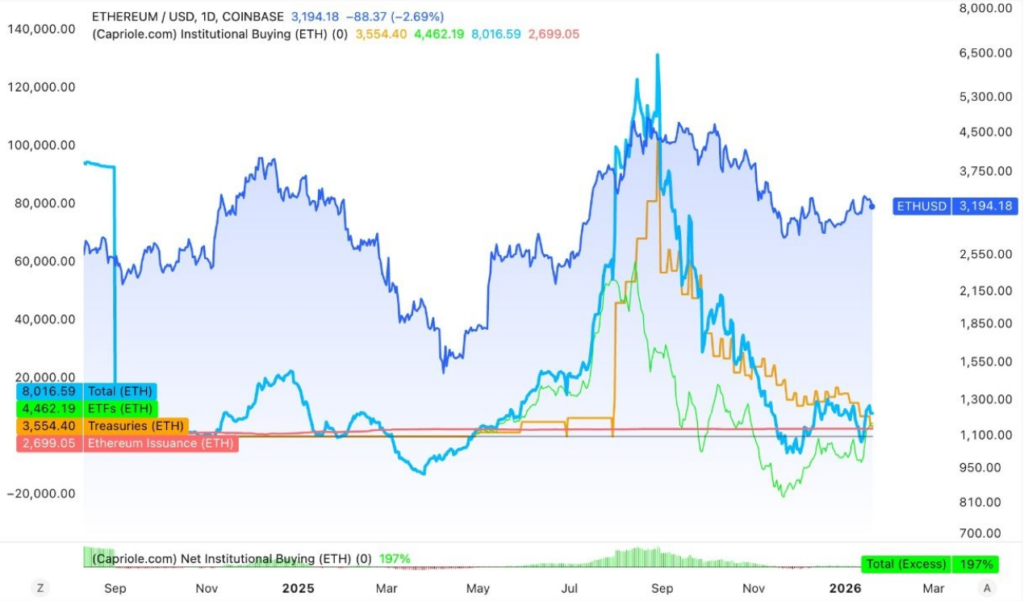
Conclusion: Ethereum’s Next Phase Is Institutional
Ethereum’s recent 10% surge may appear at first glance to be another routine crypto rally. However, a closer look reveals something far more significant.
The combination of spot ETFs, corporate accumulation, staking yield, and institutional capital inflows suggests that Ethereum is entering a new phase of market evolution.
Rather than being driven solely by retail speculation, the Ethereum ecosystem is increasingly shaped by large financial institutions, publicly traded companies, and structured investment products.
If these trends continue, Ethereum may emerge not only as the backbone of decentralized applications but also as one of the core financial assets of the digital economy.
For investors, developers, and institutions alike, Ethereum’s transformation represents one of the most important developments in the next chapter of blockchain finance.
