
Main Points :
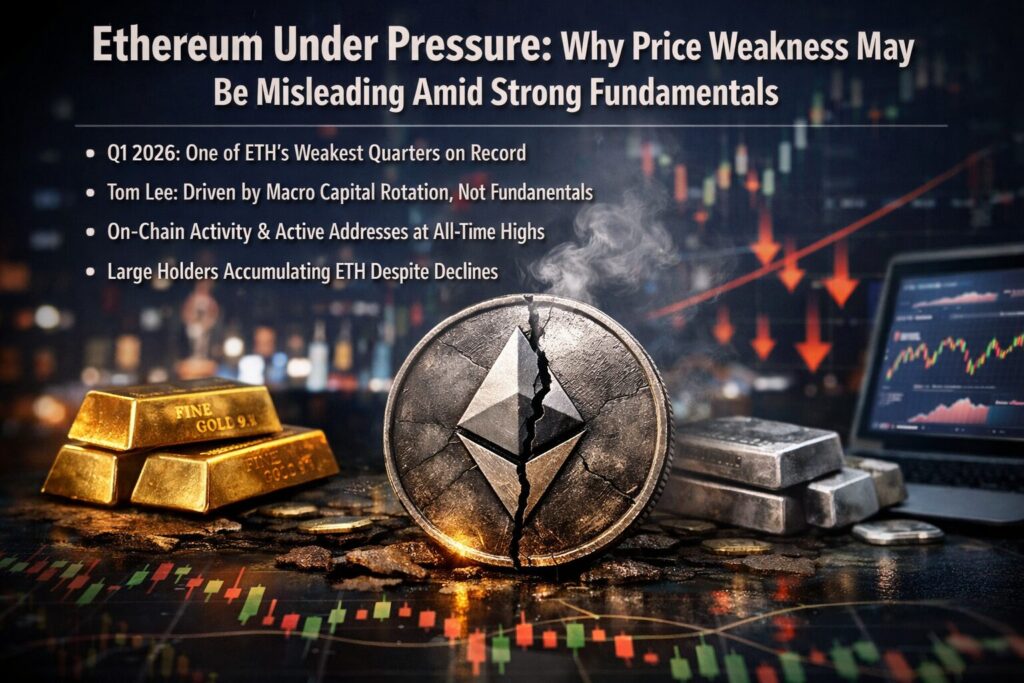
- Ethereum (ETH) has suffered a sharp price decline, with Q1 2026 shaping up as one of its weakest quarters on record.
- According to Fundstrat’s Head of Research Tom Lee, the decline is not driven by weak fundamentals, but by macro-level capital rotation and lack of leverage.
- On-chain activity, transaction counts, and active addresses continue to reach historical highs.
- Capital flight into gold and silver is temporarily suppressing risk assets, including crypto.
- Large holders are accumulating ETH aggressively, signaling long-term conviction despite short-term losses.
1. Ethereum’s Sharp Decline in Context
Ethereum has entered 2026 under significant price pressure. Data from CoinGlass suggests that the first quarter of 2026 is on track to become the third-worst quarter in Ethereum’s history, with ETH down approximately 21% year-to-date at its lowest point.
The most dramatic move occurred over a single week, when ETH fell more than 25%, dropping from around $3,000 to nearly $2,200 before staging a modest rebound. For many market participants, this sudden decline raised concerns that Ethereum’s long-term thesis might be weakening.
However, according to Tom Lee, this interpretation misses the bigger picture.
2. Fundamentals vs. Price: A Growing Disconnect
Lee argues that Ethereum’s price weakness is not a reflection of deteriorating fundamentals. In fact, he describes Ethereum’s current valuation as “attractive,” particularly when viewed against the backdrop of expanding network usage.
Historically, during major crypto downturns such as 2018 and 2022, Ethereum experienced simultaneous declines in:
- Transaction volume
- Active wallet addresses
- Developer engagement
In contrast, the past 12 months show the opposite pattern.
3. Explosive On-Chain Activity Despite Falling Prices
Glassnode data cited by Lee highlights a striking divergence between price and usage.
- Daily transactions peaked at approximately 2.8 million on January 15, marking an all-time high.
- Daily active addresses reached roughly 1 million per day in early 2026, also a historical peak.
This indicates that Ethereum is being used more than ever—for DeFi, stablecoin transfers, tokenized assets, NFTs, and Layer 2 settlement—even as its market price declines.
“When usage is rising and price is falling, the explanation must lie outside fundamentals,” Lee notes.
Ethereum Daily Transactions vs. ETH Price (2024–2026)
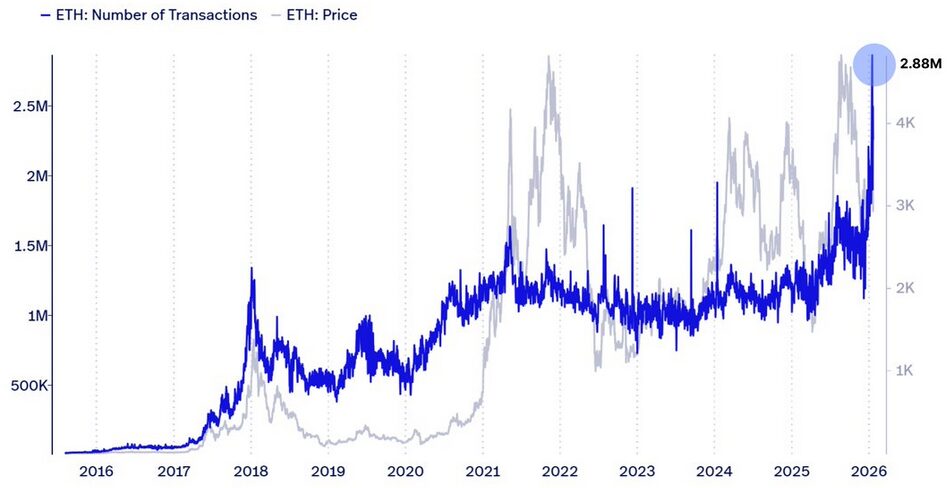
A dual-axis line chart showing rising transaction counts alongside declining ETH price.
4. The Missing Leverage Factor
One of the primary reasons Lee identifies for ETH’s weakness is the absence of leverage in the crypto market.
Following the broader crypto market crash on October 10, leveraged positions were aggressively flushed out. Unlike previous cycles—where leverage rapidly returned and amplified rebounds—this time, traders have remained cautious.
Key observations:
- Open interest in ETH derivatives remains subdued.
- Retail speculative activity has not fully recovered.
- Institutional players are prioritizing balance-sheet safety over aggressive positioning.
Without leverage, even strong spot demand struggles to translate into rapid price appreciation.
5. Capital Rotation Into Precious Metals
The second major factor suppressing ETH prices is capital migration into precious metals.
Gold and silver prices have surged amid:
- Persistent geopolitical tensions
- Inflation uncertainty
- Concerns about fiat currency debasement
Lee describes this phenomenon as a “capital vortex,” where periods of volatility push investors toward assets perceived as safe havens.
As a result:
- Risk capital is being drained from crypto.
- Ethereum competes directly with gold as a “future-of-finance” asset, but loses in the short term during risk-off phases.
Gold Price vs. Ethereum Price (Indexed, 2025–2026)
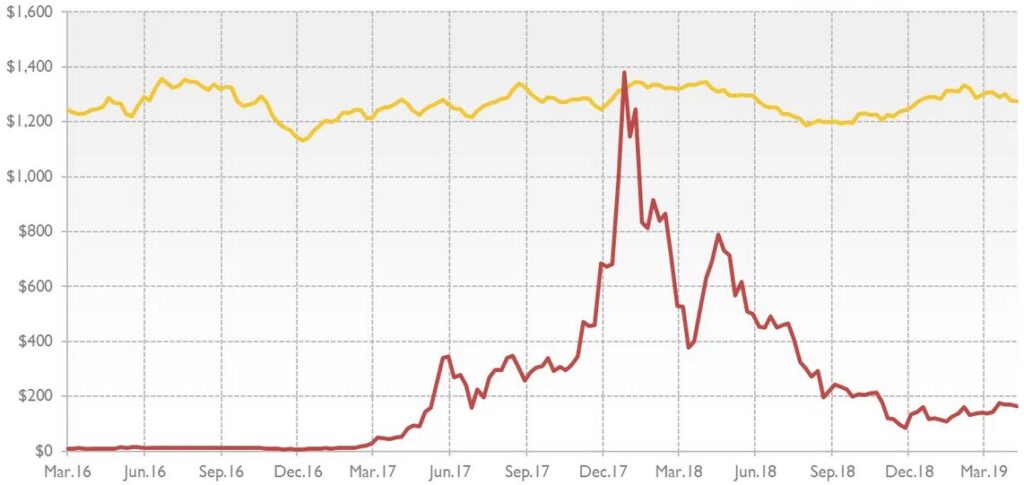
Indexed comparison showing inverse performance trends.
6. Strategic Accumulation by Long-Term Holders
Despite market turbulence, large ETH holders are acting decisively.
BitMine, an Ethereum-holding company associated with Lee, has accumulated 41,788 ETH over the past week alone, signaling confidence in a price recovery.
Currently:
- BitMine holds approximately 4.28 million ETH, representing 3.55% of total supply.
- Around 2.87 million ETH are staked, contributing to network security and yield generation.
- The firm is targeting 5% of total ETH supply over time.
Lee explains:
“ETH’s price does not reflect its real-world utility or its role as the backbone of future financial infrastructure.”
7. The Cost of Conviction: Unrealized Losses
This conviction has come at a cost.
Due to ETH’s rapid decline, BitMine’s digital asset treasury is currently facing nearly $7 billion in unrealized losses. Most of these losses were incurred during the sharp one-week drawdown.
Still, the company has not reduced exposure, reinforcing the view that this is a strategic, long-term accumulation phase rather than speculative trading.
ETH Accumulation vs. Market Price
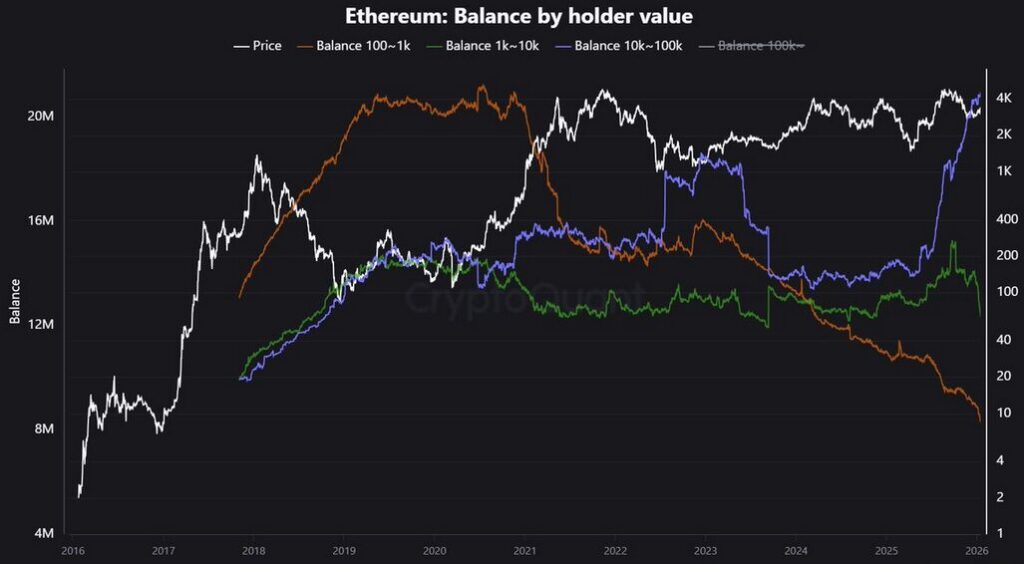
Bar chart of ETH purchases overlaid with ETH price movement.
8. Ethereum’s Expanding Role in Financial Infrastructure
Beyond price action, Ethereum continues to strengthen its position as:
- The settlement layer for stablecoins
- The backbone of DeFi liquidity
- The execution layer for tokenized real-world assets (RWAs)
Major institutions are increasingly experimenting with Ethereum-based infrastructure, reinforcing its long-term relevance regardless of short-term market cycles.
The combination of:
- High on-chain activity
- Reduced liquid supply due to staking
- Growing Layer 2 adoption
creates conditions that historically precede strong recoveries once macro headwinds ease.
9. Why This Cycle Looks Different
Unlike prior downturns, this correction is characterized by:
- Strong usage metrics
- Institutional accumulation
- Structural supply reduction via staking
This suggests Ethereum is maturing into a productive financial network, not merely a speculative asset.
ETH Supply Breakdown (Liquid vs. Staked)
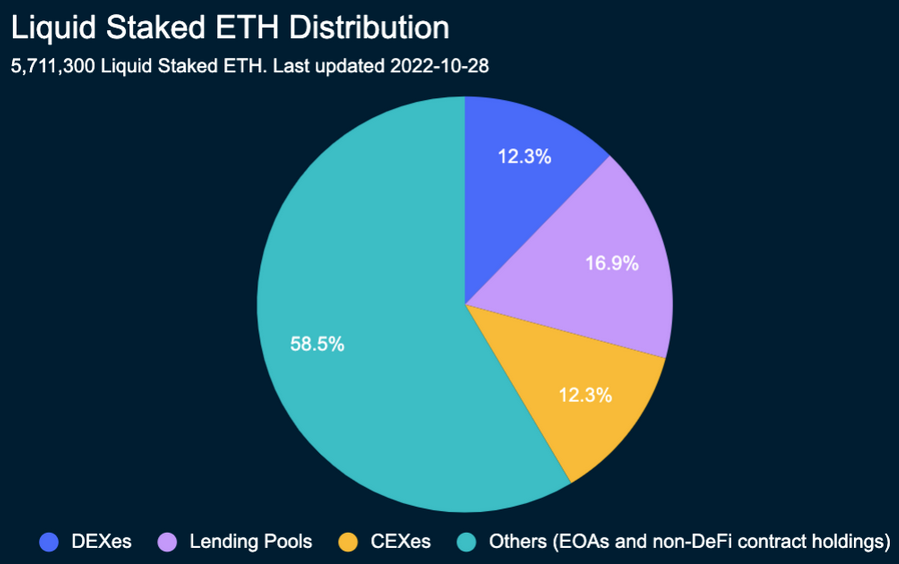
Pie chart showing staked vs. liquid ETH supply.
10. Conclusion: A Mispriced Network?
Ethereum’s recent price decline has understandably shaken market confidence. However, when viewed through the lens of on-chain data, capital flows, and institutional behavior, the weakness appears macro-driven rather than fundamental.
If leverage returns and capital rotates back into risk assets, Ethereum’s current valuation may ultimately be remembered as a rare accumulation opportunity.
For investors and builders focused on practical blockchain use cases, future revenue models, and financial infrastructure, Ethereum’s fundamentals remain not only intact—but stronger than ever.
