

Main Points :
- The Ethereum Foundation sold 5,000 ETH (~$10.2 million) directly to BitMine Immersion Technologies through an OTC (Over-the-Counter) transaction to avoid market sell pressure.
- The funds will support protocol research, ecosystem development, and community grants.
- Institutional companies are increasingly adopting ETH treasury strategies, similar to Bitcoin treasury strategies pioneered by companies like MicroStrategy.
- The Ethereum Foundation continues to hold approximately 170,000 ETH (~$356 million) and has begun staking operations, potentially allocating 70,000 ETH to validators.
- OTC sales and staking indicate a broader shift in Ethereum’s treasury management and institutional adoption trends.
1. Ethereum Foundation Conducts $10.2M OTC Sale of ETH
In March 2026, the Ethereum Foundation executed a significant transaction involving the direct sale of 5,000 ETH to BitMine Immersion Technologies (BMNR), a publicly traded company chaired by Tom Lee, the founder of Fundstrat.
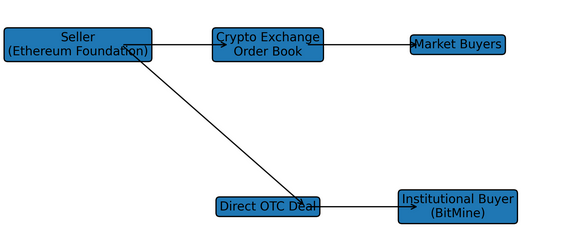
The transaction was conducted via OTC (Over-the-Counter) trading rather than through a cryptocurrency exchange. The average price per ETH was $2,042.96, placing the total transaction value at approximately $10.2 million.
Unlike exchange-based sales, OTC deals allow large trades to occur privately between counterparties. This mechanism prevents large sell orders from appearing in public order books, which can otherwise trigger panic selling or significant price volatility.
According to the Ethereum Foundation’s official announcement, the transaction was executed on-chain using a Safe multisignature wallet, ensuring transparency while maintaining controlled execution.
The proceeds from the sale will be used to fund the Foundation’s core operations, including:
- Protocol research and development
- Ecosystem infrastructure improvements
- Community grants and developer funding
These activities form the backbone of Ethereum’s ongoing technological evolution.
Structure of an OTC Transaction vs Exchange Sale
2. Why the Ethereum Foundation Avoids Exchange Sell Pressure
Large-scale token sales by foundations are often controversial. In September of the previous year, the Ethereum Foundation faced criticism from the community after announcing a sale of 10,000 ETH via exchanges, which some market participants believed contributed to short-term price pressure.
As a result, the Foundation appears to have adjusted its treasury strategy by favoring OTC deals with institutional counterparties.
The benefits of OTC transactions include:
- Reduced market volatility
- Improved price stability
- Direct partnerships with institutional players
- More predictable liquidity management
This approach mirrors the strategies used by large Bitcoin miners and institutional funds, which frequently rely on OTC desks to manage multi-million-dollar transactions.
For blockchain foundations responsible for maintaining ecosystems worth hundreds of billions of dollars, treasury management is becoming increasingly sophisticated and similar to traditional corporate finance practices.
3. BitMine and the Rise of ETH Treasury Strategies
The buyer in this transaction, BitMine Immersion Technologies, represents a growing class of institutional players adopting crypto treasury strategies.
BitMine is chaired by Tom Lee, a well-known market strategist and co-founder of Fundstrat Global Advisors.
As of March 8, 2026, the company reportedly holds approximately 4.53 million ETH, making it one of the largest institutional holders of Ethereum.
To understand the scale of this position:
- 4.53 million ETH at $2,000 per ETH equals roughly $9.06 billion.
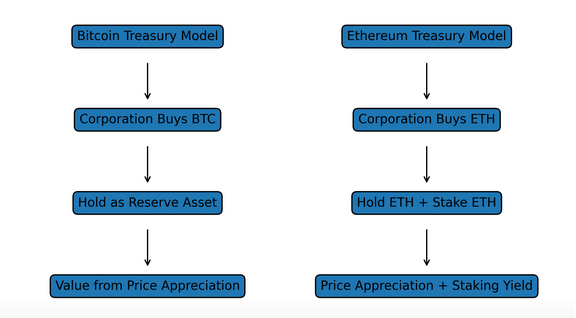
This accumulation strategy resembles the well-known Bitcoin treasury model, where companies hold BTC as a long-term balance sheet asset.
However, Ethereum introduces an additional financial dimension: staking yield.
Unlike Bitcoin, ETH holders can participate in network validation and earn returns through staking.
Institutional Crypto Treasury Models
4. Ethereum Foundation Treasury: 170,000 ETH and Growing Staking Operations
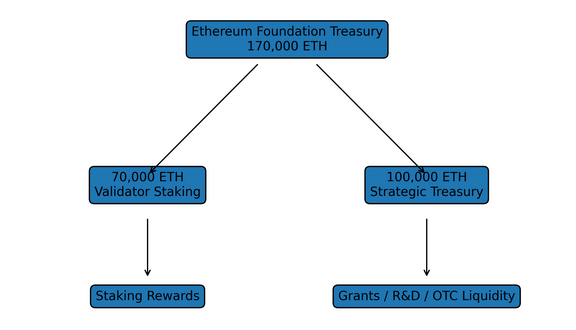
Even after this sale, the Ethereum Foundation still holds approximately 170,000 ETH, worth roughly $356 million at the transaction price.
The Foundation has also recently begun staking its ETH reserves, marking an important shift in treasury management.
The current plan includes allocating up to 70,000 ETH to validators, which would allow the Foundation to generate staking rewards while helping secure the Ethereum network.
Ethereum staking yields typically range between 3% and 5% annually, depending on network conditions.
If we assume a conservative 4% staking yield, the Foundation could potentially earn:
- 70,000 ETH × 4% = 2,800 ETH per year
At $2,000 per ETH, this represents roughly:
- $5.6 million annually
This income could help finance ecosystem development without requiring large token sales.
Ethereum Foundation Treasury Allocation Strategy
5. Institutional Ethereum Adoption Is Accelerating
The OTC transaction also reflects a broader trend: institutional Ethereum adoption is accelerating.
Several developments over the past two years highlight this shift:
- Ethereum Spot ETF Approvals (2024–2025)
Asset managers launched ETH-based ETFs, making Ethereum accessible to traditional investors. - Staking Integration in Institutional Custody Platforms
Firms like Coinbase Institutional and Anchorage began offering staking services for funds. - Corporate Treasury Diversification
Companies are exploring ETH not only as a store of value but also as a yield-generating asset. - Tokenized Finance Expansion
Ethereum continues to dominate decentralized finance (DeFi), real-world asset tokenization, and stablecoin infrastructure.
These developments make Ethereum more than just a cryptocurrency — it is increasingly seen as a financial infrastructure layer.
For investors searching for the next revenue opportunity, Ethereum’s role extends across multiple economic sectors:
- decentralized finance (DeFi)
- tokenized securities
- global payment rails
- decentralized identity
- stablecoin settlement
6. OTC Sales Signal Maturing Crypto Treasury Management
The Ethereum Foundation’s choice to conduct OTC sales rather than exchange sales reflects a broader evolution in the crypto ecosystem.
In the early days of blockchain, treasury management was relatively simple: projects held tokens and occasionally sold them on exchanges.
Today, the scale of the ecosystem requires far more sophisticated financial strategies.
Modern blockchain treasuries now incorporate:
- institutional partnerships
- staking yield optimization
- OTC liquidity strategies
- treasury diversification
These developments resemble the asset management strategies used by sovereign wealth funds and large technology corporations.
Conclusion: Ethereum’s Institutional Era Is Taking Shape
The Ethereum Foundation’s $10.2 million OTC sale to BitMine Immersion Technologies represents more than a simple token transaction. It illustrates the maturation of Ethereum’s financial ecosystem and the increasing participation of institutional players.
By choosing OTC sales, the Foundation avoids unnecessary market volatility while securing funding for development and community initiatives.
At the same time, institutions such as BitMine are accumulating large ETH reserves, betting on Ethereum’s long-term role as the backbone of decentralized finance and digital infrastructure.
With staking-based income models, expanding institutional adoption, and increasingly sophisticated treasury strategies, Ethereum is entering a new phase in its evolution.
For investors, developers, and entrepreneurs seeking new opportunities in blockchain technology, the trend is clear: Ethereum is no longer just a cryptocurrency—it is rapidly becoming a global programmable financial platform.
