
Key Takeaways :
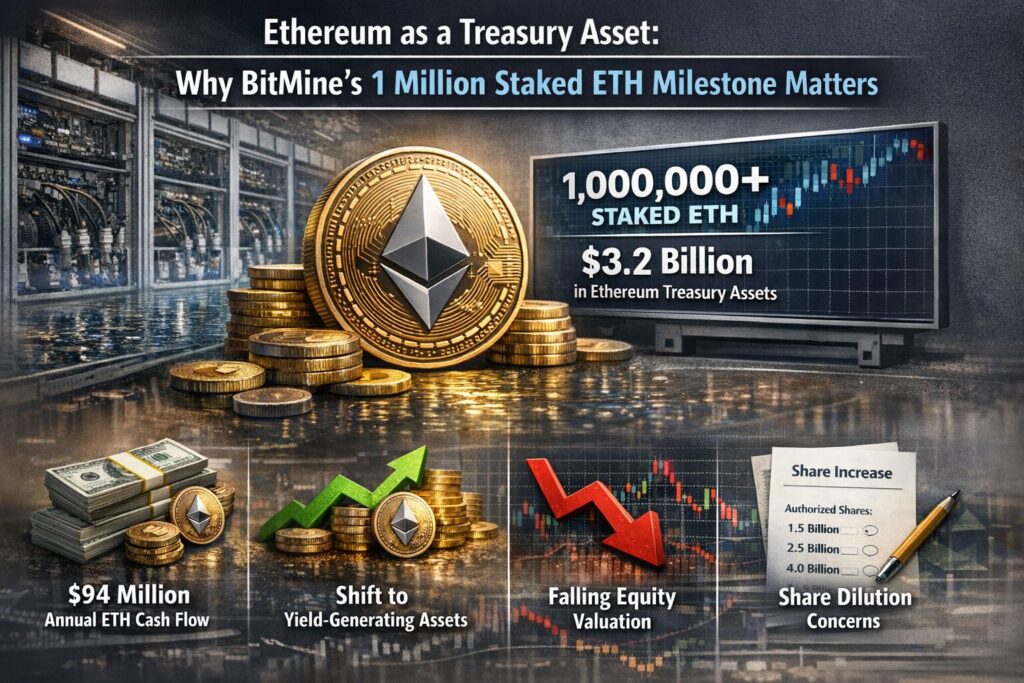
- BitMine Immersion Technologies has surpassed 1 million ETH staked, representing over $3.2 billion in Ethereum-based treasury assets
- At current staking yields, BitMine generates an estimated $94 million annually in ETH-denominated cash flow
- The move highlights a growing shift from non-yielding crypto treasury strategies toward productive, yield-generating digital assets
- Despite strong on-chain positioning, BitMine’s equity valuation has fallen sharply, underscoring the gap between crypto-native value creation and public market perception
- Proposed massive increases in authorized shares signal long-term capital structure flexibility—but also raise dilution concerns
1. BitMine Crosses a Historic Threshold in Ethereum Staking
BitMine Immersion Technologies (BMNR), a publicly traded crypto treasury company, announced that it had staked an additional 86,400 ETH, bringing its total staked Ethereum holdings to 1,080,512 ETH. At prevailing market prices, this represents approximately $3.2–3.3 billion in Ethereum assets committed to securing the Ethereum network.
According to on-chain data from Arkham Intelligence, the latest ETH was staked through four separate transactions. Blockchain analytics platform Lookonchain confirmed that this move pushed BitMine beyond the symbolic—and economically significant—threshold of one million staked ETH.
This milestone places BitMine among the largest single corporate participants in Ethereum staking globally.
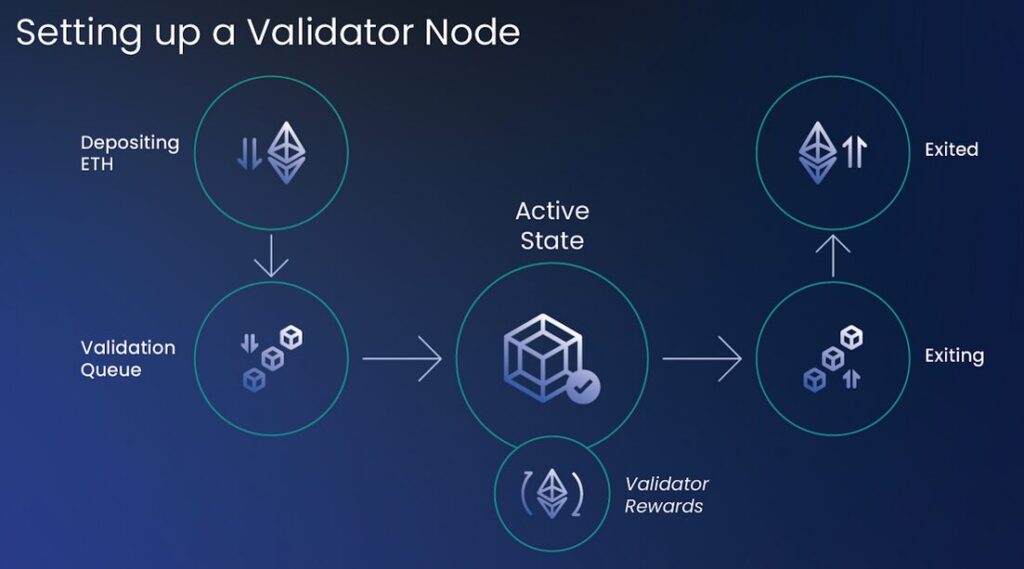
[Diagram explaining Ethereum staking mechanics and reward flow]
2. Understanding Ethereum Staking as a Treasury Strategy
Ethereum staking is the process by which ETH holders lock tokens to help secure the Proof-of-Stake network, either by operating validators directly or by delegating to staking providers. In return, stakers earn rewards denominated in ETH, derived from protocol issuance and transaction fees.
For treasury-focused companies, staking introduces a fundamentally different financial profile compared to holding non-yielding assets:
- Native yield generation
- Protocol-aligned income
- Compounding exposure to ETH price appreciation
Unlike traditional corporate treasuries that rely on fiat instruments, or Bitcoin-centric treasuries that depend entirely on price appreciation, Ethereum staking offers a hybrid model combining asset exposure and recurring yield.
At current network conditions, Ethereum staking yields hover around 2.8–3.0% annually.
3. Cash Flow in Crypto: Why Staking Changes the Equation
Market analyst Nick Paklin highlighted the financial implications of BitMine’s strategy:
“BitMine is currently staking roughly $3.3 billion worth of ETH. At a 2.81% yield, this translates into approximately $94.4 million per year in ETH-denominated rewards.”
This distinction becomes critical in adverse market environments. Bitcoin, while often regarded as digital gold, does not produce cash flow. In contrast, staking-enabled assets can provide liquidity to service debt, fund operations, or reinvest—even during prolonged market downturns.
The question raised by Paklin resonates with many institutional observers:
In the next crypto winter, which entities survive—those holding passive assets, or those holding yield-generating digital infrastructure assets?
4. The Broader Trend: Crypto Treasury Companies Evolve
BitMine’s milestone is not an isolated event. Over the past two years, a broader shift has emerged among crypto-native firms and treasury-heavy companies:
- Transition from pure price-speculation models
- Increased focus on protocol-level participation
- Emphasis on on-chain yield, validator economics, and network security
This mirrors traditional finance trends, where idle balance sheets are optimized for yield via money markets, bonds, or structured products. Ethereum staking represents the on-chain equivalent of productive capital deployment.
5. Market Reality Check: Equity Performance vs On-Chain Strength
Despite its growing Ethereum position, BitMine’s stock performance tells a different story.
After reaching an all-time high of $161 per share in July 2025, BitMine’s share price has declined by more than 80%, trading around $30.06 at the time of writing.
[BitMine share price decline from ATH to present]
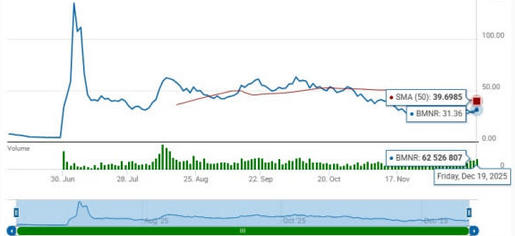
This disconnect highlights a structural issue: public equity markets often struggle to price crypto-native balance sheets accurately, especially when valuation depends on:
- Token-denominated income
- Long-duration digital assets
- Protocol-level participation rather than traditional operating revenue
6. Capital Structure Shock: The 50 Billion Share Proposal
In early January 2026, BitMine Chairman Tom Lee urged shareholders to approve a proposal increasing the company’s authorized shares from 50 million to 50 billion—a 1,000× increase.
Lee emphasized that this change does not imply immediate issuance, but rather provides flexibility for:
- Future stock splits
- Maintaining a target share price near $25
- Long-term corporate restructuring
[Illustration of stock splits required to maintain $25 share price]
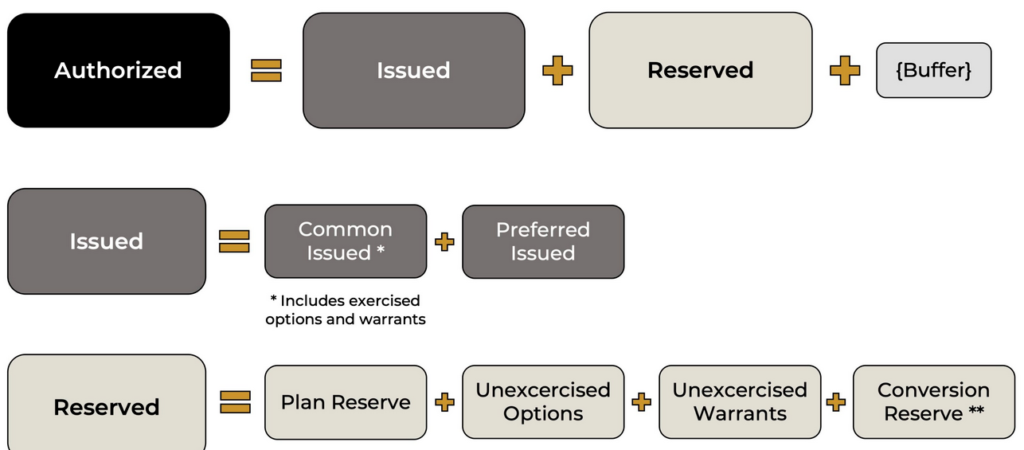
While such flexibility can be strategically valuable, it also introduces significant dilution risk, especially in a market already skeptical of crypto-related equities.
7. Strategic Interpretation: Ethereum as Digital Capital Infrastructure
From a strategic perspective, BitMine’s actions suggest a clear thesis:
Ethereum is not merely a speculative asset—it is productive digital capital.
By staking ETH at scale, BitMine effectively positions itself as:
- A large-scale validator participant
- A beneficiary of Ethereum network growth
- A crypto-native income-generating entity
This model aligns more closely with infrastructure operators than with traditional crypto holding companies.
8. Implications for Investors and Builders
For investors seeking new crypto assets or revenue models, BitMine’s case offers several lessons:
- Yield matters: Cash flow changes survival dynamics.
- On-chain participation creates defensibility.
- Public market valuations lag crypto-native innovation.
- Capital structure decisions can overshadow operational success.
For builders, the message is even clearer: designing systems that generate protocol-aligned yield may be more resilient than relying solely on token price appreciation.
Conclusion: Beyond Holdings—Toward Productive Crypto Treasuries
BitMine’s achievement of over 1 million staked ETH marks a symbolic and practical turning point in how crypto treasuries are managed.
While equity markets remain volatile and skeptical, the underlying strategy reflects a deeper evolution in digital asset management—from passive holding to active, yield-generating participation in decentralized networks.
As Ethereum continues to mature as a settlement layer and financial infrastructure, companies that treat ETH as productive capital rather than idle inventory may define the next generation of crypto-native enterprises.
