
Main Points :
- Ethereum is undergoing a structural supply shock driven by institutional accumulation and long-term staking.
- Liquidity on exchanges is shrinking, amplifying volatility and asymmetric upside risk.
- The market has transitioned from speculative price appreciation to yield-centric capital strategy.
- Algorithmic and balance-sheet-driven players now dominate price discovery.
- Smart contracts and real economic usage are accelerating permanent ETH demand destruction.
- Ethereum is evolving from a “crypto asset” into a foundational economic resource.
1. The Disappearance of Spot Supply and the Institutional Liquidity Lockdown
Bitmine’s additional acquisition of approximately 33,000 ETH sent a shockwave through the Ethereum market, triggering one of the most aggressive spot supply contractions in its history. This was not merely a large purchase; it was a declaration of intent.
What this action demonstrates is a fundamental redefinition of Ethereum in institutional portfolios. Ethereum is no longer viewed solely as a programmable blockchain or a speculative technology bet. It is now increasingly treated as a yield-bearing, capital-efficient asset capable of generating sustained returns through staking and infrastructure participation.
We are witnessing a moment where Ethereum has begun to function as a capital black hole—absorbing global liquidity and rarely releasing it back into secondary markets.
Once acquired, these ETH holdings are not actively traded. They are staked, locked, and frozen for extended periods in pursuit of validator rewards and protocol-level yield. As a result, exchange-visible liquidity continues to thin, creating a market environment where even modest incremental demand can produce sharp, vertical price movements.
[Exchange ETH Balances vs. Staked ETH Growth]
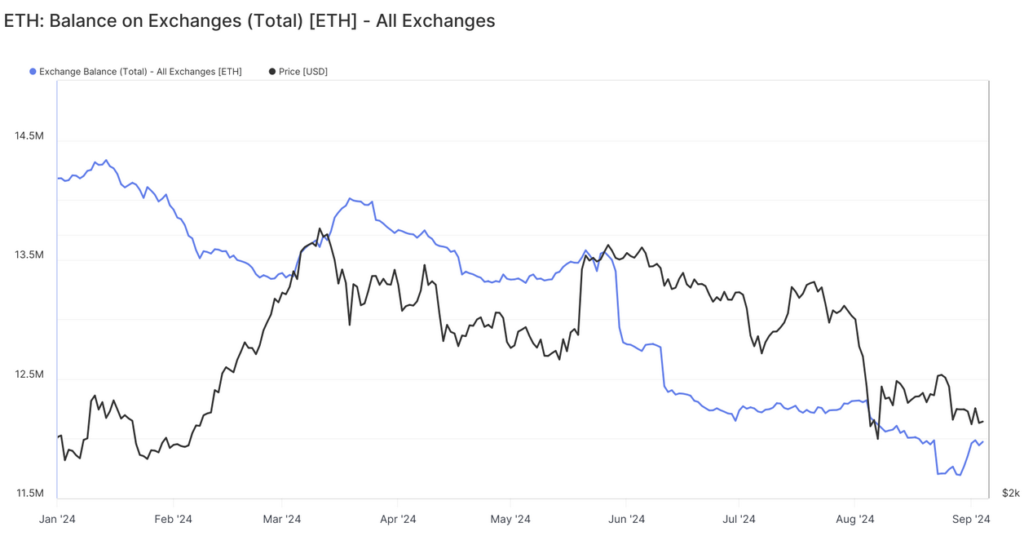
Historically, crypto bull markets were driven by aggressive demand chasing relatively liquid supply. In 2026, the equation has changed. Supply itself has become the bottleneck.
Large holders systematically absorb floating supply, transforming what was once a public liquidity pool into a privately controlled reserve. This dynamic introduces a mathematically inevitable outcome: scarcity-driven price formation.
In this environment, hesitation becomes costly. Delayed decision-making risks permanent exclusion from meaningful ownership, as ETH absorbed into institutional balance sheets may not return to open markets for years—if ever.
2. The Algorithmic Battlefield and the End of Retail Market Illusions
The era of retail-driven price discovery is effectively over.
Today’s Ethereum market is dominated by algorithmic execution, professional treasury strategies, and institutions capable of deploying hundreds of millions of dollars in coordinated fashion. In a supply-constrained environment, price is no longer dictated by narratives or fundamentals alone, but by the sheer physical possession of scarce assets.
This marks the quiet end of market “democracy.”
While individual investors react to headlines and social media sentiment, large capital actors operate with mechanical precision—accumulating ETH whenever liquidity appears, regardless of short-term price fluctuations.
[Institutional ETH Holdings vs. Retail Trading Volume]
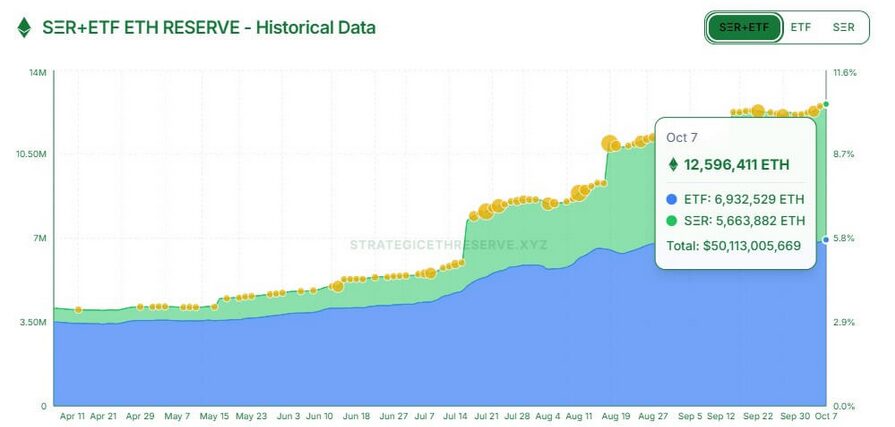
These entities are not chasing marginal gains. Their objective is structural dominance over the next generation of decentralized financial infrastructure. Control of ETH equates to control over validation, execution priority, and the economic toll gates of Web3.
For individual participants, survival strategies narrow dramatically. Competing head-on is impossible. The only viable path is alignment—understanding institutional flows and positioning alongside them rather than against them.
Information asymmetry has widened into a chasm. Execution speed, balance-sheet capacity, and protocol-level understanding now define winners and losers with brutal clarity.
3. The Smart Contract Bet and Permanent Supply Destruction
Once ETH enters institutional custody, the probability of it re-entering circulation is minimal. This reality forces the market to confront a future defined by persistent, potentially permanent supply shortages.
Ethereum’s growing role as the settlement layer for global digital commerce intensifies this effect. As more enterprises deploy applications on Ethereum, ETH is consumed not only as an asset, but as economic fuel—gas fees, collateral, and protocol reserves.
[ETH Burn Rate vs. Network Activity]
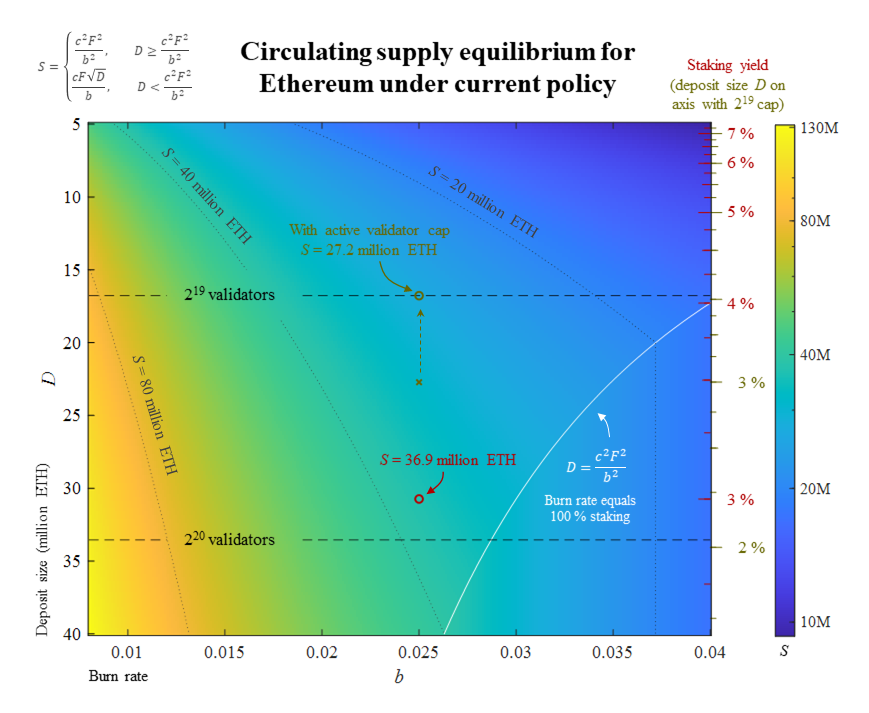
Supply is being constrained from multiple directions simultaneously:
- Long-term staking lock-ups
- Validator collateral requirements
- ETH burns via EIP-1559
- Institutional cold storage accumulation
Meanwhile, demand continues to expand as decentralized finance, tokenization, payments, and enterprise smart contracts scale globally.
This is not speculative theory—it is textbook supply-demand imbalance unfolding in real time.
By 2026, Ethereum has transcended its identity as an “investment.” It increasingly resembles a global economic resource, comparable not to tech equities, but to energy infrastructure itself.
Unlike gold or oil, Ethereum offers programmability, yield, and settlement finality—features that naturally attract concentrated global capital.
Conclusion: Standing at the Center of a Historic Capital Reallocation
We are witnessing one of the most intense asset accumulation events in modern financial history.
Ethereum represents perhaps the closest approximation humanity has created to a self-reinforcing, yield-generating, programmable store of value. The competition to own it is no longer theoretical—it is active, relentless, and increasingly exclusionary.
When exchange inventories approach exhaustion, the concept of “price” itself may lose relevance. The decisive question will not be how much ETH costs, but whether one holds ETH at all.
The winners of this era will be those who recognized the structural shift early, maintained conviction through volatility, and aligned themselves with the gravitational pull of global capital.
The invitation to this new financial order has already been issued. The remaining opportunity lies in whether one has the resolve to act before the final fragments of freely available ETH disappear into the black hole.
